

How Long Can You Stay on Mounjaro?
The question most providers never fully answer. What NICE TA1026 says about how long you can stay on Mounjaro, the weight regain reality of stopping, and what long-term treatment looks like in practice – from the specialists who manage it every day.

Clinically reviewed by
Shadeia Younis, Superintendent Pharmacist (GPhC 2052119)
The question tends to arrive a few weeks into treatment, when things are working well and the thought first crosses your mind: how long is this actually supposed to go on for? You’ve read something about a two-year limit. You’ve seen something in a forum about stopping and putting weight back on. You’re not sure whether there’s a defined endpoint, whether your provider will stop prescribing at some point, or whether staying on Mounjaro long-term is something that’s even considered medically reasonable.
The consultation covered eligibility, injection technique, and what to expect in the first few weeks. Duration never came up. It rarely does. And now you’re carrying a question that should have been answered on day one.
This guide answers it. What NICE TA1026 says about how long you can stay on Mounjaro in the UK – and what it does not say. What the clinical evidence tells us happens when you stop. How the six-month Mounjaro review works, and what it is not. How long people stay on Mounjaro in practice, and why most clinical guidance points toward long-term treatment rather than a defined endpoint. And what ongoing Mounjaro treatment looks like under Slinic’s pharmacist-led model, reviewed by specialists who manage this every day.
The Duration Difference Most Patients Don’t Know: Mounjaro vs Wegovy on the NHS
One of the most significant differences between Mounjaro (tirzepatide) and Wegovy (semaglutide) is what happens with NHS treatment duration guidance. Wegovy on the NHS is limited to a maximum of two years and must be accessed through specialist services. Mounjaro under NICE TA1026 carries no arbitrary time limit – the guidance specifies that treatment continues based on clinical assessment, not a predetermined end date.
For patients on Mounjaro through a private provider like Slinic, the same principle applies: treatment duration is a clinical decision, not a calendar one. There is no point at which the medication is automatically stopped on the basis of time elapsed rather than clinical assessment.
Key Points at a Glance
- NICE TA1026 does not set a time limit on Mounjaro treatment – duration is a clinical decision
- Mounjaro is not a fixed course – like blood pressure medication, it manages an ongoing condition. Most patients continue for as long as it works and remains affordable, which for many means years
- Stopping Mounjaro typically leads to weight regain – clinical trial data demonstrates this clearly
- A formal review is recommended at 6 months: if you haven’t lost at least 5% of starting weight at the highest tolerated dose, a clinical reassessment is required
- There is no fixed upper limit on how long you can continue treatment, provided you are responding to it and it remains clinically appropriate
- Slinic’s pharmacist-led model includes ongoing clinical reviews throughout treatment, not just at the start
What’s Covered in This Article
- What NICE guidance says about treatment duration
- What happens to your weight when you stop
- The Mounjaro six-month review explained
- What the maintenance phase looks like
- Stopping vs pausing: what you need to know
- Thinking about Mounjaro as long-term treatment
- Am I ready to stop? A decision framework
- How Slinic approaches ongoing treatment
- Frequently asked questions

What NICE Guidance Actually Says About Treatment Duration
NICE Technology Appraisal 1026, published in December 2024, is the governing clinical guidance for tirzepatide in UK weight management. Most patients searching for an answer to this question find conflicting information online. The official position is clearer – and more reassuring – than most of what circulates in forums.
TA1026 does not set a fixed treatment duration for Mounjaro. There is no two-year limit, no prescribed stopping point, no instruction to automatically discontinue after a defined period. How long you can stay on Mounjaro in the UK is determined by clinical judgment – not by an arbitrary end date. Treatment continues for as long as it is working and remains appropriate. That is the full answer.
The guidance does, however, set out one specific review point. If a patient has not lost at least 5% of their baseline body weight after six months at the highest dose they can tolerate, a clinical decision must be made about whether to continue. This is not an automatic stop – it is a structured trigger for a conversation between the patient and their clinical team about whether the treatment is delivering sufficient benefit to justify continuing. The existence of this checkpoint is not a threat to long-term treatment; it is a protection against indefinite use of a medication that is not working for a particular individual.
The NICE Position in Plain Terms
Mounjaro is recommended for adults with a BMI of at least 35 kg/m2 and at least one weight-related health condition. The BMI threshold reduces by 2.5 kg/m2 for people from certain ethnic backgrounds. Treatment is not limited to a fixed number of years. The 6-month review is a clinical checkpoint, not an endpoint.
Treatment can be initiated in primary care – unlike Wegovy on the NHS, which must be accessed through specialist weight management services only. NICE made this decision deliberately, to improve access. It also means that a private Mounjaro prescription from a GPhC-registered pharmacy like Slinic sits within a fully recognised clinical framework. At Slinic, that framework is overseen by Shadeia Younis, Superintendent Pharmacist, who has specialist expertise in GLP-1 and dual GIP/GLP-1 therapies and has reviewed tirzepatide prescribing under UK guidance since the medication’s approval.
How This Differs From Wegovy on the NHS
Understanding the Mounjaro position is clearer when you compare it to semaglutide (Wegovy) under NHS guidance. NICE TA875, which covers Wegovy for weight management, limits treatment to a maximum of two years and requires it to be delivered within a specialist weight management service. These are significant restrictions that apply to NHS semaglutide access specifically.
Tirzepatide does not carry the two-year limit under TA1026. This is a meaningful distinction – not a technicality – for anyone planning treatment beyond the first few months. It reflects how NICE assessed the strength and duration of evidence behind each medication. Tirzepatide’s clinical trial data, including the 72-week SURMOUNT programme, supported a different conclusion on long-term use.
For patients accessing Mounjaro through Slinic on a private basis, neither the specialist service requirement nor a fixed time limit applies. Treatment continues for as long as it is clinically appropriate, reviewed at each stage by a superintendent pharmacist rather than managed administratively.
Private vs NHS: What Changes on Duration
Through Slinic’s private prescription service, Mounjaro is available without a GP referral, without waiting lists, and without a two-year cap. The treatment continues for as long as it is clinically appropriate, effective, and within the patient’s private eligibility criteria (BMI 30 or above, or BMI 27 or above with a weight-related health condition).

Thinking About Starting Mounjaro?
The Slinic consultation takes around three minutes, and a pharmacist reviews your information within 24 hours. Pricing is transparent from your very first dose.
Start Your Confidential ConsultationWhat Happens to Your Weight When You Stop Mounjaro
This is the part most providers do not discuss clearly enough at the start of treatment. The clinical data on what happens after stopping tirzepatide is unambiguous, and patients who understand it from the beginning make very different decisions to those who encounter it after they have already stopped.
The honest answer: stopping Mounjaro typically leads to weight regain. Not occasionally. Not in a minority of cases. In most patients, across the clinical evidence available, weight returns – and it does so predictably. The medication works by modifying the hormonal signals that drive appetite and energy balance. When the medication stops, those signals do not stay modified. They return.
What Clinical Trial Data Tells Us
The SURMOUNT-4 trial specifically studied what happens when tirzepatide is discontinued after an initial period of treatment. Participants who switched from tirzepatide to placebo showed meaningful weight regain compared to those who continued treatment – demonstrating that the medication needs to continue for the weight loss to be maintained.
The pattern observed in semaglutide trials, where direct data is more extensively published, reinforces this. In the STEP 1 extension study, participants who stopped semaglutide regained approximately two-thirds of their weight loss within one year of stopping. This is not a failure of the treatment – it reflects the underlying biology of obesity as a chronic condition.
Why This Happens: The Biology
Obesity is not simply a matter of willpower or habit. It involves persistent changes in the hormonal signals that regulate appetite, metabolism, and fat storage – changes that do not reverse on their own when weight is lost. The medication addresses those signals directly. When it stops, the signals that drove the original weight gain tend to reassert themselves. This is why NICE, the NHS, and the major international medical bodies now classify obesity as a chronic condition requiring ongoing management, in exactly the same way as hypertension or type 2 diabetes. Ongoing treatment is medically sound. It is not dependency. It is the correct clinical response to a chronic condition.
What This Means for Treatment Planning
Understanding weight regain biology changes how patients approach the question of treatment duration. For many people, Mounjaro functions in the same category as other long-term medications – blood pressure treatments, cholesterol-lowering drugs, thyroid medications – where ongoing use is how the condition is managed. Stopping and restarting is possible, but the result of stopping is typically a return of the symptoms the medication was treating.
Weight regain after stopping Mounjaro is not a failure of the patient. It is the predictable consequence of removing a medication that was addressing the biological causes of the problem. The weight does not come back because something went wrong. It comes back because the thing that was preventing it stopped.
This is not a reason for alarm. The useful response is to plan for it honestly, not to discover it six months after stopping.
One of the most common things we see in practice is patients stopping Mounjaro because they’ve reached a weight they’re happy with, then returning several months later having regained much of what they worked for. The biology is not a surprise once you understand it – but most patients aren’t told about it clearly enough at the beginning of treatment. The decision to stop is always the patient’s. But it should be an informed one, made with the full picture in view – not one made in the quiet assumption that the results will simply stay.

The Mounjaro Six-Month Review Explained
NICE TA1026 builds in a formal effectiveness checkpoint at six months. It applies to patients who have reached the highest dose they can tolerate and have been assessed at that dose. The question the Mounjaro six-month review is designed to answer: is the treatment delivering enough clinical benefit to justify continuing?
The benchmark is a minimum of 5% weight loss from baseline after six months at the highest tolerated dose. If a patient has lost 5% or more, treatment continues. If a patient has not reached that threshold, a clinical conversation is required – not an automatic stop, but a structured review of what has happened and what the options are. At Slinic, that review is conducted by Shadeia Younis, who has followed every prescription from your first injection. The distinction matters: a pharmacist who knows your escalation timeline, your side effect history, and the specific reasons a dose was held or advanced is not interchangeable with a clinician reading your notes cold. The quality of a six-month Mounjaro review is determined almost entirely by the quality of the clinical relationship that precedes it.
What That 5% Threshold Represents
Five percent of baseline weight is clinically meaningful. For a person starting at 100kg, that is 5kg. For someone starting at 120kg, it is 6kg. These are numbers that have real health consequences – improvements in blood pressure, blood glucose, joint health, and cardiovascular risk factors are all associated with weight reductions in this range.
The threshold is not about hitting a weight loss goal in the aesthetic sense. It is about establishing whether the medication is producing a level of response that justifies its continuation on clinical grounds.
What the Six-Month Review Is Not
The six-month check is not an instruction to stop Mounjaro after six months. It is a review point, triggered only when a specific benchmark has not been met. Patients who are responding well to treatment – which is the majority, based on SURMOUNT trial data – continue without interruption. The checkpoint exists to protect patients from continuing a treatment that is not working, not to create an arbitrary end to treatment that is.
What Affects Response in the First Six Months
Several factors influence how much weight a patient loses in the first six months of Mounjaro treatment. Dose escalation is the biggest variable: patients who experience side effects and need to stay at lower doses for longer may reach their highest tolerated dose only a few weeks before the six-month assessment. That context matters clinically, and a good review accounts for it.
Dietary habits, injection technique, individual metabolic differences, and the accuracy of the titration timeline all play a role. This is where pharmacist-led oversight earns its value. A prescriber who has followed your escalation week by week, adjusted your dose with clinical judgement, and understands the relationship between your personal timeline and the six-month benchmark is not interchangeable with one reviewing your case for the first time. The quality of the review depends entirely on the quality of the clinical relationship that preceded it.
Real Patient Experience
“Slinic isn’t just a weight-loss clinic – it’s a professional, pharmacist-led healthcare service that puts patient wellbeing first while delivering real, measurable results. I’ve been with Slinic for 3 months and have already lost 11 kg. At the beginning of my treatment, I experienced some minor side effects such as nausea. The pharmacist was excellent – they took the time to explain how to reduce these effects and adjusted my treatment to keep me comfortable. My dose was kept at 5mg until I fully adjusted, which made all the difference. I felt safe, supported, and well-informed throughout.”
– Caroline Slater, 11kg lost in 3 months

What the Maintenance Phase Actually Looks Like
The titration phase of Mounjaro treatment – the period during which the dose increases every four weeks from 2.5mg toward the maximum of 15mg – takes up to 20 weeks to complete. Once a patient reaches their highest tolerated dose and is stable on it, they enter what is often described as the maintenance phase.
Maintenance is where most of the work happens. The escalation phase gets you to a therapeutic dose. The maintenance phase is where the clinical benefit accumulates – weight continues to come off, or is held at a lower level, month after month. The practical question shifts from “how do I manage the escalation?” to “how do I sustain this over the long term?” – and that is a question the right clinical team can answer.
What Maintenance Involves Day to Day
In practical terms, maintenance on Mounjaro means continuing the weekly injection at a stable dose. For most patients, the side effects that troubled the escalation phase – nausea in particular – have resolved by this point. The injection takes thirty seconds and becomes unremarkable. The appetite suppression is steady and familiar rather than a novel experience. For many patients, this is the phase that feels most sustainable: the treatment is working, the disruption is minimal, and the results are visible.
For many patients, the escalation phase is the hard part. Once they find their maintenance dose and the side effects settle, Mounjaro becomes unremarkable – the weekly injection takes thirty seconds, and the results continue quietly in the background.
Long-term results from the SURMOUNT programme – which studied participants across 72 weeks – show that weight loss achieved during escalation is largely maintained or extended through the maintenance period. The medication keeps working. A plateau in weight loss during this phase is not a sign that the medication has stopped being effective; it typically reflects the body settling at a new equilibrium. If progress stalls during the Mounjaro maintenance phase, the question to ask is whether the dose is optimised, not whether the treatment has run its course. Shadeia Younis and the Slinic team assess this at every review – not as a renewal formality, but as genuine clinical judgment about whether the treatment is still working as well as it should.
Maintenance Dosing: Do All Patients Reach 15mg?
No. NICE guidance specifies maintenance doses at 5mg, 10mg, and 15mg. Some patients achieve a clinically meaningful response at a lower dose and stay there. Escalation is not a mandatory progression – it is a clinical decision based on whether a higher dose is needed and whether it is tolerated. The assumption that every patient should push toward 15mg is worth questioning. The goal is the right response at the right dose, not the highest dose available. Some of the most consistent long-term outcomes come from patients who find a sustainable dose and maintain it, rather than chasing the maximum.
Mounjaro’s Dosing Timeline at a Glance
| Period | Dose | Purpose | Monthly Price (Slinic) |
|---|---|---|---|
| Weeks 1-4 | 2.5mg | Starting dose – body adjustment, not therapeutic | £129 |
| Weeks 5-8 | 5mg | First maintenance dose – therapeutic effect begins | £155 |
| Weeks 9-12 | 7.5mg | Dose increase if needed and tolerated | £206 |
| Weeks 13-16 | 10mg | Dose increase if needed and tolerated | £230 |
| Weeks 17-20 | 12.5mg | Dose increase if needed and tolerated | £247 |
| Week 21+ | 15mg | Maximum dose – long-term maintenance | £267 |
Prices shown are monthly, per dose. No hidden consultation fees. Slinic pricing correct at April 2026.

Stopping vs Pausing: What You Need to Know Before You Decide
Patients sometimes conflate stopping Mounjaro with pausing it – as though the medication can be held in reserve and resumed without consequence. The distinction matters, and it is worth being clear on both.
What Pausing Looks Like
A deliberate, short-term pause – for surgery, a planned pregnancy, a period where the prescription cannot be continued – is a different situation from stopping treatment entirely. In these cases, the intention is to resume. The clinical team needs to be aware and involved. Depending on the length of the pause, restarting may involve going back to a lower dose and re-titrating rather than resuming at the previous maintenance dose.
The longer the gap, the more likely it is that some degree of re-titration will be needed. Missing a single injection by a few days is very different from stopping for two months. NICE guidance notes that if a dose is missed, it should be administered as soon as possible if within four days. If more than four days have passed, skip that dose and resume the regular schedule. Extended gaps are a different matter and require clinical guidance.
If You Miss Doses or Need to Pause: Contact Your Pharmacist
Do not restart at your previous dose after an extended break without clinical input. Restarting at a high maintenance dose after a significant gap can increase the likelihood of gastrointestinal side effects. Shadeia Younis and the Slinic pharmacist team can advise on whether a brief re-titration is appropriate and, if so, what that looks like given your specific history and the length of the gap.
What Stopping Looks Like
Stopping is not a failure. But it is a decision that deserves the same quality of thought as starting.
Stopping treatment entirely – with no intention to resume – means accepting that the biological effects of the medication will reverse. The appetite suppression will ease. The hormonal signalling changes that the medication was producing will return toward pre-treatment baseline. For most patients, this means a gradual return of appetite and, over months, weight regain.
This is not a judgement on the patient. It is a predictable biological response that the clinical trial data describes clearly. The question for patients considering stopping is not whether weight regain is likely – it is – but whether stopping is the right decision for their circumstances at that time, and whether they have adequate support in place to manage what follows.
Reducing Dose as an Alternative to Stopping
Some patients find that at higher doses, side effects become difficult to manage, or that the benefit-to-burden ratio shifts. In these cases, reducing to a lower maintenance dose rather than stopping entirely can preserve meaningful clinical benefit while reducing the side effect burden. This is standard clinical practice and is specifically supported by the Mounjaro prescribing guidance, which allows patients to stay at lower doses for as long as needed.
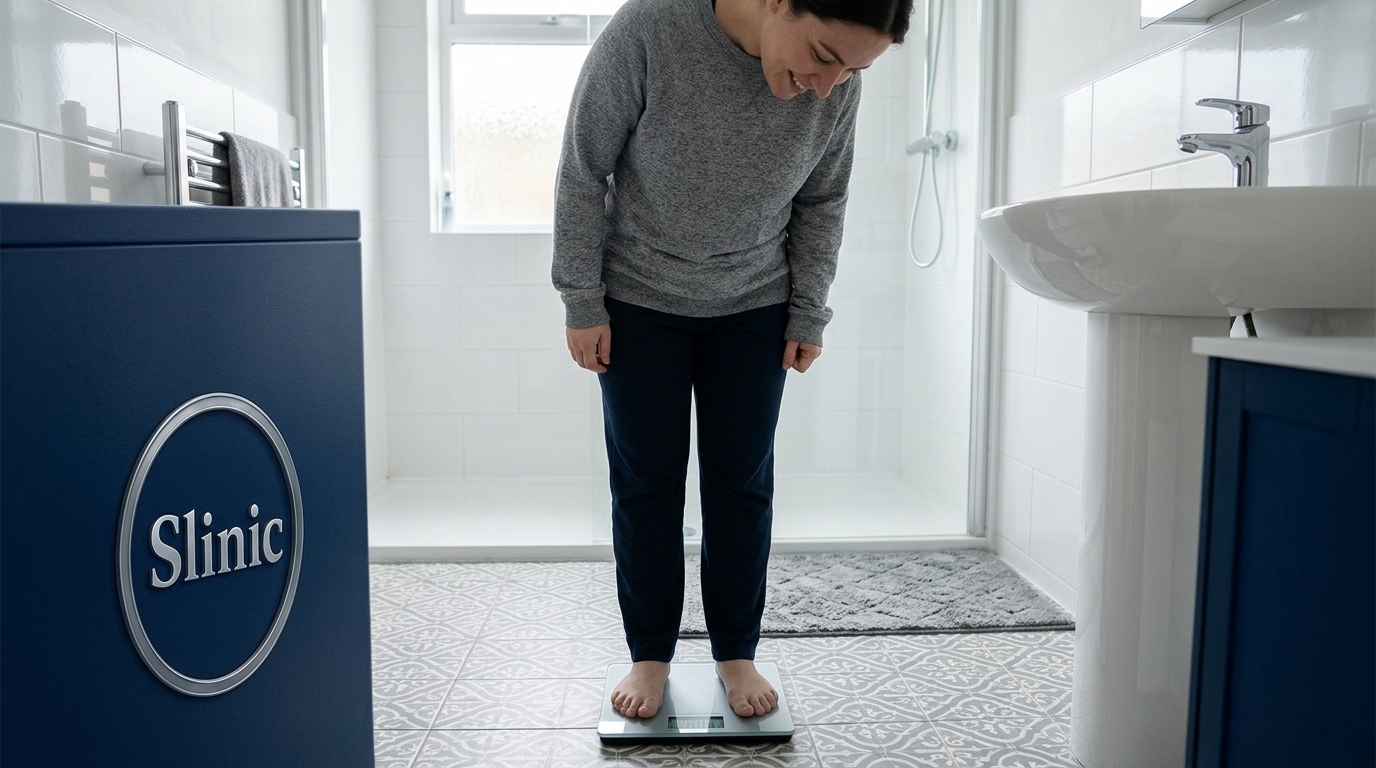
Mounjaro as a Long-Term Treatment: Reframing the Question
The idea of Mounjaro as a “course of treatment” – something you do for a period and then stop – is common, persistent, and medically inaccurate. It is borrowed from the mental model of antibiotics or chemotherapy, where the treatment has a clear endpoint because the condition being treated resolves. That model does not apply here.
Nobody describes a patient with hypertension as “dependent” on their blood pressure medication. Nobody suggests a patient with type 2 diabetes should stop their metformin once their glucose levels improve. These medications are taken because the underlying condition requires ongoing management. The condition does not resolve; the medication manages it. That is how Mounjaro works too.
Obesity is a chronic condition with well-documented hormonal and metabolic drivers. The language of medicine has shifted – where it once spoke of patients who “lack willpower”, it now speaks of patients with a chronic condition and identifiable biological causes. NICE, the NHS, and international clinical bodies have aligned on this. Mounjaro was approved on the basis of that recognition. Long-term Mounjaro use in the UK is not only clinically supported – it is, for many patients, the most medically appropriate path. Long-term treatment is not a concession. It is the correct clinical response to a condition that does not resolve.
The question is not whether you can stay on Mounjaro long term. The question is whether staying on it is the right decision for you – and that is a clinical one, not a calendar one.
What the Clinical Evidence Says About Long-Term Use
The SURMOUNT programme studied tirzepatide across 72 weeks. Results show sustained, and in some cases continuing, weight loss over the full treatment period. There is no clinical evidence that the medication becomes less effective over time in patients who continue on it and are responding well. Stabilising at 20% below starting weight during the maintenance phase is not the medication failing – it is the medication doing precisely what it was designed to do. Extended follow-up data collection is ongoing, and no duration-related safety concerns have emerged to date.
When Does Long-Term Treatment Make Sense?
For most patients who are responding well, the answer to “how long?” is: as long as needed. That is not an evasion – it is a clinical judgement that replaces an arbitrary time limit. Long-term use makes sense when the medication is working, the side effect burden is manageable, and the alternative – stopping and managing weight regain – is a worse outcome for the patient’s health.
It makes sense to reassess when circumstances change: a meaningful improvement in the underlying conditions that qualified someone for treatment, a BMI shift that changes the clinical picture, financial considerations that require a different approach, or a patient’s informed choice to try a period without medication with a clear plan for what to monitor. These are all legitimate reasons for a clinical conversation. None of them requires stopping without discussion.
The decision to continue or stop is always the patient’s. What Slinic’s clinical team provides is the honest, unvarnished picture of what each choice is likely to look like – so that the decision is made clearly, not in the dark, and not alone. Most providers can tell you how to start. Shadeia Younis and the Slinic team can tell you what comes next at every stage – because they have been there with patients through month one, month six, month twelve, and the questions that only arise that far into treatment.

Am I Ready to Stop Mounjaro?
Work through these scenarios honestly. There is no right answer – but an informed one is better than a hasty one.
You’re stopping because you feel fine now and think you no longer need it
This is the most common reason for stopping – and the one most likely to result in weight regain. The medication is creating the conditions that make you feel fine. Discuss this with your pharmacist before making the decision.
You’re considering stopping for financial or practical reasons
This is a valid consideration and one worth discussing clinically. A dose reduction rather than a complete stop may be a useful middle option. Speak to your Slinic pharmacist about the options available.
You want to stop after a considered clinical conversation and understand what to expect
This is the right starting point. Your pharmacist can talk through the likely trajectory after stopping, what monitoring makes sense, and whether there is a plan in place if weight begins to return.
You’re not sure – you’re just starting to think about it
That is the right time to raise it with your clinical team, not after you’ve already stopped. Slinic’s pharmacist support means these conversations are part of your ongoing care.

How Slinic Approaches Ongoing Mounjaro Treatment
Most prescribing models work well for the first two months. The consultation, the first pen, the initial dose – these are the uncomplicated parts. It is month four, month eight, month twelve where clinical oversight matters most. Is the dose still right? Has anything changed? Is the six-month review approaching? Is the patient considering stopping, and if so, do they understand what to expect? These questions require a pharmacist who has followed the treatment from the beginning, not one reviewing the file for the first time.
Every Mounjaro prescription dispensed through Slinic is overseen by Shadeia Younis, whose role as Superintendent Pharmacist means clinical accountability sits with her at every stage of your treatment – not with an automated renewal system. Regular check-ins give patients a direct line to clinical guidance on dose, side effects, progress, and the kind of questions around long-term use that most providers never raise proactively.
The private Mounjaro market in the UK has expanded significantly. Not every prescribing model is built the same way. Many are designed around the initial consultation and first supply, which is the straightforward part. Slinic’s pharmacist-led structure is built for what comes after: the dose escalation decisions, the side effect management, the six-month review, the long-term planning. By month six, month twelve, your treatment history is known in detail. The clinical relationship deepens over time, not fades into a renewal queue.
Shadeia Younis
Superintendent Pharmacist, Slinic (GPhC 2052119)
Shadeia Younis leads clinical oversight for all weight loss treatments at Slinic. As a superintendent pharmacist with specialist expertise in GLP-1 and dual GIP/GLP-1 therapies, she has reviewed tirzepatide prescribing under UK guidance since the medication’s approval. Questions about how long to stay on Mounjaro, when to consider stopping, how to interpret the six-month review, or how to manage a dose reduction are not handled by a support team or a FAQ page – they go to a pharmacist with the clinical depth to answer them properly. That is not the standard across private prescribing services. At Slinic, it is the baseline.
What Long-Term Support at Slinic Includes
Ongoing Clinical Reviews
Regular reviews throughout treatment, not just at sign-up. Every contact is an opportunity to assess progress, refine the dose, and address questions – so concerns are resolved promptly, not accumulated until renewal.
Dose Titration Support
Pharmacist oversight through the escalation period, with clinical guidance on whether to escalate, hold at a lower dose, or adjust the schedule based on individual response and tolerability.
Six-Month Effectiveness Assessment
A structured, evidence-based review aligned with NICE TA1026. Not a form to complete – a clinical conversation about what has worked, what the numbers mean in context, and what the clearest path forward looks like for this patient, at this stage.
Stopping and Pausing Guidance
Clinical advice when a patient is considering stopping or pausing – including an honest account of what weight regain typically looks like, how to manage any re-titration on restarting, and what support is available either way.
Transparent Pricing Throughout
Monthly pricing with no hidden fees at any stage. Patients can see the cost of each dose level in advance, which makes long-term treatment planning financially predictable.
Real Patient Experience
“My experience with Slinic has been excellent from start to finish. The whole process was fast, efficient, and incredibly professional. My treatment was clinically checked and verified before being dispensed, which gave me complete peace of mind. The video consultation was thorough and reassuring – the pharmacist took time to explain everything clearly and made sure all my questions were answered. Delivery was quick, discreet, and reliable, arriving exactly when expected. I couldn’t have asked for a smoother or more professional service. I feel confident knowing my care is verified, clinically safe, and managed by a trusted team.”
– Pauline Lane, 21kg lost

Frequently Asked Questions
There isn’t one. NICE TA1026, which governs tirzepatide for weight management in the UK, does not set a time limit on treatment. Duration is a clinical decision based on whether the medication is working and remains appropriate – not a calendar one. This distinguishes tirzepatide from Wegovy (semaglutide) on the NHS, where NICE TA875 limits treatment to a maximum of two years. For patients accessing Mounjaro through Slinic on a private basis, no such cap applies. Treatment continues for as long as it is clinically appropriate and the patient chooses to continue.
Medically, there is no defined ceiling. Long-term Mounjaro use is clinically supported by NICE TA1026, which sets no time limit on treatment. Whether staying on it indefinitely makes sense for you depends on whether the medication is working, whether it remains appropriate given your overall health picture, and whether it fits within your budget. For patients managing obesity as a chronic condition – which is most patients – the clinical case for continuing treatment is often stronger than the case for stopping. “Forever” is not a category NICE uses. “For as long as it is clinically appropriate and delivering benefit” is the operative phrase, and reviewing that regularly with your pharmacist is how that judgment gets made properly.
There is no automatic point at which stopping becomes the right answer. The clinical scenarios worth discussing with your pharmacist are: the medication has stopped producing meaningful benefit at the highest tolerated dose; side effects are making treatment untenable and a dose reduction has not resolved them; there is a clinical reason to stop, such as a planned pregnancy; or you have made an informed choice to stop with a clear understanding of what to expect. “When should I stop Mounjaro?” is a different question from “when am I allowed to stop?” – and the honest answer to the first is: when stopping is the better clinical option for your circumstances at that time. That is a judgment best made with a pharmacist who knows your treatment, not in isolation.
Clinical trial data indicates that weight regain is likely after stopping tirzepatide, as the SURMOUNT-4 study demonstrated when participants switched from active treatment to placebo. This mirrors findings in semaglutide trials, where participants regained approximately two-thirds of lost weight within a year of stopping. The reason is biological: the medication addresses hormonal signals that drive appetite and fat storage. When those signals are no longer modulated by the medication, they tend to return toward pre-treatment baseline. This does not mean weight regain is inevitable or immediate, but it is the most likely trajectory without ongoing treatment or significant lifestyle changes that compensate for the loss of the medication’s effect.
The six-month review is a clinical checkpoint recommended in NICE TA1026. After six months at the highest tolerated dose, a patient’s response is assessed against a benchmark of at least 5% weight loss from baseline. If the benchmark has been met, treatment continues. If it has not, a clinical conversation is required about whether to continue, adjust, or stop treatment. This is not an automatic stopping point – it is a structured review to ensure the treatment is delivering sufficient clinical benefit. Many factors can affect response in the first six months, including the dose escalation timeline and individual metabolic variation, and these can be explored during the review.
Yes, but the restarting process matters. After an extended break, it is generally advisable to restart at a lower dose and re-titrate rather than resuming at the previous maintenance dose, to reduce the likelihood of gastrointestinal side effects. How long the break was, and why, are relevant to the clinical decision about restarting. Contact your Slinic pharmacist before resuming treatment after any significant gap so that the restart can be managed safely and with appropriate clinical oversight.
Yes. Staying at a lower maintenance dose is a clinically supported option and is explicitly recognised in Mounjaro’s prescribing guidance. NICE identifies 5mg, 10mg, and 15mg as maintenance doses – patients are not required to be at 15mg to remain on treatment. If side effects at a higher dose are making treatment difficult, or if the clinical benefit is adequate at a lower dose, staying there is a reasonable long-term approach. Discuss with your pharmacist whether a dose adjustment is appropriate for your situation.
Reaching your goal weight is a significant milestone. It is also one of the most common moments at which patients stop treatment – and then return having regained weight. The medication is what created the conditions that allowed you to reach that number. Removing it removes that mechanism. Some patients reach their goal and choose to continue at a lower maintenance dose to protect the result long-term. Others choose to stop with a clear understanding of what to expect. Both are valid decisions. Neither should be made without a clinical conversation about the likely trajectory of each.
The clinical trial data from the SURMOUNT programme, covering 72 weeks of treatment, does not show the medication becoming less effective over time in patients who continue on it. Weight loss tends to be greatest during the escalation phase and stabilises during maintenance. A plateau in weight loss during maintenance is not the same as the medication losing effectiveness – it typically reflects the body reaching a new equilibrium. If progress stalls, it may be worth discussing with your pharmacist whether the dose is optimised, whether any other factors are playing a role, and whether any adjustments to the treatment or lifestyle approach are appropriate.
Tirzepatide has been studied across clinical trials of up to 72 weeks, with longer-term data collection ongoing. No safety concerns have emerged that would create a fixed duration ceiling for patients who are responding well and tolerating the medication. NICE guidance does not identify a point at which treatment becomes unsafe by reason of duration alone. As with any long-term medication, regular clinical review is appropriate – and built into Slinic’s model. Your pharmacist is not waiting for problems to arise; they are reviewing your treatment at each stage to ensure it remains the right decision.
Contact your Slinic pharmacist before stopping. This gives you the opportunity to have a clinical conversation about what stopping is likely to mean for your weight, whether there are alternatives such as a dose reduction, and what monitoring makes sense after you stop. There is no clinical procedure required to stop – Mounjaro does not require tapering the way some medications do. But stopping is a clinical decision that benefits from informed discussion, not a unilateral choice made in isolation.
Slinic can continue prescribing Mounjaro for as long as the treatment remains clinically appropriate, the patient meets private eligibility criteria (BMI 30 or above, or BMI 27 or above with a weight-related comorbidity), and there are no clinical reasons to discontinue. There is no arbitrary time cap. Each renewal involves clinical assessment, and the ongoing pharmacist-led model means that suitability is reviewed continuously rather than assumed.
Clinical reviews at Slinic cover progress to date, current dose, side effects or concerns, and whether any adjustments are needed. They are a direct conversation with Shadeia Younis and the Slinic pharmacist team – not a support inbox, not a renewal form, and not a chatbot response. Duration, dose changes, the six-month assessment, stopping, pausing, restarting: these are all legitimate review topics and are treated as substantive parts of the clinical relationship, not one-off queries to be closed quickly. If you have questions about how long to stay on Mounjaro, when to consider stopping, or what the next stage of treatment looks like, these are exactly the conversations Slinic’s pharmacist-led model is built for. Complete our online consultation to begin.
The head-to-head SURMOUNT-5 trial, published in 2025, compared tirzepatide directly with semaglutide over 72 weeks. Tirzepatide produced a mean weight loss of 20.2% compared to 13.7% for semaglutide – a statistically significant difference. Both medications show weight regain after stopping, reflecting the chronic nature of obesity rather than any failure of the treatment. On the NHS, Wegovy is limited to two years; Mounjaro carries no equivalent time limit under NICE TA1026. For patients on both medications privately through Slinic, neither has a fixed duration cap – treatment continues based on clinical assessment.

Long-Term Mounjaro Treatment, Managed by Specialists
Most providers can prescribe your first pen. Fewer can support you through month six, month twelve, the dose changes, the six-month review, and every decision that follows. That is what Slinic is built for. Pharmacist-led from first consultation to long-term maintenance, with transparent pricing and no hidden fees. The consultation takes around three minutes.
Complete Our Online ConsultationRelated Guides From Slinic
- How to Store Mounjaro: The Complete UK Guide – Fridge temperatures, the 30-day room temperature rule, travel storage, and what to do if you’re unsure whether your pen is still safe.
- Mounjaro Dosing Schedule UK: 2.5mg to 15mg Explained – The full titration timeline, what each dose is for, and how to manage the escalation period.
- Mounjaro Side Effects: What UK Patients Should Expect – Why side effects happen, when they typically peak, and what helps reduce them.
- Starting Mounjaro: What to Expect in Your First Month – The week-by-week experience of starting treatment, from the first injection onward.
- Mounjaro vs Wegovy: Which Is Right for Me? – A direct clinical comparison of tirzepatide and semaglutide, based on the SURMOUNT-5 head-to-head trial data.
- Weight loss treatments at Slinic – Mounjaro, Wegovy, and how to choose between them.
- About Slinic – GPhC registration, the pharmacist-led model, and what sets Slinic apart.
- Complete our online consultation – Start your Mounjaro treatment. Takes around three minutes. No GP referral needed.
Medical References and Guidance
Clinical data in this article is based on NICE Technology Appraisal TA1026 (tirzepatide for weight management, published December 2024), NICE TA875 (semaglutide for weight management, published March 2023), the SURMOUNT clinical trial programme (NEJM 2022, 2025), and the STEP programme (NEJM 2021). All medical facts are verified against MHRA, NICE, NHS, and BNF sources. Pricing correct at April 2026.
Related Blog Posts From Slinic
Mounjaro Long-Term Use: What Happens After 1 Year? – what the evidence shows about staying on Mounjaro beyond the first year of treatment.
How to Stop Mounjaro Safely: A UK Clinical Guide – a clinical walk-through of how to come off Mounjaro safely if and when you choose to.
Fear of Gaining Weight Back: Sustainable Weight Maintenance – practical, evidence-based strategies for protecting your results and managing the fear of regain.