

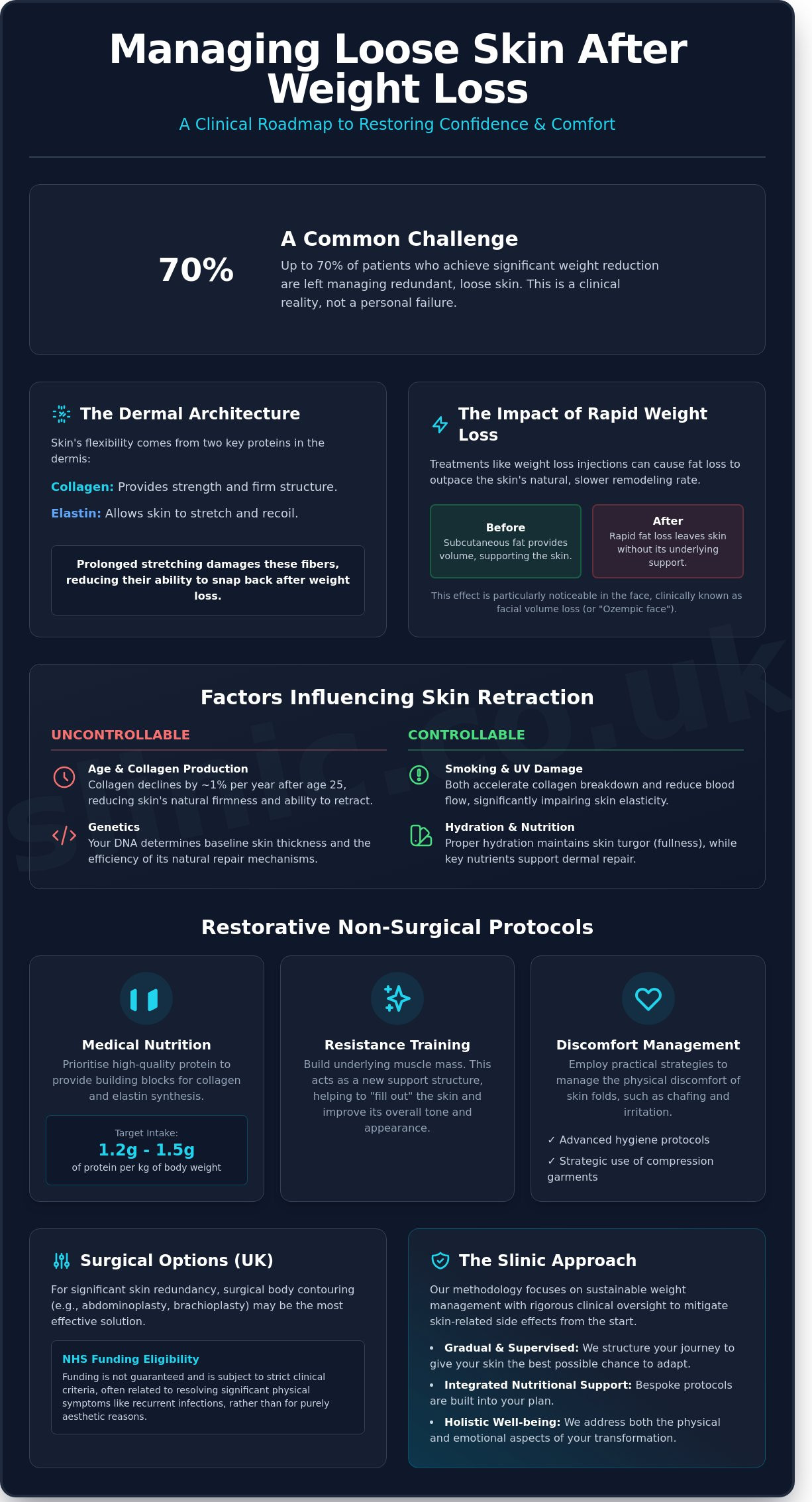
According to research published in the journal Plastic and Reconstructive Surgery, up to 70% of patients who achieve significant weight reduction are left managing redundant tissue that impacts their daily comfort. You’ve worked incredibly hard to reach your target weight, yet the presence of excess skin can feel like an unexpected barrier to the confidence you’ve earned. It’s frustrating when physical discomfort like chafing or emotional distress overshadows your clinical success. Understanding what to do about loose skin after weight loss uk requires a specialist perspective that prioritises both your long-term health and your aesthetic harmony.
We’re here to provide a clear, restorative roadmap. You’ll discover the clinical evidence behind non-surgical interventions, such as bespoke nutritional protocols that support dermal architecture. We also clarify the complex landscape of UK surgical options, including the specific criteria used by the NHS to assess funding eligibility. This guide ensures you have the professional insight needed to move from a state of uncertainty to a structured plan for your physical and emotional well-being, supported by our commitment to clinical excellence.
Key Takeaways
- Understand the underlying biological architecture of skin elasticity and why rapid weight loss requires a specialist clinical approach to preserve collagen and elastin fibres.
- Discover how prioritising high-quality protein intake and structured resistance training can help improve skin tone by building underlying muscle mass.
- Navigate the complexities of surgical body contouring and understand the specific NHS eligibility criteria when considering what to do about loose skin after weight loss uk.
- Learn practical, restorative protocols for managing the physical discomfort of skin folds, including advanced hygiene management and compression strategies.
- Explore the Slinic methodology for sustainable weight management, where rigorous clinical oversight helps mitigate skin-related side effects through structured monitoring.
Understanding the Biology of Loose Skin After Weight Loss
The human skin is a complex, living organ designed to expand and contract in response to body changes. This remarkable flexibility is governed by two primary proteins found within the dermis: collagen and elastin. Collagen provides the structural scaffolding that gives skin its strength and firmness, while elastin allows the tissue to stretch and snap back into place. When an individual carries excess weight for a prolonged period, these fibres are stretched to their physiological limit, often resulting in permanent damage to the dermal architecture.
Clinical research indicates that What is excess skin represents the physical remains of this overstretched tissue that has lost its ability to recoil. If you are researching what to do about loose skin after weight loss uk, it is vital to first understand the physiological constraints of your body’s largest organ. Once the elastic threshold is exceeded, the skin cannot simply “shrink” to fit a significantly smaller frame, leading to the folds often seen after successful weight management.
The Impact of Rapid Weight Loss
The modern clinical landscape has been transformed by the efficacy of weight loss injections, which often facilitate significant reductions in body mass over a relatively short period. While these treatments are highly effective for metabolic health, the speed of fat depletion frequently outpaces the skin’s natural remodelling rate. Subcutaneous fat provides a structural volume that supports the skin; when this fat is lost rapidly, the overlying tissue is left without its internal foundation.
Skin laxity refers to the loss of structural integrity and elastic recoil within the dermal tissues following the rapid depletion of underlying adipose volume. This phenomenon is particularly visible in the face, a condition colloquially termed “Ozempic face.” In clinical terms, this is facial volume loss. The medication does not target the face specifically, but because the face relies on deep fat pads for a youthful, lifted appearance, the rapid loss of this fat can lead to a hollowed or sagging aesthetic that does not match the patient’s biological age.
Biological Factors You Can and Cannot Control
Several variables dictate how well your skin will respond to a weight loss journey. While we cannot alter our genetic blueprint, understanding these factors helps in managing expectations for your final aesthetic outcome.
- Age and Collagen Production: After the age of 25, collagen production naturally declines by approximately 1% each year. Older skin possesses fewer healthy elastin fibres, making retraction less likely.
- Genetics: Your DNA determines the baseline thickness of your dermis and your body’s efficiency in repairing damaged protein strands.
- Smoking and UV Damage: Tobacco use causes vasoconstriction, reducing blood flow to the skin, while UV radiation breaks down existing collagen. Both significantly accelerate skin ageing and reduce elasticity.
- Hydration and Turgor: Proper cellular hydration maintains skin turgor, which is the skin’s ability to change shape and return to normal. Dehydrated tissue appears thinner and more prone to sagging.
Non-Surgical Strategies for Improving Skin Elasticity
Addressing dermal laxity requires a dual focus on internal biological architecture and external support structures. While the primary goal of any weight management journey is metabolic health, the aesthetic impact of redundant tissue is a significant concern for many patients. Understanding what to do about loose skin after weight loss UK clinics often recommend involves a combination of nutritional precision and physiological patience. The skin is a living organ that requires specific raw materials to maintain its structural integrity during periods of rapid change.
The Role of Medical Nutrition
Proteins are the fundamental building blocks of the dermis. When utilizing Mounjaro weight loss UK treatments, maintaining a high protein intake is vital to prevent the body from scavenging its own structural proteins. We recommend a target of 1.2g to 1.5g of high-quality protein per kilogram of body weight to support collagen and elastin synthesis. Micronutrients act as essential co-factors in this process. Vitamin C is a critical requirement for the hydroxylation of collagen molecules; without it, the biological “glue” that keeps skin firm cannot form correctly. Zinc and copper also play specialized roles in repairing damaged elastic fibres. Hydration remains the most underrated tool for skin resilience. Dehydrated cells lose their turgor, making skin appear thinner and more prone to sagging. Aiming for 2 to 3 litres of water daily ensures the extracellular matrix remains plump and supportive.
Lifestyle and Exercise Interventions
Resistance training serves as a mechanical solution to a volume problem. As subcutaneous fat vanishes, it leaves a void between the muscle and the skin. Hypertrophy, or the deliberate growth of muscle tissue, helps “fill” this space from beneath. Focusing on the quadriceps, hamstrings, and triceps can significantly improve the contour of the upper arms and thighs. It’s also essential to respect the biological timeline of skin contraction. The dermis can continue to retract for up to 18 months after your weight stabilizes. Rushing into surgical consultations too early may result in unnecessary procedures. During the active loss phase, protecting the skin from UV damage is paramount, as sun exposure degrades the very elastin fibres you are trying to preserve.
Topical interventions and supplements offer supportive, though secondary, benefits. Clinical evidence suggests that bioactive collagen peptides, taken in daily doses of 2.5g to 5g, can modestly improve skin elasticity over a 12-week period. Retinoids, specifically prescription-strength tretinoin or high-quality over-the-counter retinosides, can stimulate cellular turnover and thicken the epidermal layer. However, topical “firming” creams rarely penetrate deep enough to affect the structural dermis. If non-surgical methods do not yield the desired results, many patients explore clinical interventions, though it’s vital to understand that NHS eligibility for skin removal surgery is extremely strict and often restricted to cases causing significant physical functional impairment. For those seeking professional guidance on managing their transition, a specialist clinical consultation can provide a bespoke roadmap for long-term skin health.
Surgical Options and NHS Eligibility in the UK
For many patients, achieving a healthy weight through a structured weight loss treatment is only the first phase of a broader restorative journey. Once the biological goal of fat loss is met, the focus often shifts to the structural integrity of the skin. When considering what to do about loose skin after weight loss uk patients must distinguish between aesthetic refinement and clinical necessity, as this distinction dictates the pathway to care.
Types of Body Contouring Surgery
Body contouring is a specialist field of plastic surgery designed to remove redundant tissue and tighten the remaining skin to match the body’s new proportions. An abdominoplasty, or tummy tuck, is the most frequent request. This procedure targets the “apron” of skin that often persists after significant weight reduction. The ideal candidate has maintained a stable weight for at least 12 months and doesn’t smoke, as nicotine significantly impairs the micro-vascular healing required for such extensive incisions. You can find detailed guidance from the NHS on Tummy Tuck Surgery regarding the risks and recovery expectations.
Other specialist procedures include Brachioplasty (arm lift) and Thighplasty. A rising concern in the era of GLP-1 medications is “Ozempic face,” where rapid fat loss leads to a hollowed, aged appearance. While non-surgical dermal fillers can restore bespoke volume to the mid-face, a surgical neck or face lift is often required to address significant structural laxity. The Slinic approach involves guiding patients through their medical weight loss journey first, before referring them to trusted, specialist surgical consultants for these definitive procedures.
Navigating the NHS and Private Sector
Securing skin removal surgery on the NHS is exceptionally difficult. Most Integrated Care Boards (ICBs) classify these procedures as cosmetic rather than clinical. To qualify for an Exceptional Funding Request (EFR), patients must usually meet rigorous criteria:
- A BMI typically below 27 or 28, depending on local ICB policy.
- Documented weight stability for a period of 12 to 24 months.
- Severe physical complications, such as chronic intertrigo (fungal infections or skin breakdown in the folds) that hasn’t responded to primary care treatments.
- Significant functional impairment or psychological distress documented by specialist clinical reviews.
Because NHS funding is rare, many seek private care. It’s vital to choose a surgeon registered with the British Association of Aesthetic Plastic Surgeons (BAAPS) or the British Association of Plastic, Reconstructive and Aesthetic Surgeons (BAPRAS). These credentials ensure your surgeon has the specialist training required for complex body contouring. When deciding what to do about loose skin after weight loss uk clinical safety must always remain the priority. Recovery is intensive, often requiring 6 to 8 weeks before returning to full physical activity, making a structured follow-up plan essential for a seamless outcome.
Managing the Physical and Emotional Impact of Excess Skin
Successfully completing a medical weight loss journey is a profound clinical achievement. However, the presence of redundant tissue can create a disconnect between your health milestones and your daily comfort. For many patients, deciding what to do about loose skin after weight loss uk involves addressing both the functional limitations of the skin and the psychological transition into a new body identity. This phase requires a specialized approach to skin health and mental resilience.
Practical Daily Management
Physical discomfort often stems from skin-on-skin friction, which can lead to intertrigo, a common inflammatory condition. Clinical hygiene is paramount. Ensure skin folds are thoroughly dried after bathing, potentially using a hairdryer on a cool setting to reach deep areas. High-quality barrier creams or antifungal powders containing zinc oxide can prevent moisture buildup and redness. When selecting support wear, prioritize medical-grade compression garments. These pieces provide the necessary biological architecture to stabilize tissue, reduce chafing, and improve mobility during exercise. If you experience persistent rashes or infections, discuss these symptoms during your online weight loss consultation. Our prescribing doctors can provide guidance on topical treatments or refer you for further dermatological assessment.
Mental Well-being and Body Image
The emotional transition is frequently more complex than the physical one. Patients often report a “catfish” feeling, where they feel thin in clothing but unrecognizable to themselves when undressed. This dissonance can lead to body dysmorphia if left unaddressed. It’s helpful to reframe loose skin as a “battle scar” or a testament to your metabolic success rather than a failure of the skin’s elasticity. In the UK, patient communities and support groups offer a tranquil space to share these experiences, helping to normalise the reality of post-weight loss bodies. If your reflection causes significant distress, seeking specialist psychological support is a proactive step toward long-term aesthetic harmony.
- Hygiene Protocols: Use pH-balanced cleansers to maintain the skin’s natural protective barrier.
- Clinical Communication: Keep a diary of physical symptoms, such as skin breakdown or limited range of motion, to share with your GP.
- Support Networks: Engage with UK-based forums where members discuss the Slinic experience and shared recovery milestones.
- Reframing Techniques: Focus on the restorative functional gains, such as improved cardiovascular health and joint mobility, rather than purely aesthetic markers.
Managing the aftermath of significant weight reduction is a bespoke process that requires patience and professional oversight. If you are currently using weight loss injections and have concerns about skin elasticity, our clinical team is here to support your transition into the maintenance phase.
Start your clinical consultation with Slinic today.
The Slinic Approach: Sustainable Weight Loss and Skin Health
Achieving your target weight is a significant milestone, but the journey doesn’t end when the scales reach a specific number. At Slinic, we recognise that the physical transformation involves more than just fat loss; it requires a focus on the structural integrity of your skin. Our clinical oversight is designed to mitigate the risks associated with rapid, uncontrolled weight loss, which is a primary contributor to skin laxity. By managing your progress through a weight loss treatment plan tailored to your unique physiology, we prioritise long-term biological health over temporary fixes.
Our “safety-first” philosophy ensures that weight reduction occurs at a sustainable pace. Rapid weight loss can often outpace the skin’s natural ability to retract, leading to more pronounced folds. Through structured follow-ups and continuous side-effect monitoring, our clinicians help you maintain a steady trajectory. This controlled approach provides your body with the necessary time to adjust, ultimately leading to better aesthetic outcomes and a more restorative experience. We don’t just focus on the loss; we focus on the foundation of your future self.
Specialist Clinical Governance
Our prescribing doctors play a vital role in your journey by carefully tailoring your dosage to manage the speed of your weight loss. This precision prevents the “crash” effect that often damages skin elasticity. Every patient undergoes a robust clinical assessment and a video consultation to ensure eligibility and safety. At Slinic, we integrate aesthetic harmony into medical weight management by ensuring that the rate of tissue change allows your skin’s biological architecture the best possible chance to adapt. This specialist oversight differentiates our service from generic providers, as we remain committed to your overall self-image and quality of life.
Next Steps in Your Journey
Transitioning to the maintenance phase is a critical step in preserving your results and managing skin health. You can access our comprehensive treatment guides for ongoing support and specialist advice on nutrition and hydration. If you are concerned about what to do about loose skin after weight loss uk, our team is available for a specialist review to discuss your progress and any specific dermatological concerns. We provide a clear narrative flow from your initial consultation to your final maintenance goal, ensuring you never feel rushed or unsupported. Start your clinically supervised journey with confidence today and build a foundation for a lifetime of health.
Advancing Your Journey Toward Restorative Health
Navigating the complexities of skin elasticity requires a nuanced understanding of biological architecture and patient safety. While surgical interventions like abdominoplasty remain a definitive solution for significant redundant tissue, many patients find success through a combination of targeted non-surgical therapies and structured medical weight management. Understanding what to do about loose skin after weight loss uk involves balancing aesthetic goals with clinical reality, especially when navigating NHS eligibility criteria or private specialist care. It’s essential to remember that skin recovery is a gradual process influenced by age, genetics, and the rate of weight reduction.
At Slinic, we prioritise long-term health through rigorous clinical governance and pharmacist-led oversight. Our service is regulated by the General Pharmaceutical Council (GPhC), ensuring every treatment pathway meets the highest safety protocols. We offer some of the most competitive UK pricing and provide nationwide discreet delivery, ensuring a seamless experience from your initial assessment to ongoing support. Your journey doesn’t end when the scales reach your goal; it evolves into a phase of restorative care and refined confidence. We’re here to act as your dedicated partner in maintaining both your functional health and your self-image.
Start your specialist weight loss consultation with Slinic today
Frequently Asked Questions
Will the NHS pay for loose skin removal after weight loss in 2026?
The NHS will only provide loose skin removal in 2026 if you meet strict functional and psychological criteria, as it’s typically classified as cosmetic surgery. Most Integrated Care Boards (ICBs) require evidence of recurrent infections or significant functional impairment that impacts daily life. You’ll need a referral from your GP to an Exceptional Healthcare Funding Request (EHFR) panel, where success rates for “tummy tucks” or apronectomies remain below 5% in many regions.
How long should I wait before considering surgery for loose skin?
You should wait at least 12 to 18 months after reaching your target weight before pursuing surgical intervention. This period allows your body’s tissues to stabilise and ensures your weight remains consistent, which is vital for long-term surgical success. Leading UK surgeons recommend this maintenance phase to ensure that the skin’s elasticity has reached its natural limit before any invasive procedures are planned.
Can I tighten loose skin naturally through diet and exercise alone?
Natural methods like resistance training and high-protein diets can improve muscle tone but won’t fully eliminate significant skin folds. When considering what to do about loose skin after weight loss uk patients often find that building 2kg to 4kg of lean muscle mass helps fill the void left by fat. However, if the skin’s elastic fibres have been stretched beyond their breaking point, clinical or surgical solutions are usually necessary for a restorative outcome.
Does Mounjaro or Wegovy cause more loose skin than traditional dieting?
Mounjaro and Wegovy don’t directly cause loose skin, but the rapid rate of weight loss associated with these GLP-1 medications can make skin laxity more apparent. Clinical data shows that losing more than 1kg to 1.5kg per week doesn’t give the dermis sufficient time to retract. Our Slinic specialists monitor your progress to ensure weight loss is steady, which helps manage the aesthetic impact on your body’s biological architecture.
What is the best cream for loose skin after weight loss in the UK?
There’s no topical cream that can surgically “fix” loose skin, but products containing prescription-strength retinoids or hyaluronic acid can improve surface texture. Clinical studies indicate that topical treatments only penetrate the epidermis, meaning they can’t address the structural damage in the deeper dermal layers. For genuine restoration, we recommend focusing on hydration and medical-grade skincare that supports collagen production rather than over-the-counter firming lotions.
Are there non-surgical clinical treatments for “Ozempic face”?
Non-surgical treatments like dermal fillers, Profhilo, and polynucleotides are highly effective at restoring volume lost during rapid weight loss. These clinical interventions address the “hollowed” appearance by stimulating collagen and replacing lost subcutaneous fat. At Slinic, we advocate for a bespoke approach where practitioners use 1ml to 2ml of hyaluronic acid filler to subtly lift the mid-face, providing a refreshed and tranquil aesthetic without the need for a facelift.
How can I prevent skin infections in the folds of excess skin?
You can prevent intertrigo and fungal infections by keeping skin folds meticulously dry and using pH-balanced barrier creams. Statistics show that up to 25% of patients with significant skin aprons suffer from recurrent rashes. Using antimicrobial washes and high-wicking fabrics can reduce moisture buildup. If you notice persistent redness or a foul odour, it’s essential to seek professional medical advice from our prescribing doctors for appropriate antifungal treatment.
What is the average cost of private skin removal surgery in the UK?
Private skin removal surgery in the UK typically costs between £4,500 and £10,000 depending on the complexity of the procedure. An abdominoplasty (tummy tuck) usually starts at £6,000, while a full body lift can exceed £12,000 at specialist London clinics. These figures generally include the surgeon’s fee, anaesthesia, and hospital stay. We recommend obtaining a bespoke quote from a British Association of Aesthetic Plastic Surgeons (BAAPS) registered specialist to ensure clinical excellence.