
Quick answer: A kilogram of muscle weighs the same as a kilogram of fat, but muscle is about 15% to 20% denser, so it takes up less space. That is why two people of the same weight can look very different. To lose fat and keep muscle, aim for a moderate calorie deficit, eat enough protein and do strength training at least twice a week.
Check if you qualify in 2 minutes
Trusted by 5,000+ patients · free online assessment
- ✓ First month from £73: Mounjaro £119, Wegovy and Foundayo £73, Wegovy pill £82
- ✓ Low fixed prices: no subscription, no contract, no cancellation fee
- ✓ £10 off your first order
- ✓ Award-winning, pharmacist-led care with free ongoing monthly clinical support
- ✓ UK prescriber reviews every order · GPhC-registered, NHS-contracted pharmacy
- ✓ Discreet, tracked 24-hour delivery, kept cool with Woolcool packaging and gel packs
Already a patient? Reorder in 1 minute →
Muscle and fat: quick answers
Does muscle weigh more than fat?
Not kilo for kilo, but muscle is denser, so the same weight takes up less space.
How can I measure body fat at home?
Smart scales give an estimate; track the trend over weeks. Your waist measurement is also a good guide.
Mounjaro from £119 for your first month (£10 off), then £129 to £267 by dose. Wegovy from £73 first month. No subscription. Rated Excellent on Trustpilot.
A kilogram of muscle weighs exactly the same as a kilogram of fat, but muscle is denser, so it takes up less space. Muscle is roughly 15% to 20% denser than fat, which is why two people of the same weight can look very different, and why you can lose inches without the scales moving much when you start exercising. This guide explains muscle versus fat, how to measure your body fat at home and with professional methods, healthy body fat ranges, and how to lose fat while keeping muscle, including on weight loss medicines.
Is muscle heavier than fat?
Not kilo for kilo: 1kg is 1kg. But by volume, muscle is heavier:
- muscle has a density of about 1.06 grams per cubic centimetre;
- fat has a density of about 0.9 grams per cubic centimetre;
- so a litre of muscle weighs about 1.06kg, while a litre of fat weighs about 0.9kg.
Put another way, 1kg of fat takes up roughly 15% to 20% more space than 1kg of muscle. That’s why someone with more muscle often looks slimmer and wears smaller clothes than someone of the same weight with more fat.
“I’m exercising but the scales aren’t moving”
This is common, and there are several reasons:
- Water: starting a new exercise programme makes muscles hold extra water for repair, which can add 0.5 to 1.5kg for a week or two.
- Muscle gain: beginners can build some muscle while losing fat, especially with strength training, but muscle grows slowly, usually no more than about 0.5 to 1kg a month at best for beginners.
- Calories: exercise can increase appetite, and it’s easy to eat back the calories you burn.
Muscle gain is rarely the main reason the scales aren’t moving for several weeks. If your weight hasn’t changed for 3 to 4 weeks, check your calories too. See calorie deficit.
What Mounjaro costs at Slinic
Fixed prices at every dose: no subscription, no contract, no cancellation fee, and £10 off your first order.
| Dose | 1 pen (4 weekly doses) | 2 pens |
|---|---|---|
| 2.5mg (starting dose) | £129.00 | £258.00 |
| 5mg | £155.00 | £310.00 |
| 7.5mg | £206.00 | £412.00 |
| 10mg | £230.00 | £460.00 |
| 12.5mg | £247.00 | £494.00 |
| 15mg | £267.00 | £534.00 |
✓ Cheaper than Superdrug, Asda Online Doctor, Juniper, Voy and Simple Online Pharmacy at every Mounjaro dose.
Why muscle matters
- it burns slightly more energy at rest than fat;
- it helps control blood sugar, as muscles take up glucose;
- it keeps you strong, mobile and less likely to fall as you get older;
- it protects your bones and joints;
- it gives your body shape as you lose fat.
Adults gradually lose muscle from around their 30s onwards, faster after 50, unless they stay active. Strength training and enough protein slow this down.
How to measure body fat percentage
| Method | How it works | Accuracy | Cost |
|---|---|---|---|
| Waist measurement and waist-to-height ratio | Tape measure around your middle | Doesn’t give body fat %, but a good guide to harmful tummy fat | Free |
| Smart scales (bioelectrical impedance) | A tiny electric current estimates fat and muscle | Can be several % out; better for tracking trends | £20 to £150 |
| Skinfold callipers | Measures skin and fat thickness at set points | Fair, depends on the person measuring | Low |
| DEXA scan | Low-dose X-ray scan of fat, muscle and bone | Very good | About £50 to £150 privately |
| BMI | Weight compared with height | Doesn’t measure fat directly | Free |
Tips for smart scales: weigh yourself at the same time each day, ideally first thing in the morning after using the toilet, before eating, drinking or exercising. Hydration changes readings a lot, so focus on the trend over weeks.
Is treatment right for you?
Free 2-minute assessment · a UK prescriber reviews every order · fixed prices, no subscription · £10 off your first order
Check if you qualify, free in 2 minutes →Healthy body fat ranges
There’s no single official UK standard, but commonly used guides for adults are:
| Women | Men | |
|---|---|---|
| Essential fat | about 10% to 13% | about 2% to 5% |
| Athletic | about 14% to 20% | about 6% to 13% |
| Healthy / average | about 21% to 31% | about 14% to 24% |
| High | about 32% or more | about 25% or more |
Women naturally carry more body fat than men for hormonal and reproductive reasons. Body fat also tends to increase with age.
How to lose fat and keep muscle
- A moderate calorie deficit: about 500 to 600 calories a day. Very large deficits increase muscle loss.
- Enough protein: many people aim for 1.2 to 1.6g per kg a day while losing weight, spread across meals. See high protein foods.
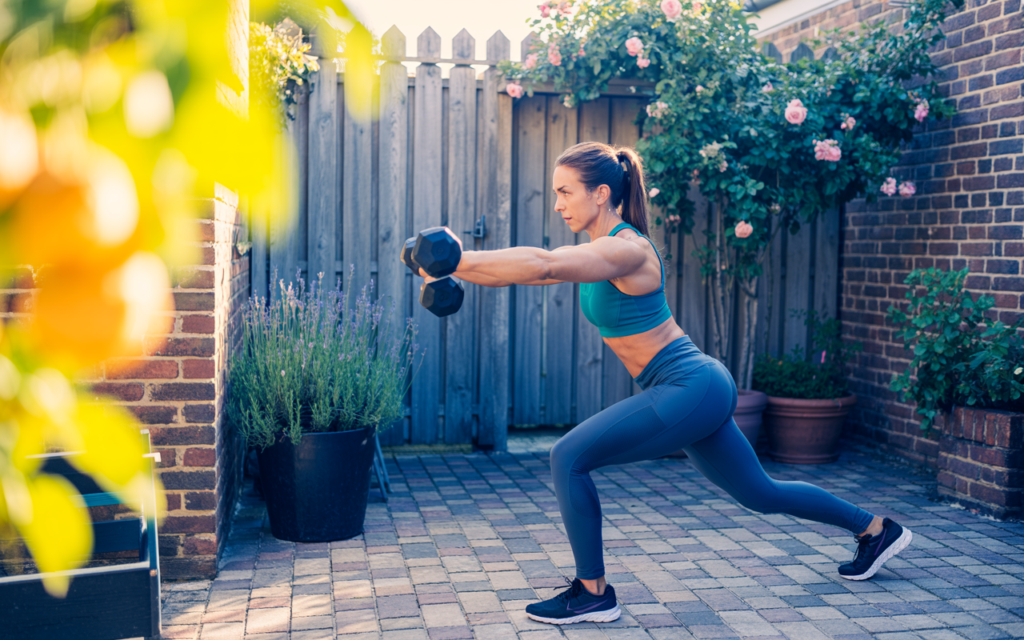
- Strength training at least twice a week: weights, resistance bands or bodyweight exercises. See best exercise for weight loss.
- Stay active every day: walking and everyday movement.
- Sleep 7 to 9 hours: poor sleep is linked to more muscle loss when dieting.
Muscle on Mounjaro and Wegovy
Weight loss medicines such as Mounjaro (tirzepatide) and Wegovy (semaglutide) lead to large weight loss, and body scans in trials showed that most of it was fat, but a share (often around a quarter to a third) was lean tissue, including muscle. This is similar to other ways of losing a lot of weight. To protect your muscle on these medicines:
- eat your protein first at each meal, before you feel full;
- use protein-rich snacks such as yoghurt, skyr or a protein shake if your appetite is very low;
- do strength exercise twice a week;
- tell your prescriber if you feel weak or very tired.
Better ways to track progress than the scales
- Waist measurement: measure every 2 to 4 weeks at the same point.
- How clothes fit: often the first sign of fat loss.
- Progress photos: same place, same lighting, every month.
- Strength: lifting heavier weights or doing more repetitions.
- Fitness: walking further or climbing stairs more easily.
- Health checks: blood pressure, blood sugar and cholesterol.
Two people, same weight
Imagine two women, both 165cm tall and 75kg, so both have a BMI of 27.5. One has about 25% body fat and lifts weights regularly; the other has about 38% body fat and rarely exercises. The first will likely wear smaller clothes, have a smaller waist and a lower risk of type 2 diabetes and heart disease. This is why BMI is a useful first check but not the full picture.
Ready to take the next step?
Free 2-minute assessment · a UK prescriber reviews every order · fixed prices, no subscription · £10 off your first order
Check if you qualify, free in 2 minutes →Muscle and ageing
From around middle age, adults lose muscle each year unless they stay active. This muscle loss (sarcopenia) increases the risk of falls, frailty and losing independence. Strength training can rebuild muscle at any age, even in your 70s and 80s, and is one of the best things you can do for healthy ageing.
Protein through the day
Spreading protein across meals (about 25 to 30g each) supports muscle better than eating most of it at dinner. Easy ways to hit this:
- Breakfast: Greek yoghurt or skyr, eggs, or porridge with protein stirred in.
- Lunch: chicken, tuna, eggs, beans or tofu with salad or vegetables.
- Dinner: fish, lean meat, lentils or tofu with vegetables.
- Snack: cottage cheese, a protein drink or edamame beans.
Muscle and fat myths
“Fat turns into muscle.” No. They’re different tissues; you lose fat and build muscle separately.
“Lifting weights makes women bulky.” Building large muscles takes years of specific training; for most women, strength training creates a toned, stronger shape.
“You can burn fat from one area.” Exercises like sit-ups strengthen muscles but don’t burn fat from that spot. Fat loss happens all over.
Muscle and fat: your questions
Is muscle heavier than fat?
A kilo of each weighs the same, but muscle is denser, so the same weight of muscle takes up less space.
Why am I gaining weight when I’ve started exercising?
Often it’s water held in your muscles for repair, which settles in a week or two. Muscle growth is usually slow.
How can I measure my body fat at home?
Smart scales give an estimate; track the trend. Measuring your waist is also a good guide.
What is a healthy body fat percentage?
Roughly 21% to 31% for women and 14% to 24% for men.
Can you lose fat and gain muscle at the same time?
Yes, especially if you’re new to strength training, with enough protein and a moderate calorie deficit.
Do you lose muscle on Mounjaro or Wegovy?
Some lean tissue is lost along with fat. Protein and strength training help protect your muscle.
References
- Heymsfield SB et al. Human body composition (density of fat and fat-free mass).
- American Council on Exercise. Body fat percentage norms.
- NICE. Obesity: identification, assessment and management (waist-to-height ratio).
- Wilding JPH et al. STEP 1 DEXA substudy. N Engl J Med 2021.
- Jastreboff AM et al. SURMOUNT-1 body composition substudy. N Engl J Med 2022.
Mounjaro dose schedule at a glance
| Weeks | Weekly dose | What usually happens |
|---|---|---|
| 1 to 4 | 2.5mg | Starting dose so your body can adjust; appetite usually drops |
| 5 to 8 | 5mg | First treatment dose; weight loss usually becomes steadier |
| 9 onwards | 7.5mg, then 10mg, 12.5mg, 15mg | Increases of 2.5mg, no more often than every 4 weeks, if needed and tolerated |
| Maintenance | The lowest dose that keeps working | Your prescriber reviews your dose at every reorder |
Your prescriber may keep you on a dose for longer if side effects are troublesome. Never increase your dose without advice.
Start today in 3 simple steps
- Free 2-minute online assessment
- A UK prescriber reviews your answers
- Discreet tracked delivery, dispatched within 24 hours of approval
✓ Trusted by 5,000+ patients ✓ £10 off your first order ✓ No subscription ✓ Award-winning, pharmacist-led care
Already a patient? Reorder in 1 minute →
More questions people ask
What is a healthy body fat percentage?
Roughly 21% to 31% for women and 14% to 24% for men.
Why have I gained weight since starting the gym?
Usually water held in muscles for repair, which settles in a week or two.
How do I keep muscle while losing weight?
Eat enough protein, do strength training twice a week and avoid very large calorie deficits.

Written by
Superintendent Pharmacist and founder of Slinic · GPhC 2052119
Written by Shadeia Younis and approved by the Slinic clinical team. Shadeia is an award-winning pharmacist with over 25 years’ experience, recognised across 19 national business and healthcare awards. She leads clinical oversight for every weight loss treatment at Slinic, from the first assessment to ongoing monthly reviews.