


How Long Do Mounjaro Side Effects Last? UK Week-by-Week Timeline (2026)
If the promise of a restorative weight loss journey feels overshadowed by the fear of persistent nausea, have you considered that these symptoms are often the precise biological markers of your system recalibrating to a new metabolic architecture? It’s natural to feel apprehensive when a dose increase disrupts your professional focus or daily rhythm. To help you regain control, this guide provides a definitive clinical roadmap to understanding How Long Do Mounjaro Side Effects Last? UK Week-by-Week Timeline, offering the specialist precision you need to navigate your treatment with quiet confidence.
We’ll analyze the SURMOUNT-1 clinical data, which indicates that while 25% of patients may experience transient gastrointestinal effects, these typically resolve as the body adapts to the medication. You’ll discover practical, pharmacist-led mitigation strategies designed to minimize discomfort and ensure your progress remains seamless. We’ll outline the exact trajectory of symptom resolution through each titration stage, providing the specialist support and safety netting required for a successful, long-term outcome.
Key Takeaways
- Understand the biological phases of metabolic recalibration, from the initial 2.5mg induction to the strategic escalation of higher dosages.
- Navigate your journey with precision using our How Long Do Mounjaro Side Effects Last? UK Week-by-Week Timeline, designed to help you anticipate and manage symptoms effectively.
- Master specialist “Safety-First” dietary and hydration protocols to mitigate common side effects like nausea and fatigue during your treatment.
- Learn why the 5-day half-life of tirzepatide necessitates a structured titration schedule to ensure clinical safety and long-term success.
- Discover the value of the Slinic approach, where pharmacist-led oversight and rigorous clinical governance provide a seamless foundation for your weight loss journey.
For a full comparison of UK Mounjaro providers including pricing, see:
⇒Slinic’s Top UK Mounjaro Providers Guide
Understanding the Mounjaro Side Effect Landscape
Mounjaro represents a sophisticated evolution in the field of medical weight loss. It’s a dual agonist, which means it targets both glucose-dependent insulinotropic polypeptide (GIP) and glucagon-like peptide-1 (GLP-1) receptors. Tirzepatide (the active ingredient in Mounjaro) works by mimicking these naturally occurring hormones to regulate appetite and blood sugar. When you begin treatment, your body initiates a process of biological metabolic recalibration. The side effects many patients experience aren’t simply “adverse events” but are often primary indicators that the body’s internal chemistry is shifting toward a new, healthier equilibrium.
In the United Kingdom, patient safety is governed by the Medicines and Healthcare products Regulatory Agency (MHRA). This regulatory framework ensures that every Mounjaro weight loss journey is supported by rigorous clinical data. At Slinic, our Specialist clinicians distinguish between transient symptoms, which are temporary adaptations, and persistent symptoms that may require medical intervention. Having a clear expectation of How Long Do Mounjaro Side Effects Last? UK Week-by-Week Timeline is essential for maintaining treatment adherence and achieving long-term aesthetic and functional goals.
Why Does Mounjaro Cause Side Effects?
The most significant physiological change involves delayed gastric emptying. This mechanism ensures food remains in the stomach longer, which directly contributes to the feeling of satiety. While this is beneficial for weight management, it can lead to digestive discomfort if the system is overwhelmed. Additionally, the central nervous system must adapt to intensified satiety signals sent from the gut to the brain. Gastroparesis, a rare condition where the stomach muscles stop moving food effectively, remains a significant clinical consideration that our prescribing doctors monitor closely.
Common vs. Rare: What the Clinical Data Shows
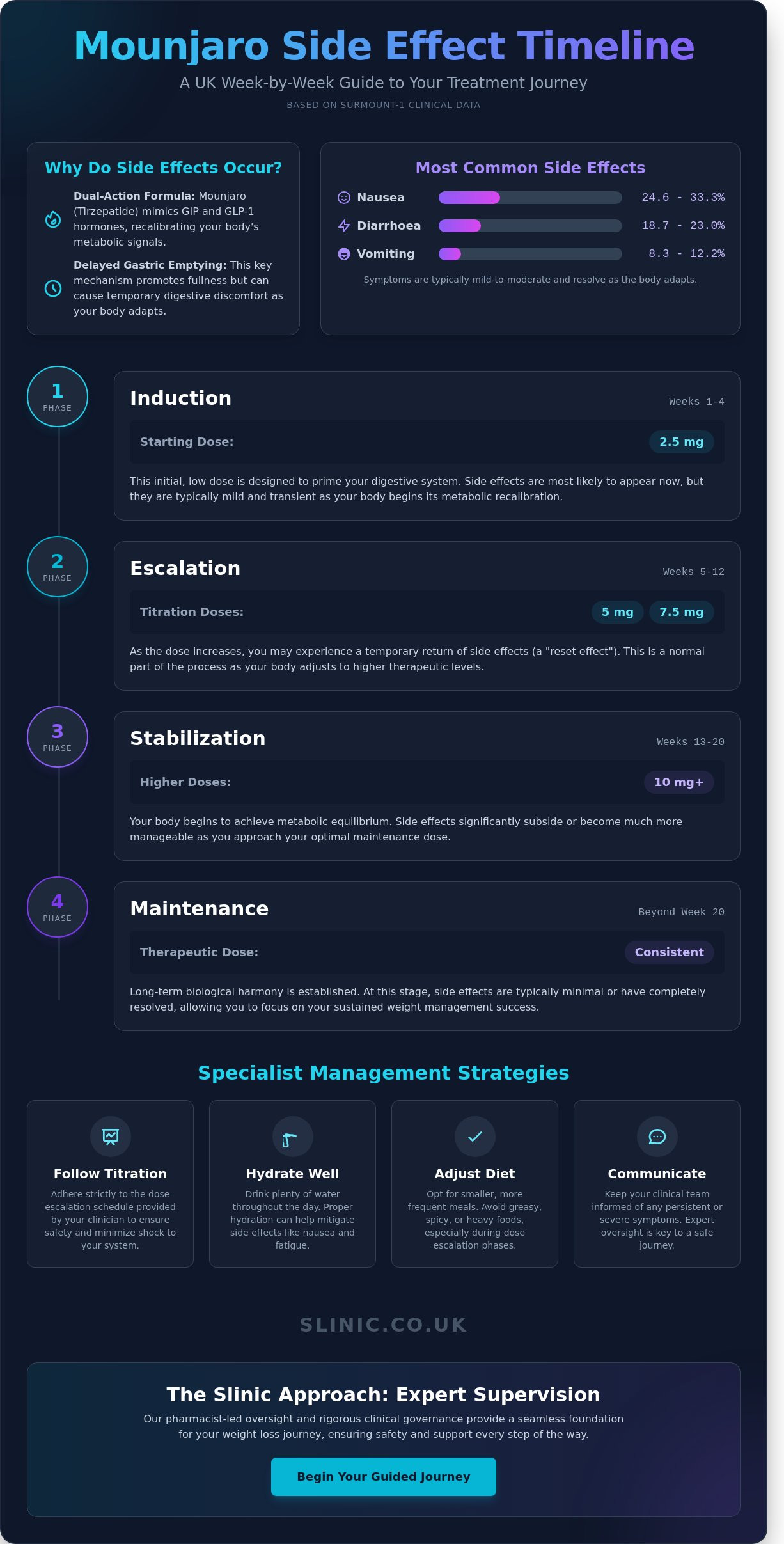
Clinical data from the 2022 SURMOUNT-1 trials provides a clear baseline for patient expectations. The most frequent reports involve gastrointestinal symptoms, which are usually concentrated during the initial dose-escalation phases. Most symptoms are classified as mild or moderate in severity. The prevalence rates observed in clinical settings include:
- Nausea: Reported by approximately 24.6% to 33.3% of patients, depending on the dosage strength.
- Diarrhoea: Experienced by roughly 18.7% to 23% of trial participants.
- Vomiting: Noted in 8.3% to 12.2% of cases, typically resolving as the body adapts.
- Less Common Symptoms: These include fatigue, headache, and minor injection site reactions.
At Slinic, our pharmacist-led service prioritizes clinical oversight. We provide structured follow-up and clear escalation pathways to ensure that every patient feels supported. Most individuals find that their symptoms dissipate as they settle into a maintenance dose. Understanding How Long Do Mounjaro Side Effects Last? UK Week-by-Week Timeline allows you to prepare for these temporary hurdles while focusing on the transformative outcomes of your treatment.
The UK Mounjaro Side Effect Timeline: A Week-by-Week Breakdown
Understanding exactly how long do Mounjaro side effects last? UK week-by-week timeline data suggests that most patients experience a predictable trajectory of biological adaptation. As a specialist weight management service, Slinic monitors this progression closely to ensure clinical safety and patient comfort. Tirzepatide functions by mimicking two distinct metabolic hormones, GLP-1 and GIP, which requires a deliberate period of systemic recalibration. This process is divided into four distinct clinical phases:
- Phase 1: Induction (Weeks 1-4) – The 2.5mg initiation period designed to prime the digestive system.
- Phase 2: Escalation (Weeks 5-12) – Navigating the transitions to 5mg and 7.5mg doses.
- Phase 3: Stabilization (Weeks 13-20) – Reaching higher therapeutic levels as the body achieves metabolic equilibrium.
- Phase 4: Maintenance (Beyond Week 20) – Long-term biological harmony where symptoms typically resolve.
Weeks 1-4: The Initial Adjustment Period
The induction phase begins with the 2.5mg dose. While this dose isn’t typically therapeutic for significant weight loss, it’s vital for building drug tolerance. Many patients report a “first-dose shock” where nausea or mild dyspepsia peaks within 24 to 48 hours of the initial administration. This occurs as the medication begins to slow gastric emptying for the first time. It’s essential to follow clinical guidance on how to use Mounjaro properly to mitigate these early symptoms. You’ll likely notice early satiety, which is a feeling of fullness after consuming significantly smaller portions. Most patients find these initial sensations subside by the third or fourth injection as the body adapts to the new biological architecture.
Weeks 5-12: Managing Dose Increases
Moving to 5mg and 7.5mg doses often triggers a temporary “reset” of symptoms. As the concentration of tirzepatide reaches a steady-state in your blood, gastrointestinal flux might return briefly during the first week of a new pen. Data from the Mounjaro Official FDA Information indicates that while nausea is common during titration, it typically lessens in intensity with each subsequent week on the same dose. Maintaining momentum is key during this phase. Our prescribing doctors recommend staying hydrated and prioritizing lean proteins to support your journey. If symptoms feel unmanageable, our clinicians provide structured follow-up to adjust your titration schedule safely.
Beyond Week 12: Achieving Long-Term Comfort
By the time you reach week 13, your body has typically achieved a state of metabolic equilibrium. The focus shifts from managing side effects to optimizing lifestyle results. The brain-gut communication has stabilized, and the “food noise” that often drives overeating remains suppressed without the acute digestive discomfort seen in earlier weeks. Long-term success relies on this stabilization, allowing you to focus on the restorative power of healthy habits. If you’re looking for a professional, pharmacist-led approach to your treatment, you can start your consultation with Slinic for bespoke clinical oversight throughout your maintenance phase.
Dose Escalation and the “Reset” Effect: Why Symptoms May Return
Understanding the pharmacokinetics of tirzepatide is essential for managing expectations during your weight loss journey. The medication has a half-life of approximately 5 days. This means that after a weekly injection, about half of the active compound remains in your system when the next dose is administered. Consequently, the concentration of the drug builds steadily over the first four weeks of any specific dosage. This accumulation explains why a patient might feel well on day one of a 2.5mg cycle but experience mild nausea by day twenty-one. When asking How Long Do Mounjaro Side Effects Last? UK Week-by-Week Timeline data suggests that each dose increase acts as a physiological “reset,” potentially reintroducing transient GI symptoms as the body recalibrates to a higher medicinal baseline.
The Science of Titration
The standard 4-week titration schedule is a safety-led protocol designed to balance metabolic efficacy with patient comfort. Clinicians follow this structured escalation to mitigate the risk of severe adverse events, including acute kidney injury (AKI) which can occur if profound nausea leads to dehydration. According to NICE guidance, the focus remains on reviewing progress and ensuring the treatment is tolerated before advancing. If a patient experiences significant weight loss and high satiety on a lower dose, our specialist prescribers may recommend “staying down” rather than escalating. This bespoke approach ensures your biological architecture isn’t overwhelmed. You don’t need to fear that 10mg will be four times as difficult as 2.5mg; the body’s adaptive mechanisms are remarkably efficient at building tolerance over time.
Factors Influencing Symptom Duration
Individual metabolic rates and genetic GLP-1 sensitivity dictate how long side effects persist. Patients with pre-existing gastrointestinal conditions, such as Irritable Bowel Syndrome (IBS) or chronic acid reflux, may experience a more prolonged adjustment period during the How Long Do Mounjaro Side Effects Last? UK Week-by-Week Timeline. Clinical data indicates that hydration is the most critical variable in symptom resolution. Maintaining a minimum intake of 2 to 3 litres of water daily supports renal function and helps clear metabolic waste. At Slinic, we prioritize this level of clinical oversight, providing a clinician-led guide to help you navigate these transitions with confidence. If symptoms remain severe after the second week of a new dose, a structured follow-up with our pharmacy team is necessary to assess whether a dose reduction is required for your safety.
- Metabolic Rate: Faster clearance can sometimes lead to a quicker resolution of acute side effects.
- GI Health: History of reflux may necessitate a slower titration to 5mg or 7.5mg.
- Hydration: Dehydration significantly worsens the perception of nausea and fatigue.
Specialist Management Strategies and Safety Protocols
Managing Mounjaro side effects requires more than just patience; it demands a structured clinical approach. At Slinic, we prioritize a safety-first methodology to ensure your journey remains comfortable and sustainable. Understanding how long do Mounjaro side effects last? UK week-by-week timeline evidence indicates that while most gastrointestinal issues peak during dose escalations, proactive management can significantly reduce their intensity. Our pharmacists recommend a combination of lifestyle adjustments and targeted over-the-counter support to bridge the gap during the initial 4 to 12 weeks of treatment.
Fatigue often stems from a combination of reduced caloric intake and subtle dehydration. We advise patients to maintain a daily intake of at least 2 to 2.5 litres of water. Integrating sugar-free electrolytes can help maintain the body’s biological architecture and prevent the lethargy sometimes reported in the first month. If nausea persists, our clinical team may suggest over-the-counter options like cyclizine or peppermint oil capsules to settle the digestive system and support gastric transit.
The Slinic Dietary Protocol
Our specialist dietary protocol focuses on minimizing the workload on your digestive system. Because Mounjaro slows gastric emptying, eating large meals can lead to significant discomfort. We recommend prioritizing small, frequent, protein-rich meals to maintain muscle mass and stabilize blood glucose levels. You should identify and eliminate trigger foods such as high-fat fried items, heavy spices, and ultra-processed sugars, which are known to exacerbate reflux. For a comprehensive meal structure, refer to our Mounjaro diet guide for bespoke planning advice.
Clinical Escalation: When to Seek Urgent Help
While most side effects are transient, “Safety Netting” is a vital component of our clinical governance. You must be able to distinguish between common adjustment symptoms and “Red Flag” indicators that require immediate medical attention. Clinical complications, though rare, can include acute pancreatitis or gallbladder issues. Pancreatitis often presents as severe, persistent abdominal pain that may radiate to the back and is frequently accompanied by vomiting. Cholecystitis, or gallbladder inflammation, may cause jaundice (yellowing of the eyes or skin) and intense pain in the upper right abdomen.
- Severe Abdominal Pain: If pain is debilitating or doesn’t improve with over-the-counter relief, seek help.
- Persistent Vomiting: Inability to keep fluids down for more than 12 hours requires clinical review.
- Acute Allergic Reactions: Any swelling of the face, lips, or throat necessitates an immediate 999 call.
If you experience any of these acute complications, contact 111 or attend your local A&E department immediately. By following a structured protocol, you gain clarity on how long do Mounjaro side effects last? UK week-by-week timeline tracking helps you distinguish between expected adjustment periods and symptoms requiring urgent medical review. Our master craftsmen in clinical prescribing are always available to adjust your titration schedule if symptoms remain persistent.
For a tailored assessment of your suitability and ongoing safety monitoring, start your clinical consultation with our prescribing team today.
The Slinic Approach: Expert Supervision for a Seamless Journey
Choosing a medical weight loss treatment requires more than just a prescription; it demands a partnership with clinicians who understand the delicate balance between biological health and aesthetic harmony. At Slinic, our pharmacist-led team provides the specialist oversight necessary to navigate the transition phases of your treatment. When patients ask How Long Do Mounjaro Side Effects Last? UK Week-by-Week Timeline data often suggests that most symptoms resolve within the first 4 to 8 weeks, but having a dedicated clinical lead ensures these milestones are met with professional reassurance and precision.
We prioritize clinical governance without the premium price tag. Our model offers some of the most competitive pricing in the UK, ensuring that high-level medical weight loss is accessible to those who need it. This affordability doesn’t compromise our standards; every patient receives bespoke support, from initial video consultations to discreet, temperature-controlled delivery. It’s a restorative journey managed by experts who view weight management as a foundational element of your overall well-being.
Clinical Governance and Safety Audits
The Slinic experience is built on a foundation of rigorous safety audits and professional accountability. Our eligibility assessment isn’t a mere formality; it’s a robust screening process designed to ensure that Mounjaro is the correct biological fit for your profile. As a GPhC-regulated online pharmacy, we adhere to strict clinical protocols that include structured follow-ups and documented escalation pathways. These audits ensure every patient maintains adherence while receiving expert side-effect advice throughout their treatment cycle, ensuring safety is never secondary to results.
Starting Your Journey with Confidence
It’s natural to feel apprehensive about potential gastrointestinal changes, but these are often temporary markers of a shifting metabolic state. By following our How Long Do Mounjaro Side Effects Last? UK Week-by-Week Timeline guide, you can view these adjustments as manageable steps toward a transformative outcome. Our digital consultation process is streamlined yet thorough, providing fast access to professional support whenever you need it. You aren’t just starting a medication; you’re building a foundation for a lifetime of confidence and health.
Mastering Your Metabolic Transformation
Understanding the How Long Do Mounjaro Side Effects Last? UK Week-by-Week Timeline allows you to anticipate physiological changes with clinical clarity rather than uncertainty. Most patients experience a significant reduction in gastrointestinal symptoms by week four as the body achieves biological harmony with the medication. While dose escalations may trigger a temporary reset of these symptoms, they’re manageable milestones within a structured weight management plan. At Slinic, we prioritize your safety through pharmacist-led clinical reviews and continuous monitoring, ensuring every step of your journey is backed by medical expertise.
Our GPhC Registered Pharmacy (No. 1033729) provides a foundation of trust, offering competitive UK pricing and discreet nationwide delivery without compromising on rigorous safety protocols. We don’t just provide a prescription; we offer a partnership dedicated to your long-term health and aesthetic goals. By choosing a specialist-led approach, you’re ensuring that your transition to a healthier weight is both seamless and restorative.
Begin your clinically supervised Mounjaro journey with Slinic
Your path to a more confident self is ready for you, and we’re here to guide you every step of the way.
Frequently Asked Questions
How long do Mounjaro side effects last after the first dose?
Most patients find that initial side effects last between 3 to 7 days after the first 2.5mg injection. As your body begins to process the tirzepatide molecule, mild symptoms like nausea or fatigue are common. Our clinical data suggests these early effects typically dissipate before your second weekly dose is administered.
Do Mounjaro side effects get worse every time I increase the dose?
Symptoms don’t always intensify with every increase, but you may experience a transient spike in side effects for 48 to 72 hours after moving to a higher strength. When you transition from 2.5mg to 5mg or subsequent doses, your digestive system requires time to adjust to the increased hormonal signal. Most patients report that their system stabilizes within 14 days of staying on a consistent dose.
Can I take anti-sickness medication with Mounjaro in the UK?
You can use certain anti-sickness medications such as cyclizine or prochlorperazine, provided they’re approved by your Slinic prescriber. It’s vital to discuss any over-the-counter remedies with our clinical team to ensure they don’t interfere with your weight loss treatment. Managing nausea proactively allows you to maintain your nutritional intake and stay on track with your health goals.
Will Mounjaro side effects eventually go away completely?
Clinical trials indicate that side effects resolve completely for over 90% of patients once they reach a stable maintenance dose. While the “How Long Do Mounjaro Side Effects Last? UK Week-by-Week Timeline” varies for everyone, most gastrointestinal issues subside within the first 8 weeks of treatment. Your body’s biological architecture eventually adapts to the medication, leading to a much more comfortable experience.
What is the most common side effect of Mounjaro reported in the UK?
Nausea is the most frequently reported side effect, affecting approximately 12% to 18% of patients during the initial titration phase. Other common reports include diarrhoea and localized injection site reactions. These symptoms are generally mild and are a sign that the medication is actively influencing your metabolic pathways.
Can I drink alcohol while experiencing Mounjaro side effects?
It’s best to avoid alcohol while you’re experiencing active side effects, as it can worsen nausea and increase the risk of dehydration. Alcohol can also irritate the stomach lining, which may exacerbate gastric reflux. If you choose to drink once symptoms have settled, you should stay within the UK Chief Medical Officers’ limit of 14 units per week.
What should I do if my Mounjaro side effects are too severe to handle?
You should contact your Slinic prescribing doctor immediately if your side effects feel unmanageable or prevent you from drinking fluids. Our safety-first approach includes structured follow-ups to adjust your dose if necessary. If you experience severe, persistent abdominal pain or signs of a serious allergic reaction, you must seek urgent medical help via NHS 111 or your local A&E department.
How long does Mounjaro stay in your system after stopping treatment?
Mounjaro has a half-life of approximately 5 days, which means it takes about 25 to 30 days for the medication to be entirely cleared from your system. When considering how long do Mounjaro side effects last? UK week-by-week timeline evidence shows that any remaining side effects usually fade significantly within the first 2 weeks after the final injection. This gradual reduction ensures your body returns to its baseline state safely.