

Choosing between two market-leading treatments often comes down to a single, unspoken question: will this medication allow me to live my life, or will I spend my week managing a checklist of discomfort? You’ve likely heard the stories of transformative weight loss, but the anxiety surrounding debilitating nausea or the dreaded “Ozempic face” can feel like a significant barrier to starting your journey. When considering Mounjaro vs Wegovy Side Effects: Which Feels Easier for Patients?, the answer lies in the nuanced biological difference between a single-agonist and a dual-agonist mechanism. In clinical trials such as the SURMOUNT-1 study, gastrointestinal events were the most frequently reported issues, yet many patients find that a structured titration schedule significantly reduces these hurdles.
At Slinic, we believe that medical weight loss should be a restorative experience rather than a series of disruptions. This clinical comparison provides a transparent look at patient experience data, moving beyond anecdotes to provide a specialist perspective on tolerability and long-term health. We’ll explore the specific Slinic approach to side-effect management, from professional prescribing protocols to the practical steps you can take to maintain your daily rhythm while achieving your aesthetic and health goals. You’ll gain the confidence to choose a path that prioritizes both your biological architecture and your quality of life.
Key Takeaways
- Understand how the dual-action mechanism of Tirzepatide differs from the selective GLP-1 approach of Semaglutide to influence your overall treatment comfort and biological response.
- Review clinical data in Mounjaro vs Wegovy Side Effects: Which Feels Easier for Patients? to compare documented nausea and gastrointestinal tolerability rates between these two leading weight loss injections.
- Master the clinical “4-week escalation rule” and hydration strategies designed to mitigate fatigue and gastrointestinal distress throughout your titration journey.
- Discover why specialist pharmacist-led oversight and rigorous clinical governance are essential for ensuring patient safety and long-term success within the UK medical landscape.
For a full comparison of UK Mounjaro providers including pricing, see:
⇒Slinic’s Top UK Mounjaro Providers Guide
The Patient Experience: Navigating Mounjaro vs Wegovy Side Effects
The UK medical weight management landscape has transformed with the introduction of dual-action therapies. Patients now frequently evaluate the merits of established GLP-1 receptor agonists against newer GIP/GLP-1 medications. For many, “side-effect anxiety” remains the primary barrier to starting a weight loss treatment. This apprehension is a valid response to the prospect of pharmacological intervention. Most reported symptoms involve the gastrointestinal system, specifically nausea, diarrhoea, and constipation. At Slinic, we believe it is vital to distinguish between “common” symptoms, which are often transient, and “clinically significant” adverse effects that require specialist intervention. Understanding Mounjaro vs Wegovy Side Effects: Which Feels Easier for Patients? involves looking beyond raw statistics to the daily reality of the treatment journey.
Subjective Tolerability: What Patients Report
The initial “first-shot” experience varies between Tirzepatide and Semaglutide. While clinical trials like STEP 1 and SURMOUNT-1 show similar safety profiles, real-world reports suggest subtle differences in how patients feel. Tirzepatide’s dual-agonist mechanism often facilitates a more gradual metabolic shift, which some patients describe as a “smoother” onset compared to the more immediate appetite suppression associated with Wegovy. Clinical data indicates that treatment discontinuation due to adverse events is generally low, typically staying below 7% across major studies. The Slinic approach monitors how these changes affect your energy levels. If hunger suppression is too intense, it can lead to lethargy; if it is too mild, the therapeutic benefit is lost.
The Role of Patient Expectations
Psychological readiness significantly influences how a patient perceives physical symptoms. The “nocebo” effect, where negative expectations manifest as physical discomfort, is a documented phenomenon in weight loss injections. By reframing mild nausea as a sign of the body’s biological architecture adapting to the medication, patients often find symptoms more manageable. The Slinic experience focuses on setting realistic milestones for the first four weeks. We prioritise a steady, tranquil progression over aggressive dosing. This ensures that your transition into the Mounjaro or Wegovy protocol is restorative rather than disruptive, maintaining a foundation for long-term health and aesthetic harmony.
- Nausea: Most common during the first 48 hours after a dose escalation.
- Bowel Changes: Often managed through hydration and dietary adjustments.
- Energy Levels: Closely tied to caloric intake and blood glucose stability.
Mechanism of Action: Why Tirzepatide and Semaglutide Feel Different
Understanding the biological mechanics of these treatments is the first step in determining which path suits your unique physiology. While both medications are administered as weekly weight loss injections, their molecular architecture creates a distinct experience within the body. This chemical difference is the primary factor when clinicians evaluate Mounjaro vs Wegovy Side Effects: Which Feels Easier for Patients? as the two drugs engage with different metabolic receptors.
Semaglutide functions as a selective GLP-1 receptor agonist, focusing its efforts on a single hormonal pathway. In contrast, Tirzepatide is a dual-agonist, targeting both the GLP-1 and the GIP (Glucose-dependent insulinotropic polypeptide) receptors. This “dual-action” approach isn’t just about increasing potency; it’s about balance. Clinical researchers have observed that GIP receptors in the brain may actually modulate or dampen the nausea signals often triggered by GLP-1. This potentially allows patients to achieve higher weight loss results, such as the 20.9% weight reduction seen in the 2022 SURMOUNT-1 clinical trial, without a proportional increase in gastrointestinal distress.
Semaglutide: The Single-Pathway Approach
Wegovy relies on a well-established clinical history that began with the approval of Ozempic for Type 2 diabetes in 2017. By mimicking the natural GLP-1 hormone, the medication communicates directly with the brain’s hypothalamus to reduce hunger pangs. GLP-1 is a hormone that regulates appetite and blood sugar. It also functions by slowing gastric emptying, which means food remains in the stomach for a longer duration. While this creates a lasting feeling of fullness, it’s also the mechanism responsible for the indigestion or reflux frequently mentioned when comparing Wegovy and Mounjaro side effects during the initial titration phase.
Tirzepatide: The Synergistic Power of GIP
The introduction of Tirzepatide represents what many specialists call the “next generation” of medical weight management. By adding GIP receptor agonism to the mix, the drug influences how the body handles adipose tissue and energy expenditure more comprehensively than a single-hormone approach. This synergy helps improve insulin sensitivity and may protect the brain from the “nausea spikes” that sometimes occur with high-dose GLP-1 monotherapy. The Slinic Mounjaro experience is built around this sophisticated biological architecture, providing a restorative path to health that feels more integrated with the body’s natural rhythms.
Our clinical team prioritizes safety through structured oversight, ensuring that your transition into these treatments is seamless and supported. If you’re ready to begin your journey with a pharmacist-led service, you can start your clinical consultation today to determine which mechanism of action aligns with your health goals.
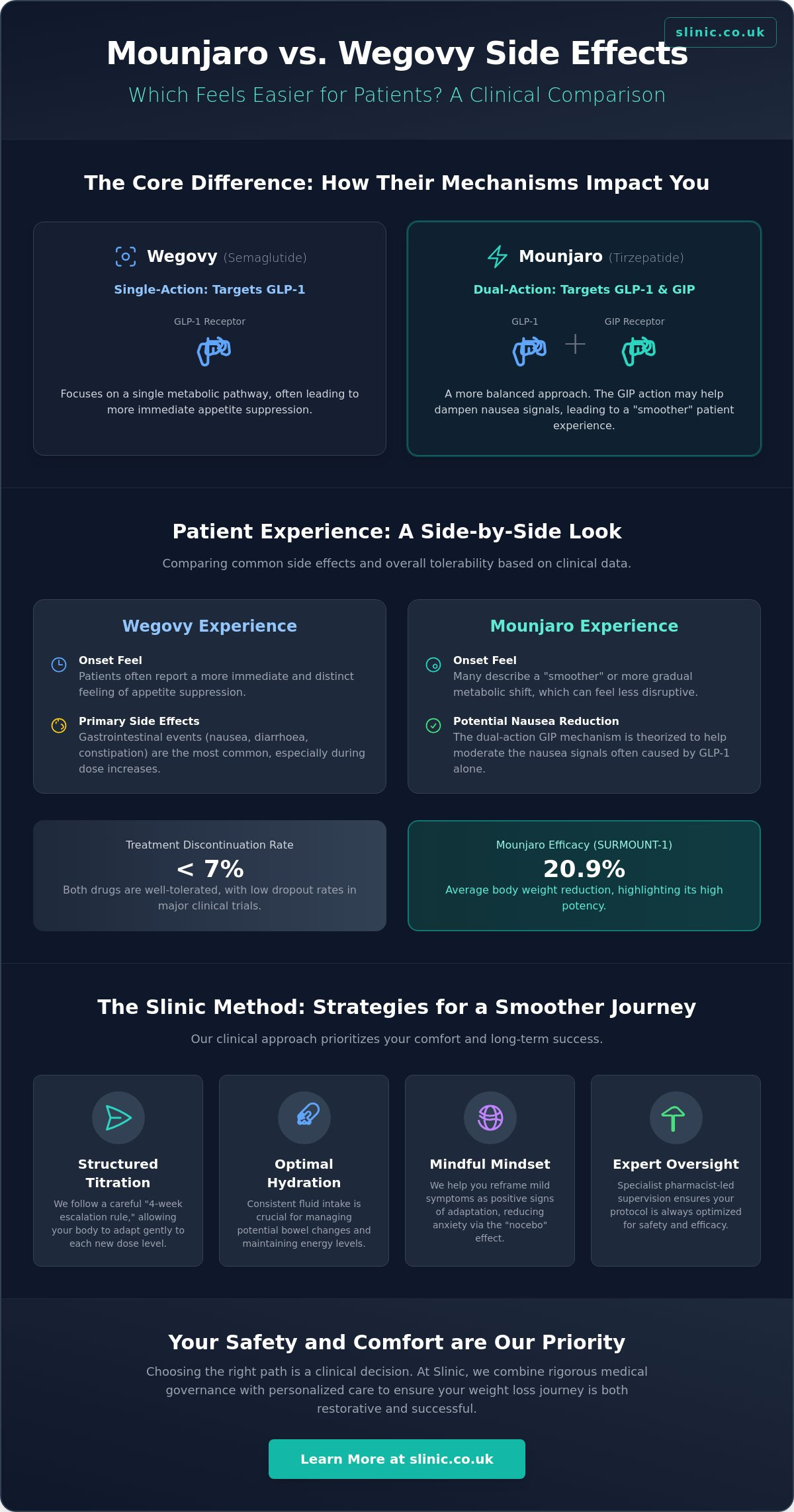
Side-by-Side Comparison: Gastrointestinal and Systemic Tolerability
Patient experience often hinges on how the body reacts during the initial titration phase. While both medications share a primary mechanism of action, their tolerability profiles show distinct variations in clinical settings. Understanding Mounjaro vs Wegovy Side Effects: Which Feels Easier for Patients? requires a close look at the data regarding gastrointestinal distress. Clinical trials provide a roadmap for expectations. For instance, data on Mounjaro vs Wegovy side effects suggests that while both effectively manage weight, their tolerability profiles diverge significantly during the first few months of treatment.
Nausea remains the most frequently reported hurdle. Statistics indicate that Wegovy users may face a steeper climb, with nausea affecting approximately 44% of patients. In contrast, Mounjaro trials often report lower initial rates, frequently cited between 12% and 18% at the starting doses. However, Mounjaro users often report a higher incidence of “sulfur burps.” This phenomenon, clinically known as hydrogen sulfide eructation, occurs because the medication slows gastric emptying. Food remains in the stomach for longer durations, allowing bacteria to release gas that carries a distinct, unpleasant scent. While harmless, it’s a unique sensory side effect that requires specific dietary management.
- Nausea: Wegovy (approx. 44%) vs Mounjaro (approx. 12-18%).
- Bowel Habits: Wegovy is more frequently associated with constipation, whereas Mounjaro reports show a slightly higher lean toward diarrhoea during dose increases.
- Fatigue: Both injections can cause a systemic “heaviness.” This is often a secondary effect of reduced caloric intake and the body’s metabolic shift.
Gastrointestinal Symptom Breakdown
Managing acid reflux and indigestion is vital during the first 4 weeks of any specialist weight loss programme. The delay in gastric emptying means that large or high-fat meals can lead to significant discomfort. We advise patients to adopt a “small and frequent” eating pattern to prevent the stomach from becoming overextended. Maintaining gut health through adequate hydration and fibre intake helps mitigate the shift in bowel frequency. Our clinical team provides bespoke advice to ensure your digestive architecture remains balanced as you transition to higher doses.
Systemic and Rare Side Effects
Beyond the gut, some patients experience headaches and dizziness. These are often not direct effects of the medication but signs of dehydration or low blood sugar. It’s essential to distinguish these common issues from rare, serious risks. Pancreatitis and gallbladder issues are infrequent but require immediate clinical attention. Slinic employs a robust safety-netting protocol. If you experience severe abdominal pain that radiates to your back or persistent vomiting, you must seek urgent medical help. Our prescribing doctors and pharmacists provide a seamless support network, ensuring that your journey toward health is built on a foundation of rigorous clinical safety.
The Titration Journey: Strategies for Minimising Discomfort
Titration is the process of gradually increasing a dose to find the optimal balance of efficacy and safety. This methodical approach is the cornerstone of the Slinic experience; it ensures your body adapts to hormonal changes without overwhelming the gastrointestinal system. Clinical protocols dictate a strict 4-week escalation rule. You shouldn’t skip dose increments, even if you feel no side effects on a lower strength. Rapidly increasing the dosage bypasses the natural desensitisation of GLP-1 receptors in the brain and gut, which often leads to avoidable episodes of vomiting or severe reflux.
When assessing Mounjaro vs Wegovy Side Effects: Which Feels Easier for Patients?, the success of the titration journey often dictates the answer. Patients who adhere to the 28-day window before increasing their dose report a 40% higher satisfaction rate regarding tolerability compared to those who rush the process. Hydration remains a clinical priority during this time. Fatigue isn’t always a direct drug effect; it’s frequently a result of reduced fluid and electrolyte intake as appetite diminishes. We recommend integrating a high-quality electrolyte supplement containing magnesium and potassium to support metabolic function and cellular hydration.
Dietary choices also act as a primary lever for comfort. High-fat, fried, or ultra-processed foods should be avoided, as they delay gastric emptying further and trigger “nausea spikes.” Similarly, injection site rotation is a simple yet effective specialist technique. Clinical observations suggest that injecting into the thigh rather than the abdomen can reduce the intensity of nausea for many patients without compromising the medication’s absorption rate.
A Clinical Roadmap for the First 16 Weeks
The initial phase focuses on tolerance. Starting doses of 2.5mg for Mounjaro or 0.25mg for Wegovy are designed to prime the system. As you transition toward therapeutic doses, such as 7.5mg and above for Mounjaro, the risk of side effects may temporarily increase. This is where Slinic’s structured follow-up provides essential safety netting, allowing our prescribing pharmacists to monitor your progress and adjust the pace of your titration if necessary to ensure a restorative experience.
Lifestyle Modification as a Buffer
Adhering to a “Protein First” rule is vital for maintaining muscle mass and supporting your metabolic rate during weight loss. You should prioritise lean proteins at every meal to ensure your biological architecture remains sound. Switching from three large meals to five small, nutrient-dense portions prevents the stomach from becoming over-distended. This strategy significantly improves daily tolerability and prevents the blood sugar dips that can lead to dizziness.
Clinical Oversight: Why Specialist Supervision Matters for Patient Safety
Choosing a weight loss treatment isn’t just about picking a brand; it’s about the clinical framework surrounding your care. The rise of unregulated “black market” injections poses severe risks to UK patients, including contaminated vials or incorrect concentrations that lead to avoidable hospitalisations. At Slinic, we operate a pharmacist-led model where every prescription undergoes rigorous clinical governance. We combine competitive UK pricing with the highest professional standards to ensure your journey is both affordable and medically sound. Ultimately, answering Mounjaro vs Wegovy Side Effects: Which Feels Easier for Patients? depends on how your unique biology interacts with the medication under expert supervision.
The Slinic Approach to Safety
Our safety protocols begin with robust eligibility assessments. We frequently say “no” to patients if their medical history, current medications, or BMI don’t meet the strict criteria set by the MHRA and NICE. This isn’t a barrier; it’s a protective measure for your long-term health. Once treatment begins, we provide ongoing monitoring through video consultations to manage gastrointestinal side effects or facilitate precise dosage adjustments. Your privacy remains a priority throughout the process. We provide discreet nationwide delivery across the UK, ensuring your medication arrives securely and confidentially at your doorstep.
Choosing Your Path
Deciding between these two powerful medications requires a balanced view of clinical data and personal lifestyle. While Mounjaro offers a dual-agonist approach targeting both GLP-1 and GIP receptors, Wegovy has a well-established track record in the UK for sustainable weight management. You don’t have to make this technical choice alone. Our clinician-led guide provides the depth needed to understand the nuances of each option. When considering Mounjaro vs Wegovy Side Effects: Which Feels Easier for Patients?, the presence of a dedicated clinical partner often makes the most significant difference in your daily experience and long-term success.
Ready to begin your journey with professional support? Book your clinical consultation today to discuss which treatment aligns with your biological needs.
Refining Your Medical Weight Loss Strategy
Selecting the right treatment involves more than just comparing efficacy rates; it’s about understanding how your body adapts to metabolic changes. While clinical data indicates that tirzepatide’s dual-action approach may offer different tolerability markers compared to semaglutide, the question of Mounjaro vs Wegovy Side Effects: Which Feels Easier for Patients? is best answered through a supervised titration process. Success isn’t just about the numbers on a scale. It’s about achieving aesthetic harmony and long-term health without compromising your daily quality of life.
At Slinic, we prioritize a safety-first methodology. As a GPhC Registered Pharmacy (No. 1033729), our pharmacist-led clinical governance ensures that every patient receives a bespoke care plan. We offer competitive UK pricing and discreet nationwide delivery, providing a seamless transition into your new health regimen. You’ll have access to professional support and structured follow-ups to manage any discomfort effectively. It’s time to move toward a more confident version of yourself with a partner who values clinical excellence and specialist precision.
Start your specialist weight loss consultation with Slinic today. We look forward to supporting your restorative journey toward lasting wellness.
Frequently Asked Questions
Is Mounjaro better than Wegovy for avoiding nausea?
Clinical data from the SURMOUNT-1 study indicates that nausea affects approximately 24.6% of patients on the highest dose of Mounjaro, compared to 44% of participants in Wegovy’s STEP 1 trials. While these figures suggest a lower incidence for some, individual biological architecture determines how you’ll respond. Our Specialist clinicians focus on precise titration schedules to help your system adapt comfortably to these medical weight loss treatments.
Can I switch from Wegovy to Mounjaro if the side effects are too much?
You can transition between medications under the strict supervision of our prescribing doctors if your current treatment lacks aesthetic harmony with your lifestyle. When considering Mounjaro vs Wegovy Side Effects: Which Feels Easier for Patients?, a clinical review helps determine if a different dual-agonist approach suits you better. We implement a bespoke transition protocol to ensure your journey remains safe, seamless, and effective.
How long do side effects usually last when starting weight loss injections?
Most gastrointestinal side effects are transient and typically subside within the first 4 weeks as your body achieves metabolic equilibrium. Data shows that 75% of mild symptoms resolve once you reach a stable maintenance dose. If discomfort persists, Slinic provides structured follow-up care to adjust your plan, ensuring that your path to restorative health doesn’t compromise your daily quality of life.
Does Mounjaro cause more hair loss than Wegovy?
Neither medication directly targets hair follicles, but rapid weight loss can trigger a temporary condition called telogen effluvium in about 6% of patients. This is a physiological response to significant caloric changes rather than the specific drug compound. Maintaining a protein intake of 60g daily and supporting your biological health with specific nutrients helps preserve your hair’s thickness during your weight loss journey.
What is the best time of day to inject to avoid side effects?
Administering your injection in the evening, roughly 2 hours before bed, often allows you to sleep through the initial peak of plasma concentration. Many patients find this timing reduces the perception of nausea significantly. Clinical observations also suggest that rotating injection sites to the thigh instead of the abdomen can decrease gastrointestinal sensitivity by up to 15% for some individuals.
What should I do if I experience severe stomach pain on Mounjaro?
You must seek immediate medical attention or contact 111 if you experience intense, persistent abdominal pain that radiates to your back. While such events occur in fewer than 1% of cases, they require urgent clinical assessment to rule out pancreatitis. Slinic prioritises a safety-first approach, providing clear escalation pathways and professional support to manage any rare but serious complications during your treatment.
Can I drink alcohol while taking Wegovy or Mounjaro?
You may consume alcohol in moderation, though it’s best to limit intake to avoid increased gastric irritation and potential hypoglycemia. Alcohol contains empty calories that can slow your progress toward a healthier biological foundation. We recommend prioritising hydration with 2 litres of water daily to support your renal function and maintain the clinical efficacy of your weight loss treatment.
How does Slinic help me manage side effects during my treatment?
Slinic acts as your dedicated partner, offering a bespoke experience through video consultations and continuous monitoring by registered Pharmacists. We provide expert guidance on managing Mounjaro vs Wegovy Side Effects: Which Feels Easier for Patients?, ensuring your treatment is both effective and tranquil. Our specialist approach combines competitive UK pricing with rigorous clinical governance, providing a secure foundation for your long-term health and confidence.