

Home › Weight Loss › Wegovy UK
Wegovy UK: Injection and Weight Loss Pill Guide
Wegovy UK is available in two forms: the once-weekly semaglutide injection, licensed here since 2023, and the once-daily Wegovy pill, which the MHRA approved on 11 June 20267 as the first oral GLP-1 medicine licensed in the UK for weight management. Both contain the same active ingredient, semaglutide, and both are prescription-only medicines available privately following a clinical assessment, or on the NHS through specialist services for a much narrower group of patients. This guide covers eligibility, how the injection and the tablet differ, dosing for both, what they cost, side effects, and how to obtain either safely from a regulated UK pharmacy.
✍️ Written by Shadeia Younis, Superintendent Pharmacist (GPhC No. 2052119) and the Slinic Clinical Team
Last medically reviewed: 26 July 2026 · Last updated: 26 July 2026 · Prices last verified: 26 July 2026
Quick verdict
About the author
Shadeia Younis is the founder and Superintendent Pharmacist of Slinic (GPhC No. 2052119), with 25 years of clinical pharmacy experience. She has owned and operated community pharmacies in Lancashire since 2008, oversees the clinical governance of Slinic’s prescribing service, and holds SCOPE certification in obesity management. Treatment is dispensed from GPhC-registered premises No. 1033729, which also provides NHS pharmacy services. More about Slinic and our clinical team.
✓ Sources used
UK Summary of Product Characteristics for Wegovy 0.25–2.4 mg and Wegovy 7.2 mg, and the MHRA-approved Patient Information Leaflets supplied with your medicine.
MHRA statement on oral semaglutide approval, 11 June 2026, and the MHRA approval of the single-dose 7.2 mg pen, April 2026.
NICE TA875, the ongoing NICE appraisal of oral semaglutide, and NHS England guidance.
Peer-reviewed publications for STEP 1, STEP 4, STEP UP and OASIS 4. Full list in the references at the end of this guide.
Important
Wegovy is a prescription-only medicine in both injection and tablet form. This guide is general information and does not replace advice from a qualified healthcare professional. Treatment is supplied only after an individual clinical assessment by a UK-registered prescriber and is not suitable for everyone.
If you experience severe abdominal pain, persistent vomiting, breathing difficulty, facial swelling or signs of an allergic reaction, seek urgent medical advice or contact emergency services immediately.
Check if Wegovy is right for you
Free assessment covering both the injection and the pill, reviewed by a UK-registered prescriber.
Free clinical assessment · Reviewed by a UK-registered prescriber · No subscription
Dispensed from GPhC-registered premises No. 1033729 · Subject to eligibility and prescriber approval
Completing an assessment does not guarantee that treatment will be supplied.
Jump to
At a glanceWhat is Wegovy?Injection vs pillIs the pill available?How it worksWeight loss expectedType 2 diabetesWhy results varyEligibilitySpecific conditionsWho may not be suitableInjection dosesWhy it sometimes failsWhen not to increaseThe 7.2 mg doseBest doseTablet dosesYour consultationUsing the penCostNHS accessFirst weeksSide effectsOther medicinesPregnancy & contraceptionDiet & exerciseAlcoholFasting & RamadanStorageMissed dosesPractical problemsMonitoringvs MounjaroSwitchingContinuing treatmentStoppingFAQsReferences
Wegovy UK at a glance
| Key fact | Wegovy injection | Wegovy pill |
|---|---|---|
| Active ingredient | Semaglutide | Semaglutide |
| Medicine type | GLP-1 receptor agonist | GLP-1 receptor agonist |
| Form | Solution for injection in a pre-filled pen | Film-coated tablet |
| How often | Once weekly, same day each week | Once daily |
| How it is taken | Subcutaneous injection into abdomen, thigh or upper arm. Any time of day, with or without food | Swallowed whole on an empty stomach with a sip of water, after fasting at least 8 hours |
| Dose range | 0.25 mg to 2.4 mg weekly, plus a licensed 7.2 mg higher-dose pen | 1.5 mg to 25 mg daily |
| UK legal status | Prescription-only medicine | Prescription-only medicine |
| BMI eligibility | 30 or above, or 27 to under 30 with at least one weight-related comorbidity | 30 or above, or 27 to under 30 with at least one weight-related comorbidity |
| UK approval | Licensed for weight management since 2023 | MHRA approved 11 June 2026 |
| NHS availability | Yes, but only via specialist weight management services under NICE TA875, funded for a maximum of two years | No. A NICE appraisal is under way; NHS access is not expected in 2026 |
| Cold chain required | Yes — refrigerated before first use | No — stored at room temperature |
| Slinic price | £83.00 to £196 per pen, by strength | £83.00 to £164 per month, by strength |
What is Wegovy?
Wegovy is a brand name. The medicine inside it is semaglutide, made by Novo Nordisk. Semaglutide is a GLP-1 receptor agonist — it mimics glucagon-like peptide-1, a hormone your gut releases after eating that signals fullness to the brain.
In the UK, Wegovy is licensed for weight management in adults as an adjunct to a reduced-calorie diet and increased physical activity. That word adjunct is not filler. The medicine is not licensed as a standalone intervention, and the trial results everyone quotes were achieved alongside structured dietary and lifestyle support, not instead of it.
Wegovy, Ozempic and Rybelsus: three products, one molecule
This is the single most common source of confusion in UK weight management, and it matters because the products are not interchangeable.
| Product | Form | Strengths | Licensed in the UK for |
|---|---|---|---|
| Wegovy injection | Weekly injection | 0.25–2.4 mg (7.2 mg also licensed) | Weight management |
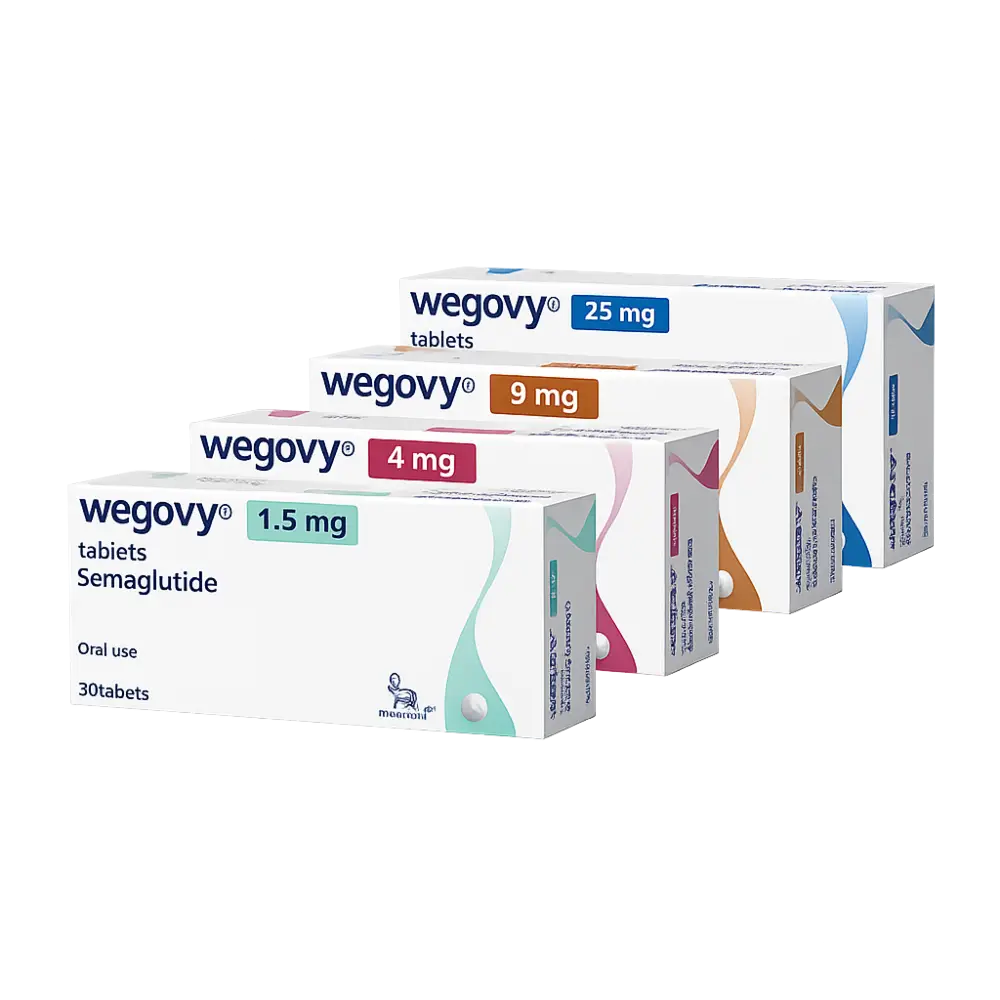
| Wegovy pill | Daily tablet | 1.5, 4, 9, 25 mg | Weight management |
| Ozempic | Weekly injection | 0.25–2 mg | Type 2 diabetes only |
| Rybelsus | Daily tablet | 3, 7, 14 mg | Type 2 diabetes only |
🩺 Clinical insight: two substitutions that should never happen
Ozempic is not a weight-loss medicine in the UK. It contains semaglutide, but it is licensed for type 2 diabetes. Prescribing it for weight loss is off-label, and demand for that purpose has contributed to supply shortages affecting people who need it for diabetes.
Rybelsus is not the Wegovy pill. Both are oral semaglutide, but Rybelsus is licensed only for type 2 diabetes and only up to 14 mg. The Wegovy pill is a higher-strength formulation licensed specifically for weight management. Swapping one for the other is not a substitution a patient or a prescriber should make.
The medicine versus the service
Semaglutide is the same molecule regardless of which UK pharmacy supplies it, provided it is genuine licensed stock from the authorised supply chain. What varies enormously between providers is everything around it: the depth of the clinical assessment, who reviews your case, whether anyone follows up, how side effects are managed, and what happens when progress stalls or you want to stop. Comparing providers on price alone compares the identical component and ignores the variable one.
Wegovy injection versus Wegovy pill
Both deliver semaglutide. The practical differences are substantial, and neither is universally better.
| Wegovy injection | Wegovy pill | |
|---|---|---|
| Frequency | Once weekly | Once daily |
| Administration | Subcutaneous injection you give yourself | Tablet swallowed whole |
| Timing rules | Any time of day, with or without food. Same day each week | Morning, on an empty stomach after at least 8 hours fasting, with a sip of plain water. Then wait before eating, drinking or taking other oral medicines, as directed in the leaflet |
| Doses | 0.25, 0.5, 1, 1.7, 2.4 mg | 1.5, 4, 9, 25 mg |
| Titration | Four weeks at each step | One month minimum at each step |
| Storage | Refrigerated before first use; cold chain required for delivery | Room temperature; no refrigeration |
| Travel | Needs a cool bag and planning | Straightforward |
| Needles required | Yes, plus a sharps bin | No |
| Evidence | STEP programme, including STEP 11 and STEP 42 | OASIS 44 |
| Missing a dose | One missed weekly dose has a defined recovery window | A missed daily tablet is skipped entirely; the schedule resumes next day |
| Adherence demand | One action per week | One action per day, with fasting and timing rules attached |
| NHS funding | Yes, via specialist services under TA87512 | No |
Who each may suit
The injection may suit you better if you would rather think about treatment once a week than every morning, you are comfortable with needles or willing to become so, your mornings are unpredictable, or you already take oral medicines whose timing would be complicated by the fasting window.
The tablet may suit you better if you have a genuine needle phobia, you travel frequently and find cold-chain logistics a problem, you already have a settled morning routine that a fasting window fits into, or you have found injection-site reactions troublesome.
🩺 Clinical insight: the tablet is not the easier option for everyone
It is needle-free, which sounds simpler, but it asks more of you day to day. The fasting requirement is not optional guidance — oral semaglutide absorption depends on it, and taking the tablet with food or too close to other oral medicines substantially reduces how much medicine actually enters your system.
If you know you will not reliably manage an early-morning fasted dose every day, the weekly injection is likely to give you a better result.
Not sure which form suits you?
Both the Wegovy injection and the Wegovy pill are available at Slinic. Our prescribers will advise based on your history and routine.
Free clinical assessment · Reviewed by a UK-registered prescriber · No subscription
Dispensed from GPhC-registered premises No. 1033729 · Subject to eligibility and prescriber approval
Completing an assessment does not guarantee that treatment will be supplied.
Is the Wegovy pill available in the UK?
Yes, but with an important distinction between approval and supply that a lot of coverage has blurred.
The MHRA approved oral semaglutide on 11 June 20267 for weight management in adults with a BMI of 30 or above, or 27 to under 30 with at least one weight-related comorbidity. It is the first oral GLP-1 receptor agonist licensed for weight management in the UK, and the UK was the third jurisdiction to approve it, after the United States and the United Arab Emirates.
Supply is being introduced in phases. Novo Nordisk has described a phased UK rollout intended to keep supply consistent. The lower titration strengths entered circulation first, with the higher strengths following progressively. In practice this means a new patient starting at the bottom of the titration ladder is generally unaffected, but availability of a specific strength at a specific moment can vary.
| Stage | Status |
|---|---|
| MHRA licence | Granted 11 June 2026 |
| Private prescribing | Live through regulated providers |
| Commercial supply | Phased; strength availability may vary |
| NHS funding | Not available. A NICE appraisal of oral semaglutide is under way13 and access is not expected in 2026 |
🩺 Availability changes — check before you decide
If a provider is promising immediate supply of a particular strength, ask them to confirm current stock rather than assuming. And if a website is offering oral semaglutide without a prescription or a clinical assessment, that is not a legitimate UK route regardless of what the product page says.
This section reflects the position at the time of writing. Supply and NHS funding for oral semaglutide are both moving, so check the current position with your provider before making a decision based on availability.
How Wegovy works
| What happens | What it may mean for you |
|---|---|
| GLP-1 receptors in the brain are activated | Appetite signalling changes. Many people describe a marked reduction in what is often called food noise — the background preoccupation with what and when to eat next |
| Satiety signalling increases | You feel full sooner and stay full longer, so smaller portions become satisfying without conscious restraint |
| Gastric emptying slows | Food stays in the stomach longer, extending fullness after a meal |
| Insulin release becomes more responsive to glucose | Blood glucose control improves, which is why semaglutide also has a diabetes licence in other products |
| Glucagon secretion is reduced | Contributes to steadier blood glucose |
| Overall energy intake falls | Weight reduction follows from eating less, not from any effect on metabolic rate |
What it is not
Semaglutide is not a stimulant, does not raise your metabolic rate, and does not block absorption of what you eat. Weight loss happens because appetite falls and energy intake follows. If intake does not fall — because portion sizes stay the same out of habit, or because reduced appetite is offset by high-calorie liquids — results will be limited whatever the dose.
Why the two forms feel different
The weekly injection produces relatively steady drug levels across the week. The daily tablet produces a daily peak and trough. Some people notice appetite effects more variably through the day on the tablet, particularly early in treatment. Both reach comparable exposure at maintenance doses when taken correctly, which is why the fasting rules for the tablet matter so much.
How much weight can people lose on Wegovy?
The evidence base for semaglutide is large and genuinely strong. It is also routinely misquoted, so it is worth separating what the trials found from what an individual should expect.
| Trial | What it studied | Headline result |
|---|---|---|
| STEP 11 | Once-weekly semaglutide 2.4 mg in adults with overweight or obesity, without type 2 diabetes, over 68 weeks alongside lifestyle intervention | Mean weight reduction approximately 14.9%, versus approximately 2.4% on placebo. Around two-thirds of participants lost at least 10% of body weight |
| STEP 42 | Participants took semaglutide for 20 weeks, then either continued or switched to placebo | Those who continued kept losing weight. Those switched to placebo regained a substantial proportion. The effect depends on continued exposure |
| STEP UP3 | The 7.2 mg weekly strength against 2.4 mg and placebo, over 72 weeks | Greater average weight reduction than 2.4 mg in the population studied. See the 7.2 mg section below |
| OASIS 44 | Oral semaglutide 25 mg in 307 adults with overweight or obesity without diabetes over 64 weeks | Mean weight reduction approximately 16.6%, versus approximately 2.2% on placebo. This is the trial that supported the MHRA approval |
🩺 Clinical insight: a warning about cross-trial comparison
It is tempting to line up 14.9% from STEP 1 against 16.6% from OASIS 4 and conclude the tablet works better. That comparison is not valid.
Different trials, different populations, different durations, different baseline characteristics and different eras of lifestyle support. The two forms have not been compared head to head at maintenance dose in a single trial, so no honest claim can be made that one produces more weight loss than the other.
What the averages do not tell you
- An average contains a wide spread. Some participants lost far more, some far less. A mean figure presented as an expected personal result is misleading.
- Trial conditions are not everyday conditions. Participants received structured dietary support, regular contact and monitoring at an intensity most people do not have.
- Results depend on more than the medicine. Starting weight, dose reached, consistency, diet, activity, sleep, other conditions and other medicines all influence the outcome.
- Duration matters. These are figures at 64 to 68 weeks. Results at 12 weeks look very different.
| Time point | What may happen | Important qualification |
|---|---|---|
| Weeks 1–4 | Appetite changes may be noticed. Weight change is often modest | The starting dose is a titration dose, used to improve tolerability |
| Weeks 5–16 | Weight change may become more noticeable as the dose steps up | Each step depends on clinical response and tolerability, not a fixed calendar |
| Months 4–8 | Progress often becomes easier to assess over a longer window | Weight loss is rarely linear, and temporary plateaus are common |
| Months 8–16 | Further reduction may continue | The rate commonly slows as treatment continues |
| Beyond 16 months | Focus may shift increasingly toward maintaining progress | Long-term decisions should be reviewed individually |
✓ Key takeaway
Trial averages are around 15% for the 2.4 mg injection, around 17% for the 25 mg tablet and around 19–21% for the 7.2 mg injection. Those are group averages over more than a year with structured support, not predictions for any individual.
No provider can accurately predict how much weight an individual will lose.
Semaglutide, Wegovy and type 2 diabetes
Semaglutide is licensed in the UK for two entirely separate purposes under different brand names, and the distinction has practical consequences if you have diabetes.
- Different products. Wegovy and the Wegovy pill are licensed for weight management. Ozempic and Rybelsus contain the same molecule but are licensed for type 2 diabetes. They are not substitutes for one another, and the strengths differ.
- Different prescribing route. Semaglutide for type 2 diabetes is prescribed through diabetes care, usually your GP practice or a diabetes specialist. That route is not subject to the specialist weight management service bottleneck that limits NHS Wegovy.
- Different clinical priorities. When prescribed for diabetes the focus is HbA1c, glycaemic control and cardiovascular risk, with weight reduction as a welcome secondary benefit. When prescribed for weight management the priorities reverse.
If you have type 2 diabetes
Do not seek private weight-management Wegovy as a way around your diabetes care. Speak to whoever manages your diabetes first.
If you are prescribed Wegovy privately while also taking glucose-lowering medicines, both your prescriber and your diabetes team need to know, so insulin or sulfonylurea doses can be reviewed. Adding a GLP-1 to insulin without adjusting the insulin creates a real hypoglycaemia risk. Coordination here is a safety requirement, not a courtesy.
Private weight-management prescribing for someone with type 2 diabetes is common and entirely legitimate — BMI 27 or above with type 2 diabetes meets the licensed criteria. It requires your HbA1c, current medicines and diabetes history to form part of the assessment, and coordination with your GP on any dose adjustments.
Why some people lose weight faster than others
Two people on the same dose of the same medicine, starting at similar weights, can end up with markedly different results. This is the question patients ask most often once treatment is under way, and it deserves a proper answer rather than a shrug.
| Factor | Why it matters |
|---|---|
| What you eat during the appetite window | The medicine reduces hunger. It does not decide what fills the smaller amount you now eat. Two people eating 1,500 calories can have very different outcomes depending on protein, fibre and how much comes from liquids |
| Whether you drink your calories | The most common invisible cause of a poor response. Sugary drinks, alcohol, syrup coffees and smoothies deliver calories without triggering fullness signalling at all |
| Muscle mass and what happens to it | Someone who resistance trains and eats adequate protein loses proportionally more fat and less lean tissue, and holds a higher energy requirement while doing it |
| Sleep | Short or disrupted sleep raises appetite signalling and reduces the effect the medicine is trying to produce. Unglamorous, and it matters |
| Starting weight and body composition | Percentage weight loss and absolute weight loss are different measures, and people comparing themselves to each other are frequently comparing different things |
| Other medicines | Some antidepressants, antipsychotics, steroids, certain diabetes treatments and some beta blockers are associated with weight gain or make loss harder. Worth reviewing rather than assuming the weight-loss medicine has failed |
| Untreated conditions | Undiagnosed hypothyroidism, poorly controlled diabetes, and conditions affecting mobility all influence what is achievable |
| How consistently the medicine is taken | Adherence data across GLP-1 treatment shows a close, near-linear relationship between doses taken and weight lost. The single biggest modifiable factor, and the one people are least likely to report accurately |
🩺 Clinical insight: the tablet-specific version of this question
If you are on the tablet and progress is poor, the first thing to check is not the dose but the technique.
Taken with food, with coffee, with any drink other than a sip of water, or too close to other oral medicines, absorption falls substantially. A month of incorrectly taken tablets looks exactly like a month of non-response, and it is entirely fixable.
Who may qualify for Wegovy privately in the UK?
Private eligibility follows the terms of the UK licence, then narrows according to each provider’s clinical governance. The licensed criteria are the same for the injection and the tablet.
| BMI | Additional requirement | Typically eligible privately? |
|---|---|---|
| 30 or above | No additional weight-related condition required | Yes, subject to full clinical assessment |
| 27 to under 30 | At least one weight-related health condition | Yes, subject to full clinical assessment |
| 27 to under 30 | No weight-related condition | No |
| Below 27 | — | No |
Weight-related conditions that may qualify at BMI 27 to under 30
- Type 2 diabetes
- Prediabetes
- High blood pressure
- Dyslipidaemia, including raised cholesterol
- Obstructive sleep apnoea
- Cardiovascular disease
Lower thresholds for some ethnic backgrounds
For people of South Asian, Chinese, other Asian, Middle Eastern, Black African or African-Caribbean family background, a lower BMI threshold is commonly applied — usually reduced by around 2.5 kg/m² — because cardiometabolic risk occurs at lower BMI in these populations. NICE applies this adjustment in its NHS criteria12. Whether and how a private provider applies it is a matter of their clinical policy.
What else is assessed
- Full medical history, including anything you might assume is irrelevant.
- Every medicine you take — prescription, over-the-counter, herbal and supplements. This matters more for the tablet than most people realise, because the fasting window interacts with the timing of other oral medicines.
- Pregnancy status and plans. Semaglutide is not recommended in pregnancy and needs establishing before treatment, not after.
- Identity and weight verification. A legitimate provider verifies who you are and confirms your weight rather than accepting a self-reported figure unchecked10.
- Any current GLP-1 treatment. Two GLP-1 medicines must never be taken together, and that includes the Wegovy injection and the Wegovy pill.
- Eating disorder history, current or past.
🩺 Clinical insight: meeting the criteria does not guarantee treatment
A prescriber can decline — because of your medical history, because a symptom needs investigating first, because another treatment would be safer, or because the overall picture does not support prescribing.
A provider that guarantees approval before assessing you is telling you something important about how seriously it takes the assessment.
Find out if you are eligible
BMI 30+, or 27+ with a weight-related condition. Free assessment reviewed by a UK-registered prescriber.
Free clinical assessment · Reviewed by a UK-registered prescriber · No subscription
Dispensed from GPhC-registered premises No. 1033729 · Subject to eligibility and prescriber approval
Completing an assessment does not guarantee that treatment will be supplied.
Wegovy and specific weight-related conditions
Several conditions are both a reason you might qualify at a lower BMI and a reason treatment needs particular care.
| Condition | What to know |
|---|---|
| Obstructive sleep apnoea | A recognised qualifying condition at BMI 27 to under 30. Weight reduction frequently improves symptoms, and CPAP pressure requirements can change as weight falls. If you use CPAP, tell the service that manages it — settings may need reviewing rather than staying fixed. |
| High blood pressure | Also a qualifying condition. Blood pressure commonly falls with weight reduction, which means you may become over-treated as you lose weight. Dizziness on standing is usually the first sign. Report it rather than accepting it — it generally means a medication review is due. |
| Polycystic ovary syndrome | Not itself on the licensed list, but insulin resistance, prediabetes and raised BMI commonly accompany it and those may qualify. Weight reduction can restore ovulation in people who were not previously ovulating, so fertility may return unexpectedly — and semaglutide is not recommended in pregnancy. |
| Prediabetes | A qualifying condition with a preventive dimension: weight reduction reduces progression to type 2 diabetes. Your prescriber may want a baseline HbA1c. |
| Raised cholesterol and dyslipidaemia | A qualifying condition. Lipid profiles commonly improve with weight reduction. If you take a statin, continue it unless your prescriber advises otherwise. |
| Fatty liver disease | Common alongside obesity, and weight reduction is the main intervention. Known liver disease requires individual assessment as part of your consultation. |
| Gallstones | This one runs the other way. Rapid weight loss from any cause increases gallstone risk, and gallbladder events are a recognised effect of GLP-1 treatment. A history of gallstones is not automatically a barrier, but your prescriber needs to know, and new upper right abdominal pain during treatment should be reported rather than tolerated. |
Who may not be suitable for Wegovy?
Three categories are often presented as one undifferentiated list. They are not equivalent, and the distinction is useful. The authoritative source is the current UK Summary of Product Characteristics and the patient information leaflet supplied with your medicine6.
Licensed contraindication
Wegovy must not be used if you have known serious hypersensitivity to semaglutide or to any of the excipients in the product.
Warnings and precautions in the product information
| Situation | What it means |
|---|---|
| Pregnancy | Semaglutide is not recommended during pregnancy. Because of its long half-life, guidance is to discontinue well in advance of a planned pregnancy — confirm the specific interval with your prescriber and the current patient information leaflet. |
| Breastfeeding | Discuss with your prescriber before starting; the decision will be based on your circumstances and the current product information. |
| Pancreatitis | Acute pancreatitis has been reported with GLP-1 receptor agonists, and the MHRA has issued strengthened warnings on this9. A history of pancreatitis requires careful assessment, and any symptoms suggestive of it during treatment need urgent medical attention. |
| Gallbladder disease and gallstones | Rapid weight loss from any cause increases gallstone risk. Symptoms need reporting rather than tolerating. |
| Severe gastrointestinal disease, including gastroparesis | Because semaglutide slows gastric emptying, pre-existing severe GI disease needs individual assessment. |
| Kidney impairment | Gastrointestinal fluid loss can precipitate acute kidney injury in susceptible people. Dehydration is the mechanism, which is why fluid intake matters more than it sounds like it should. |
| Liver impairment | Requires individual assessment. |
| Diabetic retinopathy | Rapid improvement in blood glucose control has been associated with temporary worsening. Relevant if you have diabetes and existing eye disease, and a reason to report sudden visual changes promptly. |
| Hypoglycaemia risk | Semaglutide alone rarely causes low blood sugar, but risk rises substantially alongside insulin or a sulfonylurea. Those doses may need adjusting by whoever manages your diabetes. |
| Planned surgery or procedures with sedation | Delayed gastric emptying increases aspiration risk. Tell your surgical and anaesthetic team well in advance — professional guidance on how far ahead to stop varies16, so have the conversation early rather than the night before. |
| Thyroid history | If you have a personal or family history of thyroid disease, raise it at your assessment so your prescriber can consider it against the current UK product information for the specific product being discussed. |
Provider-specific clinical exclusions
Beyond the licence, providers apply their own criteria reflecting their clinical governance and the limits of a remote service — commonly current or past eating disorders, certain mental health presentations, complex polypharmacy, or situations better managed face to face. These are legitimate clinical decisions but they are policy rather than universal medical fact, which is why one clinic may decline where another accepts.
Never combine two GLP-1 medicines
Wegovy must not be combined with another GLP-1 receptor agonist — including Mounjaro, Ozempic, Saxenda or Victoza — or with other weight-loss medicines, unless specifically directed by a prescriber managing the whole picture.
The injection and the pill must never be taken together either. They contain the same medicine.
Wegovy injection doses
The maintenance dose of 2.4 mg once weekly is reached by starting low and escalating in steps, to reduce the likelihood of gastrointestinal symptoms.
| Stage | Weekly dose | Earliest typical timing | Purpose |
|---|---|---|---|
| Initiation | 0.25 mg | Weeks 1–4 | Introduces treatment gradually to improve tolerability |
| Step 2 | 0.5 mg | From week 5 | Continued titration |
| Step 3 | 1 mg | From week 9 | Continued titration |
| Step 4 | 1.7 mg | From week 13 | Continued titration |
| Maintenance | 2.4 mg | From week 17 | The licensed maintenance dose |
| Higher-dose option | 7.2 mg | From week 21 at the earliest, only where clinically appropriate after review on 2.4 mg | Licensed higher-dose option, supplied as a single-dose pen. Stocked at Slinic |
How escalation works in practice
- Four weeks at each step is the standard interval. It is the point at which a dose increase may be considered, not a schedule everyone must follow. Staying longer at a dose is a legitimate clinical decision and often the right one.
- Escalation is not automatic. It should follow a review of how you are responding and how well you are tolerating the current dose. Increasing while significant symptoms persist usually worsens those symptoms without improving results.
- Steps should not be skipped. Jumping strengths without prescriber authorisation substantially increases the risk of adverse effects.
- 2.4 mg is not compulsory. If appetite is well controlled and weight is coming down at a lower dose, there may be no clinical reason to increase.
✓ Key takeaway
Titration exists to improve tolerability, not to get you to the top as fast as possible. The best dose is the lowest one that works for you and that you tolerate.
Why treatment sometimes does not work
Most people respond well. A minority do not, and the reasons are usually identifiable rather than mysterious. In rough order of how often they turn out to be the explanation:
| # | Cause | What to do about it |
|---|---|---|
| 1 | Doses not taken consistently | The most common cause and the least often reported accurately. Adherence and weight loss track each other closely. |
| 2 | Tablet taken incorrectly | With food, with coffee, or too close to other morning medicines. Absorption falls substantially and the month looks like non-response. |
| 3 | Liquid calories | Drinks bypass the satiety mechanism the medicine works through, so the appetite reduction never translates into reduced intake. |
| 4 | Portion sizes unchanged out of habit | Serving the same amount and finishing it, because that is what a meal has always looked like. |
| 5 | Not enough time at an adequate dose | Judging the medicine at week six, on a titration dose, is judging it before it has been given a chance. |
| 6 | Another medicine working against it | Some antidepressants, antipsychotics, steroids and diabetes treatments make loss harder. Worth reviewing before concluding the treatment failed. |
| 7 | An untreated condition | Undiagnosed thyroid disease and poorly controlled diabetes both change what is achievable. |
| 8 | Genuine non-response | A real but small group. Response to one GLP-1 does not predict response to another, so this is a reason to review options rather than to stop looking. |
✓ Key takeaway
Before concluding that Wegovy has not worked, work through consistency, technique, liquid calories and portion size.
In most cases one of those four is the answer, and all four are fixable without changing the medicine or the dose.
When increasing the dose is not the right answer
There is a strong assumption among patients that a stalled result means the dose should go up. Sometimes it should. Often it should not, and escalating into the wrong situation makes things worse rather than better.
Reasons a prescriber may hold the dose
- You are still having significant side effects. Increasing while nausea, vomiting or diarrhoea are unresolved reliably worsens them, and the most common consequence is that the patient abandons treatment altogether.
- You are still losing weight steadily. If the current dose is working, there is no clinical argument for adding side-effect risk and cost to achieve something already happening.
- The plateau is short. Two or three weeks without movement is normal variation, not a plateau, and reacting to it with a dose increase treats noise as signal.
- Something other than the dose explains it. Liquid calories, a new medicine, poor sleep, a period of low adherence, or tablet technique.
- Intake has dropped too far already. If you are struggling to eat adequately, more appetite suppression is the opposite of what is needed.
- A symptom needs investigating first. New abdominal pain, in particular, is a reason to pause and assess rather than escalate.
🩺 Clinical insight: dose escalation is not a reward
Patients sometimes read a held dose as being denied something. It is not.
The aim of treatment is the lowest dose that produces a good result and that you tolerate, not the highest dose you can be talked into. A provider that escalates everyone automatically on a fixed calendar is not making a clinical decision at each step — it is running a schedule.
Wegovy 7.2 mg: the higher-dose option
A 7.2 mg once-weekly strength is licensed in the UK8, roughly three times the standard 2.4 mg maintenance dose. It is the highest licensed semaglutide dose available, and it is frequently misunderstood, so it is worth being precise about what it is and who it is for.
It is not a starting dose
This is the single most important point. Nobody begins treatment on 7.2 mg. The standard titration still applies in full — 0.25 mg, then 0.5, 1, 1.7 and 2.4 mg, with the usual minimum interval at each step. Only after you are established on 2.4 mg does 7.2 mg become a question your prescriber might consider, and typically only after you have been on 2.4 mg for a period and the clinical picture supports going further.
Who it may be considered for
Broadly, someone who has completed the full titration, is tolerating 2.4 mg well, and whose weight loss has slowed or fallen short of what their clinical situation calls for. It is a response-driven decision, not an upgrade to request. It is generally not appropriate if you had significant side effects at lower doses, if you have not completed the standard escalation, or if there is something in your medical history that makes a higher exposure unwise.
What the evidence shows
The 7.2 mg dose was studied in STEP UP3, a phase 3b trial of around 1,400 adults with obesity and without type 2 diabetes, over 72 weeks, comparing 7.2 mg against 2.4 mg and placebo alongside lifestyle support.
| Outcome | Semaglutide 7.2 mg | Semaglutide 2.4 mg |
|---|---|---|
| Mean weight reduction at 72 weeks | Approximately 19–21%, depending on the analysis | Approximately 16–18% |
| Proportion losing 25% or more of body weight | Around one third | Roughly half that proportion |
| Proportion losing 5% or more | Over 90% | Similar |
| Discontinuation due to side effects | Low, and only marginally higher than at 2.4 mg | Low |
🩺 Clinical insight: two honest caveats about these figures
First, the headline percentage varies between published figures depending on which statistical analysis is quoted, which is why a range is given above rather than a single number.
Second, the additional average benefit over 2.4 mg is real but moderate — for someone weighing 100 kg it amounts to roughly a few extra kilograms across more than a year. The more striking finding is the shift at the top end: substantially more people reached 25% or more.
Side effects at the higher dose
The overall safety profile in STEP UP was broadly consistent with 2.4 mg, and gastrointestinal effects followed the familiar pattern — most common during escalation, easing over time.
One finding is specific enough to be worth knowing about in advance. Dysaesthesia — an altered or tingling sensation in the skin — was reported by close to a quarter of participants on 7.2 mg, considerably more than at 2.4 mg. In the large majority of cases it resolved while treatment continued. It is not dangerous, but it is unsettling if nobody has mentioned it to you, and it is the kind of thing that leads people to stop treatment unnecessarily. Report it to your prescriber if it happens rather than assuming something has gone wrong.
💡 How the 7.2 mg dose is supplied
Wegovy 7.2 mg is supplied as a single pre-filled FlexTouch pen containing four weekly doses — one pen per month, exactly like the lower strengths. It is administered exactly like the lower strengths, so nothing about your routine changes except the pen you are using.
Slinic stocks the 7.2 mg pen at £350 per pen. If your prescriber agrees it is clinically appropriate once you are established on 2.4 mg, it can be dispensed as part of your ongoing treatment.
Is it better than Mounjaro? A reasonable question, and not one with a clean answer. The 7.2 mg strength narrows the gap in average weight reduction between semaglutide and tirzepatide, but the two have never been compared head to head at those doses in a single trial. Cross-trial comparison is not valid evidence. See our Mounjaro UK guide and our Mounjaro versus Wegovy comparison.
Plateaued on 2.4 mg?
Tell us your current dose, how long you have been on it and how you have tolerated it. Our prescribers will review whether a change is appropriate.
Free clinical assessment · Reviewed by a UK-registered prescriber · No subscription
Dispensed from GPhC-registered premises No. 1033729 · Subject to eligibility and prescriber approval
Completing an assessment does not guarantee that treatment will be supplied.
What is the best Wegovy dose?
There is no universally best dose. The aim is the lowest dose that produces a good result and that you tolerate well.
Higher doses produce greater average weight reduction across populations — that is a real finding. But averages describe groups, not individuals, and several reasons argue against automatically escalating to the top of the ladder: some people respond strongly at lower doses; side effects generally increase with dose; escalating quickly raises the likelihood of gastrointestinal side effects without reliably improving the final outcome; and cost usually scales with dose. The decision belongs with your prescriber, based on your response, tolerance, progress and medical history.
Wegovy tablet doses and how to take them
The tablet has its own titration ladder, and the numbers look nothing like the injection’s because oral absorption differs so much. The two connect at the top: 2.4 mg weekly by injection corresponds to 25 mg daily by tablet, and the licence allows a direct switch between them.
| Stage | Daily dose | Minimum duration before increasing |
|---|---|---|
| Initiation | 1.5 mg | One month |
| Step 2 | 4 mg | One month |
| Step 3 | 9 mg | One month |
| Maintenance | 25 mg | — |
💡 Switching between the injection and the tablet
The MHRA has set out a direct transition: patients established on the 2.4 mg once-weekly injection can move straight to the 25 mg once-daily tablet, on their prescriber’s advice. That is the licensed equivalence point between the two forms.
Below that point the numbers are not proportional — oral absorption is far lower and less predictable than subcutaneous absorption, which is why the oral strengths are numerically much higher. If you are part-way up the injection ladder, the right tablet starting point is a clinical judgement rather than arithmetic. Either way, the switch is a prescriber decision and the two forms must never overlap.
How to take the tablet correctly
Take it once daily in the morning
On an empty stomach after fasting for at least 8 hours — for most people this means first thing on waking.
Swallow it whole with a sip of plain water only
Do not split, crush or chew it. Do not take it with tea, coffee, juice or milk.
Wait before eating or drinking anything else
And before taking other oral medicines, for the interval specified in your patient information leaflet.
Take it at roughly the same time each day
Consistency matters more than the exact hour.
Plan around your other morning medicines
If you take other regular morning medicines, work out the sequence with your pharmacist before you start.
Why the fasting rule is not optional
Oral semaglutide absorption depends on the tablet dissolving in an empty stomach. Taking it with food, with any drink other than a sip of water, or too close to other oral medicines substantially reduces how much medicine actually enters your bloodstream.
A tablet taken incorrectly is not a slightly weaker dose — it may be a largely wasted one. If the routine will not fit your mornings, say so at assessment, because the weekly injection will almost certainly give you a better result.
Missing a tablet
A missed daily tablet is skipped entirely. Do not take two tablets to catch up, and do not take a missed tablet later in the day once you have eaten, because the fasting condition has gone. Resume your normal single daily dose the following morning. If you miss several consecutive days, contact your prescriber before resuming, as a lower restart dose may be appropriate.
What happens at your first consultation
Knowing what to expect makes the assessment easier to complete properly, and completing it properly is what makes it safe.
What you will be asked
- Your height and current weight, and how your weight has changed over time
- Previous weight-loss attempts, including any medication
- Your full medical history, including anything you might assume is irrelevant
- Every medicine you take — prescription, over-the-counter, herbal and supplements, with the times of day you take them
- Whether you are pregnant, breastfeeding or planning a pregnancy
- Any history of eating disorders
- Whether you have surgery or a procedure planned
- Your alcohol intake
- Your morning routine, if you are considering the tablet — the fasting window has to fit your actual life
What to have ready
- An accurate current weight — weigh yourself rather than estimating
- A list of your medicines with doses and timings
- Photo ID
- If transferring from another provider: your current medicine, dose, how long you have been on it, and evidence such as a dispensing label or order history
🩺 Clinical insight: complete answers matter more than fast ones
The assessment exists to catch situations where semaglutide would be unsafe for you specifically. Leaving something out does not improve your chance of approval in any way that helps you — it raises the chance of being prescribed something that interacts badly with a medicine you take, or worsens a condition you have.
A UK-registered prescriber then reviews your submission. The outcome is approval, a request for further information or a video consultation, or a decision that treatment is not appropriate. That last outcome is not a rejection of you — it is the assessment doing its job.
How to use the Wegovy pen
This is an overview. The Instructions for Use supplied with your pen are the authoritative source and should be read fully before your first injection.
- Once weekly, same day each week. Any time of day, with or without food.
- Check the pen before use. The liquid should be clear and colourless. Do not use it if it is cloudy, discoloured, contains particles, has been frozen, or looks damaged.
- Use a new needle every time. Reusing needles blunts the tip, increases pain and injection-site reactions, and risks blockage.
- Inject into an approved site and hold the pen in place for the full count specified, so the complete dose is delivered.
- Remove the needle immediately afterwards and dispose of it in a sharps bin. Never store the pen with a needle attached.
- Never share your pen, even with a new needle.
- If the pen appears faulty, do not work around it. Contact your pharmacy.
Where to inject
Wegovy is injected subcutaneously — into the fat layer just under the skin, not into muscle or a vein. Approved sites are the abdomen (avoiding the area immediately around the navel), the front of the thigh, and the upper arm.
Rotate sites with each injection. Repeated use of the same spot can cause lumps, hardening or changes in the fat layer, which can affect absorption. Avoid skin that is bruised, tender, red, hardened, scarred or affected by a skin condition. If you also inject insulin, use a different site for each medicine.
How much does Wegovy cost in the UK?
Private Wegovy costs in the UK vary widely between providers, and the advertised figure is frequently not what you end up paying over a year.
| Why the headline price and the real cost differ | What to check |
|---|---|
| Dose-based pricing | Most providers charge more for higher strengths. Since almost everyone starts at the bottom of the ladder, the advertised price is usually the lowest you will ever pay. |
| Subscription models | Some providers require a monthly commitment with a minimum term or a cancellation window. |
| First-order discount codes | Very common. A discount on the first order that reverts from month two changes the annual figure considerably. |
| Consultation and delivery charges | Included by some providers, added at checkout by others. |
| Consumables | Needles and a sharps bin are needed for the injection and are not always supplied. |
Slinic Wegovy injection prices
| Dose | Price per pen (4 weekly doses) |
|---|---|
| 0.25 mg · starting dose | £83.00 |
| 0.5 mg | £93.00 |
| 1 mg | £93.00 |
| 1.7 mg | £144.00 |
| 2.4 mg · standard maintenance dose | £196.00 |
| 7.2 mg · higher-dose option | £350.00 |
Slinic Wegovy pill prices
| Dose | Price per month |
|---|---|
| 1.5 mg · starting dose | £92.00 |
| 4 mg | £104.00 |
| 9 mg | £119.00 |
| 25 mg · maintenance dose | £164.00 |
🩺 Clinical insight: budget against the maintenance dose, not the entry price
The figure that matters is not the starting price, it is what you pay once you reach a maintenance dose and stay there. On the injection, most people settle at 2.4 mg. On the tablet, most reach 25 mg. Those are the numbers to budget against, and it is worth doing that arithmetic before you start rather than discovering it at month four.
It is also worth noting that the tablet costs less at maintenance than the injection does, which is unusual in this market and largely reflects the absence of cold-chain handling. If cost is a significant factor and the daily fasted routine suits you, that difference is real and worth raising at your assessment.
Fixed 2026 prices with no subscription and no minimum term. The price does not change mid-treatment, and there is no discount code that expires after month one. Included: clinical assessment, prescriber review, monthly clinical reviews, needles and swabs with injectable treatment, and access to a pharmacist during treatment. All prices are subject to clinical approval before dispatch. For a full breakdown and comparison against other UK providers, see our provider price comparison.
Can you get Wegovy on the NHS?
The injection, yes — but through a much narrower route than most people expect. The tablet, not currently at all.
| What it is | What it determines |
|---|---|
| The MHRA licence | Who the medicine may legally be prescribed to: adults with BMI 30 or above, or 27 to under 30 with a weight-related comorbidity6 |
| The NICE recommendation | Who the NHS should fund it for. NICE technology appraisal TA875, published in March 2023, recommends semaglutide within NHS specialist weight management services, subject to specific criteria and with a funding limit12 |
| Local commissioning | What is actually available where you live, and this varies considerably14 |
NHS criteria for the Wegovy injection
- Initiated within a specialist weight management service — commonly described as Tier 3 — not by your GP directly
- BMI thresholds set by TA875, with the usual 2.5 kg/m² downward adjustment for certain ethnic backgrounds
- At least one weight-related comorbidity
- Funded for a maximum of two years
- Continuation typically requires a demonstrated response at review
Your GP can refer you to a specialist service but cannot generally initiate treatment themselves under this route. Waiting times for specialist weight management services vary from weeks to well over a year depending on area.
The four UK nations
NICE appraisals apply to England and, through separate arrangements, generally to Wales and Northern Ireland. Scotland has its own process through the Scottish Medicines Consortium. Local implementation, service availability and waiting times differ across all four nations, so if you are outside England, check your own nation’s current position rather than assuming the arrangements described here apply.
✓ Key takeaway
The injection is available on the NHS but only through specialist weight management services, with a two-year funding cap and often a long wait. The tablet is not NHS-funded at all — NHS funding requires a separate NICE appraisal, which is under way for oral semaglutide, and access is not expected during 2026.
Don’t want to wait for a specialist referral?
Private Wegovy assessment reviewed by a UK-registered prescriber. Fixed 2026 prices, no subscription, no waiting list.
Free clinical assessment · Reviewed by a UK-registered prescriber · No subscription
Dispensed from GPhC-registered premises No. 1033729 · Subject to eligibility and prescriber approval
Completing an assessment does not guarantee that treatment will be supplied.
Your first weeks on Wegovy
The opening month is when most people either settle into treatment or decide it is not for them. Knowing what is normal helps you tell the difference between an adjustment period and a genuine problem.
On the injection
| Week | What is commonly experienced | What to do |
|---|---|---|
| Week 1 | Appetite reduction may be noticeable within days. Mild nausea, often in the first 48 hours after injecting. Some people notice very little. | Eat smaller portions. Keep fluids up. Note when symptoms occur relative to your injection day. |
| Week 2 | Nausea often eases. Fullness after small meals becomes more predictable. Constipation may appear. | Increase fibre gradually and keep drinking. Settle into a fixed weekly injection day. |
| Week 3 | Most people have found a pattern. Weight change may or may not be visible yet. | Weigh weekly, same day and time, rather than daily. |
| Week 4 | Your prescriber reviews whether to step up to 0.5 mg. | Report honestly how you have tolerated 0.25 mg. Staying longer at a step is a legitimate option. |
On the tablet
The first month looks different, because the routine is the harder part rather than the dose. Most people find the fasting window is the thing that takes adjusting to, not the medicine. It is worth setting an alarm, keeping a glass of water by the bed, and deciding in advance what time you will actually be able to eat breakfast, because working that out on day one tends to produce a week of missed or badly-taken doses.
If by the end of the first month you have repeatedly taken the tablet with food, taken it late, or skipped it because the routine did not fit, that is worth raising at review rather than pushing on. Switching to the weekly injection is a reasonable answer and not a failure.
🩺 Clinical insight: the most common first-month mistake on either form
Eating the same portion sizes out of habit rather than appetite. Semaglutide reduces hunger, but a plate served at your previous portion size still tends to get eaten, and that is the most frequent cause of both nausea and disappointing early results.
Serve less rather than leaving food. Pharmacologically, semaglutide begins acting from the first dose — but appetite changes usually come first and visible weight change usually takes longer, because the starting doses on both forms are titration doses.
Wegovy side effects
Most side effects are gastrointestinal, most appear during titration or shortly after a dose increase, and most settle as the body adjusts. In the clinical trials nausea was the most frequently reported effect, followed by diarrhoea and vomiting, and these were typically mild to moderate. The current patient information leaflet and the BNF entry15 are the authoritative sources for the full profile.
| Side effect | Practical self-care | When to contact a clinician |
|---|---|---|
| Nausea | Smaller portions; eat slowly; avoid rich, fatty or heavily spiced meals | Persistent, preventing you eating or drinking, or not settling |
| Diarrhoea | Maintain hydration; avoid known triggers | Severe, prolonged, or with signs of dehydration |
| Vomiting | Small frequent sips of fluid; do not force food | Persistent, unable to keep fluids down, or with abdominal pain |
| Constipation | Maintain hydration, remain active, increase fibre gradually if tolerated | No bowel movement for several days, or with pain or bloating |
| Abdominal pain or discomfort | Smaller portions; note any pattern | Severe or persistent pain, particularly with vomiting or radiating to the back — seek urgent advice |
| Indigestion or reflux | Avoid large meals late in the evening; stay upright after eating | Persistent or troublesome |
| Burping, including sulphur-smelling burps | Eat slowly, avoid fizzy drinks and fatty meals | Persistent or with other GI symptoms |
| Headache | Check hydration and food intake | Severe or persistent |
| Fatigue | Review fluid intake, food intake and sleep | Persistent or significant |
| Dizziness | Stand slowly; check hydration; if you take blood pressure medicines this may signal over-treatment | Recurrent, or with fainting |
| Injection-site reactions | Rotate sites; new needle each time | Spreading redness, worsening pain, or signs of infection |
| Hair thinning | Ensure adequate protein and overall nutrition | Persistent or distressing |
Reducing side effects
- Eat smaller portions. Because gastric emptying is slower, a normal-sized meal can feel like a large one. The single most effective adjustment for most people.
- Eat slowly and stop when full. Fullness signals arrive earlier than you are used to.
- Avoid very fatty and fried food, particularly in the days after a dose increase.
- Keep fluids up. Reduced appetite usually reduces drinking too, and mild dehydration worsens nausea, fatigue and constipation.
- Do not increase your dose while significant symptoms persist. Discuss staying longer at the current step.
- Ask a pharmacist before adding any remedy. Delayed gastric emptying affects how oral medicines are absorbed — and if you are on the tablet, anything taken in the morning interacts with the fasting window.
- Watch for dehydration — dark urine, passing much less urine than usual, dizziness on standing, persistent thirst.
Serious symptoms requiring urgent medical help
Call 999 or go to A&E for: severe abdominal pain, particularly persistent pain or pain radiating to the back — this can indicate pancreatitis, and the MHRA has issued strengthened warnings about this risk with GLP-1 medicines. Signs of a serious allergic reaction: swelling of the face, lips, tongue or throat, difficulty breathing, widespread rash with feeling unwell. Severe dehydration: confusion, fainting, unable to keep any fluid down. Persistent vomiting with severe abdominal pain and inability to pass stool or wind. Severe hypoglycaemia in anyone taking insulin or a sulfonylurea.
Contact NHS 111 or your prescriber promptly for: vomiting or diarrhoea that will not settle; pain in the upper right abdomen, yellowing of the skin or eyes, or pale stools; passing much less urine than usual after a period of vomiting or diarrhoea; sudden changes in vision, particularly if you have diabetes; significant changes in mood, or thoughts of harming yourself; any symptom that worries you.
Tell your surgical and anaesthetic team well in advance of any planned operation or procedure involving sedation. Delayed gastric emptying increases aspiration risk, and they need to know.
Suspected side effects can be reported through the MHRA Yellow Card scheme11, either by you or by your prescriber. Reporting helps build the safety picture for medicines that are still relatively new in widespread use.
Wegovy and other medicines
This is not an exhaustive list. Tell your prescriber about every prescription medicine, over-the-counter product, herbal remedy and supplement you take.
| Medicine | Why it matters |
|---|---|
| Insulin | Combining semaglutide with insulin substantially increases hypoglycaemia risk. Insulin doses may need adjusting by whoever manages your diabetes. |
| Sulfonylureas (gliclazide, glimepiride and similar) | The same concern applies. |
| Oral medicines generally | Delayed gastric emptying can alter how quickly oral medicines are absorbed. Most relevant where timing matters or where the therapeutic range is narrow. |
| Levothyroxine, warfarin and other narrow-therapeutic-index medicines | More frequent monitoring may be appropriate — discuss with the clinician managing that treatment. |
| Blood pressure medicines | As weight falls, blood pressure often falls with it. Dizziness on standing is usually the first sign you may be over-treated, and it is a reason for a medication review rather than something to endure. |
| Any other oral medicine, if you take the tablet | The fasting window before and after your daily dose has to be planned around your other morning medicines. Go through this with a pharmacist before you start. |
| Other GLP-1 medicines | Never combine. This includes taking the Wegovy injection and the Wegovy pill together. |
Wegovy, contraception and pregnancy
- Wegovy is not recommended during pregnancy.
- If you are planning to become pregnant, treatment should be stopped well in advance of conception. Semaglutide has a long half-life of roughly a week, so the interval is longer than people generally expect. Confirm the specific period with your prescriber and the current patient information leaflet.
- If you become pregnant while taking Wegovy, stop the medicine and contact your prescriber or GP straight away.
- If you are breastfeeding or planning to, discuss this with your prescriber before starting.
Contraception matters more than people expect here
Weight reduction can restore ovulation in people who were not previously ovulating — this is common in polycystic ovary syndrome — which means fertility can return unexpectedly while you are taking a medicine that is not recommended in pregnancy. If there is any possibility of pregnancy, plan contraception before your first dose rather than after17.
If you take the oral contraceptive pill, check the timing question specifically with your prescriber or pharmacist, particularly if you are taking the Wegovy tablet, because the fasting window and the interval before other oral medicines can affect when you take your contraceptive. Do not simply assume your existing routine still works.
What should you eat while taking Wegovy?
Appetite reduction creates an opportunity and a risk at the same time. The opportunity is that eating less becomes far easier. The risk is that eating less of everything — including protein and micronutrients — produces poor nutrition, muscle loss and fatigue.
- Prioritise protein. When total intake falls, protein is the thing most worth protecting, because it helps preserve lean muscle during weight loss.
- Include fibre from vegetables, fruit, pulses and wholegrains, adjusted to your symptoms.
- Keep some healthy fats — olive oil, nuts, oily fish — while noting that very fatty meals commonly worsen nausea early on.
- Eat smaller portions more often rather than three large meals.
- Drink enough. Reduced appetite usually reduces fluid intake without you noticing, and dehydration is the mechanism behind several of the more serious problems.
- Do not crash diet. Combining very low calorie intake with semaglutide raises the risk of nutritional deficiency, muscle loss, fatigue, hair thinning and gallstones.
🩺 Clinical insight: how much protein, and why resistance exercise matters
Protein requirements vary by body size, age, activity level and health status, so a single universal target is not useful and for some people would be actively wrong. Older adults generally need more protein per kilogram than younger adults. Anyone with kidney disease must get individual advice before increasing protein — the general advice does not apply.
Weight loss from any cause includes some lean tissue as well as fat. Adequate protein combined with resistance exercise limits that considerably — bodyweight work, bands or weights, a couple of times a week. It is the single most effective thing you can do to protect muscle while losing weight, and it is the biggest protective factor for maintenance after stopping.
Can you drink alcohol on Wegovy?
There is no absolute prohibition, but several reasons for caution: it can worsen nausea and reflux, particularly in the days after a dose increase; it contributes calories that do not trigger fullness; it can affect blood glucose, which matters more if you take insulin or a sulfonylurea; it contributes to dehydration; and heavy drinking carries risks to the pancreas and liver worth considering with a medicine that has pancreatitis among its recognised risks.
Many people report wanting it less. A reduction in alcohol interest is commonly described by people on GLP-1 medicines, and is worth noting rather than fighting. Many people drink moderately without difficulty — discuss your own situation with your prescriber.
Wegovy, fasting and Ramadan
Fasting while taking semaglutide raises practical and safety questions, and the two forms are affected very differently.
On the injection
- Hydration is the main concern. Semaglutide can cause gastrointestinal fluid loss, and a long daily fast on top of that increases dehydration risk.
- Injection timing is flexible. The dose can be given at any time of day, so schedule it for whatever suits.
- Appetite reduction can make it hard to eat enough in a short eating window. Prioritising protein and fluid becomes more important, not less.
- If you take insulin or a sulfonylurea, get individual advice before fasting. That combination carries a real hypoglycaemia risk needing planning with your diabetes team.
On the tablet
The tablet needs more thought, because it already requires a fasted state and a waiting period before eating or drinking. During Ramadan that has to be worked around the pre-dawn meal and the evening break, and the arrangement will not be obvious. Plan it with your prescriber or pharmacist in advance rather than improvising during the first week, and be aware that switching temporarily to the injection is a legitimate option to discuss.
How should Wegovy be stored?
Storage differs completely between the two forms, and this is one of the practical advantages of the tablet.
The injection
- Before first use: store in a refrigerator between 2°C and 8°C. Do not freeze.
- After first use: the pen may be kept for a defined in-use period at room temperature or returned to the fridge — check the exact period and temperature range in the patient information leaflet supplied with your pen.
- Never use a pen that has been frozen, even if it has thawed and looks normal.
- Keep it in the original carton to protect it from light.
- Never store the pen with a needle attached — this can cause leaking, block the needle and allow air into the cartridge.
- Do not use it if the liquid is cloudy, discoloured or contains particles.
The tablet
Store at room temperature in the original blister and packaging. No refrigeration required, and no cold chain needed for delivery or travel. Keep it dry — do not decant tablets into a pill organiser unless your pharmacist confirms that is appropriate, because the packaging protects the formulation.
Travelling with Wegovy
| Injection | Tablet | |
|---|---|---|
| Hand luggage | Yes — hold luggage is not temperature controlled and may freeze | Yes |
| Cool bag | Required, with the pen not touching the cooling pack directly | Not required |
| Documentation | Carry a copy of your prescription or a pharmacy letter for security | Carry a copy of your prescription |
| Sharps | Take a travel sharps container and check disposal rules at your destination | Not applicable |
| Time zones | Keep your weekly injection day consistent; plan around long-haul shifts | Keep the daily fasted morning dose consistent with local time |
| Spares | Take extra needles | Take a few days’ extra supply |
What to do if you miss a dose of Wegovy
The advice is completely different for the two forms, and applying the injection rule to the tablet, or the reverse, causes real problems.
Missed injection
| Time since your scheduled dose | What to do |
|---|---|
| Less than 5 days (120 hours) | Take the missed dose as soon as you remember, then continue your normal weekly schedule |
| 5 days or more | Skip the missed dose entirely. Take your next dose on your normal scheduled day |
| Two or more consecutive doses missed | Contact your prescriber before restarting — you may need to restart at a lower dose |
The five-day window exists because semaglutide has a half-life of roughly seven days. Within that window, taking the missed dose keeps drug levels in the right range. Beyond it, you risk two near-full doses overlapping. Never take two injections to make up for a missed one.
Missed tablet
Skip it entirely and take your next tablet at the normal time the following morning. Do not take two tablets to catch up, and do not take a missed tablet later the same day — once you have eaten or drunk anything other than that sip of water, the fasting condition needed for absorption has gone. If you miss several consecutive days, contact your prescriber before resuming rather than restarting at your previous dose.
🩺 Clinical insight: if you keep missing doses, work out why
Inconsistent dosing produces inconsistent results, and adherence data across GLP-1 treatment shows a close relationship between how consistently the medicine is taken and how much weight is lost.
If the cause is side effects, cost, or a routine that does not fit — particularly the tablet’s fasting window — there are usually solutions, including switching form. That is a conversation worth having at review rather than quietly absorbing.
Practical problems and what to do
| Problem | What it usually means | What to do |
|---|---|---|
| A drop of liquid appears at the injection site | Minor leakage, usually from withdrawing the needle too quickly | Hold the pen in place for the full count next time. Do not re-dose to compensate. |
| Bleeding or bruising at the site | Normal, particularly on anticoagulants or if you caught a small vessel | Apply light pressure, do not rub, rotate to a different site next time. |
| A hard lump under the skin | Usually repeated injection into the same area | Rotate sites properly. Report anything painful, spreading or hot. |
| The needle seems blocked | Frequently caused by storing the pen with a needle attached | Fit a new needle. Never store the pen with a needle on. Contact your pharmacy if it persists. |
| The pen has been out of the fridge | Depends how long and how warm | Check the in-use period and temperature limits in your leaflet. If it has frozen at any point, or exceeded the stated maximum, do not use it. |
| You are unsure the full dose went in | Usually uncertainty rather than a real problem | Do not inject again. Contact your prescriber and note it for your next review. |
| You took the tablet with food or coffee by mistake | Absorption is likely to have been reduced | Do not take another. Resume normally the next morning and mention it at review if it happens often. |
| You cannot swallow the tablet whole | It must not be split, crushed or chewed | Speak to your pharmacist. If it remains a problem, the injection is the alternative. |
Never do this
Do not attempt to extract extra liquid from a used pen. Do not re-inject if you think some leaked. Do not use a pen that has frozen, even once, even if it thawed and looks fine. Do not split, crush or chew the tablet. Do not share a pen or tablets under any circumstances.
Monitoring, blood tests and clinical reviews
Treatment does not end at the first prescription, and what happens afterwards varies far more between providers than the medicine itself does.
What ongoing review should cover
- Weight change and over what period
- Whether side effects are settling, persisting or worsening
- Whether the current dose is right, or whether staying longer is better than escalating
- Any new symptoms, particularly abdominal pain
- Any new medicines — and for tablet patients, whether the morning routine is still working
- Whether your other conditions or medicines need reviewing as weight changes, particularly blood pressure and diabetes medicines
- Eating pattern, protein intake and activity
Do you need blood tests?
Routine blood monitoring is not universally required for weight-management semaglutide in the way it is for some medicines. Your prescriber may request baseline or interval tests depending on your circumstances — for example if you have diabetes, kidney or liver concerns, or if a symptom needs investigating. Testing is a clinical judgement based on your history, not a fixed schedule. Be cautious of a provider offering no clinical review at all, and equally of one marketing extensive testing you have not been given a clinical reason for.
Do not wait for your next review to report severe abdominal pain, persistent vomiting, signs of dehydration, reduced urine output, symptoms of an allergic reaction, or sudden visual changes. Those need attention when they happen.
Monthly clinical reviews included as standard
A review by a doctor or pharmacist clinician, included in the price. Not an app-based coaching flow.
Free clinical assessment · Reviewed by a UK-registered prescriber · No subscription
Dispensed from GPhC-registered premises No. 1033729 · Subject to eligibility and prescriber approval
Completing an assessment does not guarantee that treatment will be supplied.
Wegovy versus Mounjaro
The most common comparison in UK weight management, and the one most often reduced to a single percentage.
| Wegovy (semaglutide) | Mounjaro (tirzepatide) | |
|---|---|---|
| Mechanism | GLP-1 receptor agonist | Dual GIP and GLP-1 receptor agonist |
| Forms available | Weekly injection and daily tablet | Weekly injection only in the UK |
| Injection doses | 0.25 to 2.4 mg, plus a 7.2 mg option | 2.5 to 15 mg |
| Trial weight reduction | Around 15% at 2.4 mg over 68 weeks (STEP 1)1; around 19–21% at 7.2 mg over 72 weeks (STEP UP)3 | Around 15% at 5 mg, 19.5% at 10 mg and 20.9% at 15 mg over 72 weeks (SURMOUNT-1) |
| Head-to-head evidence | Compared at 2.4 mg against tirzepatide in SURMOUNT-55, where tirzepatide produced greater average reduction | Greater average reduction than semaglutide 2.4 mg in SURMOUNT-5 |
| Needle-free option | Yes — the tablet | No |
| NHS availability | Injection via specialist services under TA875 | Via specialist services and a phased GP-led rollout under TA1026 |
🩺 Clinical insight: what the comparison does and does not tell you
SURMOUNT-5 compared tirzepatide against semaglutide 2.4 mg directly and found greater average reduction with tirzepatide. That is real head-to-head evidence and it should not be dismissed. But it compared 2.4 mg, not 7.2 mg, and averages describe groups rather than individuals.
Plenty of people do very well on semaglutide, some tolerate it better than tirzepatide, and some have already tried tirzepatide and want an alternative. The practical differences that often decide it: Wegovy offers a needle-free option, Mounjaro does not. Tirzepatide has the stronger average trial result. Cost, supply, tolerability and your own response matter more than either.
Switching to or from Wegovy
Patients move between treatments and between providers regularly. None of it should be improvised.
Switching provider
- You will need evidence of your current treatment — a dispensing label, prescription record, letter from your previous provider, or order history showing dose and dates. Without it, a prescriber cannot safely continue you at a higher dose.
- The clinician will review continuity and tolerability — how long you have been treated, at what doses, how you tolerated them, and whether there has been a gap.
- A prolonged gap may mean restarting lower. This is a safety decision, not an administrative one.
- No supply is guaranteed until the assessment is complete.
Between the two forms, and between medicines
The licence allows people established on the 2.4 mg weekly injection to transition directly to the 25 mg daily tablet on their prescriber’s advice. If you are on a lower injection dose, the appropriate tablet starting point is a clinical judgement rather than a fixed conversion. Moving from tablet to injection is also possible and also a clinical judgement. Switching between semaglutide and tirzepatide happens frequently, usually because of response, tolerability, cost or supply — there is no official published dose-equivalence between them for weight management.
Never overlap two GLP-1 medicines
Whatever you are switching from and to — injection to tablet, Wegovy to Mounjaro, or between providers — the two must never be taken together. That includes the Wegovy injection and the Wegovy pill, which contain the same medicine. Plan the transition with a prescriber who knows both sides of it.
How clinicians decide whether to continue treatment
Continuation is a decision at every review, not a default. A prescriber is weighing several things: whether it is working, whether it is tolerated, whether anything has changed medically, whether it is still the right tool, and what you actually want from it. Clinical guidance for weight-management medicines generally looks for a meaningful response within a defined period at an adequate dose — NICE uses a 5% threshold at six months for NHS semaglutide. Private prescribing is not bound by that figure, but the principle is sound.
🩺 What continuation should never depend on
Whether you bought last month.
A repeat supply issued without a review is not clinical care, and any provider whose renewal process consists solely of a payment page is not assessing you at all — which means nobody is checking whether the treatment is still safe or still appropriate.
What happens when you stop Wegovy?
- Appetite generally returns. The effect on appetite signalling stops when the medicine does.
- Weight regain is common. STEP 42 demonstrated this directly: participants switched to placebo regained a substantial proportion of what they had lost, while those who continued kept losing.
- This is not a personal failure. Obesity is a chronic condition, and treatments for chronic conditions generally stop working when stopped. The same is true of blood pressure medicine.
- Habits built during treatment matter enormously. People who used the treatment period to establish sustainable eating patterns, regular activity and resistance training tend to retain more of their result.
- Stopping should be planned, not impulsive. If cost, side effects or lack of progress are prompting the thought, say so at review.
Is Wegovy a lifelong treatment?
There is no single answer, and anyone giving you one is oversimplifying. Obesity is recognised as a chronic, relapsing condition, and for some people long-term pharmacological support is appropriate in the same way it would be for hypertension. For others a defined treatment period followed by maintenance through diet, activity and behavioural change works well. Stopping treatment is not failure, and needing to continue is not failure either.
💡 What makes maintenance more likely to work
Resistance exercise established during treatment rather than started at the point of stopping. Eating patterns you actually want to keep, rather than ones you are enduring. Adequate protein maintained throughout. A planned taper and review rather than an abrupt stop. And realistic expectations — some regain is common and is not failure.
Frequently asked questions
Is Wegovy available as a tablet in the UK?
Is the Wegovy pill as effective as the injection?
Who is eligible for Wegovy in the UK?
How much weight will I lose on Wegovy?
How much does Wegovy cost at Slinic?
Can I get Wegovy on the NHS?
What is the Wegovy 7.2 mg dose?
How do I take the Wegovy tablet?
What happens if I take the tablet with food?
Can I switch from the Wegovy injection to the tablet?
What if I miss a dose?
What are the most common Wegovy side effects?
When should I seek urgent medical help?
Can I take Wegovy with Mounjaro?
Does Wegovy affect contraception?
Is Ozempic the same as Wegovy?
Is Rybelsus the same as the Wegovy pill?
What happens if I stop taking Wegovy?
How should I store Wegovy?
Do I need blood tests on Wegovy?
Start your Wegovy assessment
Both the injection and the pill available. Free clinical assessment reviewed by a UK-registered prescriber. Fixed 2026 prices, no subscription.
Free clinical assessment · Reviewed by a UK-registered prescriber · No subscription
Dispensed from GPhC-registered premises No. 1033729 · Subject to eligibility and prescriber approval
Completing an assessment does not guarantee that treatment will be supplied.
Related guides
References
Numbered citations in the text link to the sources below. Trial figures quoted on this page are taken from the primary publications listed here rather than from secondary reporting.
Clinical trials
- Wilding JPH, Batterham RL, Calanna S, et al; STEP 1 Study Group. Once-weekly semaglutide in adults with overweight or obesity. N Engl J Med. 2021;384(11):989–1002. doi:10.1056/NEJMoa2032183
- Rubino D, Abrahamsson N, Davies M, et al; STEP 4 Investigators. Effect of continued weekly subcutaneous semaglutide vs placebo on weight loss maintenance in adults with overweight or obesity: the STEP 4 randomized clinical trial. JAMA. 2021;325(14):1414–1425. doi:10.1001/jama.2021.3224
- Once-weekly semaglutide 7.2 mg in adults with obesity (STEP UP): a randomised, controlled, phase 3b trial. The Lancet Diabetes & Endocrinology, 2025.
- Wharton S, Lingvay I, Bogdanski P, et al; OASIS 4 Study Group. Oral semaglutide at a dose of 25 mg in adults with overweight or obesity. N Engl J Med. 2025;393(11):1077–1087. doi:10.1056/NEJMoa2500969
- Aronne LJ, Horn DB, le Roux CW, et al; SURMOUNT-5 Trial Investigators. Tirzepatide as compared with semaglutide for the treatment of obesity. N Engl J Med. 2025;393(1):26–36. doi:10.1056/NEJMoa2416394
Regulatory and licensing
- electronic Medicines Compendium — Wegovy Summary of Product Characteristics and Patient Information Leaflets for all presentations, including the 7.2 mg pen and the oral tablet.
- MHRA — approval of oral semaglutide (Wegovy tablets) for weight management, statement published 11 June 2026. Reported in The Pharmaceutical Journal.
- MHRA — single-dose 7.2 mg semaglutide (Wegovy) pen approved to treat adult patients with obesity. GOV.UK, 14 April 2026.
- MHRA — marketing authorisations and product information portal, including safety communications on GLP-1 receptor agonists.
- General Pharmaceutical Council — registers of pharmacies and pharmacy professionals.
- MHRA Yellow Card scheme — reporting suspected adverse drug reactions.
UK guidance
- NICE TA875 — Semaglutide for managing overweight and obesity, March 2023.
- NICE — technology appraisal of oral semaglutide for weight management, in development. Check the current status before relying on the NHS funding position stated on this page.
- NHS England — weight management injections: access, eligibility and service arrangements.
- British National Formulary — semaglutide.
- Centre for Perioperative Care — guidance on GLP-1 receptor agonists and anaesthesia.
- Faculty of Sexual and Reproductive Healthcare — contraception guidance.
All sources accessed August 2026. Where guidance conflicts, the current UK Summary of Product Characteristics takes precedence. Regulatory positions, supply and NHS commissioning arrangements in this area change frequently, so this page is reviewed on a scheduled basis and the review date shown at the top reflects the last check.
Written and clinically reviewed by Shadeia Younis, Superintendent Pharmacist (GPhC No. 2052119). This page is general information and does not replace advice from a qualified healthcare professional. Wegovy (semaglutide) is a prescription-only medicine in both injection and tablet form, is supplied only after an individual clinical assessment by a UK-registered prescriber, and is not suitable for everyone. It is licensed for use alongside a reduced-calorie diet and increased physical activity. Individual results vary. Treatment is dispensed from GPhC-registered premises No. 1033729.