

The true cost of a cocktail during GLP-1 therapy isn’t measured in calories, but in the metabolic friction it creates within your digestive system. It’s natural to feel a sense of hesitation when navigating social invitations in the UK, especially when you’ve committed to a specialist medical weight loss program. You likely want to enjoy a social life without the fear of severe nausea or the anxiety that you’re undermining your clinical progress. Understanding Mounjaro and Alcohol: Is It Safe and Does It Affect Results? is essential for maintaining the biological harmony required for your long-term transformation.
At Slinic, our pharmacist-led team prioritizes rigorous safety protocols and clinical excellence. We promise to provide a comprehensive analysis of how ethanol interacts with tirzepatide, focusing on the specific physiological risks and the metabolic cost to your liver and blood sugar. This guide previews the specialist boundaries you need to establish and offers a bespoke social strategy that protects your results without compromising your lifestyle. You’ll move from confusion to clinical clarity, ensuring your journey toward health remains both seamless and restorative.
Key Takeaways
- Understand why Tirzepatide’s dual-action mechanism necessitates clinical caution and how it interacts with alcohol metabolism.
- Discover how metabolic competition can stall fat burning, providing a definitive answer to: Mounjaro and Alcohol: Is It Safe and Does It Affect Results?
- Learn how delayed gastric emptying compounds common side effects like nausea, and why alcohol may stay in the system longer during treatment.
- Master specialist-led social strategies, such as the “food-first” rule and strict hydration protocols, to protect your physiological well-being.
- Gain insight into the Slinic approach, where UK-registered pharmacists provide the clinical oversight and safety netting essential for successful weight management.
For a full comparison of UK Mounjaro providers including pricing, see:
⇒Slinic’s Top UK Mounjaro Providers Guide
Clinical Safety: Can You Drink Alcohol While Taking Mounjaro?
Patient safety remains the foundational pillar of our clinical governance at Slinic. While the official summary of product characteristics doesn’t list ethanol as a direct contraindication, the question of Mounjaro and Alcohol: Is It Safe and Does It Affect Results? requires a nuanced, specialist perspective. There isn’t a known chemical reaction that makes the combination toxic in the traditional sense. However, clinical caution is paramount because both substances exert significant influence over your metabolic architecture.
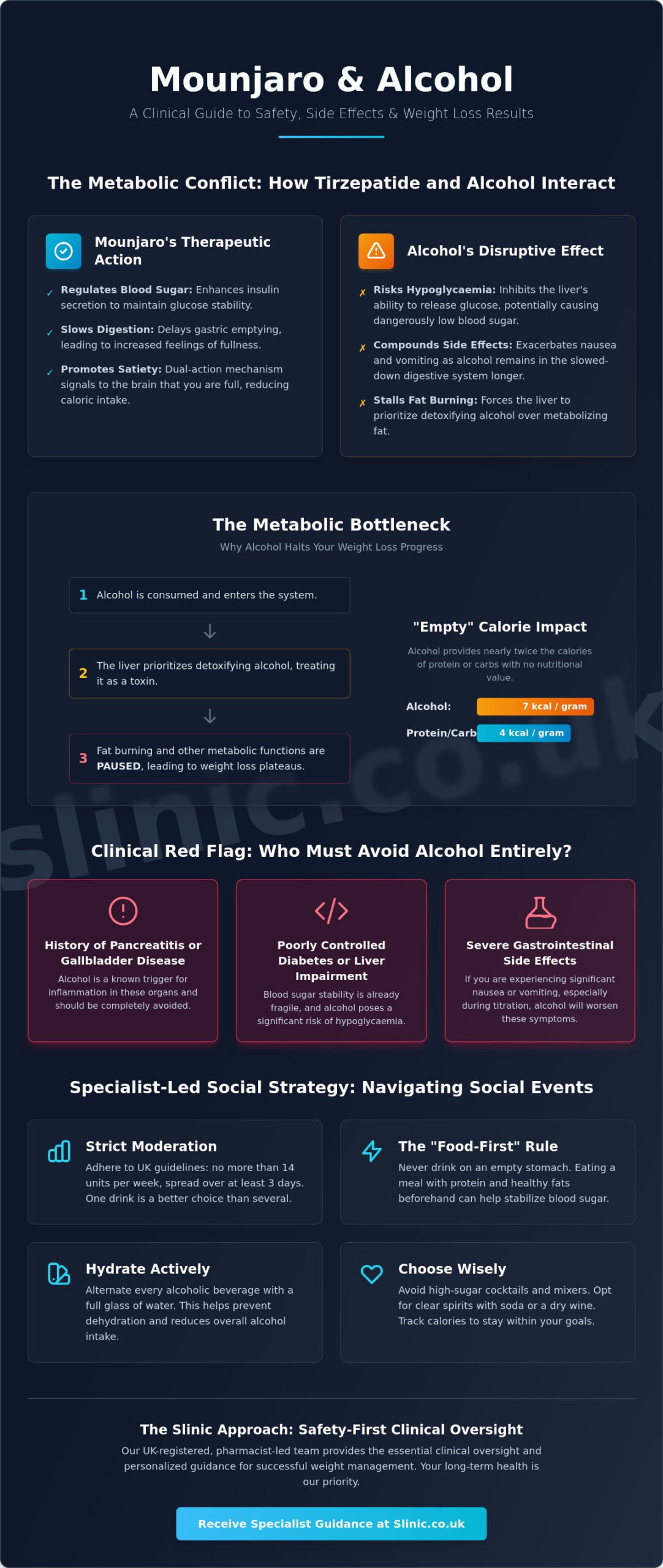
As a dual GIP (glucose-dependent insulinotropic polypeptide) and GLP-1 (glucagon-like peptide-1) receptor agonist, Tirzepatide (Mounjaro) profoundly alters how your body processes nutrients and regulates blood sugar. Alcohol introduces a volatile element into this finely tuned biological environment. For those undergoing medical weight loss, we advise a conservative approach. If you choose to drink, it should be in strict moderation. In the UK, the Chief Medical Officers’ low-risk guidelines recommend not exceeding 14 units of alcohol per week, spread across three or more days.
Consulting a specialist prescriber before mixing alcohol with your treatment is essential. At Slinic, our pharmacist-led team provides bespoke guidance to ensure your journey is both seamless and restorative. We prioritize long-term health over temporary fixes, ensuring every patient understands the physiological implications of their lifestyle choices.
Understanding Tirzepatide and Alcohol Interaction
Mounjaro regulates blood glucose by enhancing insulin secretion and slowing gastric emptying. Alcohol, conversely, can inhibit the liver’s ability to release glucose into the bloodstream. This creates a heightened risk of hypoglycaemia, or dangerously low blood sugar. This risk is particularly acute if you’ve already reduced your caloric intake as part of your weight management plan. The clinical relationship between Tirzepatide and ethanol metabolism is primarily defined by delayed gastric emptying and altered glucose counter-regulation rather than a direct chemical incompatibility. Before starting treatment, completing a clinical consultation is vital to assess your individual risk profile.
Who Should Avoid Alcohol Entirely on Mounjaro?
Certain clinical profiles necessitate total abstinence from alcohol to maintain safety and treatment efficacy. Alcohol can exacerbate underlying conditions or intensify the medication’s side effects. You should avoid alcohol if you fall into these categories:
- Patients with a documented history of pancreatitis or gallbladder disease, as alcohol is a known trigger for inflammation in these organs.
- Individuals with poorly controlled Type 2 diabetes or significant hepatic impairment, where blood sugar stability is already fragile.
- Those currently in the titration phase who are experiencing severe gastrointestinal side effects like nausea or vomiting.
Maintaining a “safety-first” mindset ensures your transition to a healthier weight is tranquil and sustainable. If you’re unsure about your eligibility, reviewing our clinician-led guide
Metabolic Competition: How Alcohol Affects Mounjaro Results
When you introduce ethanol into your system, your liver undergoes a immediate physiological shift. It prioritises the detoxification of alcohol over almost all other metabolic functions, including the fat-burning processes Mounjaro is designed to enhance. This “priority fuel” problem means that while your body is busy processing a drink, lipid metabolism effectively stalls. For patients questioning Mounjaro and Alcohol: Is It Safe and Does It Affect Results?, the answer often lies in this metabolic bottleneck. Your liver cannot efficiently process stored fat and alcohol simultaneously.
Alcohol provides 7 calories per gram. This is nearly twice the caloric density of protein or carbohydrates. These are “empty” calories that offer no nutritional support for your biological architecture. When you’re on a calorie-restricted programme, consuming 300 to 500 calories via cocktails or wine can lead to a frustrating weight-loss plateau. Beyond the calories, alcohol can trigger “alcohol noise.” This phenomenon occurs when the substance temporarily overrides the satiety signals Mounjaro sends to your brain. It leads to impulsive food choices that compromise your long-term progress and metabolic efficiency.
Blood Sugar Regulation and Cravings
Alcohol consumption can lead to significant fluctuations in glucose levels. While Mounjaro works to stabilise insulin, sugary mixers or heavy beers cause rapid spikes followed by sharp “rebound” drops. This physiological dip often results in intense cravings for high-calorie, fatty foods, even when the medication is technically suppressing your appetite. Understanding how to manage these triggers is vital for success. Our Mounjaro diet plan provides a structured framework for maintaining metabolic stability. Clinical safety remains our first priority, and patients should research safely drinking alcohol on Mounjaro to avoid the risks of hypoglycemia or severe dehydration during treatment.
Neurological Pathways and Reduced Cravings
Recent clinical observations from 2024 and 2025 suggest that GLP-1 and GIP receptor agonists do more than just regulate physical hunger. They appear to modulate the brain’s reward system directly. Many patients at Slinic report a newfound “disgust” or a total loss of interest in alcohol shortly after starting their treatment. This neurological shift happens because the medication dampens the dopamine release typically associated with drinking. For many, this unexpected benefit supports a more restorative lifestyle, allowing the body to focus entirely on cellular repair and weight reduction. This shift can be a foundation for a lifetime of improved health. If you’re ready to begin your journey with specialist oversight, you can start a clinical consultation with our prescribing team today.
Managing Side Effects: The Compounding Effect of Drinking
Combining Mounjaro with alcohol isn’t just a matter of managing calories; it’s a complex physiological interaction that can significantly intensify physical discomfort. Tirzepatide, the active ingredient in Mounjaro, functions by slowing down the rate at which food leaves your stomach. This mechanism, known as delayed gastric emptying, is central to how the medication controls appetite. However, when you introduce alcohol, this slowed process means the liquid remains in your gastric cavity for much longer than usual. This prolonged exposure often leads to increased irritation of the stomach lining and heightened acidity.
Many patients within our weight management programmes report an altered tolerance. Because of the metabolic shifts caused by the medication, you might feel the effects of alcohol much faster or experience significantly more debilitating hangovers. The “dehydration trap” is also a genuine concern. Mounjaro can sometimes cause fluid loss through mild gastrointestinal issues, and since alcohol is a potent diuretic, the combination can lead to severe electrolyte imbalances, fatigue, and persistent headaches. When considering Mounjaro and alcohol safety, it’s vital to recognise that the medication and the drink are often competing for the same metabolic pathways.
Gastrointestinal Distress and Alcohol
Alcohol acts as a direct irritant to the gastrointestinal tract, which is already sensitised by Tirzepatide. This interaction frequently results in heightened nausea, bloating, and upper abdominal pain. Distinguishing between standard medication side effects and alcohol-induced distress can be difficult. If you notice that nausea peaks specifically after a drink, it’s a clear signal that your system is struggling to process the combination. For a deeper understanding of how these treatments affect your gut, you can review our specialist guide on Mounjaro side effects and GI health.
The Risk of Acute Pancreatitis
A primary clinical concern for any patient on GLP-1 or GIP receptor agonists is the health of the pancreas. While Mounjaro is highly effective, it carries a small but documented risk of pancreatitis. Alcohol is one of the most common triggers for pancreatic inflammation, meaning the combination significantly raises your risk profile. You must be able to distinguish a “normal” Mounjaro stomach ache from a medical emergency. Clinical symptoms of acute pancreatitis include:
- Severe, persistent pain in the upper abdomen that may radiate through to your back.
- Tenderness when touching the abdomen.
- Fever and a rapid pulse.
- Vomiting that doesn’t subside.
If you experience these symptoms, you must stop drinking immediately and contact a healthcare professional or visit an A&E department. At Slinic, our safety-first approach ensures that we monitor your journey closely, but patient vigilance remains the most important factor in preventing serious complications. Understanding Mounjaro and Alcohol: Is It Safe and Does It Affect Results? requires acknowledging that while a single drink might be tolerated by some, the compounding risk to your internal organs is a specialist concern that shouldn’t be ignored.
Social Strategies: How to Drink Safely on Mounjaro
The Slinic approach prioritises clinical safety and long-term biological health. When exploring Mounjaro and Alcohol: Is It Safe and Does It Affect Results?, you must understand that your body’s metabolic environment changes significantly under tirzepatide. Maintaining social connections is vital for well-being, but it requires a meticulous strategy to avoid gastric distress or hypoglycaemia.
Adhering to the “Food First” rule is essential. You should never consume alcohol on an empty stomach while using GLP-1 medications. Because Mounjaro slows gastric emptying, alcohol may remain in your stomach longer, potentially irritating the lining and increasing the risk of acid reflux. Consuming a protein-rich meal before a social event provides a protective buffer and stabilises blood glucose levels.
- Hydration Protocols: Implement a strict 1:1 ratio. Consume 250ml of water for every alcoholic unit to mitigate dehydration and support kidney function.
- Injection Timing: Avoid alcohol for 24 hours before and after your scheduled Mounjaro dose. This 48-hour window is when the medication’s concentration is most volatile.
- The Stop Signal: Mounjaro often dampens the brain’s reward response to alcohol. If you feel a sudden sense of “fullness” or a mild aversion to your drink, stop immediately to prevent late-onset nausea.
Choosing the “Right” Drinks
Precision in your choice of beverage can prevent unnecessary metabolic strain. High-sugar cocktails and heavy mixers can lead to rapid glucose spikes, followed by a sharp “crash” that Mounjaro may struggle to regulate. Opt for clean, low-calorie spirits such as vodka or gin paired with plain soda water and fresh lime. You should exercise caution with carbonated drinks like beer or Prosecco; the trapped gas frequently exacerbates Mounjaro-induced bloating and abdominal discomfort. Many patients find that premium non-alcoholic botanicals offer the same social ritual without the risk of specialist clinical complications.
Monitoring Your Response
Maintaining a detailed symptom diary during your first 12 weeks of treatment is a hallmark of the Slinic experience. Document how different types of alcohol affect your digestion and energy levels. As you titrate up from 2.5mg to higher doses like 5mg or 7.5mg, your tolerance may diminish further. You must consume your drink slowly over 60 minutes to monitor your gastric response before considering a second. This measured pace allows you to remain in control of your journey toward restorative health.
If you require further guidance on managing your treatment, our UK-registered pharmacists are available to provide bespoke advice.
The Slinic Approach: Specialist Oversight for UK Patients
Slinic operates on a foundation of clinical excellence, moving beyond simple prescription fulfillment to provide a comprehensive medical service. Our pharmacist-led model ensures that every patient receives professional oversight from UK-registered clinicians who specialize in metabolic health. We believe that successful weight management requires more than just medication; it demands a partnership rooted in clinical governance and safety. When patients investigate Mounjaro and Alcohol: Is It Safe and Does It Affect Results?, they need a clinical team that can interpret these risks within the context of their unique biological profile. Our clinicians don’t just provide a product. They provide a structured framework for long-term health transformation.
Our approach prioritizes ongoing monitoring to manage the nuances of Tirzepatide treatment. We provide proactive support for side-effect management, ensuring that common issues like nausea or gastrointestinal discomfort are addressed before they hinder your progress. Patients can access the cheapest Mounjaro prices in the UK without compromising on the quality of their clinical care. This balance of affordability and specialist precision defines the Slinic experience.
Eligibility and Safety Protocols
Our digital consultation process is a rigorous medical assessment designed by prescribing pharmacists. We don’t use simple tick-box forms. Instead, we scrutinize your medical history and lifestyle factors, such as regular alcohol consumption, to ensure treatment is clinically appropriate. This safety-first mindset aligns with the MHRA’s 2023 updates regarding GLP-1 receptor agonists, emphasizing the need for structured patient follow-ups. You can start your weight-loss consultation today to receive a bespoke review from our Brierfield-based clinical team.
Discreet Support and Nationwide Delivery
Privacy is a fundamental component of our service. From our specialist pharmacy in Brierfield, we coordinate nationwide delivery using discreet, temperature-controlled packaging to maintain the integrity of your medication. We maintain high professional accountability through every stage of the patient journey. Our Mounjaro cost breakdown ensures full transparency, so you understand the investment in your health without hidden fees. By combining clinical rigor with modern convenience, we help you understand how Mounjaro and Alcohol: Is It Safe and Does It Affect Results? applies to your specific journey, ensuring your safety remains the absolute priority.
- Pharmacist-led consultations for every patient.
- Robust eligibility checks considering medical history and lifestyle.
- Structured follow-up and side-effect management.
- Secure, discreet delivery from our registered UK pharmacy.
Navigating Your Weight Loss Journey with Clinical Precision
Integrating medical weight loss into your lifestyle requires a nuanced understanding of how external factors influence your biological architecture. When considering Mounjaro and Alcohol: Is It Safe and Does It Affect Results?, the clinical evidence suggests that while occasional moderation may be permissible, alcohol can impede metabolic efficiency and intensify gastrointestinal side effects. Data from 2024 clinical observations indicate that patient adherence to treatment protocols improves significantly when alcohol intake is minimized. Our pharmacist-led clinical team prioritizes your long-term success through bespoke guidance and rigorous safety netting.
We ensure every patient receives a structured follow-up plan to manage these complex interactions effectively. As a GPhC-regulated provider, Slinic combines specialist expertise with the convenience of discreet nationwide delivery across the United Kingdom. You don’t have to navigate these physiological transitions alone. By choosing a partner dedicated to clinical excellence, you’re building a foundation for sustainable health and aesthetic harmony. Begin your clinical weight-loss consultation for Mounjaro today. Your path toward a restorative transformation starts with professional, evidence-based care.
Frequently Asked Questions
Is it safe to drink alcohol on the same day as my Mounjaro injection?
It’s generally safe to consume a small amount of alcohol on your injection day, though we advise caution during the initial 24 hours. Mounjaro reaches peak concentration in your system relatively quickly, and combining this with alcohol can intensify gastrointestinal side effects. Our clinical team recommends assessing your tolerance first to ensure your biological foundation remains stable while starting this weight loss treatment.
Can alcohol cause a “hypo” (low blood sugar) while taking Mounjaro?
Alcohol can increase the risk of hypoglycaemia because it prevents your liver from releasing glucose into the bloodstream. While Mounjaro itself has a low risk of causing “hypos” in non-diabetics, the British National Formulary indicates that alcohol consumption can disrupt metabolic balance. If you experience dizziness or shaking, consume a fast-acting carbohydrate immediately and contact our specialist support team for a clinical review.
Does alcohol stop Mounjaro from working for weight loss?
Alcohol doesn’t chemically deactivate the medication, but it can certainly impede your progress regarding Mounjaro and Alcohol: Is It Safe and Does It Affect Results? Liquid calories from alcohol provide zero nutritional value and can lead to a 20% reduction in fat oxidation. To maintain the Slinic approach to restorative health, we recommend limiting intake to ensure your calorie deficit remains intact for optimal weight loss results.
Why do I feel nauseous after just one drink on Mounjaro?
You feel nauseous because Mounjaro significantly slows the rate at which your stomach empties, a process known as delayed gastric emptying. When alcohol sits in the stomach for longer, it irritates the gastric lining and can trigger immediate discomfort. This physiological change means even a single unit of alcohol can feel much more potent, often leading to premature feelings of fullness or sickness.
Can I drink alcohol if I have Mounjaro side effects like diarrhoea or constipation?
You should avoid alcohol if you’re currently experiencing gastrointestinal side effects like diarrhoea or constipation. Alcohol acts as a diuretic, which can exacerbate dehydration and worsen the biological architecture of your digestive health. Clinical data suggests that maintaining hydration is vital for managing Mounjaro side effects, so we advise prioritising water and electrolytes until your symptoms have fully resolved.
What are the best low-calorie alcoholic drinks to have while on Mounjaro?
The most suitable options for those on a medical weight loss journey are clear spirits like vodka or gin paired with sugar-free mixers. A standard gin and slimline tonic contains approximately 60 calories, compared to over 200 calories in a pint of lager. Choosing bespoke, lower-calorie options helps you enjoy a social life without compromising the specialist precision of your weight management programme.
Does Mounjaro reduce the “buzz” or pleasure I get from drinking alcohol?
Many patients report a diminished desire for alcohol and a reduced “buzz” while taking this medication. Mounjaro interacts with the brain’s reward pathways, which can dampen the dopamine response usually triggered by alcohol consumption. This effect is a documented phenomenon in clinical observations, often leading to a natural, effortless reduction in alcohol cravings as part of your transformative health journey.
What should I do if I drink too much while on Mounjaro and feel very ill?
If you feel severely ill after drinking, prioritise rehydration with small sips of water or an oral rehydration solution. Monitor your symptoms closely; if you experience persistent vomiting or severe abdominal pain, you must seek urgent medical attention via NHS 111. Our safety-first protocol ensures you have access to professional guidance, so please update your prescribing clinician during your next scheduled follow-up.