

Could the very exercise routine designed to transform your body actually be undermining your clinical weight loss results? We understand that for many of our patients across the UK, the transition to GLP-1 medications brings a unique set of physical challenges. You might find that persistent fatigue or bouts of nausea make your usual gym sessions feel like an impossible hurdle. It’s a common concern that rapid weight loss might lead to the loss of vital lean muscle tissue, which according to a 2024 study in The Lancet, can account for up to 40% of total weight lost if not managed correctly. This loss affects both your long-term metabolic health and your aesthetic harmony.
This specialist-led guide provides a bespoke framework for how to exercise whilst on Mounjaro and Wegovy, ensuring you protect your biological architecture while accelerating your progress. At Slinic, our clinical team prioritises a safety-first methodology that moves beyond temporary fixes to establish a foundation for a lifetime of health. We’ll explore the precise balance of resistance training and restorative movement needed to maintain muscle mass and enhance your cardiovascular vitality throughout your treatment journey.
Key Takeaways
- Discover how to exercise whilst on mounjaro and Wegovy through a specialist-led framework that prioritises the preservation of lean muscle mass and long-term metabolic health.
- Understand the biological impact of GLP-1 medications on energy dynamics, including clinical strategies to manage delayed gastric emptying and initial treatment fatigue.
- Implement the bespoke Slinic Exercise Protocol, a structured movement programme that balances resistance training with cardiovascular health to create a foundation for a lifetime.
- Master essential safety netting protocols and hydration strategies to manage potential side effects like orthostatic hypotension, ensuring your physical activity remains restorative and safe.
- Learn how to transition from active weight loss to permanent weight maintenance by establishing the lifestyle habits required to prevent the rebound effect after tapering medication.
The Clinical Necessity of Physical Activity with Mounjaro and Wegovy
Success in medical weight management is defined by more than a descending number on a digital scale. At Slinic, our Specialist clinicians view physical activity as a non-negotiable pillar of your treatment journey. National Institute for Health and Care Excellence (NICE) guidelines specifically mandate that medications like Mounjaro and Wegovy must be prescribed alongside a reduced-calorie diet and increased physical activity. This isn’t a mere suggestion; it’s a clinical requirement for achieving the metabolic outcomes observed in pivotal trials, where participants often achieved weight reductions of 15% to 22.5% over 72 weeks. Without this lifestyle integration, the physiological benefits of the medication cannot be fully realised or sustained.
The “Slinic Approach” prioritises your long-term biological health over superficial victories. We focus on restorative health, ensuring your body’s internal architecture remains robust as you shed adipose tissue. Understanding the mechanism of GLP-1 receptor agonists is fundamental to this process. These medications enhance insulin secretion and slow gastric emptying, but they work most effectively when paired with consistent movement. Physical activity improves metabolic flexibility, which is your body’s ability to switch efficiently between burning carbohydrates and fats. Learning how to exercise whilst on mounjaro and Wegovy ensures you’re maximising these biochemical shifts rather than relying solely on appetite suppression to drive results.
Combating Sarcopenia: Why Muscle Preservation Matters
A primary concern during rapid weight loss is sarcopenia, the involuntary loss of lean muscle tissue. Clinical data suggests that without resistance training, up to 40% of weight lost during GLP-1 therapy can come from muscle rather than fat. This is a critical risk to your biological foundation. Muscle is your most metabolically active tissue; it dictates your resting metabolic rate (RMR). If your RMR drops significantly due to muscle wastage, you face a higher risk of weight regain once the medication is tapered. Our Specialist team recommends a bespoke resistance programme to protect this tissue. Preserving even 1kg of additional muscle can significantly aid your long-term strategy by keeping your basal energy expenditure elevated. This makes understanding how to exercise whilst on mounjaro and Wegovy a vital safety protocol for your future health.
Beyond the Scale: Cardiovascular and Mental Health Benefits
While the aesthetic transformation is often what patients first notice, the internal restorative effects of movement are far more profound. Regular exercise complements the medication’s effect on blood glucose regulation, further reducing systemic inflammation and improving cardiovascular resilience. There is also a vital psychological component to consider. Patients frequently report that movement helps manage the remaining “food noise” and provides a natural dopamine boost that enhances the mood-stabilising effects of weight loss. This clinical synergy between medicine and movement creates a tranquil path toward your goals. If you’re ready to begin a structured, medically supervised journey, you can start your clinical consultation for weight loss today with our UK-based experts. We provide the professional accountability and safety netting required for a truly transformative experience.
Understanding Energy Dynamics: How GLP-1 Medications Influence Your Workouts
The biological landscape of your body shifts significantly when you begin treatment with GLP-1 receptor agonists. These medications, including Tirzepatide and Semaglutide, function by mimicking naturally occurring incretin hormones that regulate insulin secretion and appetite. A primary mechanism of action is the marked delay in gastric emptying. This means food remains in the stomach for a longer duration, which directly impacts how glucose is released into your bloodstream. For those learning how to exercise whilst on mounjaro and Wegovy, this delay requires a strategic rethink of pre-workout fuelling to avoid gastrointestinal distress or sudden energy dips.
Many patients experience what is colloquially termed “GLP-1 fatigue” during the first 14 to 28 days of their journey. This lethargy is often a byproduct of the rapid transition into a caloric deficit and the metabolic adjustment to lower circulating glucose levels. It is a period where your body is recalibrating its energy sourcing. Research provides a clinical perspective on GLP-1 agonists and exercise, highlighting that while these medications are highly effective for weight reduction, active physical intervention is necessary to ensure the weight lost is predominantly adipose tissue rather than vital lean muscle mass.
Your weekly injection schedule also dictates your performance peaks. Peak plasma concentration typically occurs between 24 and 72 hours after your dose. During this window, side effects like nausea or fatigue may be more pronounced. You might find it beneficial to schedule restorative activities, such as yoga or steady-state walking, during the first three days post-injection. Save your high-intensity sessions or heavy resistance training for days five, six, and seven, when the medication’s concentration in your system begins to taper slightly, often resulting in higher perceived energy levels.
Nutritional Foundations for Active Patients
Maintaining muscle mass is the cornerstone of the Slinic approach to sustainable health. You must prioritise protein intake, aiming for approximately 1.2 to 1.5 grams of protein per kilogram of body weight daily to support cellular repair. Timing your carbohydrates is equally vital. Consuming slow-releasing complex carbohydrates three to four hours before exertion helps maintain glycogen stores without triggering the nausea associated with a full stomach. For more detailed dietary protocols, refer to our specialist resource: What to eat on Mounjaro: A UK Clinical Guide.
Monitoring Your Biological Response
Precision monitoring is essential for safety. We encourage patients to track Heart Rate Variability (HRV) and resting heart rate, as these metrics offer a window into your autonomic nervous system’s recovery state. If you notice a persistent elevation in resting heart rate or a significant drop in HRV, it is a clinical signal to scale back intensity. There is a distinct difference between the healthy fatigue of a productive workout and the clinical exhaustion that signals overtraining or under-fuelling. If you are a high-performance athlete or engage in strenuous endurance sports, you should book a follow-up with your Slinic clinician to discuss bespoke dosage adjustments that align with your metabolic demands.
The medication also alters your perception of exertion. Because GLP-1s suppress the reward pathways associated with food, they can sometimes dampen the “hunger” signals your body usually sends when it needs immediate fuel during a long workout. You must rely on a structured nutrition plan rather than intuitive hunger cues, which may be temporarily unreliable. This proactive management ensures you remain safely within your physiological limits whilst achieving the transformative results these specialist treatments offer.
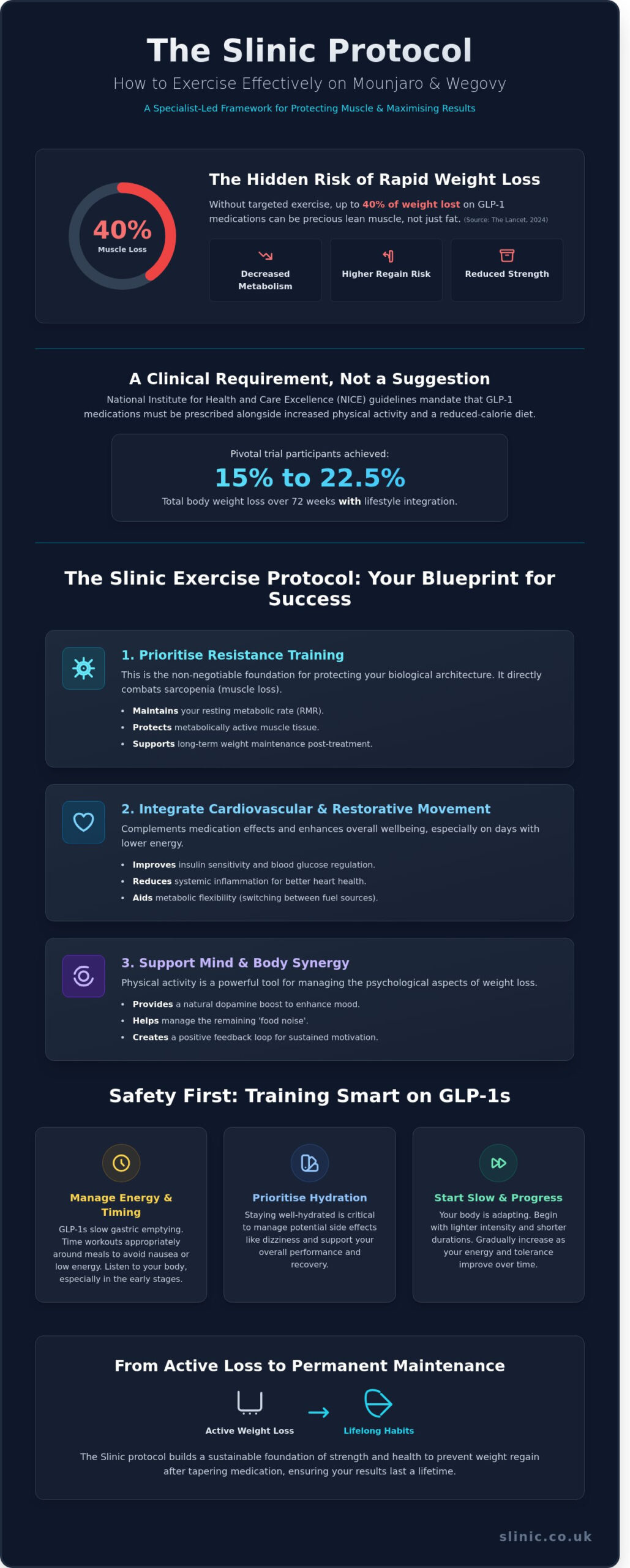
The Slinic Exercise Protocol: Balancing Strength and Cardiovascular Health
Understanding how to exercise whilst on mounjaro and Wegovy requires a shift from high-intensity burnout to specialist preservation. The Slinic approach isn’t about simply burning calories; it’s about protecting your biological architecture. Rapid weight loss can lead to a 25% to 40% reduction in lean muscle mass if your movement programme isn’t structured correctly. Our protocol prioritises the “Foundation for a Lifetime” principle, ensuring that the weight you lose comes primarily from adipose tissue while your metabolic health remains robust.
Resistance Training: The Specialist’s Choice
Clinical data suggests two to three full-body sessions per week represent the clinical gold standard for patients on GLP-1 medications. We advocate for compound movements such as squats, lunges, and overhead presses. These exercises recruit multiple muscle groups, stimulating a superior hormonal response and reinforcing bone density. You can start with bodyweight movements if you’re new to training. As your strength develops, adding external resistance through weights or bands is essential for progressive overload. This process helps maintain your basal metabolic rate even as your caloric intake decreases. Harvard experts on exercise and GLP-1 confirm that combining strength work with these treatments is vital for maintaining physical function and preventing the frailty often associated with rapid weight loss.
Aerobic Capacity and Daily Movement
Low-Intensity Steady State (LISS) cardio is our preferred aerobic tool for its restorative properties. Activities like brisk walking, swimming, or cycling at a conversational pace optimise fat oxidation without overtaxing your central nervous system. We advise clinical caution with High-Intensity Interval Training (HIIT) during the first 4 to 12 weeks of your journey. The delayed gastric emptying caused by Mounjaro and Wegovy can sometimes lead to nausea, reflux, or lightheadedness during extreme exertion. By prioritising LISS, you allow your body to adapt to the medication while still improving your heart health and recovery capacity.
Your secret weapon in this journey is Non-Exercise Activity Thermogenesis (NEAT). Aiming for a consistent 10,000 steps daily provides a metabolic baseline that supports the medication’s effects without causing undue fatigue. A typical 7-day Slinic schedule is designed to be sustainable and effective:
- Monday: Full-body resistance training (45 minutes focusing on compound lifts)
- Tuesday: 30 minutes of LISS (swimming or a brisk walk in the park)
- Wednesday: Active recovery (focus on the 10,000 step goal and mobility)
- Thursday: Full-body resistance training (45 minutes using weights or bands)
- Friday: 30 minutes of LISS (stationary cycling or a light rowing session)
- Saturday: Optional third resistance session or a longer, restorative walk
- Sunday: Full rest day to allow for tissue repair and hormonal balance
Learning how to exercise whilst on mounjaro and Wegovy is a journey of refinement rather than force. This structured approach provides the safety netting required for medical weight loss. It balances the precision of specialist care with the practicalities of daily life in the UK. By following this bespoke programme, you’re not just chasing a number on the scale. You’re building a body that’s resilient, capable, and healthy for the long term.
Safety First: Managing Side Effects and Hydration Whilst Training
Adopting a specialist approach to physical activity is essential when using GLP-1 receptor agonists. While these medications are transformative for metabolic health, they alter your internal physiology in ways that require meticulous management during exertion. Understanding how to exercise whilst on mounjaro and Wegovy involves more than just selecting a workout; it requires a deep respect for your body’s adjusted biological architecture. Our clinical team prioritises your safety by establishing clear protocols to manage gastrointestinal transitions and cardiovascular stability.
Gastrointestinal issues, such as nausea or acid reflux, are common as these treatments slow gastric emptying. To mitigate these effects, we recommend a “fasted window” of at least two hours before any high-intensity session. This prevents undigested food from causing discomfort during core-heavy movements. Additionally, while hypoglycemia is rare in non-diabetic patients, the combination of caloric deficit and intense exercise can occasionally trigger low blood sugar. You should remain vigilant for signs such as sudden tremors, cold sweats, or cognitive “fogginess.” If these occur, stop immediately and consume 15g of fast-acting carbohydrates, such as a glucose gel or a small glass of fruit juice.
Hydration: The Restorative Pillar
GLP-1 medications significantly increase the risk of dehydration because they often suppress the brain’s natural thirst signals. When you’re training, this risk intensifies, potentially leading to orthostatic hypotension. This is a sudden drop in blood pressure that causes dizziness or fainting when changing positions. At Slinic, we implement the Slinic hydration rule to ensure your vascular volume remains stable. Patients should aim for a baseline of 35ml of fluid per kilogram of body mass daily. During exercise, you must add a further 500ml to 750ml for every hour of activity to compensate for sweat loss.
Electrolyte balance is equally vital for maintaining the electrical conductivity of your heart and muscles. You should recognise the specialist signs of an imbalance, which include persistent muscle cramps, dull headaches that don’t respond to rest, and heart palpitations. Incorporating a high-quality, sugar-free electrolyte powder into your water provides the sodium, potassium, and magnesium necessary to sustain your performance and recovery. This proactive strategy ensures your journey remains both tranquil and effective.
When to Seek Urgent Medical Help
Safety netting is a core component of the Slinic experience. While most side effects are manageable, certain symptoms require immediate clinical intervention. If you experience acute, severe abdominal pain that radiates to your back, or if you suffer from persistent, projectile vomiting that prevents fluid retention, you must stop your medication and seek help. These can be rare indicators of pancreatitis or severe dehydration that require professional assessment.
If you’re unsure about your symptoms, use our established escalation pathway. Contact your prescribing doctor or specialist pharmacist at Slinic for a bespoke review of your treatment plan. For a broader understanding of how these medications function within the UK healthcare landscape, you can refer to our comprehensive guide to weight loss injections in the UK. We are dedicated to ensuring your transition to a healthier lifestyle is seamless and supported by clinical excellence.
Ready to begin your journey with a service that prioritises your clinical safety? View our range of medical weight loss treatments at Slinic today.
Sustaining Your Progress: The Long-Term Slinic Weight Management Approach
The transition from active weight loss to lifelong maintenance represents a critical phase in your clinical journey. At Slinic, we view this period not as an end, but as the stabilisation of your new biological architecture. Achieving a target weight is a significant milestone; however, the true victory lies in recalibrating your body’s metabolic baseline. This process requires more than just calorie restriction. It demands a structured integration of physical activity to protect lean muscle tissue and maintain metabolic health.
Clinical data suggests that without resistance training, up to 35% of weight lost on GLP-1 medications can come from lean muscle mass. This loss lowers your resting metabolic rate, making weight regain more likely once the medication dose is reduced or stopped. Mastering how to exercise whilst on mounjaro and Wegovy serves as a metabolic insurance policy. By prioritising hypertrophy and functional movement, you ensure your body remains a high-performance engine rather than a shrinking one. Our specialists guide you through this shift, moving the focus from the scale to strength and vitality.
The “rebound effect” is a common concern for many embarking on medical weight loss. Slinic mitigates this risk by instilling permanent lifestyle habits while the medication is still active. We don’t just provide a prescription; we provide a blueprint for a new way of living. Throughout 2026, our support remains steadfast, ensuring that the changes you make today become the foundation for your health for decades to come. You aren’t just losing weight; you are renovating your entire physiological framework.
The Role of Ongoing Clinical Supervision
Safety remains our primary directive at Slinic. Regular check-ins with your Slinic pharmacist are essential to monitor your progress and manage any side effects. These consultations allow us to provide bespoke advice as your body composition changes. When you hit a weight plateau, which 60% of patients experience at some stage, we adjust your exercise and nutrition plan to break through safely. This level of specialist oversight ensures that your journey remains effective and medically sound. Explore Mounjaro treatment options and pricing to see how our supervised programmes can support your long-term goals.
Your Journey to Restorative Health
The Slinic approach achieves a unique harmony between clinical success and aesthetic beauty. We celebrate non-scale victories, such as improved cardiovascular health, better sleep quality, and increased mobility, as much as the numbers on the dial. This restorative journey is about reclaiming your confidence and quality of life through meticulous, professional care. Our master craftsmen in weight management are here to partner with you, providing the safety netting and expertise required for a seamless transformation. It’s time to invest in a foundation that lasts. Book your consultation today to begin your supervised journey toward a healthier, more vibrant future.
Architecting Your Sustainable Metabolic Future
Building a sustainable future requires more than just medication; it demands a synergy between clinical intervention and physical movement. By 2026, the Slinic protocol emphasizes that preserving lean muscle mass through resistance training twice weekly is essential to prevent metabolic slowdown. You’ve learned that balancing 150 minutes of cardiovascular activity with precise hydration strategies mitigates the common gastrointestinal side effects associated with GLP-1 therapies. Mastering how to exercise whilst on mounjaro and Wegovy ensures that your weight loss is high-quality, focusing on fat reduction rather than muscle depletion.
Our GPhC Regulated Pharmacy provides the specialist weight-loss expertise needed to navigate these physiological changes safely. We offer national UK delivery and clinician-led safety monitoring to ensure your journey remains secure and effective. You don’t have to manage these complexities alone. Our team of prescribing doctors and pharmacists provides the safety netting required for long-term success through structured follow-up care.
Start your clinically supervised weight-loss journey with a Slinic consultation
You’re architecting a healthier version of yourself, and we’re here to provide the clinical foundation for your lifetime of wellness.
Frequently Asked Questions
Is it safe to do heavy weightlifting whilst taking Mounjaro or Wegovy?
Heavy weightlifting is safe and clinically recommended to prevent the loss of lean muscle mass during your treatment. Research indicates that individuals using GLP-1 medications can lose approximately 40% of their total weight from muscle if they don’t engage in resistance training. At Slinic, our Specialist team advises starting with 60% of your maximum lifting capacity. You can gradually increase the load as your body adapts to the medication’s metabolic effects.
What should I do if I feel dizzy during a workout on weight-loss injections?
You should immediately cease physical activity and sit down if you experience dizziness or lightheadedness. This sensation often stems from orthostatic hypotension or mild hypoglycemia, which affects roughly 10% of patients on these treatments. Consume 500ml of water with an electrolyte tablet to restore hydration and salt levels. If symptoms persist for more than 15 minutes, follow our safety netting protocols and contact your Slinic clinician for a bespoke medical review.
Can exercise help reduce the nausea caused by Wegovy or Mounjaro?
Gentle movement like a 20 minute walk can often alleviate mild nausea by improving gastric motility and digestion. However, high-intensity interval training may exacerbate stomach upset during the first 48 hours after your dose. Learning how to exercise whilst on mounjaro and Wegovy involves listening to your body’s specific signals. If nausea is severe, focus on restorative stretching rather than strenuous cardiovascular work to maintain your routine without causing further physical distress.
How much protein do I need if I am exercising whilst on a GLP-1?
You require between 1.2 and 1.5 grams of protein per kilogram of body weight daily to support your training and muscle retention. For a 90kg adult, this equates to roughly 108g to 135g of protein every day. Meeting these targets is essential for maintaining your biological architecture and ensuring weight loss comes from adipose tissue. Our Specialist pharmacists recommend spreading this intake across four small meals to accommodate the delayed gastric emptying caused by your medication.
Should I exercise on the same day I take my Mounjaro or Wegovy injection?
You can exercise on your injection day, though many patients prefer training before the dose or 24 hours after. Peak plasma concentration for these medications typically occurs within 8 to 24 hours, which is when side effects like fatigue are most prevalent. If you feel well, there’s no clinical reason to skip your session. Simply adjust your intensity if you experience the common 15% dip in energy levels often reported post-injection.
Will exercise prevent ‘saggy skin’ during rapid weight loss?
Resistance training helps mitigate skin laxity by building muscle volume to support the skin’s underlying structure. While exercise cannot change genetic skin elasticity, maintaining lean mass creates a firmer and more toned aesthetic outcome. We recommend a steady weight loss rate of 0.5kg to 1kg per week. This controlled pace allows your biological architecture to adapt more effectively than the rapid, unstructured loss often seen without Specialist clinical guidance.
What is the best time of day to exercise to avoid side effects?
The optimal time to train is usually in the early morning or at least 2 hours after a light, protein-rich meal. Exercising too soon after eating can trigger acid reflux because Mounjaro and Wegovy slow down your digestive system. Many Slinic patients find that a 7:00 AM session avoids the mid-afternoon fatigue associated with caloric deficits. Consistency is more important than the specific hour, so choose a window that ensures you don’t skip your daily programme.
How do I know if I am losing muscle instead of fat?
A 5% or greater decrease in your lifting capacity over two weeks often indicates you’re losing muscle instead of fat. You can monitor this by tracking your performance in compound movements like squats or chest presses. For a more precise analysis, we suggest a DEXA scan or bioimpedance scale every 30 days. Understanding how to exercise whilst on mounjaro and Wegovy requires this data-driven approach to ensure your weight loss is healthy, functional, and sustainable for the long term.
- Author: Slinic Clinical Pharmacy Team
- Medical Reviewer: Shadeia Younis Pharmacist Lead
- Reviewed:March 2026
Safety Notice: This information is for educational purposes and doesn’t replace professional medical advice. Weight loss injections are prescription-only medicines and require a consultation with a registered healthcare professional. If you experience severe side effects like intense abdominal pain, breathing difficulties, or swelling, contact emergency services immediately. Always read the patient information leaflet before starting any weight loss treatment.