Check if you qualify in 2 minutes
Trusted by 5,000+ patients · free online assessment
- ✓ First month from £73: Mounjaro £119, Wegovy and Foundayo £73, Wegovy pill £82 (£10 new-patient discount included)
- ✓ Low fixed prices: no subscription, no contract, no cancellation fee
- ✓ £10 off your first order
- ✓ Award-winning, pharmacist-led care with free ongoing monthly clinical support
- ✓ UK prescriber reviews every order · GPhC-registered, NHS-contracted pharmacy
- ✓ Discreet, tracked 24-hour delivery
Already a patient? Reorder in 1 minute →
Getting fit over 50: quick answers
Mounjaro from £119 for your first month (£10 off), then £129 to £267 by dose. Wegovy from £73 first month. No subscription. Rated Excellent on Trustpilot.
What is the best exercise for women over 50?
Strength training 2 to 3 times a week for muscle and bones, brisk walking or swimming, and balance work. Start gently and build up.
The best way for women over 50 to get fit is a mix of strength training on at least 2 days a week, 150 minutes of moderate activity such as brisk walking, and balance work, built up gradually. Strength training matters most after 50, because women lose muscle and bone faster around and after the menopause. It protects your bones, metabolism, joints and independence. It is never too late to start: women in their 60s, 70s and beyond gain strength when they train. This guide explains what changes after 50, a safe 12-week plan, what to eat, how to protect your joints and pelvic floor, and how fitness fits with menopause treatment and weight loss medicines.
What changes in your body after 50
Menopause and hormones
The average age of menopause in the UK is 51. As oestrogen falls, several things change at once. Fat tends to move from the hips and thighs to the waist and tummy. Muscle becomes harder to build and easier to lose. Bone density drops faster, especially in the first five to ten years after periods stop. Sleep can be disrupted by hot flushes and night sweats, which affects energy, appetite and recovery. Many women notice they gain weight more easily even though they haven’t changed what they eat.
Muscle loss (sarcopenia)
From about our 30s, adults gradually lose muscle if they don’t use it, and the rate speeds up after 50. Less muscle means a slightly slower metabolism, lower strength and more risk of falls. The good news is that muscle responds to training at any age. Regular strength exercise can slow, stop and even reverse this loss.
Bone health
According to the Royal Osteoporosis Society, half of women over 50 will break a bone because of osteoporosis. Bones respond to load: weight-bearing and impact exercise, and strength training, signal the body to keep bone strong. This is one of the most important reasons to start strength work now.
Heart and metabolic health
After the menopause, women’s risk of heart disease rises and becomes closer to men’s. Blood pressure, cholesterol and blood sugar often creep up. Regular aerobic exercise and strength training both improve these numbers, alongside weight loss if you need it.
How much exercise do women over 50 need?
The UK Chief Medical Officers’ physical activity guidelines recommend that adults:
- do at least 150 minutes of moderate activity a week (such as brisk walking, cycling or swimming), or 75 minutes of vigorous activity, or a mix;
- do strength activities on at least 2 days a week, working all the major muscles;
- for older adults, include activities that improve balance and flexibility on at least 2 days a week;
- reduce long periods of sitting, breaking them up with light activity.
If you are starting from very little, any increase helps. Even 10 minutes of brisk walking a day is a good start. Build up slowly over weeks rather than days.
What Mounjaro costs at Slinic
Fixed prices at every dose: no subscription, no contract, no cancellation fee, and £10 off your first order.
| Dose | 1 pen (4 weekly doses) | 2 pens |
|---|---|---|
| 2.5mg (starting dose) | £129.00 | £258.00 |
| 5mg | £155.00 | £310.00 |
| 7.5mg | £206.00 | £412.00 |
| 10mg | £230.00 | £460.00 |
| 12.5mg | £247.00 | £494.00 |
| 15mg | £267.00 | £534.00 |
✓ Cheaper than Superdrug, Asda Online Doctor, Juniper, Voy and Simple Online Pharmacy at every Mounjaro dose.
Strength training: the most important part
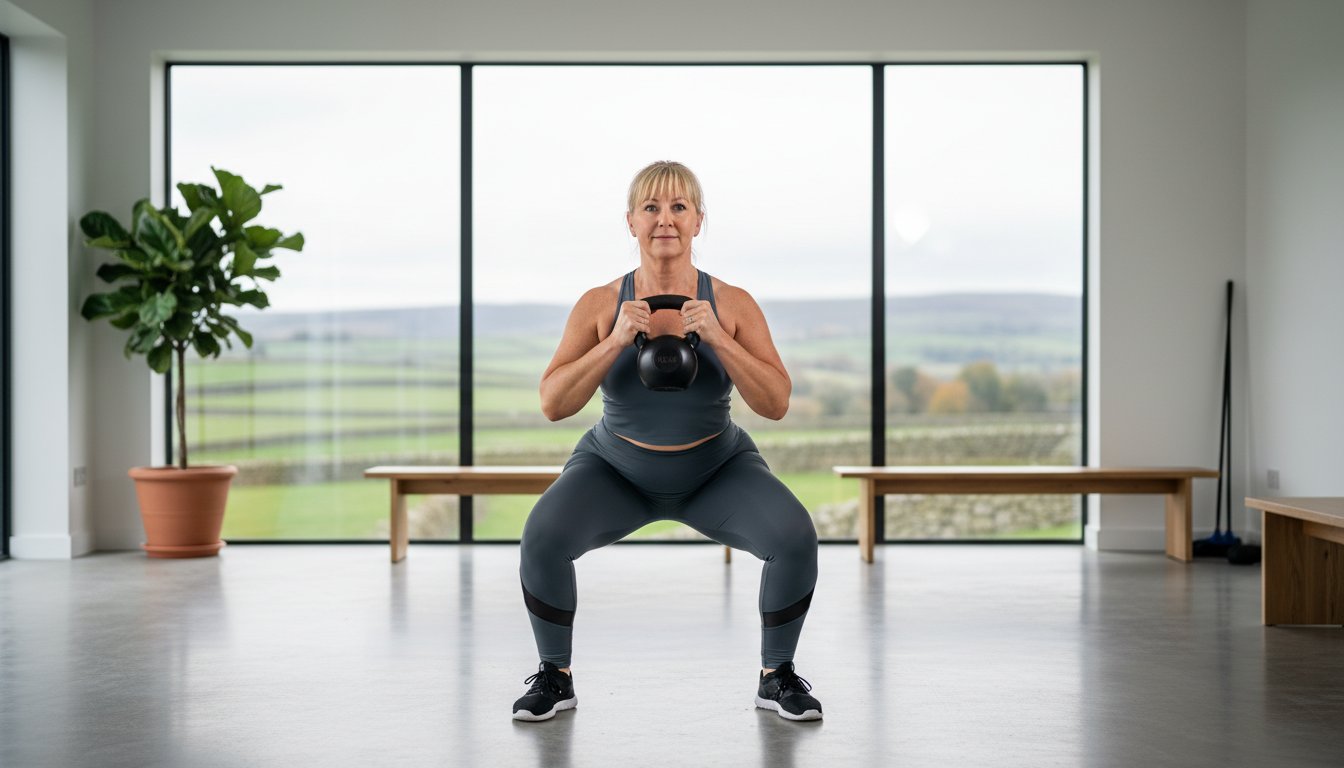
Strength (or resistance) training means working your muscles against a load: your own body weight, resistance bands, dumbbells, kettlebells or gym machines. For women over 50 it does more than any other type of exercise to protect muscle, bone and metabolism.
What it does for you
- builds and keeps muscle, which supports your metabolism and makes everyday tasks easier;
- helps maintain bone density, lowering the risk of fractures;
- improves balance and reduces the risk of falls;
- helps blood sugar control and insulin sensitivity;
- supports your joints by strengthening the muscles around them;
- can improve mood, sleep and confidence.
Simple exercises to start with
| Exercise | Works | Easier version | Harder version |
|---|---|---|---|
| Sit to stand (chair squat) | Thighs, bottom | Use your hands to push up | Hold a dumbbell or kettlebell |
| Wall press-up | Chest, arms, shoulders | Stand closer to the wall | Press-ups on a kitchen counter or knees |
| Step-ups | Legs, balance | Low step, hold a rail | Higher step, carry weights |
| Band row | Upper back, posture | Light band | Heavier band or dumbbell row |
| Glute bridge | Bottom, lower back | Small lift | One leg, or a weight on hips |
| Calf raises | Calves, ankles, balance | Hold a chair | One leg at a time |
| Farmer’s carry | Grip, core, posture | Light shopping bags | Heavier dumbbells |
Start with 1 to 2 sets of 8 to 12 repetitions of each, on 2 or 3 days a week with a rest day between. When you can do 12 comfortably with good form, make it a little harder. Aim to finish each set feeling you could only do two or three more.
Cardio: walking, cycling and swimming
Aerobic exercise strengthens your heart and lungs, helps control weight and blood pressure, and lifts mood. Most of yours can be “moderate” intensity: you can talk but not sing. Brisk walking is one of the best and simplest choices. Cycling, swimming, aqua aerobics, dancing, rowing and cross-trainers are also good, and the low-impact options are kind to the joints.
For bone health, include some weight-bearing activity, where your feet carry your weight, such as walking, stair climbing, dancing or low-impact aerobics. If your bones and joints are healthy, small amounts of impact, such as brisk walking with a few short jogs, skipping or heel drops, can help bone further. Ask your GP first if you have osteoporosis.
Some people also like to add short bursts of harder effort, such as walking uphill fast for a minute, then slowing down. This can improve fitness efficiently, but it isn’t essential; consistency matters more than intensity.
Balance and flexibility
Balance naturally declines with age, and falls are a major cause of fractures. Simple daily balance work makes a real difference:
- stand on one leg while brushing your teeth or waiting for the kettle, holding the counter if needed;
- heel-to-toe walking along a hallway;
- tai chi, yoga or Pilates classes;
- gentle stretching after walks or strength sessions for the hips, calves, chest and back.
A safe 12-week plan to get fit after 50
Weeks 1 to 4: building habits and movement quality
- walk 15 to 20 minutes on most days, at a pace that makes you slightly out of breath;
- 2 short strength sessions a week (about 20 minutes): sit to stand, wall press-ups, glute bridges, band rows, calf raises, 1 to 2 sets of 8 to 10;
- daily balance practice for 2 to 3 minutes;
- focus on good form and how your body feels, not on pushing hard.
Weeks 5 to 8: building strength and stamina
- walk 25 to 30 minutes on most days, including some hills or faster sections;
- 2 to 3 strength sessions a week (30 minutes): add step-ups and carries, 2 sets of 10 to 12;
- start using light dumbbells or a heavier band;
- try a class such as Pilates, yoga or aqua aerobics once a week.
Weeks 9 to 12: progressing safely
- reach 150 minutes of moderate activity a week;
- 3 strength sessions a week (30 to 40 minutes), 2 to 3 sets, increasing weights gradually;
- consider a session with a qualified personal trainer or a gym induction to learn new exercises safely;
- track progress: how many sit to stands in 30 seconds, how far you can walk in 20 minutes, how much you can lift.
Listen to your body. Mild muscle soreness a day or two after a new exercise is normal. Sharp pain, joint swelling or chest symptoms are not.
A sample week once you are up and running
| Day | Activity | Time |
|---|---|---|
| Monday | Strength session (legs, back, core) plus balance | 30 to 40 minutes |
| Tuesday | Brisk walk, including a hill | 30 minutes |
| Wednesday | Swimming, aqua aerobics or cycling | 30 minutes |
| Thursday | Strength session (whole body) plus stretching | 30 to 40 minutes |
| Friday | Brisk walk or dance class | 30 minutes |
| Saturday | Longer walk with friends or family, or gardening | 45 to 60 minutes |
| Sunday | Rest, gentle yoga or a short stroll | Optional |
This adds up to more than 150 minutes of moderate activity and 2 strength sessions. Swap days around to suit your life. If you only have time for 3 days, keep the 2 strength sessions and one longer walk.
Starting when you feel unfit or self-conscious
Many women over 50 haven’t exercised for years and feel nervous about gyms, classes or being seen. That is completely normal. You don’t need a gym or special kit to start. Home workouts with a chair, a step and a resistance band cover all the basics. Walking with a friend makes it social and easier to keep up. Many leisure centres run classes aimed at women over 50, beginners or people living with long-term conditions, and NHS-linked schemes such as exercise on referral may be available through your GP. Free resources such as the NHS Fitness Studio videos and the Couch to 5K app let you build up at your own pace. Start where you are, and remember that everyone in a class was a beginner once.
Menopause treatment and exercise
Hormone replacement therapy (HRT) can help with hot flushes, night sweats, sleep problems and mood, and it also helps protect bone density. For many women, feeling better on HRT makes it much easier to be active. Exercise doesn’t replace HRT for menopause symptoms, but the two work well together: HRT can help protect bone, and strength and impact exercise build on that. If menopause symptoms are making it hard to exercise or sleep, speak to your GP about the options, including HRT and non-hormonal treatments.
Sleep and recovery
Muscles get stronger while you rest, not while you train, so recovery matters, especially after 50. Aim for 7 to 9 hours of sleep where possible, leave at least one day between hard strength sessions for the same muscles, and include easy days in your week. Night sweats and broken sleep are common around the menopause; a cool bedroom, light bedding, a regular bedtime and less alcohol and caffeine in the evening can help. Regular exercise itself improves sleep for many women, though it is best to avoid very hard sessions late in the evening.
Exercising with osteoporosis
If you have osteoporosis or low bone density, exercise is still recommended, and it can help keep your bones stronger and reduce your risk of falling. The Royal Osteoporosis Society advises a mix of muscle-strengthening exercise, weight-bearing activity and balance training. Some precautions help: avoid sudden, forceful twisting or bending forward from the waist with a rounded back, especially when lifting; keep your back straight and bend at the hips and knees; build up impact very gradually; and if you have had spinal fractures, ask a physiotherapist for advice before starting. Your GP can refer you to a physiotherapist for a safe, tailored plan.
Common mistakes to avoid
- Only doing cardio. Walking and swimming are great for the heart, but on their own they do little for muscle and bone. Add strength work.
- Lifting too light for too long. To build strength, the last few repetitions should feel challenging. Gradually increase the weight or resistance.
- Doing too much too soon. Jumping straight into daily hard workouts often leads to injury or burnout. Build up over weeks.
- Skipping the warm-up. A few minutes of easy movement prepares joints and muscles and reduces injury risk.
- Eating too little protein, especially while dieting or on weight loss medicine, which makes it harder to keep muscle.
- Judging progress only by the scales. Strength, energy, waist size and how you move are often better signs early on.
- Ignoring pain. Mild soreness is normal; sharp or worsening pain means stop and get advice.
Exercise with high blood pressure or type 2 diabetes
Both conditions become more common after 50, and exercise helps both. Regular moderate activity can lower blood pressure by a few points, similar to some medicines, and strength training improves how the body handles blood sugar. If you have high blood pressure, avoid holding your breath while lifting; breathe out as you push or lift and breathe in as you lower. Build intensity gradually. If you have type 2 diabetes and take insulin or a sulfonylurea such as gliclazide, check your blood sugar before and after exercise when starting out, carry fast-acting sugar, and be aware that the blood-sugar-lowering effect can last for hours afterwards. Look after your feet with well-fitting shoes, and check them for blisters or sores if you have reduced feeling.
Staying motivated
- Set small, specific goals, such as walking 20 minutes on 5 days this week, or doing 10 sit to stands without your hands.
- Track your progress in a notebook or app; seeing improvements in strength or walking time is very motivating.
- Exercise with others: a walking group, a friend or a class keeps you accountable.
- Plan it like an appointment in your diary.
- Focus on how you feel: more energy, better sleep, carrying the shopping more easily, getting up from the floor without help.
- Be kind to yourself after a missed week. Just start again.
What to eat to support fitness after 50
Protein
Older adults need more protein than younger adults to build and keep muscle. Many experts suggest around 1.0 to 1.2g of protein per kg of body weight a day for healthy people over 50, more if you are very active or losing weight, unless you have kidney disease. For a 70 kg woman, that is 70 to 84g a day. Spread it across meals, with around 25 to 30g at each, and have some protein after strength sessions. Good sources: eggs, Greek yoghurt, cottage cheese, milk, fish, chicken, lean meat, beans, lentils, tofu and edamame.
Calcium and vitamin D
Calcium and vitamin D work together for bone health. Adults need about 700mg of calcium a day, from milk, yoghurt, cheese, fortified plant milks, tinned fish with bones, tofu set with calcium, and green leafy vegetables. The NHS advises everyone to consider a 10 microgram vitamin D supplement in autumn and winter. Your GP may suggest more if you have osteoporosis.
Other helpful habits
- plenty of vegetables, fruit, wholegrains and fibre for heart and gut health;
- oily fish once or twice a week;
- enough fluids, especially when exercising;
- alcohol within the guideline of no more than 14 units a week, spread over several days, as it affects bone, sleep and weight.
Protecting your joints
Joint pain, particularly in the knees, hips and back, is a common reason women hold back from exercise. Yet the right exercise usually helps joints rather than harming them, by strengthening the muscles that support them. Tips:
- warm up for 5 to 10 minutes with gentle movement before each session;
- choose low-impact options such as cycling, swimming or walking if joints are sore;
- keep strength exercises within a pain-free range, and progress slowly;
- wear supportive shoes for walking;
- losing even 5% to 10% of your body weight reduces load on the knees and often eases pain.
If you have arthritis, the NHS and Versus Arthritis both recommend regular activity. A physiotherapist can give a tailored plan.
Pelvic floor health
Many women over 50 have some bladder leakage, especially when coughing, jumping or lifting. It is common but not something you have to put up with. Pelvic floor exercises, done daily, strengthen the muscles that support the bladder and bowel. The NHS Squeezy app is a helpful guide. If leaking stops you exercising, start with low-impact activities and ask your GP about a referral to a women’s health physiotherapist.
Fitness, weight loss and weight loss medicines
Exercise alone is rarely enough to lose a lot of weight, because the body adjusts appetite to make up for the calories burned. But it is essential for staying healthy as you lose weight and for keeping it off. For women over 50 living with obesity, weight loss medicines such as Mounjaro (tirzepatide) and Wegovy (semaglutide) can make a big difference: in trials, average weight loss was 15% to 20.9% on Mounjaro over 72 weeks and 14.9% on Wegovy over 68 weeks.
Because these medicines reduce appetite strongly, some of the weight lost can be muscle as well as fat. That makes strength training and enough protein even more important, especially after 50 when muscle and bone are already under pressure. Think of the medicine as reducing hunger and the strength work as protecting your muscle and bone while you lose weight.
If you are taking a weight loss medicine, eat a small snack and drink water before exercising, as you may be eating much less than before. If you take insulin or a sulfonylurea for diabetes, check your blood sugar around exercise, as the risk of a hypo is higher.
Everyday activity counts too
Structured exercise isn’t the only thing that matters. Everyday movement, sometimes called “non-exercise activity”, adds up to a large share of the energy you use each day, and it tends to fall as we get older and more desk-bound. Small changes help: take the stairs, get off the bus a stop early, walk during phone calls, garden, carry your shopping in two bags rather than using a trolley, and stand up and move for a few minutes every half hour when sitting for long periods. Playing with grandchildren, walking the dog and housework all count. These habits also help keep weight steady once you have lost it.
Safety: when to check with your GP first
Most women can start gentle exercise safely. Speak to your GP before starting if you have:
- heart disease, chest pain or a heart rhythm problem;
- high blood pressure that isn’t controlled;
- diabetes treated with insulin or tablets that can cause hypos;
- osteoporosis or a previous fracture from a minor fall;
- recent surgery, or a joint replacement;
- dizziness, fainting or unexplained breathlessness.
Stop exercising and get urgent help if you have chest pain or tightness, severe breathlessness, feel faint or dizzy, or have palpitations that don’t settle.
How Slinic can help
If excess weight is making it harder to get active, a weight loss medicine alongside a fitness plan may help. Slinic is a GPhC-registered, NHS-contracted community pharmacy led by superintendent pharmacist and prescriber Shadeia Younis. You complete a free online assessment, new patients have a short video consultation, and our prescriber checks whether treatment is suitable for you. Prices are fixed for 2026 with no subscription: Mounjaro from £129 a month (£119 first order) and Wegovy from £83 (£73 first order).
Getting fit over 50: your questions
What is the best exercise for women over 50?
Strength training on 2 to 3 days a week, plus 150 minutes of moderate activity such as brisk walking, and balance work. Strength training protects muscle and bone the most.
Is it too late to start getting fit after 50?
No. Women in their 60s, 70s and beyond gain strength, fitness and balance with regular training. Start gently and build up.
How many days a week should a woman over 50 exercise?
Be active on most days, with strength sessions on at least 2 days and moderate cardio adding up to 150 minutes a week.
Why is strength training important after 50?
It slows muscle and bone loss linked to age and menopause, supports metabolism, improves balance and reduces fracture risk.
How much protein do I need after 50?
Around 1.0 to 1.2g per kg of body weight a day for most healthy women, spread across meals, unless you have kidney disease.
Can weight loss injections help women over 50?
Yes, for women who meet the criteria. Combine them with strength training and enough protein to protect muscle and bone while losing weight.
What are the best exercises for menopause weight gain?
Strength training plus regular brisk walking or other cardio, alongside changes to diet. Strength work helps keep muscle, which tends to fall after menopause.
Do I need a gym to get fit after 50?
No. Walking, home strength exercises with a chair and resistance band, and free online classes cover everything you need. A gym can help later if you want heavier weights.
How do I protect my joints when starting exercise?
Warm up, choose low-impact options at first, keep movements pain-free, progress slowly and strengthen the muscles around the joint. A physiotherapist can help if you have arthritis.
Can I exercise if I have osteoporosis?
Yes. Strength, weight-bearing and balance exercise are recommended. Avoid forceful twisting and bending forward with a rounded back, and ask a physiotherapist for advice if you have had spinal fractures.
Does HRT help with fitness after 50?
HRT can ease symptoms such as poor sleep and hot flushes, which makes exercise easier, and it helps protect bone. Exercise and HRT work well together. Speak to your GP about whether HRT is right for you.
How quickly will I see results from exercise after 50?
Most women feel more energetic and sleep better within 2 to 4 weeks. Strength usually improves noticeably within 6 to 8 weeks of regular training, and changes in body shape follow over a few months.
References
- UK Chief Medical Officers’ Physical Activity Guidelines, 2019. gov.uk
- NHS. Physical activity guidelines for older adults. nhs.uk
- Royal Osteoporosis Society. Exercise and bone health. theros.org.uk
- NHS. Menopause. nhs.uk
- Jastreboff AM et al. Tirzepatide once weekly for the treatment of obesity (SURMOUNT-1). N Engl J Med 2022. nejm.org
- Wilding JPH et al. Once-weekly semaglutide in adults with overweight or obesity (STEP 1). N Engl J Med 2021. nejm.org
Start today in 3 simple steps
- Free 2-minute online assessment
- A UK prescriber reviews your answers
- Discreet tracked delivery, dispatched within 24 hours of approval
✓ Trusted by 5,000+ patients ✓ £10 off your first order ✓ No subscription ✓ Award-winning, pharmacist-led care
Already a patient? Reorder in 1 minute →
More questions people ask
What is the best exercise for women over 50?
A mix of strength training 2 to 3 times a week, brisk walking or other cardio, and balance and flexibility work.
Why is strength training important after 50?
It protects muscle and bone, which naturally decline with age and after menopause.
Can weight loss injections help women over 50?
Yes, if you meet the BMI criteria. They work well alongside exercise and enough protein to protect muscle.
References
- NICE. Overweight and obesity management (NG246). nice.org.uk
- NICE. Tirzepatide for managing overweight and obesity (TA1026). nice.org.uk
- General Pharmaceutical Council. Online register. pharmacyregulation.org
- GOV.UK / MHRA. MHRA authorises diabetes drug Mounjaro tirzepatide for weight management and weight loss. gov.uk
- NICE. Semaglutide for managing overweight and obesity (TA875). nice.org.uk
- Jastreboff AM et al. Tirzepatide once weekly for the treatment of obesity (SURMOUNT-1). N Engl J Med 2022. nejm.org