

Why Has My Weight Loss Stalled on Mounjaro?
Your complete UK guide to understanding and breaking through weight loss plateaus in 2026

Clinically reviewed by
Shadeia Younis, Superintendent Pharmacist (GPhC 2052119)
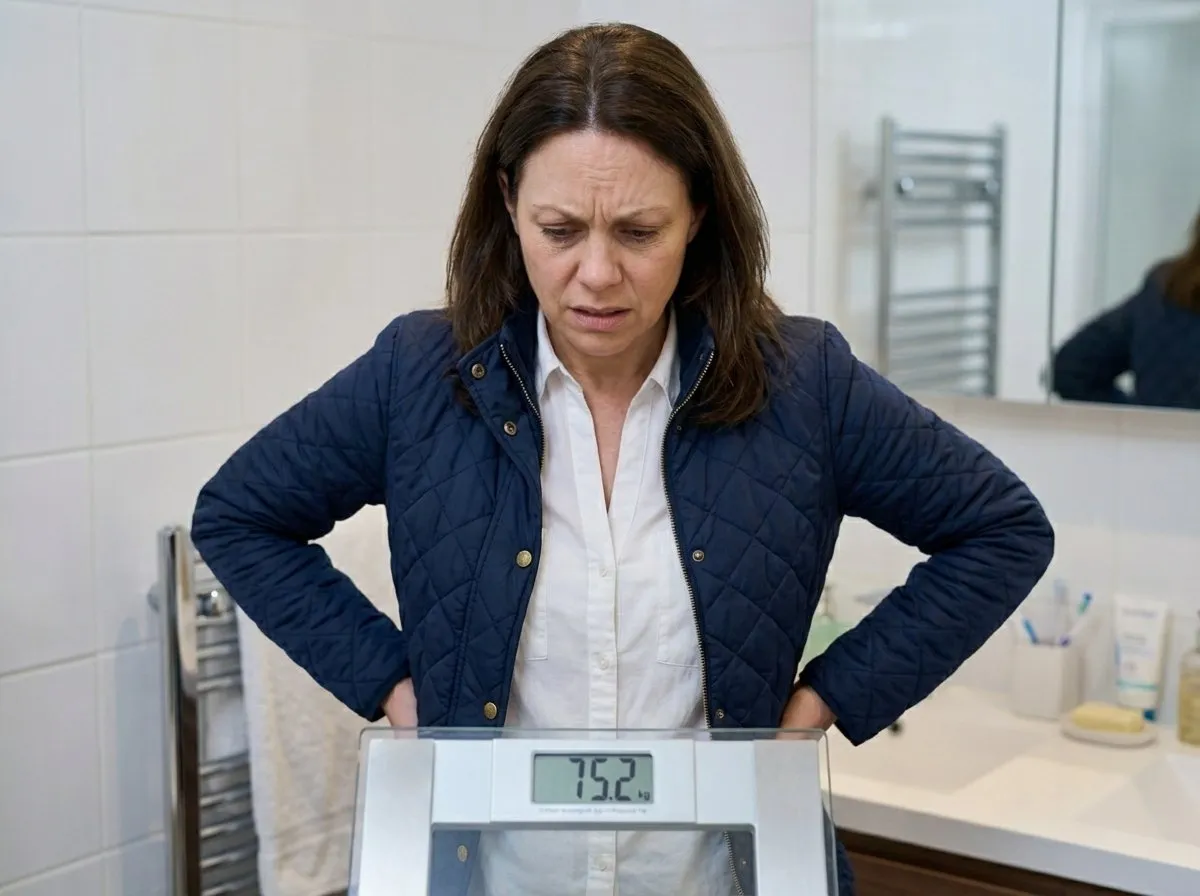
The scales haven’t moved in two weeks. You’ve been religious about your injections, you’re eating less than ever, and yet… nothing. Your heart sinks every morning when you step on those scales. What’s going wrong?
You’re not alone. Weight loss stalls are one of the most common, and most frustrating, experiences for Mounjaro patients. The good news is that most stalls are temporary, predictable, and a completely normal part of your weight loss journey.
Understanding why your weight loss has stalled helps you stop panicking and start taking the right action. Sometimes you just need patience. Other times, a dose adjustment or small lifestyle tweak breaks you through. Slinic’s pharmacist-led support helps you work out which applies to you.
Quick Summary: What You Need to Know
- Weight loss stalls are normal and rarely mean treatment has stopped working
- Common causes: dose adaptation, eating more than you realise, body composition changes, water retention, and metabolic adaptation
- Most stalls resolve within 2-4 weeks with the right management
- Slinic’s pharmacists provide dose-adjustment guidance, with your query reviewed within 24 hours
- Transparent pricing: £129 to £267 monthly depending on dose, with delivery included
What’s Covered in This Guide
5 Reasons Your Weight Loss Has Stalled
Weight loss stalls happen for specific, identifiable reasons. Understanding which applies to you determines whether you need patience, a dose adjustment, or lifestyle tweaks.
Reason 1: Your Body Has Adapted to Your Current Dose
This is the most common reason for stalled weight loss, particularly if you’ve been on the same dose for 4-6 weeks.
Your body’s hormone receptors become less responsive to the current dose. The appetite suppression you experienced initially diminishes. You notice yourself thinking about food more, feeling hungry between meals, or finishing larger portions.
This isn’t medication failure, it’s exactly why Mounjaro follows a structured dose progression schedule. Clinical trials used escalating doses precisely because researchers knew adaptation would occur.
The solution: Contact Slinic’s pharmacists to discuss dose progression. Most patients move up a dose level no sooner than every 4 weeks:
Mounjaro Dosing Schedule
| Dose | Typical Duration | Stage |
|---|---|---|
| 2.5mg | Weeks 1-4 | Starting (adjustment) dose |
| 5mg | Weeks 5-8 | First therapeutic dose |
| 7.5mg | Weeks 9-12 | Dose increase if tolerated |
| 10mg | Weeks 13-16 | Dose increase if tolerated |
| 12.5mg | Weeks 17-20 | Dose increase if tolerated |
| 15mg | Week 21+ | Maximum dose |
The four-week interval is a minimum
Dose increases happen no sooner than every four weeks, and there is no requirement to reach 15mg. Many patients settle at an effective maintenance dose well below the maximum. Your pharmacist will help you find the dose that works for you rather than pushing you to the top of the ladder.

Reason 2: You’re Eating More Than You Realise
As Mounjaro’s initial effect fades, portion sizes can creep upward without you noticing. The medication still works, higher calorie intake just offsets its effects.
Specific patterns to watch:
- Liquid calories: Coffee shop drinks, smoothies, and juices add hundreds of calories invisibly
- Cooking methods changed: Grilled chicken became fried; steamed veg became roasted in oil
- Snacking returned: “Just a few” biscuits becomes half a packet
- Restaurant portions: You’re finishing meals you’d previously have taken home as leftovers
Awareness Exercise
Try tracking everything you eat for just three days, not to restrict, but to become aware. Many patients discover they’re consuming several hundred more daily calories than they thought. This awareness alone often breaks the stall.
Reason 3: Body Composition Changes
The scales don’t distinguish between fat, muscle, water, and waste. You might be losing fat whilst gaining a little muscle, so the scale shows a stall while your body is still changing shape.
How to tell if this applies:
- Clothes fit better or looser despite stable weight
- Measurements decreasing (waist, hips, thighs)
- More muscle definition visible
- Strength or fitness improving
- Started or intensified exercise recently
Why this matters: Muscle is denser than fat. You can drop a dress size whilst the scale barely moves. This is desirable progress, not a problem.

Reason 4: Water Retention Is Masking Fat Loss
Your body holds onto water for numerous temporary reasons unrelated to actual fat loss.
Common water retention triggers:
- Hormonal fluctuations: Women can retain 2-4kg pre-menstrually
- New exercise: Muscles hold water for repair, which can add 1-3kg temporarily
- High sodium: A single salty restaurant meal can cause 1-2kg overnight retention
- Inadequate hydration: Not drinking enough can cause retention paradoxically
- Constipation: Common with Mounjaro; waste retention adds 1-2kg
Smart Weighing Strategy
Weigh yourself at the same time of day. Track weekly averages, not daily fluctuations. Expect 2-4kg swings from water, which is normal. If you’ve gained 2kg overnight, it’s water, not fat.
Reason 5: Metabolic Adaptation
The more weight you’ve lost, the more your metabolism slows to preserve energy. This is adaptive thermogenesis, your body responding to what it perceives as reduced energy intake.
The SURMOUNT-1 clinical trial showed this pattern clearly: average weekly loss rates decreased over time, even as patients continued losing overall. Faster loss earlier on and a slower, steadier rate later are both signs of treatment working, not failing.
Who experiences this most:
- Those who have already lost a significant amount of weight
- Older patients (metabolism naturally slower)
- People with a history of yo-yo dieting
- Those eating very low calorie intakes
Dose progression can help overcome metabolic adaptation by providing stronger appetite suppression, when it is clinically appropriate.
Not Sure Why You’ve Stalled?
A Slinic pharmacist can review your progress and tell you whether to wait, adjust your dose, or tweak your routine. Your query is reviewed within 24 hours.
Complete Your Online ConsultationIs This a Stall or Just Slower Loss?
Not every plateau requires action. Distinguishing between concerning stalls and normal slowdowns prevents unnecessary worry.
Normal vs Concerning
| Normal Slowdown (Wait) | Concerning Stall (Act) |
|---|---|
| Losing 0.5-1kg per week (down from 1-2kg) | Zero weight loss for 3+ weeks |
| Appetite still well-controlled | Appetite returned to pre-treatment levels |
| Clothes still getting looser | No changes in measurements or fit |
| On current dose 2-3 weeks | On same dose 6+ weeks with no progress |
What to do if it looks like a concerning stall: Contact Slinic. A pharmacist will review your treatment within 24 hours and is likely to recommend dose progression or lifestyle modifications.
Your Troubleshooting Action Plan
When weight loss stalls, systematic troubleshooting identifies the cause and the solution.
Week 1-2: Food and Water Audit
- Track all food for 3 days to identify hidden calories
- Increase water to 2-3 litres daily
- Address constipation with fibre and hydration
- Reduce sodium intake
Week 3: Contact Slinic
If there’s no improvement after 2 weeks, contact Slinic’s pharmacists, who will review your query within 24 hours.
What the pharmacist will assess:
- How long you’ve been on the current dose
- Appetite levels and control
- Your weight loss trajectory over time
- Side effect patterns
Likely recommendations:
- Dose progression: If you’ve been on the same dose 4+ weeks with returning appetite
- Continued monitoring: If you’re on a new dose and under 3 weeks in
- Lifestyle modifications: If food tracking revealed issues

How Slinic Supports You Through Stalls
Navigating a weight loss stall is stressful. Slinic’s pharmacist-led approach means you’re never managing it alone.
What Sets Slinic Apart
- Pharmacist-led clinical care: GPhC-registered pharmacy 1033729, overseen by Superintendent Pharmacist Shadeia Younis (GPhC 2052119)
- Pharmacist support: a pharmacist reviews your query within 24 hours
- Flexible dose management: pharmacists review your progress and adjust your dose when it is clinically appropriate
- Transparent pricing: clear monthly costs with delivery included and no hidden consultation fees
Shadeia Younis
Superintendent Pharmacist, Slinic (GPhC 2052119)
Every Mounjaro prescription dispensed by Slinic is clinically verified and overseen by Shadeia Younis, our superintendent pharmacist. When your weight loss stalls, a dose review is carried out by a qualified, registered professional who is accountable for its safety, not an automated system.
That oversight is what allows dose decisions to be made around your individual response, with the flexibility to hold a dose or adjust it when that is the right clinical call.

Slinic’s Transparent Pricing
| Dose | Monthly Cost |
|---|---|
| 2.5mg | £129 |
| 5mg | £155 |
| 7.5mg | £206 |
| 10mg | £230 |
| 12.5mg | £247 |
| 15mg | £267 |
What’s included: medication supply, clinical assessment, pharmacist-led follow-up, dose adjustments when appropriate, ongoing support and guidance, and discreet delivery to your address.
What’s not included: there are no hidden consultation fees, no separate prescription charges, and no annual memberships. Delivery is included in the monthly price.
When to Actually Worry: Medical Red Flags
Most stalls resolve naturally or with simple interventions. However, certain symptoms require prompt medical attention.
Contact Slinic or your GP urgently if you experience:
- Severe, persistent vomiting (24+ hours)
- Severe abdominal pain, especially in the upper abdomen
- Signs of pancreatitis (intense pain radiating to the back)
- Unexpected weight gain (3+ kg in one week)
- Symptoms of a severe allergic reaction
Call 999 for:
- Difficulty breathing or chest pain
- Severe allergic reaction (facial swelling, difficulty swallowing)
- Persistent vomiting causing dehydration
- Signs of pancreatitis with severe pain
Frequently Asked Questions
Most stalls resolve within 2-4 weeks with proper management. If you’re on the same dose for 4+ weeks with no progress, dose progression typically breaks the stall within 1-2 weeks of the increase.
Temporary stalls from water retention resolve within 3-7 days once the trigger passes.
No. Don’t increase calories hoping to “boost metabolism.” With Mounjaro, the medication works by reducing calorie intake through appetite suppression. Eating more counteracts its effects.
What actually helps:
- Ensure adequate protein to preserve muscle
- Don’t drop to very low calorie intakes
- Focus on nutrient-dense whole foods
- Track intake to ensure you’re not overeating unknowingly
Yes, absolutely. There’s no requirement to progress to the maximum dose if your current dose is working well.
Many patients maintain successfully on 5mg, 7.5mg or 10mg without needing higher doses. Slinic’s pharmacists work with your individual response, with no pressure to escalate unnecessarily.
A Slinic pharmacist reviews your query within 24 hours, assessing your treatment history, current progress, and side-effect tolerance. They provide personalised recommendations on dose progression when it is medically appropriate.
Higher Mounjaro doses cost more each month. If cost is challenging:
- Stay on an affordable dose for longer: many people achieve good results on 5mg, 7.5mg or 10mg
- NHS access: limited availability exists for certain patient groups (speak to your GP)
Your Slinic pharmacist works within your budget, with no pressure into a dose you can’t afford.
This depends on what you do after stopping. Research shows a substantial proportion of lost weight is typically regained within a year of stopping abruptly.
How to reduce regain:
- Gradual discontinuation: taper doses slowly
- Established habits: build sustainable eating patterns during treatment
- Maintenance planning: work with pharmacists on transition strategies
- Continued monitoring: regular weight checks
Obesity is a chronic condition, and some patients stay on a maintenance dose long term, which can be medically appropriate.
Medical References and Guidance
Clinical guidance in this article is based on the Mounjaro (tirzepatide) Summary of Product Characteristics (SPC) as approved by the MHRA for use in the UK, and the BNF. Weight loss data is drawn from the SURMOUNT-1 trial (Jastreboff et al., New England Journal of Medicine, 2022). NICE Technology Appraisal TA1026 covers tirzepatide for weight management in adults (published December 2024). All medical facts in Slinic content are verified against MHRA, NICE, NHS, and BNF sources.
Ready to Break Through Your Stall?
Don’t struggle with a weight loss plateau alone. Slinic’s pharmacist-led approach gives you expert guidance when you need it, with your query reviewed within 24 hours.
Complete Your Online ConsultationRelated Mounjaro Guides
Related Blog Posts From Slinic
How to Break a Mounjaro Weight Loss Plateau – clinician-led strategies for getting the scales moving again when progress has stalled.
Feeling Discouraged with Weight Loss Progress? – practical, reassuring guidance for staying motivated when a plateau is wearing you down.
Mounjaro and Food: The Definitive Clinical Guide – how nutrition shapes your results on Mounjaro, and what to eat to keep weight loss progressing.
Medical Disclaimer
This article provides educational information about Mounjaro (tirzepatide) weight loss plateaus and is not a substitute for professional medical advice. Always consult a qualified healthcare professional before starting any weight loss medication or making dose adjustments. Individual results may vary.
GPhC Registered Pharmacy: 1033729 | Superintendent Pharmacist: Shadeia Younis (GPhC: 2052119)
Medical information based on MHRA SPC, BNF, SURMOUNT-1 (Jastreboff et al., NEJM 2022), and NICE TA1026. Mounjaro is an MHRA-approved medication for weight management in eligible adults.