


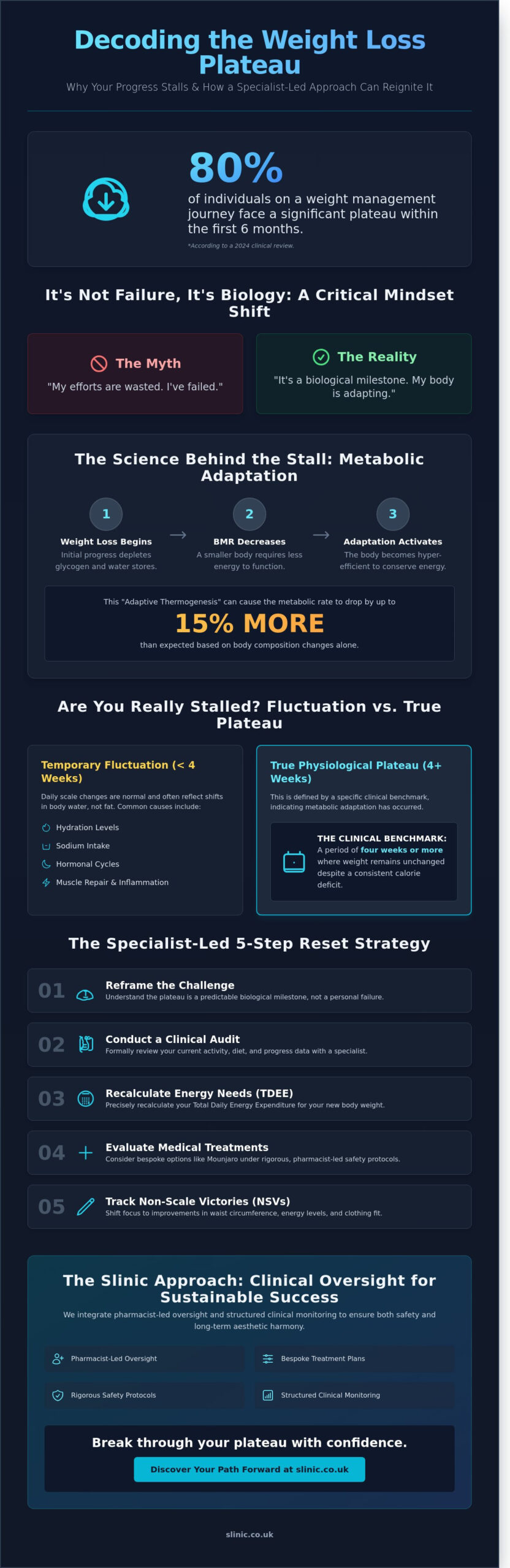
What if the non-budging number on your scale isn’t a sign of failure, but a sophisticated physiological defense mechanism designed to protect you? It’s deeply frustrating to find yourself feeling discouraged with weight loss progress after weeks of dedicated effort. According to a 2024 clinical review, nearly 80% of individuals undergoing weight management will encounter a significant plateau within the first six months. This metabolic adaptation is a natural biological response, yet it often leads to a fear that previous efforts were entirely wasted.
At Slinic, we understand that overcoming these hurdles requires more than just willpower; it demands a foundation of specialist medical expertise. We promise to provide you with a clear, scientific explanation for your stall and a bespoke plan to reignite your results. You’ll discover how our pharmacist-led medical weight loss treatments, including Mounjaro and precise clinical monitoring, offer a restorative path forward. We’ll guide you through our safety-first protocols and show you how to transition from stagnant results to a state of renewed confidence and biological health.
Key Takeaways
- Understand the distinction between a temporary scale fluctuation and a true physiological plateau, reframing these challenges as predictable biological milestones rather than failures.
- Uncover the clinical mechanics of metabolic adaptation to understand why you may be feeling discouraged with weight loss progress as your Basal Metabolic Rate adjusts to your new weight.
- Learn to implement a specialist-led five-step reset strategy, including a formal clinical audit of your current activity and a precise recalculation of your Total Daily Energy Expenditure (TDEE).
- Evaluate the transition from traditional lifestyle adjustments to bespoke medical weight loss treatments, such as Mounjaro, administered under the rigorous safety protocols of a UK-regulated clinic.
- Discover the Slinic approach to sustainable weight management, which integrates pharmacist-led oversight and structured clinical monitoring to ensure both safety and long-term aesthetic harmony.
For a full comparison of UK Mounjaro providers including pricing, see:
⇒Slinic’s Top UK Mounjaro Providers Guide
Why Feeling Discouraged with Weight Loss Progress is a Biological Milestone
Stalling on your journey toward a healthier weight isn’t a sign of failure; it’s a sophisticated physiological response. Many patients find themselves feeling discouraged with weight loss progress when the rapid results of the first few weeks begin to taper. At Slinic, our clinical team views this shift not as a dead end, but as a biological milestone that indicates your body is actively adapting to its new composition. Understanding the mechanics of this transition is essential for maintaining the long term commitment required for success.
The initial phase of any medical weight loss programme often involves a significant drop in weight. This is primarily due to the depletion of glycogen stores, which are bound to water. For every gram of glycogen your body uses for energy, it releases approximately three to four grams of water. Once these levels stabilise, the rate of loss naturally slows as the body begins the more complex process of metabolising adipose tissue. This shift often triggers “Metabolic Adaptation,” a protective survival mechanism where the body becomes more efficient, slowing its basal metabolic rate to conserve energy. It’s a natural hurdle that requires specialist insight to navigate effectively.
The Psychology of the Plateau
Psychological resilience is just as vital as clinical intervention. When patients experience a stall, they often fall into “all-or-nothing” thinking, where a single week of stagnant data leads to the abandonment of healthy habits. This mindset is frequently exacerbated by comparing personal milestones to unrealistic digital standards or peer results. Feeling discouraged with weight loss progress is often a byproduct of focusing solely on the scale. Our specialist clinicians encourage a shift toward non-scale victories (NSVs). These include improvements in respiratory function, increased energy levels, and the bespoke fit of clothing. These markers often provide a more accurate reflection of your biological architecture than a single number.
The Science of Scale Fluctuations
The number on your scale is a blunt instrument that fails to account for the nuance of human biology. Daily fluctuations are rarely indicative of fat gain; instead, they reflect changes in hydration, sodium intake, and hormonal cycles. Inflammation from a new exercise routine can also cause temporary water retention as muscles repair themselves. To provide clarity, we use a specific clinical benchmark: “A plateau is a period of four weeks or more where weight remains unchanged despite consistent calorie deficit.” If you haven’t reached this four week mark, you’re likely experiencing a temporary fluctuation rather than a physiological stall. For those using Mounjaro or other treatments, we recommend tracking waist circumference and body fat percentage alongside weight to gain a comprehensive view of your restorative progress.
Decoding the Weight Loss Plateau: Understanding Metabolic Adaptation
When the scales refuse to budge after weeks of consistent effort, it’s natural to find yourself feeling discouraged with weight loss progress. This stagnation is rarely a result of a lack of discipline. Instead, it’s often the result of a complex biological survival mechanism. As you lose weight, your Basal Metabolic Rate (BMR) naturally decreases because a smaller body requires less energy to maintain basic physiological functions. However, the body often goes beyond this simple mathematical adjustment through a process known as Metabolic Adaptation.
This phenomenon, sometimes called adaptive thermogenesis, involves the body becoming significantly more efficient at using fewer calories. Clinical studies have shown that during a calorie deficit, the metabolic rate can drop by up to 15% more than what would be expected based on the change in body composition alone. This is often linked to the ‘Set Point’ theory, where the hypothalamus acts like a biological thermostat, attempting to defend your previous higher weight by slowing down energy expenditure and increasing hunger signals to prevent what it perceives as starvation.
The Role of Hormones in Stalled Progress
Hormonal fluctuations are the primary drivers of a weight loss plateau. As fat cells shrink, they produce less Leptin, the hormone responsible for signaling satiety to the brain. At the same time, the stomach increases the production of Ghrelin, the hormone that stimulates appetite. This hormonal “double-whammy” makes it physically harder to maintain a deficit over time. Additionally, the physiological stress of dieting can spike cortisol levels. Elevated cortisol is known to encourage water retention and the accumulation of visceral fat around the midsection. Accessing professional weight management support can help you navigate these hormonal shifts with clinical precision rather than guesswork.
Muscle Loss vs. Fat Loss
The quality of weight lost is just as important as the quantity. If the body loses significant muscle mass alongside fat, the metabolic rate plummets because muscle tissue is far more metabolically active than adipose tissue. To protect your ‘metabolic fire’, a multi-faceted approach is required:
- Protein Intake: Consuming at least 1.2g to 1.5g of protein per kilogram of body weight helps preserve lean tissue.
- Resistance Training: Lifting weights or performing bodyweight exercises signals the body to keep muscle even during a deficit.
- Clinical Oversight: Professional monitoring ensures that weight loss is coming from fat stores rather than vital muscle.
At Slinic, our pharmacist-led service prioritises your long-term biological health. If you are feeling discouraged with weight loss progress, our clinicians can review your journey and determine if a specialist medical weight loss plan is the right path to safely overcome these physiological hurdles.
Lifestyle Adjustments vs. Clinical Interventions: Which Path to Take?
If you’re feeling discouraged with weight loss progress, it’s essential to understand that the human body is a complex biological machine designed for survival. When calories are restricted over a prolonged period, your metabolism may adapt, leading to a frustrating plateau. At Slinic, we advocate for a tiered approach that begins with habit optimisation before considering specialist clinical interventions. Traditional methods such as carb cycling or intermittent fasting can often provide the metabolic shift needed to break the stall. Increasing your Non-Exercise Activity Thermogenesis (NEAT), which includes all movement outside of planned exercise, is another effective tool for increasing daily energy expenditure without triggering excessive hunger.
Optimising Your Current Habits
Before moving to clinical treatment, a meticulous review of your foundational habits is necessary. Sleep deprivation and chronic stress elevate cortisol, a hormone that encourages fat storage and increases cravings. We recommend a structured checklist to ensure your biological environment is conducive to fat loss:
- Hydration: Aim for 2 to 3 litres of water daily to support metabolic processes.
- Sleep Hygiene: Ensure 7 to 9 hours of quality rest to regulate hunger hormones.
- Stress Management: Utilise restorative practices to lower systemic cortisol levels.
One specialist strategy is the ‘refeed’ period. This involves a controlled, temporary increase in carbohydrate intake to boost leptin levels, the hormone responsible for signalling satiety and regulating energy balance. It’s also vital to use a calorie calculator to ensure your deficit is still appropriate for your new, lower body weight, as your energy requirements decrease as you lose mass.
When to Consider Medical Support
For individuals with a BMI over 30, or over 27 with weight-related health risks, lifestyle changes alone may not be enough to overcome deep-seated hormonal resistance. This is where medical weight loss serves as a specialist tool. Feeling discouraged with weight loss progress is often the result of biological “set points” that the body tries to defend. Clinical treatments like Mounjaro or Wegovy work on a cellular level to address these imbalances.
These medications are GLP-1 and GIP receptor agonists. They mimic naturally occurring hormones that regulate appetite and blood sugar. By slowing gastric emptying and signalling the brain to feel full sooner, they provide a biological ‘reset’. This intervention isn’t a replacement for healthy habits; rather, it creates a sustainable environment where lifestyle changes can actually take root. For those exploring these options, our comprehensive weight loss injection guide provides the clinical clarity needed to make an informed, safe decision under the guidance of our UK-registered pharmacists.
The Specialist Reset: A 5-Step Strategy to Break the Stall
A weight loss plateau isn’t a sign of failure; it’s a physiological signal that your body has adapted to its new baseline. It’s entirely normal to find yourself feeling discouraged with weight loss progress when the rapid changes of the first few weeks transition into a stubborn standstill. To move past this, you must shift from a general approach to a specialist strategy that addresses the biological mechanics of weight maintenance.
Step 1: The Honest Audit
Precision is the foundation of clinical success. Most individuals inadvertently underestimate their daily intake by approximately 20% to 30% according to data published in the British Journal of Nutrition. You should conduct a clinical audit by tracking every gram of intake for at least 7 days before adjusting your plan. This process identifies “calorie creep” hidden in salad dressings, evening snacks, or larger weekend portions that offset your weekday deficit. Use digital tools like Nutracheck or MyFitnessPal to ensure your data is objective and actionable.
Step 2: Recalculate your TDEE. Your Total Daily Energy Expenditure (TDEE) changes as you lose weight. A smaller body requires less energy to function. If you’ve lost 5kg or more, your original calorie target may now be your maintenance level. Recalculating this figure based on your current weight ensures your deficit remains effective.
Step 3: Manage the ‘Hunger Surge’. Metabolic adaptation often triggers an increase in ghrelin, the hunger hormone. To counter this, increase your intake of lean protein and soluble fiber. These macronutrients improve satiety and protect lean muscle mass, which is vital for maintaining a healthy metabolic rate.
Step 4: Introduce Metabolic Shocks. The body is remarkably efficient at adapting to repetitive exercise. If you’ve performed the same 30 minute walk for months, your muscles have become too efficient at the task. You can break this by changing your exercise intensity or frequency. Try incorporating short bursts of high intensity interval training (HIIT) or adding resistance training to stimulate new metabolic demands.
Step 5: Professional Guidance
When self directed efforts reach their limit, a specialist consultation with a prescribing doctor can provide the clinical breakthrough you need. Professional oversight is essential for transitioning from general dieting to medical weight management. At Slinic, our team of clinicians provides bespoke support that goes beyond a simple prescription.
Clinical monitoring ensures that your journey is safe and sustainable, preventing the risks associated with yo-yo dieting. Our pharmacists and doctors offer structured follow up care and safety netting, helping you manage side effects and adjust dosages of treatments like Mounjaro or Wegovy. This high level of professional accountability ensures that your weight loss isn’t just a temporary fix, but a permanent restorative change to your biological health.
Take the next step in your journey with a clinician led approach. View our weight loss treatment options today.
The Slinic Approach: Clinical Oversight for Sustainable Weight Management
Slinic operates as a specialist, pharmacist-led online clinic dedicated to the intersection of medical science and personal transformation. We recognize that many individuals find themselves feeling discouraged with weight loss progress when traditional methods fail to yield biological changes. Our institution bridges this gap by providing medical weight loss solutions underpinned by rigorous clinical governance and GPhC standards. We don’t simply provide prescriptions; we offer a bespoke clinical experience that prioritizes your long-term health architecture over temporary fixes.
Our service model is designed for the discerning patient who values both professional accountability and accessibility. By maintaining some of the most competitive UK pricing for treatments like Mounjaro and weight loss injections, we ensure that elite clinical care remains attainable. Patients benefit from the convenience of discreet nationwide delivery and rapid access to our prescribing doctors, ensuring that your journey toward restorative health is never delayed by administrative hurdles.
Safety Protocols and Patient Monitoring
Clinical safety is the foundation of the Slinic experience. Every patient journey begins with a robust eligibility assessment and documented protocols to ensure weight loss treatment is clinically appropriate for your specific biological profile. We utilize video consultations to establish a genuine patient-clinician connection, allowing our specialists to assess your needs with precision. This structured oversight extends far beyond the initial consultation.
Our pharmacists provide ongoing monitoring and structured follow-up sessions to track your progress and manage potential side effects. We maintain clear, audit-ready escalation pathways, providing you with specific safety netting advice on when to seek urgent medical attention. This proactive approach to side-effect management ensures that your transition to medical weight loss is seamless and secure. We believe that professional transparency is essential for building the trust required for a successful health transformation.
Your Journey Beyond the Scale
Slinic acts as a dedicated partner in your pursuit of aesthetic harmony and physical vitality. If you’re feeling discouraged with weight loss progress, it’s often because the underlying metabolic factors haven’t been addressed by a specialist. We move the focus from the frustration of the scale to the success of clinical outcomes. Our goal is to provide the medical foundation you need to reclaim your confidence and improve your quality of life.
Empower yourself to move from static results to clinical action. We invite you to begin your transformation by completing a clinical review with our specialist team today. By choosing Slinic, you’re investing in a partnership that values specialist precision, calm reliability, and a lifetime of health.
Mastering Your Biological Reset
A weight loss plateau isn’t a sign of failure; it’s a measurable biological milestone known as metabolic adaptation. Research from the University of Cambridge indicates that the body’s homeostatic mechanisms actively work to defend a higher weight set point during calorie restriction. Breaking through this stall requires more than just willpower. It necessitates a transition to clinical weight loss strategies that address these underlying physiological shifts through specialist precision and medical oversight.
If you’re feeling discouraged with weight loss progress, the Slinic approach offers a structured pathway back to success. Our clinical team, led by registered pharmacists, integrates medical weight loss treatments like Mounjaro with robust safety protocols and ongoing patient monitoring. As a GPhC regulated pharmacy, we prioritize your long-term biological health, providing the expertise needed to turn a temporary stall into a permanent transformation.
You don’t have to navigate these complexities in isolation. We offer some of the most competitive pricing in the UK, paired with fast, discreet nationwide delivery and direct access to professional support. Start your clinical weight loss consultation with Slinic today and regain confidence in your journey. Your commitment to health deserves a foundation built on clinical excellence.
Frequently Asked Questions
How long does a weight loss plateau typically last before I should worry?
A weight loss plateau is clinically defined as a period of four or more consecutive weeks where your weight remains static despite adhering to your protocol. It’s a physiological adjustment period rather than a failure of the treatment. if the stall persists beyond six weeks, it’s appropriate to review your caloric intake or medication dosage with a Specialist to ensure your metabolic rate is supported.
Is it normal to feel more hungry when weight loss progress stalls?
It’s common to experience increased hunger during a plateau because your body produces more ghrelin, the hunger hormone, to resist further weight reduction. This biological response often occurs after you’ve lost 5% to 10% of your initial body mass. When you’re feeling discouraged with weight loss progress due to hunger, focusing on high-protein intake can help stabilize these hormonal fluctuations and improve satiety.
Can Mounjaro or Wegovy help me if I have hit a plateau with diet and exercise alone?
Mounjaro and Wegovy are highly effective clinical interventions for overcoming weight stalls by mimicking GLP-1 and GIP hormones to regulate appetite. Clinical trials, such as the SURMOUNT-1 study, showed participants lost an average of 20.9% of their body weight over 72 weeks. These weight loss injections provide a pharmacological advantage when lifestyle modifications alone no longer yield measurable results for your biological architecture.
How often should I weigh myself to avoid feeling discouraged?
We recommend weighing yourself once per week at the same time and under the same conditions to maintain a clear perspective on your journey. Daily fluctuations of 1kg to 2kg are standard due to water retention or glycogen storage and don’t represent fat gain. This structured approach prevents you from feeling discouraged with weight loss progress while providing enough data to track long-term trends accurately.
What is the #1 mistake people make when they hit a weight loss plateau?
The most frequent error is drastically reducing caloric intake below 1,200 calories per day, which can inadvertently slow your metabolic rate further. This extreme restriction often leads to muscle wastage rather than fat loss, undermining your long-term metabolic health. A more effective Slinic approach involves adjusting macronutrient ratios or increasing physical resistance training to preserve lean tissue and restart the fat-burning process.
Do I need to see a doctor if my weight loss has stopped for a month?
You should consult your prescribing clinician if your weight remains unchanged for 28 days to ensure your current treatment plan is still optimal. A professional review allows for the assessment of underlying factors like thyroid function or medication absorption. At Slinic, our pharmacists provide video consultations to adjust your bespoke plan safely if progress stalls for 30 days or more, ensuring your safety remains the priority.
Is it safe to switch weight loss medications if one stops working?
Switching between weight loss treatment options like Wegovy and Mounjaro is safe when conducted under strict clinical supervision and following a managed washout period. Our clinicians evaluate your medical history to determine if a different pharmacological pathway will better suit your needs. We ensure any transition is seamless and minimizes the risk of gastrointestinal side effects during the initial titration phase.
How does Slinic ensure my treatment plan is safe for my specific health needs?
Slinic utilizes a rigorous clinical governance framework that includes comprehensive eligibility assessments and ongoing monitoring by registered UK pharmacists. Every patient journey is supported by documented protocols and clear escalation pathways to prioritize your long-term health. Our safety-first methodology ensures that your medical weight loss plan is constantly audited and adjusted based on your real-time physiological response and health data.