


What if the gravitational pull of the earth is actually the least reliable indicator of your clinical progress? For the 60% of patients who experience a weight loss plateau at some point in their journey, the daily ritual of stepping on the scale often becomes a source of frustration rather than a tool for success. At Slinic, our Specialist team recognizes that focusing solely on a single number obscures the significant non-scale victories weight loss treatments actually facilitate. While the scale measures total mass, it fails to differentiate between inflammatory fluid retention and the critical reduction of visceral fat that defines true metabolic health.
We understand that a static number can make it feel like your efforts have stalled, even when your body is undergoing a profound restorative shift. This guide will provide you with a sophisticated framework for tracking your transformation by identifying the clinical, physical, and psychological markers that signal real biological change. You’ll discover how our prescribing doctors monitor indicators such as improved glycemic control and a lower resting heart rate to validate your hard work. We’ll explore the Slinic approach to measuring success, moving beyond superficial metrics to provide a foundation for a lifetime of health.
Key Takeaways
- Understand the clinical rationale for prioritising non-scale victories weight loss as a more accurate measure of your evolving biological architecture and metabolic health.
- Identify the subtle aesthetic markers, such as the refined drape of garments and specific inch loss, that indicate successful reduction in subcutaneous fat before the scale moves.
- Gain insight into the critical metabolic improvements—including blood pressure and lipid profiles—that our specialist pharmacists monitor to validate your clinical progress.
- Learn how the cessation of intrusive ‘food noise’ serves as a profound psychological indicator of the efficacy of modern weight loss treatment.
- Discover how to implement a holistic tracking strategy that integrates professional clinical oversight for a safer, more sustainable journey toward restorative health.
For a full comparison of UK Mounjaro providers including pricing, see:
⇒Slinic’s Top UK Mounjaro Providers Guide
Redefining Success: What are Non-Scale Victories (NSVs)?
In a clinical setting, we define non-scale victories weight loss as measurable improvements in physiological function, metabolic health, and physical aesthetics that occur independently of a patient’s total body mass. While the bathroom scale provides a solitary data point, our specialists at Slinic advocate for a holistic tracking strategy for long-term health. This approach is vital because the scale is a lagging indicator; it reflects past efforts rather than the real-time cellular changes occurring during a medical weight loss journey. When patients encounter a weight plateau, focusing on these alternative markers builds the psychological resilience necessary to maintain their treatment protocol. By shifting the perspective from a single number to broader health outcomes, we ensure that the patient’s journey remains restorative and focused on long-term biological health.
The Limitations of the Bathroom Scale
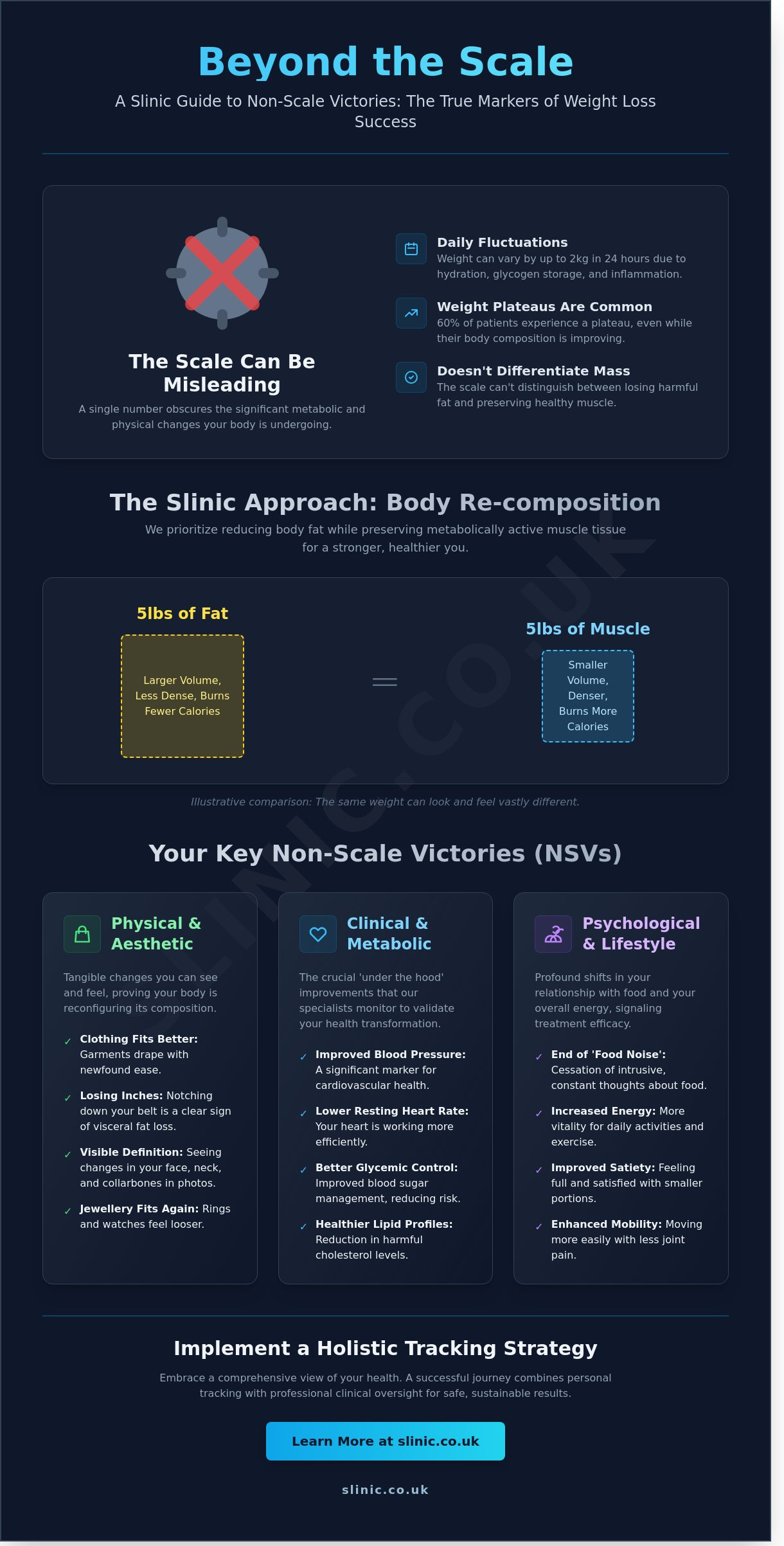
Daily weight readings are often misleading due to the body’s complex fluid dynamics. Hydration levels, glycogen storage, and transient inflammation can cause the scale to fluctuate by up to 2kg within a single 24-hour period. Our clinicians often observe the ‘Whoosh Effect’ in patients using non-scale victories weight loss as a metric. This phenomenon describes a biological delay where fat cells shrink but temporarily retain water to maintain their structure. The scale remains stagnant for days or weeks until the body suddenly releases this fluid, resulting in a delayed drop in weight. Crucially, a standard scale lacks the specialist precision to differentiate between the loss of harmful visceral fat and the preservation of metabolically active muscle tissue.
The Science of Body Composition
The Slinic approach prioritizes body re-composition, which is the process of reducing adipose tissue while safeguarding lean muscle and bone density. Maintaining muscle mass is critical for a healthy metabolic rate, as muscle tissue burns significantly more calories at rest than fat tissue. Body composition is the ratio of fat to non-fat mass in the human body. By focusing on how clothes fit or improvements in physical stamina, patients can track the success of their weight loss treatment more accurately. This specialist methodology ensures that the transformation is not merely about being smaller, but about becoming structurally stronger and more metabolically efficient.
Physical and Aesthetic Markers of Physiological Change
The numeric readout on a scale provides a single data point, but it often fails to capture the intricate biological architecture of fat loss. Physiological change frequently manifests as a profound structural shift before the scale registers a significant drop. This is particularly evident as subcutaneous fat reduces, causing garments to drape and fit with newfound ease. Patients utilizing medical weight loss interventions often observe these changes first in the way a jacket sits across the shoulders or how trousers feel at the waist. These non-scale victories weight loss milestones signal that the body is successfully reconfiguring its composition and improving its functional health.
Clothing Fit and Body Measurements
Identifying non-scale victories weight loss markers helps patients stay focused when the scale plateaus. Notching down a belt is a more precise indicator of metabolic health than a five-pound weight fluctuation. This specific change typically indicates a reduction in waist circumference, which is the primary metric for tracking the loss of dangerous visceral fat. Unlike subcutaneous fat, visceral fat accumulates around internal organs and is linked to higher systemic inflammation. We encourage patients to take regular, standardised photos every 28 days to document these aesthetic transitions. This practice creates a visual record of bespoke changes that a scale cannot quantify. Correctly measuring the waist at the midpoint between the lower rib and the iliac crest offers an objective way to monitor progress. Results speak for themselves. These tangible physical improvements often facilitate powerful mental shifts that sustain motivation during the journey.
Vitality and Physical Endurance
Enhanced physical capability serves as a vital clinical indicator of restorative health. Many patients report a seamless transition in their daily energy levels, noting the disappearance of the traditional afternoon slump. This stability often results from improved glycaemic control and metabolic efficiency. Reaching fitness milestones, such as increasing daily step counts by 2,500 or exercising for longer durations without fatigue, demonstrates improved cardiovascular capacity. A significant marker of progress is the ability to climb stairs without experiencing dyspnoea. Improved nutrition and reduced inflammation also contribute to better skin elasticity and clarity. Additionally, the restorative power of high-quality sleep cannot be overstated. As weight is lost from the neck and chest, symptoms of snoring or sleep apnoea often diminish. Our pharmacists provide structured follow-up and side-effect advice to ensure this transition is safe and sustainable. For those seeking a specialist-led path to these outcomes, our clinicians provide comprehensive weight loss treatment tailored to individual biological needs.
Clinical and Metabolic NSVs: The Specialist Perspective
Clinicians often view the scale as a secondary diagnostic tool. While BMI provides a baseline, a pharmacist or prescribing doctor prioritises the physiological shift within the body. These internal markers represent the true non-scale victories weight loss provides, indicating a reduction in the risk of stroke, heart attack, and Type 2 diabetes. For instance, a 5% to 10% reduction in total body weight can lead to a 5 mmHg drop in systolic blood pressure, according to data from the British Heart Foundation. This relief on the cardiovascular system is far more significant for long-term health than the number on a bathroom scale. At Slinic, our clinical governance ensures that we track these metabolic shifts through regular check-ins and video consultations.
Cardiovascular and Glycemic Improvements
A primary indicator of cardiac efficiency is the steady decline in resting heart rate. As adipose tissue decreases, the heart doesn’t have to work as hard to circulate blood. Patients often see their resting heart rate drop by 5-10 beats per minute within the first few months of treatment. Stabilising blood glucose is equally critical. For pre-diabetic patients, a reduction in HbA1c levels below the 42 mmol/mol threshold is a profound clinical milestone. You can explore these metrics further in the specialist clinical guide to medical weight management. Modern weight loss treatment options like Mounjaro facilitate these internal victories by mimicking incretin hormones that regulate insulin secretion. This pharmaceutical support, combined with professional side-effect advice, allows for a controlled and safe metabolic transition.
Reduction in Systemic Inflammation
Chronic inflammation is a silent driver of many metabolic diseases. Fat tissue isn’t just stored energy; it’s an active endocrine organ that produces pro-inflammatory cytokines. By reducing this tissue, patients often experience a significant decrease in C-reactive protein (CRP) levels, a key marker of systemic inflammation. This biological shift manifests physically as reduced joint pain in the knees and hips. Every kilogram lost removes roughly four kilograms of pressure from the weight-bearing joints. Slinic’s pharmacist-led team monitors these markers through structured follow-ups and documented protocols. We focus on the patient’s overall well-being, ensuring that every reduction in adipose tissue contributes to a stronger, more resilient biological foundation. This specialist approach prioritises long-term health over superficial fixes.
The Psychological Shift: Satiety and the End of ‘Food Noise’
The most profound non-scale victories weight loss treatments provide often occur within the mind rather than on the scale. For many patients, the struggle with weight isn’t merely a matter of willpower; it’s a physiological battle against “food noise.” This term describes the constant, intrusive preoccupation with the next meal, snack, or craving that dominates the mental landscape. Clinical data suggests that GLP-1 and GIP receptor agonists help silence these signals, allowing for a “quiet confidence” to emerge as patients regain control over their biological hunger cues.
Understanding the Cessation of Food Noise
Food noise acts as a persistent background hum of hunger that makes portion control feel like an uphill struggle. Modern treatments like Mounjaro target the brain’s reward centres to dampen these intrusive signals. By mimicking natural hormones, these medications regulate the brain’s response to food, effectively turning down the volume on cravings. This shift provides immense mental clarity. When the brain is no longer preoccupied with the logistics of the next meal, patients find they have the cognitive space to make healthier, more deliberate choices. Research published by the British Heart Foundation, which followed patients for an average of 3.68 years, underscores how these physiological changes support long term health outcomes beyond simple weight reduction.
Cognitive Benefits and Emotional Resilience
The transition from emotional eating to functional, mindful nourishment is a cornerstone of the Slinic approach. Stable blood sugar levels prevent the cognitive “fog” and irritability often associated with traditional calorie-restricted diets. Our patients frequently report sharper thinking and improved focus as a direct result of this metabolic stability. This resilience helps decouple self-worth from the number on the scale, focusing instead on the restorative power of professional medical care. We prioritize a safety-first methodology, ensuring that every patient has access to structured follow-up and clinical oversight to manage this psychological transition effectively.
- Biological Architecture: Restoring the natural balance of hunger and satiety hormones.
- Mindful Nourishment: Choosing food based on nutritional value rather than emotional impulse.
- Mental Freedom: The liberation found when food no longer dictates the daily schedule.
- Specialist Precision: Using clinician-led protocols to ensure weight loss is both safe and sustainable.
By focusing on these non-scale victories weight loss becomes a journey of total well-being. This mental shift creates a foundation for a lifetime of health, moving away from temporary fixes toward a bespoke, restorative experience. Our pharmacist-led team provides the necessary safety netting and side-effect advice to help you navigate these changes with confidence.
Ready to experience the mental clarity of a specialist-led weight loss programme? Start your clinical assessment with Slinic today.
Implementing a Holistic Tracking Strategy for Long-Term Health
Weekly weigh-ins often provide a narrow, sometimes misleading, view of biological progress. Transitioning to a comprehensive health audit allows you to observe the restorative changes occurring within your metabolic architecture. By documenting non-scale victories weight loss becomes a journey of clinical improvement rather than just numerical reduction. This shift in perspective is essential for the transition from a temporary diet mindset to a permanent lifestyle architecture.
Integrating clinical oversight from a pharmacist-led weight loss clinic ensures your progress is validated by objective medical data. Professional scrutiny helps differentiate between temporary fluid shifts and genuine fat loss or muscle preservation. Documenting these wins is particularly vital during maintenance phases. According to a 2023 study published in the journal Obesity, patients who tracked multi-dimensional metrics were 21% more likely to sustain their results over a 24-month period compared to those who only monitored the scale.
Creating Your NSV Journal
A structured journal provides a bespoke record of your transformation. Categorise your wins into three distinct columns: physical, mental, and clinical. Physical wins might include improved mobility or clothing fit. Mental wins often manifest as reduced “food noise” or increased cognitive clarity. Clinical wins are the most objective; aim for monthly blood pressure monitoring and periodic blood tests. A reduction of 5mmHg in systolic pressure represents a significant milestone in cardiovascular health. You should also celebrate lifestyle wins, such as choosing a nutrient-dense meal without feeling deprived, as this signals a recalibration of your neurobiological reward system.
Integrating Medical Support
Utilising professional treatment guides helps you understand the physiological milestones expected at week 4, 12, and 24 of your journey. These resources provide a roadmap for what to expect from weight loss treatment, ensuring you don’t feel discouraged during natural plateaus. Regular consultations with our specialist team are essential for adjusting dosages and managing side effects for seamless progress. If you experience significant non-scale victories weight loss despite scale stagnation, you should consult your prescribing clinician to review your body composition and metabolic health markers. This structured follow-up ensures that your treatment remains safe, effective, and tailored to your evolving biological needs.
Advancing Your Health Beyond the Digital Scale
True success in weight management transcends the fluctuations of a digital scale. By focusing on non-scale victories weight loss, you prioritize restorative markers like improved metabolic function and the cessation of intrusive food noise. Clinical data from the 2023 Health Survey for England indicates that sustaining health improvements requires a transition from superficial metrics to long-term biological architecture. Our specialist approach integrates these physiological shifts with rigorous safety protocols for medical weight loss to ensure your journey’s both effective and sustainable.
Slinic provides a foundation for this transformation through pharmacist-led care and bespoke treatment plans. We maintain strict adherence to clinical governance, ensuring every patient receives structured follow-up and expert monitoring. As a service regulated by the General Pharmaceutical Council, we prioritize your safety through clinician-led protocols and discreet nationwide UK delivery. You’ll benefit from a professional partnership that values your overall well-being as much as your aesthetic goals.
Start your clinical weight loss consultation with Slinic’s expert pharmacists today
You’ve got the specialist support needed to achieve lasting harmony between your health and your confidence.
Frequently Asked Questions
Can I lose inches without losing weight on the scale?
Yes, you can lose inches while the scale remains stagnant through a process known as body recomposition. This occurs when you lose adipose tissue while simultaneously gaining lean muscle mass. Since muscle is approximately 18% denser than fat, your physical dimensions decrease even if your total mass doesn’t change. We consider this one of the most significant non-scale victories weight loss patients experience during their first 12 weeks of specialist treatment.
How often should I check for non-scale victories during my weight loss journey?
You should track qualitative wins daily and quantitative measurements every 30 days. Daily observations include energy levels or sleep quality, while physical measurements require more time to show clinical change. Our specialist pharmacists recommend a monthly review of your progress markers to ensure your treatment plan remains effective. This structured approach prevents the frustration associated with daily scale fluctuations, which can vary by 2kg due to hydration alone.
Is improved sleep considered a non-scale victory?
Improved sleep is a vital clinical non-scale victory that indicates metabolic and respiratory health improvements. Clinical data suggests that a 10% reduction in body weight can improve symptoms of obstructive sleep apnea by up to 50%. As systemic inflammation decreases, patients often report reaching deep REM cycles more consistently. Better rest then regulates ghrelin and leptin levels, which are the hormones responsible for hunger and satiety during your waking hours.
What is ‘food noise’ and why is its disappearance a major win?
‘Food noise’ refers to the persistent, intrusive thoughts about eating that often plague individuals with metabolic challenges. Its disappearance is a major victory because it signals that your hunger hormones are finally reaching a state of equilibrium. In clinical settings, approximately 80% of patients using medical weight loss treatments report a significant reduction in these cravings. This mental clarity allows you to make conscious nutritional choices rather than reacting to biological impulses.
Why does my clothing fit better even if the scale hasn’t moved for two weeks?
Your clothing fits better because you’re losing volume, even if your total mass remains constant. One kilogram of fat occupies roughly 1.1 litres of space, whereas one kilogram of muscle occupies only 0.9 litres. This difference in density means your silhouette can shrink by several centimetres while the scale remains fixed. We view this as a primary indicator of successful non-scale victories weight loss, proving that your biological architecture is changing for the better.
Can medical weight loss injections like Mounjaro cause NSVs before actual weight loss?
Yes, weight loss injections like Mounjaro often trigger physiological improvements before the first pound is lost. These medications begin regulating blood glucose levels within 24 hours of the first dose, leading to immediate increases in stable energy. Many patients report reduced joint pain and lower systemic inflammation during the first 7 days of the Slinic experience. These early clinical wins provide a restorative foundation that supports your long-term commitment to the medical weight loss programme.
How do I explain my progress to others if the number on the scale is the same?
Focus your explanation on functional health markers and improved quality of life rather than numerical data. You might mention that your resting heart rate has decreased by 10 beats per minute or that your mobility has improved significantly. Explaining that you’re focusing on ‘biological health’ rather than ‘gravitational weight’ shifts the conversation toward your long-term wellbeing. This professional perspective highlights your commitment to a bespoke health journey that prioritizes specialist-led medical outcomes.
What are the most important clinical NSVs I should track with my pharmacist?
You should track your blood pressure, waist-to-hip ratio, and HbA1c levels during your consultations with our pharmacists. A waist circumference below 88cm for women or 102cm for men is a critical clinical milestone for reducing cardiovascular risk. We also monitor your resting heart rate and glycemic stability as part of our rigorous clinical governance. These metrics provide a comprehensive view of your internal health, ensuring your weight loss treatment delivers a truly transformative and safe outcome.