

Taking a weight loss injection without a specialist-led nutritional strategy is like building a premium home on a shifting foundation. While clinical trials for Tirzepatide demonstrated up to 22.5% weight loss over 72 weeks, the biological integrity of those results depends entirely on your daily mounjaro food choices and protein prioritisation. It’s natural to feel a sense of trepidation when facing gastrointestinal distress or the fear of losing lean muscle mass during a rapid transformation. You deserve a journey that feels as restorative as the results themselves, without the constant shadow of nausea or the exhaustion of rigid calorie counting.
This guide establishes the definitive clinical framework for your nutritional journey, designed by our prescribing pharmacists to maximise your results while prioritising your long-term health. We’ve curated a precise list of optimising foods and bespoke strategies to manage side effects with clinical precision. You’ll discover how to transition from simple appetite suppression to a sophisticated, long-term plan that safeguards your strength and enhances your quality of life through the Slinic approach.
Key Takeaways
- Understand how tirzepatide’s dual-agonist mechanism and delayed gastric emptying alter your physiological response to nourishment.
- Discover why a protein-first nutritional architecture is the non-negotiable foundation for preserving lean muscle mass during rapid weight reduction.
- Identify specific trigger foods to avoid and learn how to optimise your mounjaro food choices to minimise gastrointestinal side effects.
- Master practical behavioural strategies, such as the “little and often” approach, to ensure seamless digestion and sustained energy levels.
- Learn why specialist pharmacist-led oversight is essential for maintaining clinical safety and achieving long-term biological health.
The Relationship Between Mounjaro and Food: A Clinical Perspective
Understanding the interaction between Tirzepatide (Mounjaro) and your daily nutrition is the cornerstone of a successful weight loss journey. As a dual agonist, this medication mimics two naturally occurring incretin hormones: glucose-dependent insulinotropic polypeptide (GIP) and glucagon-like peptide-1 (GLP-1). This dual action creates a sophisticated biological architecture that goes beyond simple calorie restriction. It fundamentally rewires your physiological relationship with mounjaro food and satiety. Our specialist clinicians at Slinic view this treatment as a restorative tool, designed to help patients build a healthier foundation for their long-term well-being.
A critical distinction must be made between a suppressed appetite and nutritional neglect. While the medication effectively reduces “food noise,” it doesn’t remove the body’s requirement for essential micronutrients and high-quality protein. Without a structured approach to eating, patients risk muscle loss and fatigue. The Slinic approach prioritises clinical governance and safety, ensuring that every patient understands how to nourish their body while the medication manages their hunger. We don’t just provide a prescription; we offer a bespoke pathway toward metabolic health.
The Mechanism of Delayed Gastric Emptying
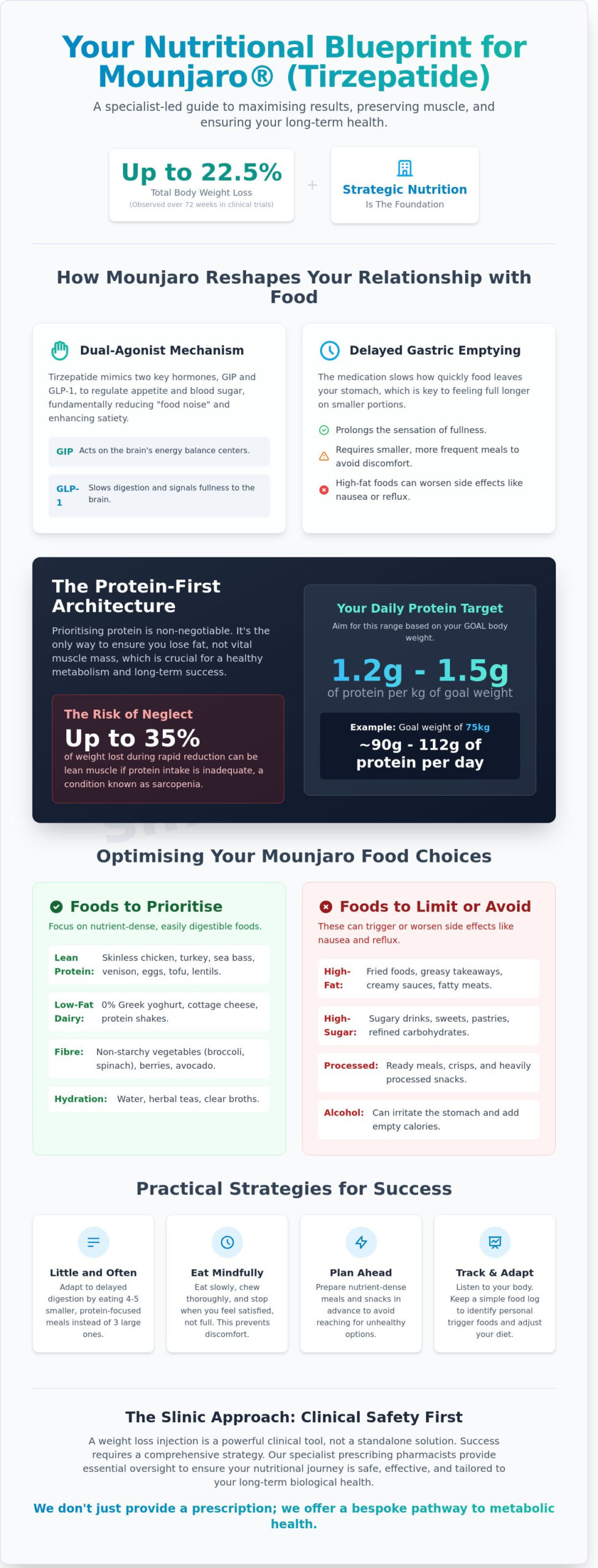
One of the primary ways Mounjaro influences your experience with mounjaro food is through delayed gastric emptying. This process slows the rate at which the stomach contents move into the small intestine. Consequently, food remains in the stomach for a significantly longer duration, which prolongs the sensation of fullness after even small meals. This biological shift requires a meticulous adjustment to portion sizes. Eating too quickly or consuming large volumes can lead to discomfort, as the stomach cannot process the intake at a traditional pace.
Clinical observation shows that this mechanism can also trigger gastrointestinal reflux if nutritional choices aren’t managed carefully. High-fat or heavily processed foods take even longer to break down. When combined with delayed emptying, these items can sit in the gastric environment long enough to cause acidity or nausea. Patients must adopt a mindful eating rhythm, focusing on smaller, nutrient-dense portions to maintain comfort and efficacy.
Metabolic Adaptation and Weight Loss
Mounjaro does more than just slow digestion; it actively influences how your body handles energy. By improving insulin sensitivity and regulating glucagon secretion, it helps stabilise blood sugar levels and encourages the body to utilise stored fat more efficiently. This metabolic shift is most effective when supported by a protein-rich, balanced diet that prevents the body from entering a state of extreme catabolism. The goal is a seamless transition to a leaner, healthier physique without compromising biological integrity.
For those beginning their journey, understanding these clinical nuances is vital. You can explore our specialist-led treatment options on the Slinic Mounjaro weight loss page to see how our clinicians monitor these metabolic changes. We provide a tranquil, professional environment where safety and long-term success are the primary metrics of excellence. By aligning your nutritional intake with these hormonal shifts, you ensure that weight loss is both sustainable and restorative.
Building Your Mounjaro Nutritional Architecture: The Protein-First Approach
Successful weight management on tirzepatide requires more than simple calorie restriction; it demands a deliberate biological strategy. When you select your mounjaro food, your primary objective is the preservation of lean tissue. Clinical data indicates that individuals losing weight rapidly can lose up to 35% of their total weight from lean muscle mass if protein intake is neglected. This condition, known as sarcopenia, reduces your basal metabolic rate and leaves the body structurally weakened, making weight maintenance significantly harder in the long term.
For 2026, our clinical specialists recommend a daily intake of 1.2g to 1.5g of protein per kilogram of goal body weight. For example, a patient targeting a weight of 75kg should aim for approximately 90g to 112g of protein daily. High-quality UK sources include skinless chicken breast, venison, sea bass, and 0% fat Greek yoghurt. These lean options provide the highest protein-to-calorie ratio, ensuring you meet your targets even when your appetite is significantly suppressed.
Preventing Muscle Wasting and Hair Thinning
Amino acids serve as the fundamental architecture for more than just muscle; they’re vital for collagen production and follicular health. A deficit often manifests as brittle nails or hair thinning, a common concern during significant metabolic shifts. If your appetite is heavily suppressed, a high-quality whey isolate or pea protein supplement can provide a concentrated dose of nutrients without the volume of a full meal. This proactive approach ensures your body doesn’t harvest its own tissues for energy during a deficit.
The Role of Complex Carbohydrates and Fibre
While many associate weight loss with restrictive low-carb diets, complex carbohydrates are essential for sustained energy and brain function. Fibre is particularly critical because Mounjaro slows gastric emptying, which can lead to constipation in approximately 11.7% of patients. Incorporating oats, quinoa, and cruciferous vegetables provides the bulk necessary for digestive regularity. Understanding which foods to avoid on Mounjaro, such as refined sugars that cause sharp glucose spikes, is just as important as choosing the right complex carbs.
Healthy Fats and Micronutrient Density
Healthy fats must be selected with precision. Essential fatty acids found in walnuts, flaxseeds, and oily fish support hormone production and the absorption of fat-soluble vitamins like A, D, E, and K. These micronutrients are often depleted during rapid weight reduction. For a comprehensive list of ingredients that support this biological balance, consult the Slinic nutritional guide. If you’re ready to begin your journey under expert clinical supervision, you can start your online consultation today to ensure your mounjaro food plan is safely optimised for your specific needs.
Navigating Side Effects: Foods to Limit for Optimal Comfort
Optimising your experience on tirzepatide involves more than just calorie tracking; it requires a meticulous understanding of how specific mounjaro food choices interact with your biology. The primary clinical mechanism of Mounjaro is delayed gastric emptying. This means food remains in the stomach significantly longer than usual to promote satiety. While this is beneficial for weight loss, it creates a narrow margin for error when consuming heavy or complex meals. If you consume “trigger foods,” they may sit in the gastric cavity for extended periods, leading to fermentation, acid reflux, and profound nausea.
The “Mounjaro Burp” is a common clinical observation, often described as having a distinct sulphur-like scent. This occurs when proteins or cruciferous vegetables break down slowly in the stomach, releasing hydrogen sulphide gas. You can manage this by reducing intake of high-sulphur foods like red meat and heavy dairy during the first 48 hours after your injection. Our clinicians at Slinic recommend keeping a detailed food diary to identify personal sensitivities, as the Slinic approach prioritises bespoke adjustments over generic dietary advice. Alcohol tolerance also shifts significantly on this medication. Many patients report a complete loss of desire for alcohol, while others find that even small amounts lead to rapid intoxication or severe gastric distress due to the way tirzepatide alters glucose metabolism.
The High-Fat and Ultra-Processed Food Warning
High-fat meals are the leading cause of gastrointestinal side effects during medical weight loss. When you eat greasy or ultra-processed items, the delayed emptying causes these fats to separate and sit atop the stomach contents, triggering reflux. For some, high-sugar snacks can induce symptoms similar to “dumping syndrome,” including cold sweats and rapid heart rate. You should consider these British comfort food swaps to maintain comfort:
- Replace a traditional deep-fried “chippy tea” with oven-baked white fish and air-fried potato wedges.
- Swap heavy, cream-based sauces for tomato-based or light zest dressings.
- Exchange processed pork sausages for lean turkey or plant-based alternatives.
Hydration and Electrolyte Balance
The Slinic team frequently observes patients mistaking thirst signals for hunger. This is particularly common during the initial titration phases when the body is adjusting to lower caloric intake. Dehydration increases the risk of constipation and fatigue, which are common reasons for treatment discontinuation. We recommend a structured hydration protocol involving at least 2.5 litres of water daily. In the UK, clinical guidelines suggest supplementary electrolyte sachets if you experience persistent headaches or dizziness. Ensuring a steady intake of sodium, potassium, and magnesium supports the biological architecture of your metabolic recovery. You can find more detailed safety protocols in our how to use Mounjaro resource to ensure your journey remains seamless and restorative.
Practical Meal Planning and Behavioural Strategies
Adopting a clinical approach to your daily nutrition is essential when using tirzepatide. Because the medication significantly delays gastric emptying, the traditional British pattern of three large meals often leads to unnecessary gastrointestinal pressure. Instead, our clinical team recommends a “little and often” strategy. Consuming four to five smaller, nutrient-dense portions helps maintain steady blood glucose levels and prevents the “overfull” sensation that frequently triggers nausea. When selecting your mounjaro food, focus on high-quality proteins first to protect your lean muscle mass during rapid weight loss.
The “Plate Method” requires a specific specialist adaptation for GLP-1 patients. Aim for a plate composed of 50% lean protein, such as grilled chicken, white fish, or tofu; 30% fibrous vegetables; and 20% complex carbohydrates. This structure ensures you hit your protein targets even if your appetite diminishes halfway through the meal. Mindful eating is no longer just a lifestyle choice; it’s a physiological necessity. You must learn to recognise the new “stop” signal, which often manifests as a subtle loss of interest in the taste of the food rather than a physical feeling of being stuffed. Stopping at the first sign of satiety prevents the late-onset bloating that occurs as mounjaro food digests more slowly than usual.
Dining out in the UK presents unique challenges, particularly with pub culture and large restaurant portions. To navigate social events with quiet confidence, consider these specialist strategies:
- Review the menu online in advance to identify grilled or steamed options.
- Request dressings and sauces on the side to control fat intake.
- Don’t hesitate to order a starter as your main course to ensure portion sizes remain manageable.
- Prioritise hydration with sparkling water between bites to aid digestion.
A Sample “Mounjaro-Friendly” Day
A typical day should focus on ease of digestion and high protein density. For breakfast, consider 200g of Greek yoghurt with a handful of raspberries, providing approximately 20g of protein. Lunch should be light; a tuna salad with a lemon vinaigrette offers essential omega-3s without heavy fats. For dinner, choose a small fillet of sea bass with steamed asparagus. This light evening meal reduces the risk of nocturnal reflux, a common side effect when the stomach remains full overnight.
Managing “Food Noise” and Cravings
Many patients describe a profound psychological shift as “food noise” — the constant intrusive thoughts about eating — begins to dissipate. This mental clarity allows for a more restorative relationship with nutrition. If occasional cravings for sweets or fried foods occur, handle them with a flexible, non-restrictive mindset. Total deprivation often leads to a cycle of guilt; instead, allow yourself a small, mindful portion. This balanced approach is the foundation for long-term weight maintenance after your clinical programme concludes.
Safety Netting: When to Seek Medical Help
While most side effects are manageable, you must remain vigilant about your biological health. Seek immediate medical advice if you experience persistent vomiting, an inability to stay hydrated, or severe abdominal pain that radiates to your back, as these can be symptoms of pancreatitis or gallbladder issues. For detailed safety protocols and escalation pathways, please refer to the Slinic treatment guides. Our prescribing doctors provide ongoing monitoring to ensure your journey remains safe and effective.
Ready to begin your supervised weight loss journey with expert clinical oversight? Start your clinical consultation with Slinic today.
The Slinic Approach: Specialist Oversight for Your Nutritional Journey
The Slinic approach is built on the principle that medical weight loss is a bespoke clinical journey, not a retail transaction. Establishing a foundation for a lifetime of health requires more than just a prescription; it demands specialist clinical governance. Unlike unregulated sources or “grey market” suppliers that have seen a 300% increase in reported counterfeit activity since 2023, Slinic operates under strict UK pharmacy regulations. Our pharmacist-led team prioritises your safety through a robust framework of clinical accountability and documented protocols.
We believe that premium care should remain accessible. Slinic provides some of the most competitive pricing for Mounjaro weight loss treatments in the UK, yet we never compromise on the safety netting essential for GLP-1 therapies. This includes structured video consultations and regular follow-ups that go beyond simple weight tracking. We focus on your overall biological health, ensuring that your weight loss is restorative and preserves lean muscle mass rather than focusing solely on a declining number on the scale.
Our commitment to your success extends past the duration of your treatment. We provide the tools and professional support necessary to foster long-term lifestyle changes. By integrating specialist medical expertise with empathetic patient care, we ensure you aren’t navigating the complexities of metabolic health alone. It’s a partnership designed to deliver tranquil, lasting results.
Professional Monitoring and Dose Titration
Dose titration at Slinic is a meticulous process guided by your individual clinical response. We don’t follow a rigid “one size fits all” schedule. Instead, our prescribing doctors and pharmacists adjust your plan based on your specific nutritional tolerance and how your body responds to mounjaro food choices. If you experience persistent nausea or suppressed appetite that prevents adequate protein intake, we may delay a dose increase to protect your metabolic health. This specialist methodology ensures your weight loss is biological and sustainable, following the latest MHRA 2024 safety updates for GLP-1 medications.
Getting Started with Slinic
The transition from your initial assessment to starting treatment is designed to be seamless and professional. Once our clinical team approves your consultation, your medication is dispatched via discreet, temperature-controlled home delivery. You’ll have immediate access to our UK-based support team for advice on managing side effects or optimising your mounjaro food intake for better energy levels. We provide a clear escalation pathway, ensuring you know exactly when to seek advice and how to manage your treatment safely at every stage.
Take the first step toward a specialist-led weight loss experience:
Securing Your Long-Term Success Through Specialist Clinical Architecture
Success with medical weight management depends on more than just the medication; it requires a sophisticated understanding of your mounjaro food choices. By prioritising a protein-first nutritional architecture and implementing proactive strategies to manage gastrointestinal side effects, you’re building a foundation for sustainable biological health. Data from 2026 clinical observations indicates that patients who follow structured meal planning under professional guidance achieve significantly more consistent outcomes than those navigating the process alone.
At Slinic, we combine this specialist medical expertise with nationwide accessibility. As a GPhC Registered Pharmacy, we provide pharmacist-led clinical oversight to ensure your journey is both safe and effective. We’re proud to offer some of the most competitive UK pricing, ensuring that premium clinical standards remain within reach. Our team of prescribing doctors monitors your progress through documented safety protocols and regular reviews, providing a level of professional accountability that general providers simply don’t match.
You don’t have to navigate these complex lifestyle changes in isolation. It’s time to transform your health through a partnership built on clinical excellence and empathetic care. Start Your Specialist Mounjaro Consultation today and begin your journey toward a more confident, restorative future.
Frequently Asked Questions
Can I drink alcohol while taking Mounjaro?
You’re able to consume alcohol in moderation, but we advise caution to prevent hypoglycaemia and gastric irritation. Alcohol can lower blood sugar levels significantly; clinical data suggests that 14 units per week is the absolute maximum, though fewer is better for your results. Since tirzepatide slows stomach emptying, you might find that alcohol stays in your system longer, which can intensify its effects or cause nausea.
Why does Mounjaro make me feel nauseous after eating?
Nausea occurs because Mounjaro slows your gastric emptying rate, meaning food remains in your stomach for a longer duration. This is a primary mechanism of the medication, but it leads to discomfort if you eat large portions or high-fat meals. Clinical trials reported that approximately 20% of patients experienced nausea, which usually subsides as your body adapts to the specialist treatment over 4 to 8 weeks.
Do I need to follow a specific calorie count on Mounjaro?
You don’t have to follow a rigid calorie count, though a deficit is necessary for the best clinical outcomes. Our prescribing doctors typically recommend a structured daily intake that targets a 500 to 600 calorie deficit based on your basal metabolic rate. This approach ensures you’re losing fat rather than lean muscle mass, which is vital for long-term biological health and aesthetic harmony.
What should I eat if I have zero appetite on Mounjaro?
Focus on high-protein, nutrient-dense liquids or small snacks if your appetite feels non-existent during the first few days after an injection. You should aim for at least 60 grams of protein daily to prevent muscle wastage, even if you aren’t feeling hungry. Small, frequent meals of 200 calories every few hours are often easier to manage than three large sittings when your mounjaro food intake is naturally suppressed.
Can I drink coffee or tea as normal on tirzepatide?
You can drink coffee and tea as normal, but it’s important to monitor your hydration and heart rate. Caffeine is a stimulant that can exacerbate the mild increase in heart rate sometimes seen with tirzepatide, which averages about 2 to 4 beats per minute in clinical studies. Stick to 2 or 3 cups a day and ensure you’re balancing every caffeinated drink with an equal volume of plain water.
Are there any foods that stop Mounjaro from working?
No specific mounjaro food items physically block the medication’s chemical function, but ultra-processed sugars can undermine your physiological progress. High-fat meals, specifically those exceeding 20 grams of fat per serving, often trigger severe gastrointestinal side effects like bloating or diarrhoea. These nutritional choices don’t stop the drug from working, but they do fight against the weight loss results you’re trying to achieve.
How much water should I be drinking daily on this medication?
You should aim to drink at least 2.5 litres of water every day to support your renal function and manage potential side effects. Dehydration is a common risk when your appetite is low, and it can lead to headaches or constipation in up to 10% of patients. Maintaining this fluid intake ensures your body can process the medication efficiently while keeping your energy levels stable throughout your weight loss journey.
Is it safe to fast (Intermittent Fasting) while on Mounjaro?
It’s generally safe to practice intermittent fasting, such as a 16:8 window, provided you maintain adequate nutrient density during your eating hours. We recommend consulting our specialist team before starting a fast, as prolonged periods without food can increase the risk of dizziness or low blood sugar. If you choose this path, ensure you’re still meeting your 1,200 calorie minimum to protect your metabolic health and sustain your energy.