
Home › Blog › Weight Loss › Wegovy Cardiovascular NHS
Wegovy Cardiovascular NHS 2026: NICE TA1152 Explained — Who Qualifies, How to Access It, and What the Evidence Shows
On 7 May 2026, NICE published technology appraisal guidance TA1152, recommending semaglutide (Wegovy) as an option for reducing the risk of major adverse cardiovascular events in adults with established cardiovascular disease and a BMI of at least 27 kg/m². This is a separate indication from the existing weight management guidance, and it opens NHS access to a population estimated at around 1.2 million people in England. This guide explains exactly what the guidance says, who meets the criteria, and how access works in practice.
The short version
NICE TA1152 was published on 7 May 2026. It recommends semaglutide up to a maintenance dose of 2.4 mg once weekly, alongside a reduced-calorie diet and increased physical activity, for reducing the risk of cardiovascular death, non-fatal heart attack or non-fatal stroke.
Two criteria must both be met: established cardiovascular disease (previous myocardial infarction, previous ischaemic or haemorrhagic stroke, or symptomatic peripheral arterial disease as defined below) and a BMI of at least 27 kg/m².
Type 2 diabetes does not exclude you. The SELECT trial excluded people with diabetes, but NICE concluded the benefit was likely to generalise and specifically decided not to exclude them from the recommendation.
The 90-day funding requirement ran from 7 May 2026, so ICBs and NHS England were required to comply by early August 2026. Local readiness still varies in practice.
About the author
Shadeia Younis is the founder and Superintendent Pharmacist of Slinic (GPhC No. 2052119), with 25 years of clinical pharmacy experience. She has owned and operated community pharmacies in Lancashire since 2008, oversees the clinical governance of Slinic’s prescribing service, and holds SCOPE certification in obesity management. She has been recognised as a finalist or winner across 19 national and European awards spanning healthcare and business.
Pharmacy Premises GPhC No. 1033729
NHS-Contracted
SCOPE Certified
LegitScript Certified
19 Awards Finalist / Winner
25+ Years Experience
Sources used
NICE TA1152 — semaglutide for reducing the risk of major adverse cardiovascular events in people with cardiovascular disease and overweight or obesity (published 7 May 2026) · Lincoff AM et al, SELECT trial, New England Journal of Medicine 2023 · Wegovy Summary of Product Characteristics (electronic Medicines Compendium) · NICE TA875 · Scottish Medicines Consortium advice SMC2872 · NHS England implementation regulations. Full list in the references at the end of this guide.
Important: Wegovy is a prescription-only medicine. This guide is general information and does not replace advice from a qualified healthcare professional. If you have cardiovascular disease, any decision about adding a new medicine should involve the clinician who manages your cardiovascular care. If you experience chest pain, sudden weakness or numbness, difficulty speaking, severe abdominal pain, persistent vomiting or signs of an allergic reaction, seek urgent medical advice or call 999.
Wondering whether treatment is appropriate for you?
Free two-minute assessment, reviewed by a UK-registered prescriber the same working day. Tell us about your cardiovascular history — it is clinically relevant to the decision.
Start Your Free Assessment →
Free · 2 minutes · Reviewed by an experienced UK-registered doctor or pharmacist prescriber
GPhC Registered Pharmacy · No Subscription · Monthly Clinical Reviews Included
Jump to
What TA1152 actually says
The two NHS pathways
The SELECT evidence
Who qualifies
Common misunderstandings
The 1.2 million figure
How to access it
Implementation timing
Wegovy vs Mounjaro for CV
Interactions with heart medicines
Monitoring
Private while you wait
NHS vs private cost
Scotland, Wales, NI
Worked examples
Beyond SELECT
Your action plan
FAQs
Summary
References
Wegovy for cardiovascular risk at a glance
| Key fact | Detail |
|---|---|
| Guidance | NICE TA1152, published 7 May 2026 |
| Medicine | Semaglutide (Wegovy), subcutaneous once-weekly injection |
| Maximum dose in this indication | Up to a maintenance dose of 2.4 mg once weekly |
| What it is recommended for | Reducing the risk of a major adverse cardiovascular event — cardiovascular death, non-fatal myocardial infarction or non-fatal stroke |
| Criterion 1 | Established cardiovascular disease — previous MI, previous ischaemic or haemorrhagic stroke, or symptomatic peripheral arterial disease |
| Criterion 2 | BMI of at least 27 kg/m² |
| Type 2 diabetes | Not an exclusion — NICE specifically concluded this population should not be excluded |
| Age restriction | None specified in the recommendation beyond being an adult |
| Time since cardiovascular event | No restriction — NICE concluded the recommendation should not be limited by how recent the event was |
| Used alongside | A reduced-calorie diet, increased physical activity, and existing standard care — not instead of any of it |
| Funding requirement | Must be funded in England within 90 days of publication (7 May 2026) |
What TA1152 actually says
The wording matters here, because a great deal of secondary coverage has paraphrased it loosely. The recommendation is that semaglutide, up to a maintenance dose of 2.4 mg once weekly, can be used within its marketing authorisation, alongside a reduced-calorie diet and increased physical activity, as an option for reducing the risk of a major adverse cardiovascular event in adults who meet both of the following.
Criterion 1: established cardiovascular disease
Defined as at least one of:
- Previous myocardial infarction (heart attack)
- Previous ischaemic or haemorrhagic stroke
- Symptomatic peripheral arterial disease — meaning intermittent claudication with an ankle-brachial index below 0.85 at rest, or a peripheral arterial revascularisation procedure, or an amputation because of atherosclerotic disease
Criterion 2: BMI of at least 27 kg/m²
This is the overweight threshold rather than the obesity threshold, which is why the eligible population is so much larger than under the weight management route.
The two NHS semaglutide pathways
TA1152 sits alongside the existing weight management guidance rather than replacing it. They are different indications with different criteria.
| Pathway | Guidance | Purpose | BMI threshold | Other requirement |
|---|---|---|---|---|
| Weight management | NICE TA875 | Managing overweight and obesity | Higher — see TA875 criteria | Weight-related comorbidity; accessed via specialist weight management services |
| Cardiovascular risk reduction | NICE TA1152 | Reducing major adverse cardiovascular events | 27+ | Established cardiovascular disease as defined above |
The practical significance is the BMI threshold. Someone with a BMI of 28 who has had a heart attack does not meet the weight management criteria but does meet the cardiovascular criteria. TA1152 does not specify which clinical setting semaglutide should be used in for this indication, so local arrangements determine who initiates and monitors it.
The SELECT evidence behind the recommendation
TA1152 is based on SELECT, a multinational randomised double-blind placebo-controlled phase 3 trial that enrolled 17,604 people with a BMI of at least 27 kg/m² and established cardiovascular disease. It compared once-weekly subcutaneous semaglutide plus standard care (n=8,803) with placebo plus standard care (n=8,801).
Standard care in the trial was substantial — participants were already on lipid-lowering medicines (90.1%), antiplatelets (86.2%), beta-blockers (70.2%), ACE inhibitors (45.0%) and angiotensin-2 receptor antagonists (29.5%). The benefit shown is therefore a benefit on top of optimised secondary prevention, not instead of it.
Results
| Endpoint | Hazard ratio (95% CI) | Interpretation |
|---|---|---|
| First MACE (primary endpoint) | 0.80 (0.72 to 0.90) | Statistically significant reduction — around 20% lower relative risk |
| Non-fatal myocardial infarction | 0.72 (0.61 to 0.85) | Significant reduction |
| Coronary revascularisation | 0.77 (0.68 to 0.87) | Significant reduction |
| All-cause death | 0.81 (0.77 to 0.93) | Significant reduction |
| Cardiovascular death | 0.85 (0.71 to 1.01) | Direction of effect consistent; confidence interval crosses 1 |
| Non-fatal stroke | 0.93 (0.74 to 1.15) | Direction of effect consistent; confidence interval crosses 1 |
| Heart failure hospitalisation or urgent visit | 0.79 (0.60 to 1.03) | Direction of effect consistent; confidence interval crosses 1 |
| Hospitalisation for unstable angina | 0.87 (0.67 to 1.13) | Direction of effect consistent; confidence interval crosses 1 |
Why NICE accepted a mechanism beyond weight loss
The evidence assessment noted that the reduction in cardiovascular events appeared shortly after treatment started, before any substantial weight loss had occurred. That was taken as evidence of a mechanism of action independent of weight reduction — and it is part of why the committee concluded the recommendation should not be restricted by how recently someone had their cardiovascular event.
Who qualifies — and who does not
You may meet the TA1152 criteria if you have both
- A previous heart attack, a previous ischaemic or haemorrhagic stroke, or symptomatic peripheral arterial disease meeting one of the three specific definitions, and
- A BMI of at least 27 kg/m²
You would not meet the criteria if
- Your BMI is below 27 kg/m²
- You have no previous MI, no previous stroke, and no symptomatic PAD meeting the definition
- Semaglutide is contraindicated for you, or your clinician judges it is not the right treatment given your overall picture
Four things that are commonly reported incorrectly
This guidance has been widely covered, and four errors recur often enough to be worth correcting directly.
1. Type 2 diabetes does not exclude you
This is the most consequential misunderstanding. The SELECT trial excluded people with diabetes, and a lot of coverage has carried that exclusion straight into descriptions of the eligibility criteria. The NICE evidence assessment addressed it explicitly: the company provided data from four cardiovascular outcomes trials in people with type 2 diabetes, the effect size was similar to SELECT, and the committee concluded the clinical effectiveness was likely to generalise. Its stated conclusion was that this population should not be excluded from the recommendation. If you have type 2 diabetes alongside established cardiovascular disease and a BMI of 27 or above, you are not shut out of this pathway — though your diabetes team must be involved, because adding semaglutide to insulin or a sulfonylurea affects hypoglycaemia risk and those doses may need review.
2. A TIA on its own does not meet the criterion
The definition of established cardiovascular disease in TA1152 is previous myocardial infarction, previous ischaemic or haemorrhagic stroke, or symptomatic peripheral arterial disease. A transient ischaemic attack is not a stroke and is not listed. Several summaries have written “stroke or TIA”, which is wrong and would give false expectations to a large group of people. If you have had a TIA but no stroke, MI or qualifying PAD, discuss your overall cardiovascular risk with your GP rather than assuming this pathway applies.
3. Haemorrhagic stroke counts, not just ischaemic
Both are named in the definition. Coverage that mentions only ischaemic stroke understates who qualifies.
4. There is no lower BMI threshold for any ethnic group under this guidance
The committee considered this directly. It acknowledged that people from South Asian, Chinese, other Asian, Middle Eastern, Black African or African-Caribbean backgrounds are at higher cardiovascular risk at lower BMI. But it noted that recommending semaglutide below a baseline BMI of 27 would fall outside the marketing authorisation, with no safety or efficacy evidence in that population to justify it. So the threshold is 27 for everyone under TA1152 — unlike the ethnic adjustments applied in some other weight management guidance.
Not sure whether you meet the criteria?
Bring your cardiovascular history to your GP, or start a free assessment with our clinical team.
Check Your Eligibility →
Free · 2 minutes · Reviewed by an experienced UK-registered doctor or pharmacist prescriber
GPhC Registered Pharmacy · No Subscription · Monthly Clinical Reviews Included
The 1.2 million figure: what it does and does not mean
Around 1.2 million people in England could be eligible for semaglutide to reduce the risk of further cardiovascular events, according to NHS England. That figure is an estimate of the population meeting the clinical criteria — not a projection of how many will be prescribed it.
Three things sit between the estimate and actual prescribing. Clinicians must judge semaglutide the most suitable option for each individual. Services have to identify eligible patients, most of whom are already under review for secondary prevention. And patients themselves have to want a weekly injection, which not everyone does. The realistic number treated in the first year will be a fraction of 1.2 million, in the same way the NHS tirzepatide rollout reached a fraction of its eligible cohort in year one.
How to access it on the NHS
TA1152 does not specify which setting semaglutide should be used in for this indication, so arrangements vary by area. In most places the conversation starts with the clinician who manages your cardiovascular care.
Step 1 — check the criteria against your own history
You need a previous MI, a previous ischaemic or haemorrhagic stroke, or symptomatic PAD meeting the definition, plus a BMI of at least 27.
Step 2 — book a review with your GP or cardiology team
This fits naturally into an existing secondary prevention review rather than needing a separate referral. Bring the date and nature of your cardiovascular event, your current medicines, and a recent accurate weight and height.
Step 3 — what to say
“I understand NICE published TA1152 in May 2026 recommending semaglutide for reducing cardiovascular risk in people with established cardiovascular disease and a BMI of 27 or above. I had a [heart attack / stroke] in [year] and my BMI is [X]. Could we discuss whether it would be appropriate for me, and what the local pathway is?”
Step 4 — assessment
Your clinician will review your cardiovascular history, current medicines, BMI, contraindications and any relevant results, then decide whether semaglutide is the right addition to your standard care.
Step 5 — if prescribed
Standard NHS prescription charge arrangements apply, and many people with established cardiovascular disease are exempt on other grounds. Check your exemption status on the NHS website.
Implementation timing: where things stand
Integrated care boards, NHS England and local authorities are required to comply with a NICE technology appraisal recommendation within 90 days of publication. TA1152 was published on 7 May 2026, so that deadline fell in early August 2026.
Why delays still happen locally
- Local formulary inclusion processes run on their own timetable
- Prescribing system alerts and templates need updating
- Services are working out who initiates and who monitors, since the guidance does not specify a setting
- Identifying eligible patients from records takes time in already busy secondary prevention clinics
Wegovy vs Mounjaro for cardiovascular patients
A common question: if tirzepatide produces greater average weight loss, why is semaglutide the one with the cardiovascular recommendation?
| Factor | Wegovy (semaglutide) | Mounjaro (tirzepatide) |
|---|---|---|
| Cardiovascular outcomes evidence | SELECT — significant reduction in first MACE | Cardiovascular outcomes programme ongoing |
| NICE cardiovascular indication | ✅ TA1152, published 7 May 2026 | ❌ Not currently |
| Marketing authorisation for CV risk reduction | ✅ Yes | ❌ Not currently |
| NHS weight management route | NICE TA875, via specialist services | NICE TA1026, phased rollout by cohort |
| Maximum dose in the CV indication | 2.4 mg once weekly | Not applicable |
The answer is simply that semaglutide has the completed cardiovascular outcomes trial and the corresponding licence and appraisal. That is a statement about the evidence base and the regulatory position, not a claim that tirzepatide lacks cardiovascular benefit — its outcomes data has not reported. If cardiovascular risk reduction is the reason for treatment, semaglutide is currently the medicine with the recommendation behind it. See our Mounjaro vs Wegovy comparison.
Wegovy and common cardiovascular medicines
Most people in this population take several medicines. This is a general overview — your own prescriber reviews your full list before any decision, and this does not replace that.
| Medicine class | Considerations | Practical management |
|---|---|---|
| Statins | No significant interaction expected. Lipid profile often improves with weight reduction. | Continue as prescribed. Do not stop cardiovascular medication because your weight is falling — review it with your clinician. |
| Antiplatelets (aspirin, clopidogrel) | No significant interaction expected. | Continue as prescribed. |
| ACE inhibitors / ARBs | Blood pressure often falls with weight reduction, which can leave you over-treated. | Report dizziness on standing rather than accepting it — it usually signals a medication review is due. |
| Beta blockers | No significant pharmacokinetic interaction expected. | Continue as prescribed. |
| Warfarin | Narrow therapeutic index; changes in diet, weight and gastrointestinal function can affect INR. | Discuss more frequent INR monitoring with your anticoagulation service when starting and at dose increases. |
| DOACs (apixaban, rivaroxaban, edoxaban) | No clinically significant interaction established. | Continue as prescribed. |
| Diuretics | Gastrointestinal fluid loss combined with a diuretic increases dehydration and kidney strain risk. | Keep fluids up. Contact your clinician if you have significant vomiting or diarrhoea. |
| Insulin or sulfonylureas | Substantially increased hypoglycaemia risk when combined with a GLP-1 medicine. | Your diabetes team must review those doses. This is a safety requirement, not a formality. |
What monitoring makes sense
- Blood pressure — weight reduction commonly lowers it, and antihypertensive doses may need review
- Lipid profile — often improves; a review point rather than a reason to alter statin therapy yourself
- Kidney function — particularly if you take diuretics or have had significant gastrointestinal side effects
- INR — more frequent monitoring if you take warfarin, especially when starting and at dose increases
- Weight — measured consistently, weekly rather than daily
- Cardiac symptoms — new or worsening chest pain, palpitations or breathlessness go to your GP or cardiology team, not just to whoever prescribes the semaglutide
Private treatment where the NHS route is not available to you
Two groups of people ask about this. The first are people who meet the TA1152 criteria but whose local pathway is not yet operating. The second are people who do not meet the cardiovascular criteria — a BMI of 27 with no qualifying event, for example — but who may meet the licensed criteria for weight management privately.
Both are legitimate reasons to look at private treatment, with two honest caveats. Private treatment costs substantially more than the NHS route, and if you qualify under TA1152 the NHS route is the better outcome for you financially. And private supply does not remove the need for your cardiovascular team to be in the loop — if anything it makes it more important, because your prescriber and your cardiology team are then different people.
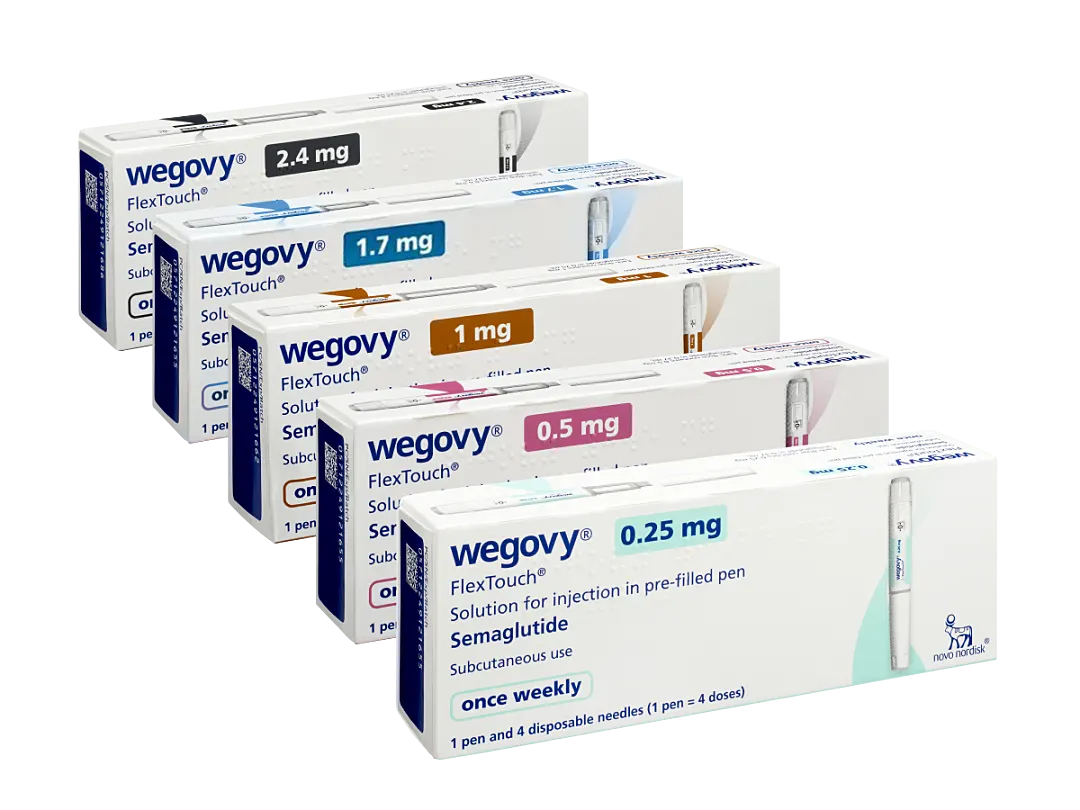
Slinic’s Wegovy prices
| Dose | Price per pen (4 weekly doses) |
|---|---|
| 0.25 mg (starting) | £83.00 |
| 0.5 mg | £93.00 |
| 1 mg | £93.00 |
| 1.7 mg | £144.00 |
| 2.4 mg (maintenance) | £196.00 |
Delivery is £4.99 per order. Fixed 2026 prices, no subscription and no minimum term. Prices subject to clinical approval before dispatch. Prices last verified 4 August 2026.
NHS versus private: the cost picture
| Factor | NHS (TA1152 route) | Private at Slinic |
|---|---|---|
| Cost to you | Standard prescription charge where applicable; exemptions apply | £83.00–£196.00 per pen plus £4.99 delivery |
| Approximate 12-month cost at 2.4 mg maintenance | Prescription charges only, or nil if exempt | Roughly £2,100 depending on titration speed |
| Availability | Funding mandated since early August 2026; local readiness varies | Days from assessment to decision |
| Who prescribes | Determined locally — the guidance does not specify a setting | UK-registered prescriber at Slinic |
| Ongoing review | Within your existing cardiovascular care | Monthly clinical reviews included |
The cost difference is large and clearly favours the NHS route for anyone who meets the criteria. If your local pathway is not yet running, the sensible question to ask your GP is when it will be, rather than assuming it will not happen.
Scotland, Wales and Northern Ireland
| Nation | Position |
|---|---|
| England | NICE TA1152 published 7 May 2026. Funding required within 90 days of publication. |
| Scotland | The Scottish Medicines Consortium accepted semaglutide for the equivalent indication — established cardiovascular disease with a BMI of 27 or above — in advice SMC2872, published 8 June 2026. The eligibility line matches TA1152. |
| Wales | Welsh ministers have issued directions on implementing NICE technology appraisals. Where NICE recommends a treatment, NHS Wales must usually fund it within 60 days of first publication of the final draft guidance. |
| Northern Ireland | NICE guidance is generally applied, but local implementation depends on trust arrangements. Check with your GP or trust for the current position. |
Worked examples
These illustrate how the criteria apply. They are not individual advice — only a clinician with access to your records can tell you where you stand.
| Profile | Meets TA1152 criteria? |
|---|---|
| BMI 29, heart attack two years ago, on aspirin and atorvastatin | ✅ Both criteria met — discuss with your GP |
| BMI 27.5, ischaemic stroke 18 months ago | ✅ Both criteria met |
| BMI 31, haemorrhagic stroke four years ago | ✅ Haemorrhagic stroke is named in the definition |
| BMI 34, heart attack four years ago, type 2 diabetes | ✅ Type 2 diabetes is not an exclusion — but your diabetes team must review your other glucose-lowering medicines |
| BMI 32, angina, no heart attack or stroke | ❌ Angina alone is not in the definition of established CVD here. Discuss overall risk with your GP. |
| BMI 28, TIA six months ago, no stroke or MI | ❌ A TIA is not a stroke and is not listed in the definition |
| BMI 26, heart attack last year | ❌ BMI below 27. No lower threshold applies under this guidance. |
| BMI 31, PAD with intermittent claudication and ABI 0.78 | ✅ Meets the symptomatic PAD definition |
Beyond SELECT: the wider GLP-1 cardiovascular picture
SELECT is the trial that produced this indication, but it sits within a broader body of cardiovascular outcomes evidence for this class of medicines.
Earlier semaglutide and liraglutide outcomes trials
Cardiovascular outcomes trials in people with type 2 diabetes showed reductions in major adverse cardiovascular events for GLP-1 receptor agonists before SELECT reported. That body of evidence is part of why NICE concluded the SELECT findings were likely to generalise to people with type 2 diabetes despite their exclusion from the trial itself.
Heart failure with preserved ejection fraction
The company also submitted supporting evidence from the STEP-HFpEF and STEP-HFpEF DM trials, in people with heart failure with preserved ejection fraction and a BMI of at least 30. Those trials did not report a reduction in MACE, so the evaluation focused on SELECT. They are relevant to a different clinical question rather than to this indication.
Tirzepatide
Eli Lilly’s cardiovascular outcomes programme for tirzepatide is ongoing. If it reports positively and is submitted to the MHRA and NICE, the cardiovascular picture could widen. Until then, semaglutide is the medicine with the licence and the appraisal for this use.
What that means if you are deciding now
Waiting for a possible future option means going without a treatment that is already recommended, licensed and funded for people who qualify. If you meet the TA1152 criteria, the sensible conversation is about the medicine that has the recommendation now, not the one that might have it later.
Your action plan
If you meet the TA1152 criteria
- Book a review with your GP or cardiology team — this fits into an existing secondary prevention review
- Bring the date and nature of your cardiovascular event, your full medicines list, and an accurate current weight and height
- Ask directly about TA1152 and what the local pathway is
- If the local pathway is not yet running, ask when it is expected — the funding requirement has been in force since early August 2026
- If you have type 2 diabetes, make sure your diabetes team is part of the conversation
If you do not meet the TA1152 criteria
- Ask your GP what else can be optimised in your cardiovascular risk management — this guidance adds an option to standard care, it does not replace the rest of it
- If your BMI is 30 or above, or 27 or above with a weight-related condition, you may meet the licensed criteria for weight management treatment — that is a separate route with its own assessment
- A free assessment at Slinic will establish whether that applies to you
A GPhC-registered pharmacy you can verify
Premises registration No. 1033729. NHS-contracted. SCOPE certified. LegitScript certified.
Start Your Assessment →
Free · 2 minutes · Reviewed by an experienced UK-registered doctor or pharmacist prescriber
GPhC Registered Pharmacy · No Subscription · Monthly Clinical Reviews Included
Frequently asked questions
Summary
NICE TA1152, published 7 May 2026, recommends semaglutide up to 2.4 mg once weekly for reducing the risk of major adverse cardiovascular events in adults with established cardiovascular disease and a BMI of at least 27. Established cardiovascular disease means a previous heart attack, a previous ischaemic or haemorrhagic stroke, or symptomatic peripheral arterial disease meeting a specific definition. Type 2 diabetes does not exclude you. A TIA on its own does not qualify you. There is no ethnicity-adjusted BMI threshold under this guidance and no restriction on how long ago your cardiovascular event happened.
Around 1.2 million people in England could meet the criteria. Funding has been mandated since early August 2026, though local implementation varies. For anyone who qualifies, the NHS route is substantially cheaper than private treatment and is the right first conversation to have.
Wegovy is a prescription-only medicine. This guide is general information and does not replace advice from a qualified healthcare professional, and any decision to add a medicine to your cardiovascular care should involve the clinician who manages it.
Find out whether treatment may be appropriate for you
Free assessment, reviewed the same working day by a UK-registered prescriber.
- ✅ GPhC-registered pharmacy premises No. 1033729 — verifiable at pharmacyregulation.org
- ✅ NHS-contracted community pharmacy, led by a SCOPE-certified pharmacist
- ✅ Full medication and medical history review before any prescribing decision
- ✅ Monthly clinical reviews included, with direct access to the pharmacy team
- ✅ Fixed 2026 prices · No subscription · No minimum term · No hidden fees
Related guides
References
- NICE TA1152 — Semaglutide for reducing the risk of major adverse cardiovascular events in people with cardiovascular disease and overweight or obesity. Published 7 May 2026.
- Lincoff AM, Brown-Frandsen K, Colhoun HM, et al. Semaglutide and cardiovascular outcomes in obesity without diabetes (SELECT). N Engl J Med. 2023;389(24):2221–2232.
- Wegovy (semaglutide) Summary of Product Characteristics — electronic Medicines Compendium.
- NICE TA875 — Semaglutide for managing overweight and obesity.
- NICE NG185 — Acute coronary syndromes.
- NICE NG238 — Cardiovascular disease: risk assessment and reduction, including lipid modification.
- NICE CG147 — Peripheral arterial disease: diagnosis and management.
- Scottish Medicines Consortium. Advice SMC2872 — semaglutide for cardiovascular risk reduction. Published 8 June 2026. scottishmedicines.org.uk
- The National Institute for Health and Care Excellence (Constitution and Functions) and the Health and Social Care Information Centre (Functions) Regulations 2013, section 7 — 90-day implementation requirement.
- General Pharmaceutical Council — register of pharmacies and pharmacy professionals.