


What if the relief you feel in your knees isn’t just about the numbers on the scale, but a fundamental shift in your body’s internal chemistry? For many, the “weight-pain” cycle feels like an unbreakable prison where chronic hip or knee discomfort makes the movement required for health feel almost impossible. While it’s logical to assume that losing weight simply lightens the load on your skeletal structure, clinical evidence reveals a more sophisticated reality regarding the impact of glp-1 agonists on joint pain and inflammation. Recent data from 2025 highlights a surge in research, with at least 15 major clinical abstracts detailing how these treatments go beyond mechanical relief to reprogram the body’s inflammatory response.
At Slinic, our pharmacist-led team understands that you’re seeking a return to a life of fluid, effortless movement. We’ll show you how medical weight loss treatments like Mounjaro and Wegovy act as a biological foundation for longevity by suppressing systemic inflammation at a cellular level. This article explores the dual-action mechanism of these medications, explaining how you can improve daily mobility and potentially avoid joint replacement surgery through a structured, safety-first clinical programme that prioritises your long-term well-being and functional health.
Key Takeaways
- Explore the dual-action mechanism where Mounjaro and Wegovy facilitate both mechanical offloading and biological suppression of pro-inflammatory cytokines in the joint lining.
- Gain a clinical perspective on the impact of glp-1 agonists on joint pain and inflammation to understand how these treatments serve as a foundation for long-term musculoskeletal health.
- Review the latest trial data for semaglutide and tirzepatide to identify which medical weight loss treatment aligns most effectively with your specific mobility goals.
- Identify the common causes of temporary discomfort during rapid weight reduction and learn how a structured clinical pathway can help you manage biomechanical shifts in your gait.
- Understand the importance of Slinic’s robust eligibility assessments and ongoing professional monitoring to ensure your safety throughout the weight management process.
For a full comparison of UK Mounjaro providers including pricing, see:
⇒Slinic’s Top UK Mounjaro Providers Guide
Understanding GLP-1 Agonists and the Inflammatory Cycle
Recent clinical developments have shifted our understanding of GLP-1 receptor agonists from simple glucose-regulating agents to powerful systemic anti-inflammatories. These medications, which include Mounjaro and Wegovy, mimic a naturally occurring hormone that coordinates the body’s metabolic response. While their primary role in medical weight loss is well-documented, the medical community is increasingly focused on the impact of glp-1 agonists on joint pain and inflammation as a distinct therapeutic benefit. This transition from treating diabetes to managing musculoskeletal health represents a sophisticated leap in how we approach patient longevity.
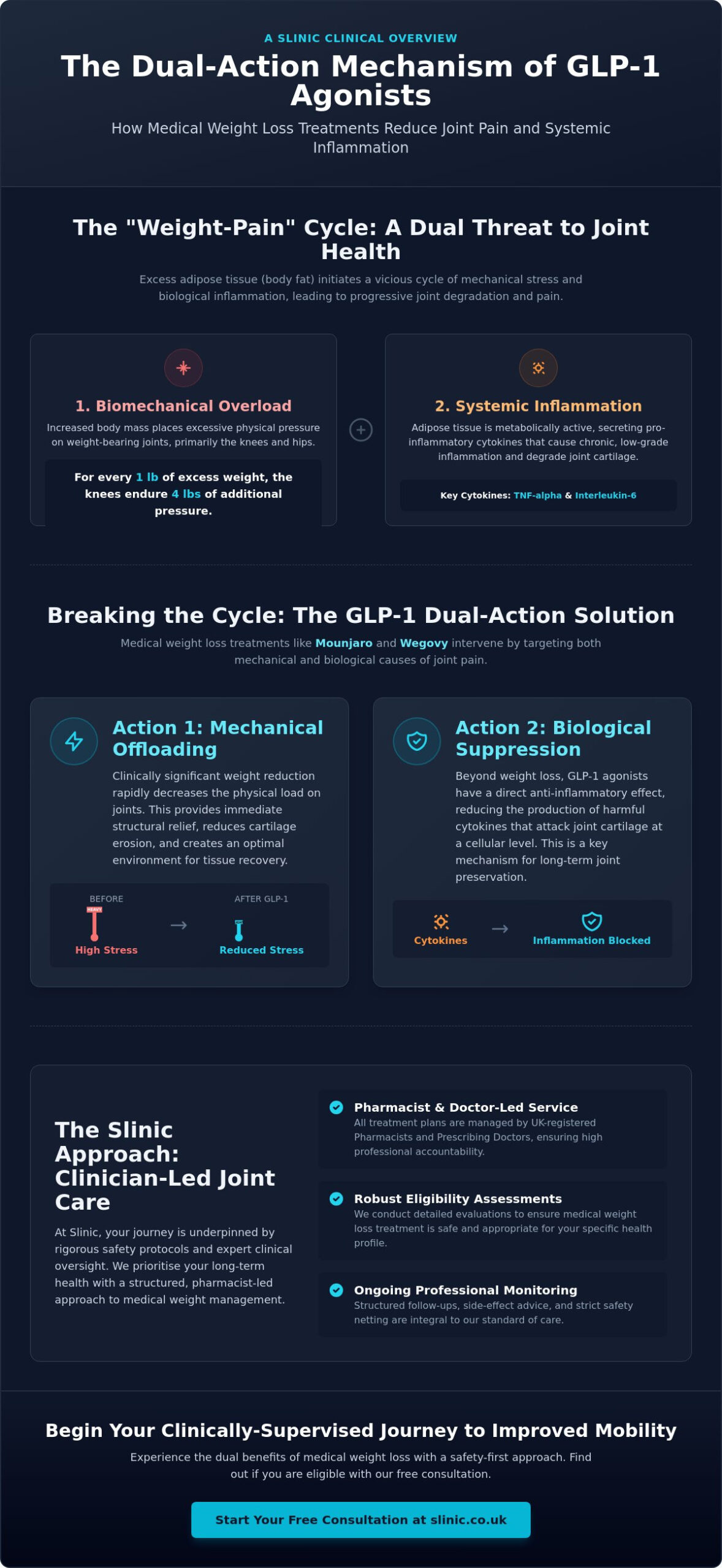
Adipose tissue, or body fat, is no longer viewed merely as passive energy storage. It’s an active endocrine organ that secretes pro-inflammatory cytokines, such as TNF-alpha and Interleukin-6. In individuals with a high Body Mass Index (BMI), this constant secretion creates a state of chronic low-grade systemic inflammation. This persistent biological heat erodes the structural integrity of joints long before physical wear and tear begins. It’s a silent cycle where metabolic dysfunction and physical degradation feed into one another.
The Relationship Between BMI and Joint Degradation
The physics of mobility are unforgiving. For every pound of excess weight carried, the knees endure four pounds of additional pressure during daily activities. This biomechanical loading accelerates the physical erosion of cartilage, leading to the frustration of the “weight-pain” cycle. However, the damage isn’t solely mechanical. Adipose tissue releases adipokines, specific proteins that directly target and destroy joint cartilage at a cellular level, even in non-weight-bearing joints like the hands. Traditional non-steroidal anti-inflammatory drugs (NSAIDs) often fail because they address the symptom of pain without silencing the adipokine-driven destruction at its source.
Metabolic Syndrome and Osteoarthritis
Modern clinical perspective now classifies Osteoarthritis (OA) as a metabolic disease rather than a simple consequence of aging. High blood sugar levels contribute to the formation of Advanced Glycation End-products (AGEs), which make joint collagen brittle and prone to breakage. By improving insulin sensitivity and reducing systemic glucose, weight loss injections help preserve the elastic foundation of the musculoskeletal system. GLP-1 agonists serve as a vital clinical bridge, connecting metabolic regulation directly to the preservation of long-term joint health and functional mobility.
At Slinic, our team of registered pharmacists and prescribing doctors ensures that every weight loss treatment is underpinned by rigorous safety protocols. We prioritise professional accountability through detailed eligibility assessments, ensuring that your journey toward reduced inflammation is managed with the precision of a specialist clinical service. This structured care allows us to monitor your progress closely, providing the medical rigor necessary for transformative health outcomes.
The Dual-Action Mechanism: How GLP-1s Reduce Pain
The clinical efficacy of Mounjaro and Wegovy in treating joint discomfort is not a single-track process. Instead, it operates through two distinct layers of relief. The first layer is mechanical offloading. As patients achieve rapid, sustained weight reduction, the physical burden on the weight-bearing joints of the lower body decreases almost immediately. This reduction in “load” provides the structural foundation for recovery, allowing the cartilage to function without the constant stress of excess mass.
The second, more sophisticated layer involves direct biological suppression. Emerging research suggests that these weight loss injections do more than just reduce weight; they actively reduce inflammation throughout the entire body. Clinical markers, specifically C-Reactive Protein (CRP), often show a significant decline in patients using GLP-1 therapies. This reduction in CRP indicates a cooling of the systemic “metabolic fire” that otherwise accelerates joint degradation. There is even compelling evidence suggesting chondroprotection, where the medication helps slow the actual loss of cartilage by altering the chemical environment within the joint capsule.
Direct Anti-Inflammatory Effects on the Synovium
To understand the impact of glp-1 agonists on joint pain and inflammation, we must look at the synovium, the lining of the joint. Specialist studies have identified GLP-1 receptors directly on human synovial fibroblasts. When these receptors are activated, they help “switch off” the production of Matrix Metalloproteinases (MMPs). These are the specific enzymes responsible for breaking down the joint’s structural matrix. By delivering treatment via the bloodstream, medical weight loss protocols address the joint from the inside out, providing a level of precision that topical treatments or oral painkillers cannot match.
Systemic vs. Localized Relief
A frequent observation in our clinical practice is that patients report relief in non-weight-bearing joints, such as the hands and fingers. This phenomenon proves that the benefits are not purely mechanical. By improving insulin sensitivity, weight loss treatment lowers the overall pain threshold and reduces the concentration of inflammatory markers circulating in the blood. This systemic cooling effect helps restore comfort to every joint in the body, not just those carrying the weight of the torso. If you are ready to address the biological root of your discomfort, you can begin a clinical weight loss consultation with our expert prescribing team today.
At Slinic, our pharmacist-led approach ensures that these complex biological shifts are monitored with the highest level of professional accountability. We provide structured follow-up and side-effect advice to ensure your transition to better mobility is both safe and effective. Our clinicians prioritise your long-term health, using documented protocols to guide you through every stage of your transformation.
Comparing Mounjaro vs. Wegovy for Joint Health
Selecting between Mounjaro and Wegovy requires a clear understanding of their distinct clinical profiles and how they influence musculoskeletal recovery. While both are highly effective weight loss injections, they achieve results through slightly different pathways. Current research on GLP-1 Receptor Agonists for Arthritis and Osteoarthritis suggests that both medications offer substantial benefits, but the speed and depth of relief can vary based on the specific molecule used. At Slinic, our clinicians help you navigate these choices through a pharmacist-led assessment that prioritises your unique health history.
Wegovy (Semaglutide) Clinical Evidence
The STEP 9 clinical trial provides the most robust evidence for semaglutide specifically in the context of knee osteoarthritis. Patients in this study achieved an average weight loss of 18%, which directly translated to significant improvements in physical function and a reduction in self-reported pain. For many, this 18% reduction represents the difference between daily struggle and restored independence. If you’re interested in the specifics of this treatment, you can read our specialist guide on Wegovy to understand its safety profile and dosing schedule.
Mounjaro (Tirzepatide) and the GIP Advantage
Mounjaro introduces a dual-agonist approach by targeting both GLP-1 and GIP (Gastric Inhibitory Polypeptide) receptors. This GIP component is vital because it provides additional anti-inflammatory synergy that complements the weight loss process. Clinical reviews show a higher percentage of patients reaching “pain-free” milestones faster than with single-agonist treatments. Regarding the impact of glp-1 agonists on joint pain and inflammation, tirzepatide’s dual-agonist mechanism generally leads to a higher percentage of weight reduction and more rapid symptom relief in musculoskeletal outcomes compared to semaglutide as of 2026.
To see a meaningful change in joint health, clinicians look for a 10% weight loss threshold. Once this target is reached, Western Ontario and McMaster Universities Osteoarthritis Index (WOMAC) scores usually show a dramatic decline in stiffness and pain. Mounjaro often helps patients reach this 10% milestone more quickly, which is a vital consideration for those facing the fear of joint replacement surgery. Our team at Slinic ensures that your medical weight loss journey is supported by structured follow-up and professional side-effect advice to keep you on track.
Every treatment plan we provide is underpinned by high professional accountability. We use documented protocols and audit-ready processes to ensure that your care meets the highest clinical standards. From your initial video consultation to ongoing monitoring, we act as a dedicated partner in your overall well-being, providing fast access to professional support whenever you need it.
Addressing the Paradox: Why Some Experience Joint Pain
While the clinical consensus highlights the positive impact of glp-1 agonists on joint pain and inflammation, a small subset of patients may experience a temporary increase in musculoskeletal discomfort. This phenomenon often feels like a paradox, yet it’s usually rooted in the rapid physical changes the body undergoes during medical weight loss. As your body composition shifts, your centre of gravity moves, which forces your musculoskeletal system to recalibrate. This biomechanical shift can lead to temporary “mechanical aches” as your gait and posture adapt to a lighter frame. It isn’t a sign of joint damage, but rather a sign of your body’s structural foundation adjusting to its new dimensions.
Another critical factor is the risk of sarcopenia, or the loss of lean muscle mass. Muscle serves as the primary support system for your joints, acting as a natural shock absorber. If weight loss occurs too rapidly without adequate protein intake or physical stimulus, the resulting muscle loss can leave joints like the knees and hips feeling less stable. In clinical trials, “arthralgia” (joint pain) is reported as an infrequent side effect. Our role at Slinic is to help you distinguish between these temporary adjustment pains and genuine inflammatory flares that might require a change in your clinical protocol.
Managing the Adjustment Phase
To support your joints as fat mass decreases, we advocate for a structured approach to physical maintenance. Resistance training is vital; it preserves the muscle tissue necessary to keep your joints aligned and stable. Additionally, hydration and electrolyte balance play an overlooked role in joint lubrication. Synovial fluid, which cushions your joints, requires consistent hydration to maintain its protective viscosity. If you notice persistent discomfort, you should consult your Slinic clinician. We provide fast access to professional support to ensure your weight loss treatment remains a comfortable and transformative experience.
Safety First: Identifying Red Flags
Our safety-first approach prioritises professional accountability at every dose escalation. It’s essential to differentiate between a dull mechanical ache and systemic red flags, such as sudden swelling or allergic reactions. We follow documented protocols to monitor your progress, ensuring that any reported discomfort is reviewed by a prescribing doctor or pharmacist. For more detailed information on navigating your journey, please refer to our Mounjaro side effects management guide. If you’re ready to begin a journey backed by rigorous clinical oversight, you can start your clinical weight loss consultation today to ensure your treatment is tailored to your specific musculoskeletal history.
The Slinic Approach: Clinician-Led Joint Care
Professional accountability is the cornerstone of effective medical weight management, particularly when addressing complex concerns like systemic inflammation. At Slinic, we recognise that the impact of glp-1 agonists on joint pain and inflammation is a sophisticated biological process that requires more than just a prescription. It demands a dedicated partner in your long-term health. Our service is led by registered Pharmacists and Prescribing Doctors who prioritise high clinical governance. This ensures that every patient’s journey is overseen with the meticulous care of a specialist master craftsman, balancing medical rigor with a warm, patient-focused atmosphere.
Our robust eligibility assessment is designed to ensure that weight loss injections align perfectly with your unique musculoskeletal history. We don’t merely look at numbers on a screen. We evaluate your history of arthritis and mobility limitations to determine if Mounjaro or Wegovy is the most appropriate clinical pathway for your specific needs. This safety-first approach is supported by audit-ready processes and clear escalation pathways, providing you with the quiet confidence that your care is in expert hands.
Your Journey to Improved Mobility
Meaningful progress involves more than just tracking weight loss. We monitor your transformation through a variety of metrics, including waist circumference and patient-reported pain scores, to gain a holistic view of your recovery. Our structured patient care includes video consultations and ongoing monitoring to ensure your dosage is optimised for both safety and efficacy. You’ll have fast access to professional support for side-effect advice, helping you navigate any biomechanical shifts as your mobility improves. To complement this elite level of care, we offer discreet nationwide delivery, ensuring your weight loss treatment arrives safely at your door without compromise.
Next Steps: Begin Your Clinical Consultation
Starting your journey toward reduced inflammation and improved daily movement is a seamless process. Our digital consultation platform allows UK patients to access specialist medical weight loss support from the comfort of their own homes. We pride ourselves on offering some of the most competitive pricing in the UK while maintaining the highest standards of clinical excellence. If you’re ready to break the cycle of chronic pain and reclaim your active lifestyle, our team is here to guide you through every step of your medical transformation. Begin your clinical consultation for medical weight loss today and take the first step toward a future defined by fluid, effortless movement and lasting biological health.
Reclaiming Your Mobility Through Clinical Excellence
The transition toward metabolic-driven joint care offers a transformative path for those previously trapped in the cycle of chronic discomfort. By understanding the impact of glp-1 agonists on joint pain and inflammation, you can look beyond simple weight loss to the biological preservation of your musculoskeletal structure. Whether through the mechanical offloading provided by Wegovy or the dual-agonist synergy of Mounjaro, these treatments provide a sophisticated foundation for long-term health and functional independence.
Slinic stands as your dedicated partner in this journey, combining the expertise of registered Pharmacists and Prescribing Doctors with the convenience of a modern digital service. As a GPhC Registered Pharmacy (No. 1033729), we prioritise your safety through rigorous clinical reviews and structured monitoring. Our commitment to excellence ensures you receive premium care with competitive UK pricing and discreet nationwide delivery. The intersection of metabolic science and joint health is a present reality that can fundamentally improve your quality of life.
We invite you to start your clinician-led weight loss journey with Slinic today. Your path to effortless movement and restored confidence begins with a single, safety-focused consultation. We look forward to supporting your transformation.
Frequently Asked Questions
Can GLP-1 agonists like Mounjaro help with Rheumatoid Arthritis?
No, GLP-1 receptor agonists are not currently indicated as a primary or disease-modifying treatment for Rheumatoid Arthritis (RA). While these medications are excellent metabolic regulators that reduce systemic inflammation, they don’t replace the specialist DMARDs (Disease-Modifying Anti-Rheumatic Drugs) required to manage autoimmune conditions. They’re primarily used to address the metabolic comorbidities that often accompany inflammatory arthritis.
How quickly will I notice a reduction in joint pain after starting treatment?
The timeline for relief varies, but many patients notice a subtle reduction in systemic “heat” and stiffness within the first four weeks of treatment. This initial phase is often driven by the medication’s biological suppression of pro-inflammatory cytokines. However, the most significant improvements in physical function typically occur once you reach a 10% weight loss threshold, which allows for substantial mechanical offloading of the knees and hips.
Is joint pain a common side effect of Wegovy or Mounjaro?
Joint pain, clinically referred to as arthralgia, is considered an infrequent side effect in clinical trials. When it occurs, it’s rarely a direct result of the medication’s chemistry. Instead, it’s usually a temporary biomechanical response to rapid weight reduction. As your body composition shifts, your posture and gait must adapt to a new centre of gravity, which can cause minor, transient aches in the musculoskeletal structure.
Will I need to take these injections forever to keep the joint pain away?
Maintaining joint health through medical weight management is often a long-term commitment. If your pain relief is directly tied to a lower BMI and reduced systemic inflammation, stopping the medication without a robust maintenance plan could lead to weight regain. This would likely reintroduce the mechanical stress and “metabolic fire” that caused the initial discomfort, potentially restarting the “weight-pain” cycle.
Do I need a specific diagnosis of Osteoarthritis to be eligible for treatment?
No, a formal diagnosis of Osteoarthritis is not a prerequisite for starting weight loss injections at Slinic. Our eligibility assessments are primarily based on your BMI and the presence of weight-related health concerns. During your consultation, our pharmacists and prescribing doctors will review your musculoskeletal history to ensure the impact of glp-1 agonists on joint pain and inflammation is a safe and appropriate consideration for your circumstances.
Can I take GLP-1 medications alongside my current arthritis painkillers?
Yes, you can generally continue your current arthritis pain management, such as NSAIDs or paracetamol, alongside GLP-1 therapy. It’s important to note that GLP-1 medications slow down gastric emptying, which might slightly delay how quickly your oral painkillers take effect. We recommend discussing your full medication regimen during your Slinic clinical review to ensure all treatments are coordinated safely and effectively.
What happens if my joint pain gets worse during the first few weeks of treatment?
If your discomfort increases, it’s often a sign of your body’s biomechanical foundation adjusting to rapid changes in mass and posture. At Slinic, we provide structured follow-up and side-effect advice to help you manage these transitions. If the pain is persistent or severe, our clinicians will evaluate your progress to ensure it isn’t an unrelated inflammatory flare or a rare reaction requiring a change in your clinical protocol.
Does the NHS prescribe GLP-1 agonists specifically for joint pain in 2026?
As of 2026, the NHS does not prescribe GLP-1 agonists for the sole purpose of treating joint pain or arthritis. Access through the NHS remains strictly governed by NICE criteria, which focus on type 2 diabetes and chronic weight management for those with specific high-risk metabolic conditions. While the impact of glp-1 agonists on joint pain and inflammation is a significant clinical benefit, it remains a secondary outcome within the current UK public health framework.