

Home › Blog › Weight Loss › Mounjaro UK
Buy Mounjaro From £129-£267| Tirzepatide Weight Loss Injection UK Online | Slinic
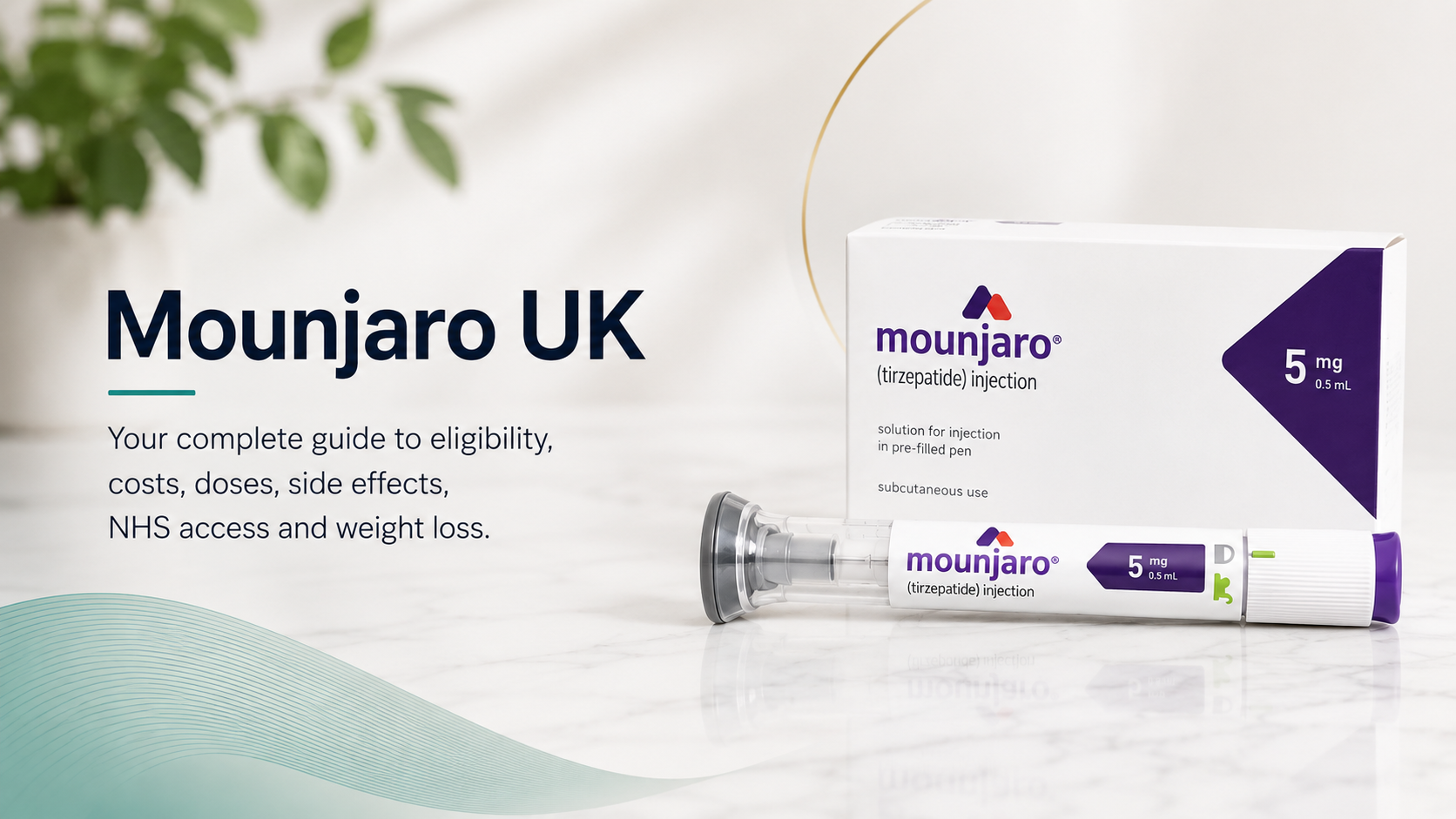
Mounjaro is the brand name for tirzepatide, a once-weekly prescription injection licensed in the UK for weight management alongside a reduced-calorie diet and increased physical activity. It is available in the UK both privately and, for a narrower group of patients, through the NHS. It is a prescription-only medicine, which means it cannot legally be sold without a prescription issued by a qualified prescriber following a clinical assessment. It may be considered for adults with a BMI of 30 or above, or a BMI of 27 or above alongside at least one weight-related health condition — but meeting a BMI threshold does not mean treatment is suitable. Only a prescriber who has reviewed your full medical history can make that decision.
Quick verdict
Mounjaro (tirzepatide) is available in the UK privately and, for a narrower group, on the NHS. It is a prescription-only medicine licensed for weight management alongside a reduced-calorie diet and increased physical activity.
Private eligibility is generally a BMI of 30 or above, or 27 or above with a weight-related condition — but meeting a threshold does not mean treatment is suitable. Only a prescriber who has reviewed your full medical history can decide that.
At Slinic, fixed 2026 prices run from £129 at the 2.5mg starting dose to £267 at 15mg, plus £4.99 delivery. No subscription, no tie-in contract, no discount code required, and the price does not change mid-treatment.
Treatment is supplied through a GPhC-registered, NHS-contracted community pharmacy, with monthly clinical reviews and direct access to doctor and pharmacist clinicians included.
This guide explains everything UK patients need to know about Mounjaro, including eligibility, NHS access, private treatment, doses, costs, side effects, expected weight loss and how to choose a safe UK provider.
✍️ Written by Shadeia Younis, Superintendent Pharmacist (GPhC No. 2052119) and the Slinic Clinical Team
Last medically reviewed: 26th July 2026 · Last updated: 26th July 2026 · Prices last verified: 26th July 2026
About the author
Shadeia Younis is the founder and Superintendent Pharmacist of Slinic (GPhC No. 2052119), with 25 years of clinical pharmacy experience. She has owned and operated community pharmacies in Lancashire since 2008, oversees the clinical governance of Slinic’s prescribing service, and holds SCOPE certification in obesity management. She has been recognised as a finalist or winner across 19 national and European awards spanning healthcare and business, including Independent Pharmacy Awards’ Independent Pharmacist of the Year.
Pharmacy Premises GPhC No. 1033729 · NHS-Contracted Community Pharmacy · Led by a SCOPE-Certified Pharmacist · LegitScript Certified · UK Doctor & Pharmacist Led · 25+ Years Pharmacy Experience · Fixed 2026 Prices · No Subscription · Monthly Clinical Reviews
Sources used
UK Summary of Product Characteristics (Mounjaro KwikPen) · MHRA-approved Patient Information Leaflet · Eli Lilly UK prescribing and medical information · NICE TA1026 and NG246 · NHS England interim commissioning guidance · SURMOUNT-1, -3, -4 and -5 peer-reviewed publications. Full list in the references at the end of this guide.
Important
Mounjaro is a prescription-only medicine. This guide is general information and does not replace advice from a qualified healthcare professional. Treatment is supplied only after an individual clinical assessment by a UK-registered prescriber, and is not suitable for everyone. If you experience severe abdominal pain, persistent vomiting, breathing difficulty, facial swelling or signs of an allergic reaction, seek urgent medical advice or contact emergency services immediately.
Check if Mounjaro is right for you
Free two-minute assessment, reviewed by a UK-registered prescriber the same working day.
Free · 2 minutes · Reviewed by an experienced UK-registered doctor or pharmacist prescriber
GPhC Registered Pharmacy · No Subscription · Monthly Clinical Reviews Included
Jump to
Mounjaro UK at a glance
This guide has been written and clinically reviewed by UK-registered pharmacy professionals at Slinic. Treatment is supplied through Brierfield Late Night Pharmacy, GPhC-registered premises No. 1033729. This guide provides general information and does not replace personal medical advice or an individual clinical assessment.
What is Mounjaro?
Mounjaro is a brand name. The medicine inside it is tirzepatide, manufactured by Eli Lilly. In the UK it is supplied as a multi-dose KwikPen containing four weekly doses.
Tirzepatide is licensed in the UK for two separate purposes: the management of type 2 diabetes, and weight management in adults. This guide deals with the weight management licence. The distinction matters, because eligibility criteria, prescribing routes and NHS funding arrangements differ between the two.
For weight management, the licence is specific: Mounjaro is indicated as an adjunct to a reduced-calorie diet and increased physical activity. The word adjunct carries real weight. The medicine is not licensed as a standalone intervention, and it is not intended to replace dietary change, activity or behavioural support. It is intended to work alongside them.
This is more than a regulatory technicality. Tirzepatide reduces appetite and increases feelings of fullness, which makes it substantially easier to eat less. But what you eat during that period determines a great deal about the quality of the weight you lose, how you feel while losing it, and how much of the result you keep. Patients who use the appetite reduction as an opportunity to build sustainable eating patterns and protect muscle mass tend to fare better over time than those who treat the injection as the whole intervention.
The medicine versus the programme
It is worth separating two things that are often conflated in advertising.
The medicine is tirzepatide. It is the same molecule regardless of which UK pharmacy supplies it, provided it is genuine, licensed stock obtained through the authorised UK supply chain. A pen dispensed by one registered pharmacy is pharmacologically identical to a pen dispensed by another.
The programme is everything around the medicine: the quality of the clinical assessment, who reviews your case, whether anyone checks in with you, how side effects are managed, what happens when progress stalls, and what support exists when you want to stop. This varies enormously between providers, and it is where the actual difference in patient outcomes lies.
When patients compare providers on price alone, they are comparing the identical component and ignoring the variable one. That is worth bearing in mind, in both directions — a higher price does not automatically indicate better clinical support either.
Why individual assessment is necessary
Tirzepatide is a potent medicine with a defined set of contraindications, warnings and interactions. Some people should not take it at all. Some should take it only with additional monitoring. Some will need a different treatment entirely.
A proper assessment establishes your BMI and weight history, your full medical history, every medicine and supplement you take, your pregnancy status and plans, and any symptoms that would need investigating before treatment begins. It is not a formality, and a provider that treats it as one is not protecting you.
Is Mounjaro available in the UK?
Yes. Mounjaro is licensed by the MHRA and available in the UK through two routes.
Privately, through registered UK pharmacies and clinics, following an online or in-person clinical assessment and a prescription from a UK-registered prescriber. This is how most UK patients currently access it for weight management.
On the NHS, through a phased programme that is currently restricted to patients with the highest clinical need. NHS access is genuine but narrow, and is covered in detail further down this page.
Both routes require a prescription. There is no legal route to obtaining Mounjaro in the UK without one.
Buying safely: what to avoid
The demand for weight-loss injections has created a substantial illegitimate market. The MHRA has repeatedly warned about falsified pens entering the UK through unofficial channels, and there have been documented cases of people being hospitalised after using products bought outside the regulated supply chain.
Treat the following as absolute red flags:
Social media sellers. Instagram, TikTok, Facebook groups and messaging apps are not legal supply routes for prescription medicines. A seller operating there is, by definition, operating outside UK medicines law.
Any offer to supply without a prescription. If a website will sell you Mounjaro without a clinical assessment and a prescriber, it is not a legitimate UK pharmacy. This is not a paperwork shortcut — it is the single clearest indicator that whatever arrives will not have come through the authorised supply chain.
Imported pens. Products sourced from outside the UK may not be licensed here, may not be the formulation approved for UK use, and carry no guarantee that cold chain has been maintained.
Anyone else’s medication. Sharing prescription medicines is unsafe and illegal. A pen prescribed for another person has been dispensed after an assessment of their medical history, not yours. Pens must never be shared even if the needle is changed, because of the risk of blood-borne infection transmission.
Prices that make no commercial sense. Genuine UK-licensed Mounjaro has a wholesale cost. A price far below the market range is a strong signal that the product is not what it claims to be.
If you have already bought a product outside the regulated route and used it, speak to a pharmacist or your GP. If you have symptoms that concern you, contact NHS 111, or 999 in an emergency.
How to verify a UK provider
Every legitimate UK pharmacy has a GPhC registration number, and every registered pharmacy can be checked on the General Pharmaceutical Council register. Look for the number displayed on the website, then verify it independently on the GPhC’s own site rather than trusting the display alone.
Slinic dispenses through Brierfield Late Night Pharmacy, GPhC-registered premises No. 1033729. Our Superintendent Pharmacist, Shadeia Younis, is personally registered under GPhC No. 2052119. Premises registration and individual professional registration are two separate things, and both can be checked independently on the GPhC register.
Not sure if you’re eligible?
Two minutes, no cost, and a UK-registered prescriber reviews every answer.
Free · 2 minutes · Reviewed by an experienced UK-registered doctor or pharmacist prescriber
GPhC Registered Pharmacy · No Subscription · Monthly Clinical Reviews Included
How does Mounjaro work?
Tirzepatide is a dual agonist. It activates two different gut hormone receptors — GIP (glucose-dependent insulinotropic polypeptide) and GLP-1 (glucagon-like peptide-1). Most other weight-management injections available in the UK, including semaglutide, act on GLP-1 alone.
Both hormones are produced naturally in your gut in response to food. They are part of the signalling system that tells your brain you have eaten enough. Tirzepatide mimics and amplifies those signals.
What it is not
Tirzepatide is not a stimulant. It does not raise your metabolic rate, does not “burn fat” directly, and has nothing in common with the appetite suppressants of previous decades. It works by changing how hungry you feel and how full you stay.
It is also not a fat-blocker. It does not prevent absorption of what you eat.
The practical consequence is that weight loss happens because energy intake falls. If intake does not fall — if appetite reduction is offset by eating patterns that maintain the same calorie load — weight loss will be limited regardless of dose.
Why response varies
People respond to tirzepatide differently, and the variation is substantial. Some people experience a dramatic reduction in appetite within days of the first 2.5 mg dose. Others notice very little until 5 mg or 7.5 mg. A minority respond poorly at any dose.
The reasons are not fully understood, but starting weight, baseline eating patterns, metabolic health, other medications, sleep, stress and activity all appear to contribute. What this means practically is that you cannot predict your own result from someone else’s, and comparing your progress to another person’s is rarely useful.
Mounjaro for type 2 diabetes: how it differs
Tirzepatide holds two separate UK licences: one for type 2 diabetes and one for weight management. They are not interchangeable, and the difference matters if you have diabetes and are considering treatment.
Different prescribing route. Tirzepatide for type 2 diabetes is prescribed through diabetes care — usually your GP practice or a diabetes specialist — as part of managing blood glucose. That route is not phased in the way the weight-management NHS programme is, so access is generally quicker if you meet the criteria.
Different clinical priorities. When prescribed for diabetes, the focus is glycaemic control, HbA1c and cardiovascular risk. Weight reduction is a welcome secondary benefit rather than the primary aim.
Different monitoring. Diabetes prescribing involves HbA1c monitoring and, importantly, review of your other glucose-lowering medicines. Adding tirzepatide to insulin or a sulfonylurea without adjusting those doses creates a real hypoglycaemia risk.
If you have type 2 diabetes
Do not seek private weight-management tirzepatide as a way around your diabetes care. Speak to whoever manages your diabetes first. If you are prescribed tirzepatide privately for weight management while also taking glucose-lowering medicines, your prescriber and your diabetes team both need to know, so insulin or sulfonylurea doses can be reviewed. Coordination here is a safety requirement, not a formality.
Private weight-management prescribing for someone with type 2 diabetes is possible and common — BMI 27 or above with type 2 diabetes meets the licensed criteria — but it requires your HbA1c, current medicines and diabetes management history to be reviewed as part of the assessment, and coordination with your GP on any dose adjustments.
Who may be eligible for Mounjaro privately in the UK?
Private eligibility is based on the terms of the UK licence, then narrowed by each provider’s own clinical governance.
BMI thresholds
For people from South Asian, Chinese, other Asian, Middle Eastern, Black African or African-Caribbean backgrounds, a lower BMI threshold is commonly applied — usually reduced by around 2.5 kg/m² — because cardiometabolic risk occurs at lower BMI in these populations. NHS England applies this adjustment in its own commissioning guidance. Whether and how a private provider applies it is a matter of their clinical policy.
Weight-related conditions that may qualify at BMI 27–29.9
The conditions recognised in the product licence include:
- Type 2 diabetes
- Prediabetes
- High blood pressure (hypertension)
- Dyslipidaemia — an unhealthy balance of fats in the blood, including raised cholesterol
- Obstructive sleep apnoea
- Cardiovascular disease
This is the licensed list. Individual providers may take a broader or narrower view within it, and a prescriber may still decline if the overall clinical picture does not support treatment.
What else is assessed
BMI is the entry criterion, not the decision. A prescriber will also review:
Full medical history, including any condition that would make treatment unsafe or require monitoring.
Every medicine you take, including prescription medicines, over-the-counter products, herbal remedies and supplements. Omitting something here is one of the more dangerous things a patient can do.
Pregnancy status and plans. Mounjaro is not recommended in pregnancy, and this needs establishing before treatment rather than after.
Identity and weight verification. A legitimate provider will verify who you are and confirm your weight rather than accepting a self-reported figure without check. Providers vary in how they do this — photo verification, video consultation, or a combination.
Previous weight-management treatment, including whether you are currently taking another GLP-1 medicine. Two must never be used together.
Eating disorder history, current or past.
Meeting the criteria does not guarantee treatment
This deserves stating plainly, because some providers imply otherwise. A prescriber can decline. They may decline because of something in your medical history, because a symptom needs investigating first, because another treatment would be safer, or because the overall picture does not support prescribing.
A provider that guarantees you will be approved before assessing you is telling you something important about how seriously they take the assessment.
You can read our full Mounjaro eligibility guide for a more detailed breakdown.
Find out if Mounjaro is right for you
BMI 30+, or 27+ with a weight-related condition. Assessed the same working day.
Free · 2 minutes · Reviewed by an experienced UK-registered doctor or pharmacist prescriber
GPhC Registered Pharmacy · No Subscription · Monthly Clinical Reviews Included
Mounjaro and specific weight-related conditions
Several conditions are both reasons you might qualify at a lower BMI and reasons treatment needs particular care. Here is how the common ones interact with treatment.
Obstructive sleep apnoea
Sleep apnoea is a recognised qualifying condition at BMI 27 to 29.9. Weight reduction frequently improves symptoms, and some patients find their CPAP pressure requirements change as they lose weight. If you use CPAP, tell the service that manages it — pressure settings may need reviewing rather than staying fixed.
High blood pressure
Also a qualifying condition. Blood pressure often falls with weight reduction, which sounds straightforwardly good but has a practical consequence: if you take antihypertensives, you may become over-treated as you lose weight. Dizziness on standing is the usual first sign. Report it rather than accepting it, because it usually means a medication review is due.
Polycystic ovary syndrome
PCOS is not itself on the licensed list of qualifying conditions, but insulin resistance, prediabetes and raised BMI commonly accompany it, and those may qualify. Two things are worth knowing. Weight reduction can restore ovulation in people who were not previously ovulating, which means fertility may return unexpectedly — and Mounjaro is not recommended in pregnancy. Contraception planning is genuinely important here. Discuss it before starting.
Prediabetes
A qualifying condition, and one where treatment has a preventive dimension. Weight reduction reduces progression to type 2 diabetes. Your prescriber may want a baseline HbA1c.
Raised cholesterol and dyslipidaemia
A qualifying condition. Lipid profiles commonly improve with weight reduction. If you take a statin, continue it unless your prescriber advises otherwise — weight loss is not a reason to stop cardiovascular medication on your own.
Fatty liver disease
Common alongside obesity. Weight reduction is the main intervention. If you have known liver disease, this requires individual assessment as part of your consultation.
Have a weight-related condition?
Tell us about it in your assessment. BMI 27+ with a qualifying condition may be eligible.
Free · 2 minutes · Reviewed by an experienced UK-registered doctor or pharmacist prescriber
GPhC Registered Pharmacy · No Subscription · Monthly Clinical Reviews Included
Who may not be suitable for Mounjaro?
This section distinguishes between three different categories, because they are often presented as one undifferentiated list and they are not equivalent.
Licensed contraindications
These are absolute. Mounjaro must not be used if you have:
- Known serious hypersensitivity to tirzepatide or any of the excipients in the pen
The UK KwikPen contains benzyl alcohol as an excipient, which is relevant for anyone with a known sensitivity to it.
Warnings and precautions in the product information
These are situations requiring caution, additional monitoring, or a decision that treatment is inappropriate for that individual:
Pregnancy. Mounjaro is not recommended during pregnancy. If you are planning to become pregnant, current guidance is to discontinue in advance — discuss the specific interval with your prescriber, as the recommended period is set out in the product information.
Breastfeeding. Discuss with your prescriber; a decision will be based on your individual circumstances.
Pancreatitis. Acute pancreatitis has been reported with GLP-1 receptor agonists. A history of pancreatitis requires careful assessment, and any symptoms suggestive of pancreatitis during treatment need urgent medical attention.
Severe gastrointestinal disease, including gastroparesis. Because tirzepatide slows gastric emptying, pre-existing severe GI disease requires individual assessment.
Gallbladder disease. Rapid weight loss of any cause increases gallstone risk. Symptoms need reporting.
Dehydration risk. Gastrointestinal side effects can cause fluid loss, which matters particularly for people with kidney impairment or those taking medicines affected by hydration status.
Kidney or liver impairment. Requires individual assessment.
Diabetic retinopathy. Rapid improvement in blood glucose control has been associated with temporary worsening of diabetic retinopathy. Relevant for patients with diabetes and existing eye disease.
Hypoglycaemia risk. Tirzepatide alone rarely causes low blood sugar, but the risk increases substantially when combined with insulin or a sulfonylurea. Doses of those medicines may need adjusting by the prescriber managing them.
Planned surgery or procedures requiring sedation or anaesthesia. Delayed gastric emptying raises the risk of aspiration. You must tell your surgical and anaesthetic team that you are taking tirzepatide, well in advance. Current professional guidance on how far ahead to stop varies, so this is a conversation to have early rather than the day before.
Thyroid C-cell tumour history. The product information addresses personal or family history of medullary thyroid carcinoma and Multiple Endocrine Neoplasia syndrome type 2. Discuss any relevant family history with your prescriber.
Provider-specific clinical exclusions
Beyond the licence, individual providers apply their own additional criteria based on their clinical governance and the limits of a remote service. These commonly include current or past eating disorders, certain mental health presentations, complex polypharmacy, or situations where the provider judges that face-to-face care is more appropriate.
These are legitimate clinical decisions, but they are provider policy rather than universal medical fact — which is why one clinic may decline where another accepts, and why a decline is not necessarily a statement that you can never be treated.
Other weight-loss medicines
Mounjaro must not be used alongside another GLP-1 receptor agonist — including Wegovy, Ozempic, Saxenda or Victoza — or alongside other weight-loss medications, unless specifically directed by a prescriber managing the whole picture. If you are switching from one to another, there is a proper process for it, covered further down.
Can you get Mounjaro on the NHS?
Yes, but access is considerably narrower than private eligibility, and the difference confuses a lot of people. It helps to separate three distinct things.
The licence says who the medicine can legally be prescribed to: adults with BMI 30+, or 27+ with a weight-related condition.
The NICE recommendation says who the NHS should fund it for. NICE technology appraisal TA1026 recommends tirzepatide for adults with a BMI of at least 35 with at least one weight-related comorbidity, with a lower threshold for certain ethnic groups.
The NHS rollout says who can actually get it right now. This is much narrower than either of the above, because NICE issued a funding variation allowing phased implementation over approximately 12 years to manage the scale of demand. The phased rollout described below is the NHS England arrangement. Scotland, Wales and Northern Ireland set their own commissioning arrangements, so if you are outside England, check your own nation’s current position.
Where the phased rollout currently stands
NHS England’s interim commissioning guidance, last reviewed in April 2026, sets out sequential cohorts widening over time.
The first cohort, active from 23 June 2025, covered adults with a BMI of 40 or above (37.5 or above with ethnic adjustment) who also had at least four of five qualifying weight-related conditions.
The second cohort activated from 23 June 2026, widening access to people with a BMI of 35 to 39.9 (32.5 to 37.4 with ethnic adjustment), with the same four-condition requirement.
Further cohorts widen the criteria in stages over the following years.
Separately, from 1 April 2026, tirzepatide prescribing for weight management moved into the 2026/27 GP contract as an optional Quality and Outcomes Framework indicator, supported by ring-fenced funding. Practice participation is voluntary.
Why access varies so much by area
Two factors. First, integrated care boards make local commissioning decisions, so the services available differ between regions. Second, GP practice participation in the QOF arrangement is optional, meaning two neighbouring practices may take different approaches.
NHS England has asked patients not to contact their GP to request weight-loss injections. Under the current arrangement, eligible patients are identified from GP records and contacted directly.
If you think you may qualify
Speak to your GP practice about your weight and any weight-related conditions, and ask what the local pathway is. Ask about referral to a specialist weight management service, which may apply the wider NICE criteria depending on local capacity. If you are prescribed on the NHS, standard prescription charge arrangements apply, and you may be exempt.
Waiting times for specialist weight management services vary from months to years depending on area.
This section reflects guidance current at the time of writing. NHS arrangements in this area have changed repeatedly, so check the current NHS England and NICE positions before making decisions.
Don’t want to wait for the NHS rollout?
Fixed 2026 prices from £129. No subscription, no tie-in, no waiting list.
Free · 2 minutes · Reviewed by an experienced UK-registered doctor or pharmacist prescriber
GPhC Registered Pharmacy · No Subscription · Monthly Clinical Reviews Included
NHS Mounjaro versus private Mounjaro treatment
NHS weight management services provide high-quality care, and where you qualify and can access one without a prohibitive wait, that route is well worth pursuing. The reason many people go private is availability, not quality: the current phased criteria simply exclude the majority of people who meet the licensed threshold.
For a fuller comparison, see our NHS versus private weight-loss treatment guide.
How to buy Mounjaro safely online in the UK
Buying prescription medicine online is entirely legitimate when the provider is properly regulated. The problem is that legitimate and illegitimate providers can look similar at a glance. Here is what to actually check.
1. Confirm it is a registered UK pharmacy. Find the GPhC registration number, then look it up on the GPhC register yourself. A number displayed on a website proves nothing until you verify it independently.
2. Check who owns and runs it. A legitimate pharmacy names its superintendent pharmacist and provides a real UK address and a working phone number. Be cautious of any provider contactable only through a web form.
3. Confirm a genuine clinical assessment takes place. You should be asked detailed questions about your medical history, current medicines, and pregnancy status. A three-question form is not a clinical assessment.
4. Confirm a prescription is required. If it is not, stop.
5. Check who the prescriber is. They should be a UK-registered doctor, pharmacist prescriber or nurse prescriber, registered with the GMC, GPhC or NMC.
6. Check how the medicine is stored and delivered. Tirzepatide requires refrigeration before first use. Ask how cold chain is maintained in transit.
7. Read the payment terms before you order. Specifically: is this a subscription? Can you cancel? Does the price change after the first month? Are there consultation, prescription or delivery charges added at checkout? Discount-code pricing that reverts to a higher rate from month two is common in this market and is the single most frequent source of unexpected cost.
8. Check what ongoing clinical support is included. Who reviews your dose increases? Is there anyone to contact when side effects appear? Is there a review before each repeat supply?
9. Be wary of guarantees. No legitimate provider can guarantee you will be approved before assessing you.
10. Check the regulatory signals in the right order. GPhC registration is the statutory requirement — it is the one that matters most. CQC registration applies to certain provider types. LegitScript certification is a useful additional signal but is a private certification scheme, not a substitute for statutory regulation.
A GPhC-registered pharmacy you can verify
Registration No. 1033729. NHS-contracted. SCOPE accredited. LegitScript certified.
Free · 2 minutes · Reviewed by an experienced UK-registered doctor or pharmacist prescriber
GPhC Registered Pharmacy · No Subscription · Monthly Clinical Reviews Included
What happens at your first consultation
Knowing what to expect makes the assessment easier to complete properly, and completing it properly is what makes it safe.
What you will be asked
- Your height and current weight, and how your weight has changed over time
- Previous weight-loss attempts, including any medication
- Your full medical history, including anything you might assume is irrelevant
- Every medicine you take — prescription, over-the-counter, herbal and supplements
- Whether you are pregnant, breastfeeding, or planning a pregnancy
- Any history of eating disorders
- Whether you have any surgery or procedure planned
- Your alcohol intake
- Family history where relevant to the product warnings
What to have ready
- An accurate current weight — weigh yourself rather than estimating
- A list of your medicines, with doses
- Photo ID
- If you are transferring from another provider: your current dose, how long you have been on it, and evidence such as a dispensing label or order history
Why complete answers matter more than fast ones
The assessment exists to catch the situations where tirzepatide would be unsafe for you specifically. Leaving something out does not increase your chance of being approved in any way that helps you — it increases the chance of being prescribed something that interacts badly with a medicine you take, or that worsens a condition you have.
Prescribers see incomplete assessments regularly, and the usual outcome is a request for more information, which delays things rather than speeding them up.
What happens next
A UK-registered prescriber reviews what you have submitted. The outcome is one of three things: approval, a request for further information or a video consultation, or a decision that treatment is not appropriate. That last outcome is not a rejection of you — it is the assessment doing its job.
How much does Mounjaro cost in the UK?
Private Mounjaro costs in the UK generally range from around £120 to over £300 per month depending on dose and provider. That range is wide because providers structure pricing very differently, and the headline number is often not what you end up paying.
Why the advertised price and the actual cost differ
Dose-based pricing. Most providers charge more for higher doses. Since almost everyone starts at 2.5 mg and increases over time, the price you see advertised is usually the lowest one you will ever pay.
Flat pricing. Some providers charge the same regardless of dose. This works out better at high doses and worse at low ones.
Consultation fees. Charged separately by some providers, included by others.
Delivery charges. Frequently excluded from the headline figure.
Subscription models. Some providers require a monthly commitment with a minimum term or a cancellation window.
First-order discount codes. Extremely common. A £40 discount on the first order that reverts to standard pricing from month two changes the annual cost considerably.
Consumables. Needles and sharps bins are not included in the pen. Some providers supply them, others do not.
The only meaningful comparison is total cost over twelve months at the dose you are likely to be on, including everything.
Slinic’s Mounjaro prices
Delivery is £4.99 per order. These are fixed 2026 prices with no subscription and no minimum term. Prices are subject to clinical approval before dispatch.
Prices checked: 4th August 2026
For a full breakdown including annual cost projections and comparison against other UK providers, see our Complete Mounjaro Cost Breakdown for UK 2026 and our cheapest Mounjaro UK guide.
Fixed prices that don’t change mid-treatment
£129 at 2.5mg to £267 at 15mg. No subscription. No discount code required.
Free · 2 minutes · Reviewed by an experienced UK-registered doctor or pharmacist prescriber
GPhC Registered Pharmacy · No Subscription · Monthly Clinical Reviews Included
What does Slinic’s weight-management service include?
- Online clinical assessment reviewed by a UK-registered prescriber
- Video consultation where required by our clinical pathway
- Prescribing decisions made by GMC- and GPhC-registered clinicians
- Monthly clinical check-ins
- Needles and swabs supplied with your treatment
- No subscription and no minimum term
- Fixed published 2026 prices that do not change mid-treatment
- Access to a pharmacist for clinical questions during treatment
- Discreet UK delivery in temperature-controlled packaging
- Support for patients transferring from another provider
Slinic dispenses through Brierfield Late Night Pharmacy, GPhC-registered premises No. 1033729, an NHS-contracted community pharmacy. Our founder and superintendent pharmacist has more than 25 years of pharmacy experience.
Most approved orders are prepared promptly, with dispatch subject to clinical approval, stock availability, identity verification and delivery-service cut-off times. Completing an assessment does not guarantee that treatment will be approved.
Every dose reviewed before it’s approved
We don’t escalate automatically — your prescriber reviews response and tolerance first.
Free · 2 minutes · Reviewed by an experienced UK-registered doctor or pharmacist prescriber
GPhC Registered Pharmacy · No Subscription · Monthly Clinical Reviews Included
What Mounjaro doses are available?
Mounjaro is supplied in the UK in six strengths, each as a KwikPen containing four weekly doses.
How dose increases work
The starting dose is 2.5 mg once weekly. After four weeks, the dose is increased to 5 mg once weekly. Where further increases are needed, they are made in 2.5 mg steps after a minimum of four weeks at the current dose.
The recommended maintenance doses are 5 mg, 10 mg and 15 mg. The 7.5 mg and 12.5 mg strengths exist primarily as titration steps between them, though some people remain on them where that is what suits their response and tolerance.
Three things follow from this that matter in practice.
Four weeks is a minimum, not a schedule. The product information sets four weeks as the earliest a dose may be increased. It does not say every patient should increase every four weeks. Staying longer at a dose is a legitimate clinical decision.
Increases are not automatic. They should follow a review of how you are responding and how well you are tolerating the current dose. Increasing while you are still experiencing significant side effects usually makes those side effects worse without adding benefit.
Doses must not be skipped. Moving from 5 mg straight to 10 mg without the intermediate step is not how the medicine is titrated, and doing it without prescriber authorisation substantially increases the risk of adverse effects.
Follow the directions given by your own prescriber.
Our Mounjaro dosing schedule guide covers this in more detail.
Every dose reviewed by a clinician before it’s approved
We don’t escalate automatically. Your prescriber reviews response and tolerance first.
Free · 2 minutes · Reviewed by an experienced UK-registered doctor or pharmacist prescriber
GPhC Registered Pharmacy · No Subscription · Monthly Clinical Reviews Included
Your first four weeks on Mounjaro: what to expect
The first month is the period when most people either settle into treatment or decide it is not for them. Knowing what is normal helps.
The single most common first-month mistake
Eating the same portion sizes out of habit rather than appetite. Tirzepatide reduces hunger, but a plate served at your previous portion size will still get eaten by most people, and that is the most frequent cause of both nausea and disappointing early results. Serve less rather than leaving food.
If side effects are severe rather than mild in the first weeks, contact your prescriber. Severe symptoms are not something to endure as an inevitable part of starting treatment.
What is the best Mounjaro dose for weight loss?
There is no universally best dose. The aim is the lowest dose that produces a good result and that you tolerate well.
Higher doses do produce greater average weight loss across a population. That is a real finding from the clinical trials. But averages describe groups, not individuals, and there are several reasons why escalating to 15 mg is not automatically the right approach for any given person.
Some people respond strongly at low doses. If appetite is well controlled and weight is coming down steadily at 5 mg, there is no clinical reason to increase simply because higher strengths exist.
Side effects generally increase with dose. A dose that produces good results but makes you feel unwell is not a good dose, particularly if it leads you to stop treatment altogether.
Faster is not better. Escalating quickly increases the likelihood of gastrointestinal side effects without reliably improving the final outcome.
Cost scales with dose at most providers. Being on the lowest effective dose has a financial dimension too.
The decision belongs with your prescriber, based on your response, your tolerance, your progress and your medical history.
If you are on 2.5 mg and seeing little change, that is usually a question about where you are in the titration rather than a treatment failure — 2.5 mg is the starting dose, not a maintenance dose. Our guide on why 2.5 mg may not be working covers this.
How do you use the Mounjaro KwikPen?
This is an overview. The Instructions for Use supplied with your pen are the authoritative source, and you should read them fully before your first injection.
Once weekly, same day each week. Choose a day that suits your routine. The dose can be given at any time of day, with or without food.
Check the pen before use. The liquid should be clear and colourless to slightly yellow. Do not use it if it is cloudy, discoloured or contains particles, or if the pen has been frozen or looks damaged.
Use a new needle every time. Needles are single-use. Reusing them blunts the tip, increases pain and injection-site reactions, and risks blocking the needle.
Prepare the dose as described in the Instructions for Use. The KwikPen has a specific preparation sequence. Follow it exactly.
Inject into an approved site, holding the pen in place for the full count specified in the instructions to ensure the complete dose is delivered.
Remove the needle immediately after injecting and dispose of it in a sharps bin. The pen must never be stored with a needle attached — this can cause leaking, block the needle, and allow air into the cartridge.
Never share your pen, even with a new needle.
If the pen appears faulty, do not attempt to work around it. Contact your pharmacy.
One point that circulates widely online and should be addressed directly: some people attempt to extract residual liquid from a used pen to obtain an additional dose. Do not do this. The pen is designed and licensed to deliver four doses. Any liquid remaining after that is overfill, not a fifth dose, and there is no way to measure it accurately. Attempting it risks an incorrect dose and contamination.
See our Mounjaro injection guide for a fuller walkthrough.
Where should Mounjaro be injected?
Mounjaro is injected subcutaneously — into the fat layer just under the skin, not into muscle or a vein.
Approved sites:
- The abdomen, avoiding the area immediately around the navel
- The front of the thigh
- The back of the upper arm — this site should be used only when someone else is administering the injection, as it is difficult to do safely yourself
Rotate sites with each injection. Using the same spot repeatedly can cause lumps, hardening or changes in the fat layer under the skin, which can affect how the medicine is absorbed.
Avoid injecting into skin that is bruised, tender, red, hardened, scarred or affected by a skin condition.
If you also inject insulin, use a different site for each medicine.
Practical injection problems and what to do
Never do this
Do not attempt to extract residual liquid from a finished pen. Do not re-inject if you think some liquid leaked. Do not use a pen that has frozen, even once, even if it thawed and looks fine. Do not share a pen under any circumstances.
What should you do if you miss a Mounjaro dose?
Never take two doses to make up for a missed one. Doubling up substantially increases the risk of side effects and does not improve results.
If you want to change your injection day permanently, this is possible provided at least 3 days (72 hours) pass between injections. Plan the change with your prescriber rather than improvising it.
If you keep missing doses, it is worth working out why. Inconsistent dosing produces inconsistent results, and if the cause is side effects, cost or something practical, there are usually solutions.
Restarting Mounjaro after a break
If you have stopped treatment for a period — through supply problems, cost, side effects, travel or simply pausing — restarting is not always as straightforward as picking up where you left off.
Tolerance can reduce during a break. The gradual titration schedule exists because the body adapts to tirzepatide over time. After a gap, that adaptation may have partly reversed, which means returning directly to your previous high dose can produce side effects considerably worse than you experienced before.
How much this matters depends on how long the gap was, what dose you were on, how well you tolerated it, and what has changed about your health in the meantime.
Restart decisions are individual. A short gap after months at a stable dose is a different situation from a long gap after a rapid escalation. Your prescriber will assess which applies to you.
Do not simply resume your previous dose without a review. Providers set their own restart protocols, and these are clinical policy rather than universal product instructions — which is why one provider may restart you differently from another.
See our guide to restarting Mounjaro after a break.
Switching to Slinic from another provider
Patients transfer between providers regularly, usually because of cost, service quality, supply reliability or subscription terms. It is a normal thing to do and does not require starting treatment again from scratch.
You may be able to continue at your current dose or move to the next clinically appropriate one, depending on your treatment history and how long you have been at your current strength.
You will need to evidence your current treatment. Acceptable evidence usually includes a dispensing label, a prescription record, a letter from your previous provider, or an order history showing dose and dates. Without evidence of what you have been taking, a prescriber cannot safely continue you at a higher dose.
The clinician will review continuity and tolerability — how long you have been treated, at what doses, how well you tolerated them, and whether there has been any gap.
A prolonged gap may mean restarting lower. This is a safety decision, not an administrative one.
Never use two GLP-1 medicines together. If you are switching from Wegovy, Ozempic or Saxenda, the transition needs planning so the medicines do not overlap.
No supply is guaranteed until the assessment is complete.
See our provider comparisons: Slinic vs Boots, Slinic vs MedExpress, Slinic vs Simple Online Pharmacy, Slinic vs VOY, Slinic vs Juniper.
Paying more than £129 elsewhere?
Tell us your current dose and treatment history. We’ll review whether you can continue at the same strength.
Free · 2 minutes · Reviewed by an experienced UK-registered doctor or pharmacist prescriber
GPhC Registered Pharmacy · No Subscription · Monthly Clinical Reviews Included
Monitoring, blood tests and clinical reviews
Treatment does not end at the first prescription, and what happens afterwards varies more between providers than the medicine itself does.
What ongoing review should cover
- How much weight you have lost and over what period
- Whether side effects are settling, persisting or worsening
- Whether the current dose is right, or whether staying longer is better than escalating
- Any new symptoms, particularly abdominal pain
- Any new medicines you have started
- Whether your other conditions or medicines need reviewing as your weight changes
- Your eating pattern, protein intake and activity
Do you need blood tests?
Routine blood monitoring is not universally required for weight-management tirzepatide in the way it is for some medicines. Your prescriber may request baseline or interval tests depending on your circumstances — for example if you have diabetes, kidney or liver concerns, or if a symptom needs investigating. Blood tests are a clinical judgement based on your history, not a fixed schedule.
Be cautious of a provider that offers no clinical review at all, and equally of one that markets extensive testing you have not been given a clinical reason for.
What to report between reviews
Do not wait for your next review to report severe abdominal pain, persistent vomiting, signs of dehydration, symptoms of an allergic reaction, or sudden visual changes. Those need attention when they happen. The urgent symptoms section above covers where to go.
Monthly clinical reviews included as standard
Not an app-based coaching flow — a review by a doctor or pharmacist clinician, included in the price.
Free · 2 minutes · Reviewed by an experienced UK-registered doctor or pharmacist prescriber
GPhC Registered Pharmacy · No Subscription · Monthly Clinical Reviews Included
How much weight can you lose on Mounjaro?
The clinical trial data is genuinely strong, and it is also frequently misrepresented. Here is what the evidence actually shows and what it does not.
In SURMOUNT-1, the main trial of tirzepatide for weight management in adults with obesity but without type 2 diabetes, participants received treatment for 72 weeks alongside lifestyle intervention. Mean weight reduction was approximately 15% at 5 mg, approximately 19.5% at 10 mg and approximately 20.9% at 15 mg, compared with approximately 3.1% in the placebo group.
Those are averages across a trial population over 72 weeks — approximately sixteen months — with structured lifestyle support throughout.
What the averages do not tell you
An average contains a wide spread. Some participants lost considerably more than the average, and some lost considerably less. Publishing a mean figure as though it were an expected individual result is misleading.
Trial conditions are not everyday conditions. Participants received regular contact, structured dietary support and monitoring at a level most people do not have.
Results depend on more than the medicine. Starting weight, dose reached, how consistently treatment is taken, diet, activity, sleep, other medical conditions and other medications all affect the outcome.
Time matters. These are 72-week figures. Results at 12 weeks look very different.
The timeline above is a general illustration rather than a prediction. No provider can accurately predict how much weight an individual will lose — published figures describe averages across study populations, not guaranteed personal outcomes.
Ready to find out if treatment suits you?
A UK-registered prescriber reviews your full history before any decision.
Free · 2 minutes · Reviewed by an experienced UK-registered doctor or pharmacist prescriber
GPhC Registered Pharmacy · No Subscription · Monthly Clinical Reviews Included
When does Mounjaro start working?
Pharmacologically, tirzepatide begins acting after the first dose. What you notice, and when, is a different question.
Appetite changes usually come first. Many people notice reduced hunger and earlier fullness within the first week or two — often before the scales move meaningfully.
Visible weight change usually takes longer. 2.5 mg is the starting dose, used to introduce treatment gradually, and weight change during those first four weeks is often modest.
Weight fluctuates day to day. Fluid, hormonal cycles, salt intake and bowel habit all move the number on the scales independently of fat loss. Weekly measurements at a consistent time are more useful than daily ones.
Limited early change does not mean failure. Some people notice little weight change during the first four weeks, while others respond earlier. Limited early change does not necessarily mean treatment will be ineffective. Continue only as directed by your prescriber, who will review your response and tolerability before deciding whether the dose should change.
Response should be assessed over an appropriate period. If there has been no meaningful change after several months at an adequate dose taken consistently, that warrants a proper review — which might mean a dose adjustment, a look at what else is going on, or a discussion about whether a different approach would suit you better.
Related reading: Mounjaro results week by week, Mounjaro before-and-after timeline and what to do about a weight-loss plateau.
What evidence supports Mounjaro for weight loss?
SURMOUNT-1 studied adults with obesity, or overweight with a weight-related complication, without type 2 diabetes, over 72 weeks alongside lifestyle intervention. It found substantially greater weight reduction with tirzepatide than placebo at all three maintenance doses. Limitation: participants received structured support at trial intensity, and the population excluded people with type 2 diabetes.
SURMOUNT-3 examined tirzepatide following an intensive lifestyle intervention lead-in — that is, in people who had already lost weight through lifestyle change alone. It found further significant reduction with tirzepatide. Limitation: the population had already demonstrated they could respond to lifestyle intervention, which may not generalise.
SURMOUNT-4 is the most important trial for anyone thinking about stopping. Participants took tirzepatide for 36 weeks, then were randomised either to continue or to switch to placebo for a further 52 weeks. During the 52-week randomised withdrawal period, those who continued tirzepatide lost a further 5.5% of body weight measured from week 36, while those switched to placebo regained 14.0% measured from week 36 — not from the original baseline. A later analysis found that among those who had lost at least 10% during the lead-in, most regained a quarter or more of that loss within a year of stopping, with a corresponding reversal of the cardiometabolic improvements.
SURMOUNT-5 compared tirzepatide directly against semaglutide in 751 adults with obesity and without diabetes over 72 weeks. Mean weight reduction was approximately 20.2% with tirzepatide versus approximately 13.7% with semaglutide, with a greater reduction in waist circumference as well. Limitation: it was an open-label trial conducted in the US and Puerto Rico, and a difference in group averages does not predict which medicine will suit any individual patient — tolerability, cost, availability and medical history all bear on that.
Across these trials, tirzepatide produced substantial average weight reduction in the populations studied. SURMOUNT-4 also showed that discontinuing treatment was commonly followed by weight regain, reinforcing the importance of a planned long-term weight-management strategy.
Clinical support throughout treatment
Monthly clinical reviews included, with direct access to our pharmacy team when you need support.
Free · 2 minutes · Reviewed by an experienced UK-registered doctor or pharmacist prescriber
GPhC Registered Pharmacy · No Subscription · Monthly Clinical Reviews Included
Common Mounjaro side effects
Most side effects are gastrointestinal, most appear in the first weeks or after a dose increase, and most settle as the body adjusts.
Our full Mounjaro side effects guide and our guide to sulphur burps go into more depth.
Clinical support throughout treatment
Monthly clinical reviews included, with direct access to our pharmacy team when you need support.
Free · 2 minutes · Reviewed by an experienced UK-registered doctor or pharmacist prescriber
GPhC Registered Pharmacy · No Subscription · Monthly Clinical Reviews Included
How can Mounjaro side effects be reduced?
Eat smaller portions. Because gastric emptying is slower, a normal-sized meal can feel like a large one. Reducing portion size is the single most effective adjustment for most people.
Eat slowly and stop when full. Fullness signals arrive earlier, and eating past them is a common cause of nausea.
Avoid very fatty and fried food, particularly in the first days after an injection or a dose increase.
Keep fluids up. Reduced appetite often means reduced drinking too, and mild dehydration worsens nausea, fatigue and constipation.
Adjust fibre according to your symptoms — increase gradually for constipation, moderate it if diarrhoea is the problem.
Do not increase your dose while significant symptoms persist. Speak to your prescriber about staying longer at the current dose.
Ask before adding anything. Over-the-counter remedies can interact with prescription medicines, and delayed gastric emptying can affect how oral medicines are absorbed. Check with a pharmacist first.
Watch for dehydration — dark urine, passing urine much less than usual, dizziness on standing, persistent thirst.
If symptoms are severe or not settling, that is a reason to contact your prescriber rather than to push through.
Serious symptoms requiring urgent medical help
The symptoms above are common and usually manageable. The following are not, and need prompt medical attention.
Call 999 or go to A&E for:
- Severe abdominal pain, especially pain that is persistent, severe, or radiates to the back — this can indicate pancreatitis
- Signs of a serious allergic reaction: swelling of the face, lips, tongue or throat, difficulty breathing, widespread rash with feeling unwell
- Symptoms of severe dehydration: confusion, fainting, unable to keep any fluid down
- Persistent vomiting with severe abdominal pain and inability to pass stool or wind, which can indicate bowel obstruction
- Severe hypoglycaemia in anyone taking insulin or a sulfonylurea: confusion, seizure, loss of consciousness
Contact NHS 111 or your prescriber promptly for:
- Vomiting or diarrhoea that will not settle
- Pain in the upper right abdomen, yellowing of the skin or eyes, or pale stools — possible gallbladder or liver involvement
- Sudden changes in vision, particularly if you have diabetes
- Significant changes in mood, or thoughts of harming yourself
- Any symptom that worries you
Tell your surgical team well in advance of any planned operation or procedure involving sedation. Delayed gastric emptying increases aspiration risk under anaesthesia, and your team needs to know.
Mounjaro and other medicines
This is not an exhaustive list. Tell your prescriber about every prescription medicine, over-the-counter product, herbal remedy and supplement you take.
Insulin. Combining tirzepatide with insulin substantially increases hypoglycaemia risk. Insulin doses may need adjusting by the clinician managing your diabetes.
Sulfonylureas (gliclazide, glimepiride and similar). Same concern.
Other glucose-lowering medicines. Require review.
Oral medicines generally. Delayed gastric emptying can alter how quickly oral medicines are absorbed. This is most relevant for medicines where timing or a narrow therapeutic range matters.
Warfarin and other narrow-therapeutic-index medicines. More frequent monitoring may be appropriate — discuss with the clinician managing that treatment.
Oral contraceptives. Covered in the next section — this one matters and is frequently missed.
Other GLP-1 medicines. Never combine.
Other weight-loss medicines. Not to be used together unless specifically directed.
Mounjaro, contraception and pregnancy
This section matters, and it is one of the most commonly overlooked pieces of information about this medicine.
Oral contraception may be less effective after starting Mounjaro and after each dose increase. Current UK product information advises using a barrier method of contraception, or switching to a non-oral contraceptive method, for 4 weeks after starting Mounjaro and for 4 weeks after each dose increase.
This is a genuine risk of unintended pregnancy, not a theoretical precaution. If you take the oral contraceptive pill, plan for this before your first injection and again at each escalation.
Mounjaro is not recommended during pregnancy.
If you are planning to become pregnant, treatment should be stopped in advance of conception. Discuss the specific interval with your prescriber, as the recommended period is set out in the current product information.
If you become pregnant while taking Mounjaro, stop the medicine and contact your prescriber or GP straight away.
If you are breastfeeding or planning to, discuss this with your prescriber before starting.
Check the current patient information leaflet supplied with your medicine, as contraceptive and pregnancy guidance is periodically updated.
What should you eat while taking Mounjaro?
Appetite reduction creates an opportunity and a risk simultaneously. The opportunity is that eating less becomes far easier. The risk is that eating less of everything — including protein and micronutrients — leads to poor nutrition, muscle loss and fatigue.
Prioritise protein. When total intake falls, protein becomes the thing most worth protecting, because it helps preserve lean muscle during weight loss.
Include fibre from vegetables, fruit, pulses and wholegrains, adjusted to your symptoms.
Keep some healthy fats — olive oil, nuts, oily fish — while being aware that very fatty meals often worsen nausea early in treatment.
Choose wholegrain carbohydrates over refined where you can.
Eat smaller portions more often rather than three large meals.
Drink enough. Reduced appetite frequently reduces fluid intake without you noticing.
Do not crash diet. Combining a very low calorie intake with tirzepatide increases the risk of nutritional deficiency, muscle loss, fatigue, hair thinning and gallstones. The medicine already reduces intake substantially; adding severe restriction on top is counterproductive.
Adapt to your own requirements. Existing medical conditions, allergies and dietary patterns all change what “eating well” looks like for you.
See our Mounjaro diet guide.
How much protein do you need?
Protein requirements vary by body size, age, activity level and health status, so a single universal target is not useful — and for some people it would be actively wrong.
Why it matters. Weight loss from any cause includes some lean tissue as well as fat. Adequate protein, combined with resistance exercise, helps limit that.
Food first. Meat, fish, eggs, dairy, beans, lentils, tofu and pulses. Supplements are worth considering only where food intake genuinely cannot meet requirements.
Older adults generally need more protein per kilogram than younger adults to maintain muscle.
Anyone with kidney disease must get individual advice before increasing protein intake — the general advice above may not apply.
If you are unsure what an appropriate target is for you, ask your prescriber or a registered dietitian.
Exercise while taking Mounjaro
Any movement counts. Walking is genuinely valuable and needs no equipment.
Include resistance exercise. This is the single most effective thing you can do to protect muscle while losing weight — bodyweight exercises, resistance bands or weights, a couple of times a week.
Build gradually. Large sudden increases in activity while eating considerably less is a route to exhaustion.
Stay hydrated, particularly if you have had gastrointestinal side effects.
Scale back when unwell. During periods of nausea or low intake, reduce intensity rather than pushing through.
If you have diabetes, be aware of hypoglycaemia risk around exercise, particularly on insulin or a sulfonylurea.
Get medical advice before starting vigorous exercise if you have a heart condition, joint problems or another condition affected by exertion.
Mounjaro, fasting and Ramadan
Fasting while taking tirzepatide raises practical and safety questions, particularly around hydration and, for anyone on glucose-lowering medicines, hypoglycaemia.
- Hydration is the main concern. Tirzepatide can cause gastrointestinal fluid loss, and a long fast on top of that increases dehydration risk. Rehydrating properly during non-fasting hours matters more than usual.
- Injection timing can be planned around a fast. The dose can be given at any time of day, so it can be scheduled for whatever suits you. Keep at least three days between doses if you change your injection day.
- Appetite reduction can make it harder to eat enough during a short eating window. Prioritising protein and fluid becomes more important, not less.
- If you take insulin or a sulfonylurea, get individual advice before fasting. The combination of fasting and glucose-lowering medicines carries a real hypoglycaemia risk that needs planning with whoever manages your diabetes.
- Speak to your prescriber before a prolonged fast rather than after.
The same considerations apply to intermittent fasting patterns. Combining aggressive time restriction with a medicine that already substantially reduces intake tends to produce poor nutrition and fatigue rather than better results.
Can you drink alcohol while taking Mounjaro?
There is no absolute prohibition on alcohol while taking Mounjaro, but there are several reasons for caution.
It can worsen nausea and reflux, particularly in the days after an injection or dose increase.
It contributes calories — often a significant number, and ones that do not trigger fullness.
It can affect blood glucose, which matters more if you take insulin or a sulfonylurea.
It contributes to dehydration, compounding the effect of any gastrointestinal side effects.
Heavy drinking carries risks to the pancreas and liver that are worth considering in the context of a medicine with pancreatitis among its recognised risks.
Many people drink moderately without difficulty. Discuss your own situation with your prescriber. See our Mounjaro and alcohol guide.
Travelling with Mounjaro
- Keep the pen in its original carton, with the patient information leaflet
- Carry it in hand luggage — hold luggage is not temperature-controlled and may freeze
- Carry a copy of your prescription or a pharmacy letter for airport security
- Use a cool bag with a temperature-controlled pack, ensuring the pen does not touch the pack directly
- Never use a pen that has frozen, even if it has thawed
- Never use a pen that has been above 30°C
- Plan your injection day around time zone changes, keeping at least 3 days between doses
- Take enough needles for the trip, plus spares
- Take a travel sharps container and check disposal rules at your destination
- Check whether your destination has restrictions on bringing in prescription medicines
- Declare the medicine to your travel insurer
Travel checklist: pen in original carton • prescription copy or pharmacy letter • cool bag and pack • spare needles • travel sharps bin • patient information leaflet • provider contact details • travel insurance documents
How should Mounjaro be stored?
Follow the current UK manufacturer instructions supplied with your pen.
Before first use: store in a refrigerator between 2°C and 8°C. Do not freeze.
After first use: the KwikPen may be stored unrefrigerated at up to 30°C for up to 30 days. It may also be returned to the fridge during this period.
Discard the pen after four weekly doses, or 30 days after first use, whichever comes first — even if liquid remains.
Never freeze it. If a pen has been frozen, do not use it, even after thawing.
Protect from light and keep in the original carton.
Never store the pen with a needle attached. This causes leaking, can block the needle and allows air into the cartridge.
Note that UK guidance applies to the multi-dose KwikPen. Instructions written for single-dose pens sold in other markets do not apply here.
If a pen has been stored incorrectly, contact your pharmacy rather than using it and hoping.
What happens when you stop Mounjaro?
Appetite generally returns. The effect of the medicine on appetite signalling stops when the medicine does.
Weight regain is common. SURMOUNT-4 demonstrated this clearly: participants who switched to placebo after 36 weeks of treatment regained a substantial proportion of the weight they had lost.
This is not a personal failure. Obesity is a chronic condition, and treatments for chronic conditions generally stop working when they are stopped. The same is true of blood pressure medicine.
The habits built during treatment matter enormously. People who have used the treatment period to establish sustainable eating patterns, regular activity and resistance training tend to retain more of their result.
Some people need longer-term treatment. Others successfully move to a lower maintenance dose. Others stop entirely and maintain.
Stopping should be planned, not impulsive. If cost, side effects or lack of progress are prompting the thought, discuss it — there may be options you have not considered.
Long-term treatment and maintenance planning
Most conversations about weight-loss injections focus on starting. The harder question is what happens after the first year, and it is worth thinking about before you get there.
Three broad paths
Continuing at a maintenance dose. For many people with a chronic condition, continued treatment is the appropriate answer, in the same way it would be for blood pressure. SURMOUNT-4 supports this: continued treatment maintained and extended the result, while stopping was commonly followed by regain.
Reducing to a lower dose. Some people maintain well on less. This is a prescriber decision based on your response, not something to trial independently.
Stopping with a maintenance plan. Possible, and more likely to work where sustainable eating patterns, regular activity and resistance training are already established rather than being started at the point of stopping.
What makes maintenance more likely to work
- Resistance exercise established during treatment, not after it — preserved muscle is the single biggest protective factor
- Eating patterns you actually want to keep, rather than ones you are enduring
- Adequate protein maintained throughout
- A planned taper and review rather than an abrupt stop
- Realistic expectations: some regain is common and is not failure
Cost as a factor
Cost is a legitimate part of the decision and worth planning for rather than discovering. At fixed prices, twelve months at a maintenance dose is a predictable figure you can budget against. Where cost is the reason you are considering stopping, say so at your review — there may be options, and an abrupt unplanned stop is the worst version of that decision.
Planning long-term treatment?
Fixed 2026 prices mean your cost doesn’t change as you continue. No subscription, no minimum term.
Free · 2 minutes · Reviewed by an experienced UK-registered doctor or pharmacist prescriber
GPhC Registered Pharmacy · No Subscription · Monthly Clinical Reviews Included
Is Mounjaro a lifelong treatment?
There is no single answer, and anyone giving you one is oversimplifying.
Obesity is recognised as a chronic, relapsing condition. For some people, that means long-term pharmacological support is appropriate, in the same way it would be for hypertension or type 2 diabetes.
For others, a defined treatment period followed by maintenance through diet, activity and behavioural change works well.
What determines the right approach: how well the medicine works for you, how well you tolerate it, your other medical conditions, cost, and what you want. All of that should be reviewed periodically rather than decided once at the start.
Stopping treatment is not failure, and needing to continue is not failure either.
Not sure which treatment suits you?
Mounjaro, Wegovy injection and Wegovy Oral all available, subject to clinical assessment.
Free · 2 minutes · Reviewed by an experienced UK-registered doctor or pharmacist prescriber
GPhC Registered Pharmacy · No Subscription · Monthly Clinical Reviews Included
Mounjaro versus Wegovy
Both are once-weekly injections licensed in the UK for weight management. The main differences:
SURMOUNT-5 found greater average weight reduction with tirzepatide. That is a real finding, but it describes group averages, not individuals. Tolerability, cost, availability, medical history and personal preference all bear on which is the better choice for a particular person, and plenty of people do very well on semaglutide.
See our Mounjaro versus Wegovy comparison and our weight-loss injections at Slinic.
Not sure which treatment suits you?
Mounjaro, Wegovy injection and Wegovy Oral all available. Our clinicians will advise.
Free · 2 minutes · Reviewed by an experienced UK-registered doctor or pharmacist prescriber
GPhC Registered Pharmacy · No Subscription · Monthly Clinical Reviews Included
Mounjaro compared with other weight-loss injections
Several GLP-1 based treatments are available in the UK, and they are not equivalent. This is a summary rather than a recommendation — which one suits you depends on your history, tolerance and preference.
Why Ozempic is not a weight-loss treatment in the UK
Ozempic contains semaglutide, the same active ingredient as Wegovy, but it is licensed in the UK for type 2 diabetes, not weight management. Prescribing it for weight loss is off-label, and demand for weight loss has contributed to supply problems for people who need it for diabetes. If you want semaglutide for weight management, Wegovy is the licensed product.
Switching between them
Moving between GLP-1 treatments is common and is done regularly, but there is no official published dose-equivalence table for weight management. Any switch is a clinical judgement based on your current dose, how long you have taken it, how you tolerated it, and your response. It must never be self-managed, and the two must never overlap.
Common Mounjaro mistakes to avoid
Increasing the dose too quickly. Four weeks is a minimum, not a target.
Doubling up after a missed dose. Never.
Trying to extract a fifth dose from the pen. The residual liquid is overfill, not a dose.
Sharing a pen. Unsafe regardless of needle changes.
Reusing needles. A new one every time.
Buying outside the regulated supply chain. The most dangerous thing on this list.
Ignoring severe symptoms. Severe abdominal pain in particular needs urgent attention, not waiting to see.
Letting yourself get dehydrated. Easily done when appetite drops.
Eating too little protein. Costs you muscle.
Stopping abruptly with no plan. Weight regain is likely without one.
Not disclosing a medicine or a condition. The assessment only protects you if it is complete.
Using two weight-loss injections together. Never.
Assuming 15 mg is the goal. The best dose is the lowest one that works for you.
Comparing your progress to other people’s. Response varies enormously, and the comparison rarely helps.
Common myths about Mounjaro
How to begin treatment with Slinic
- Complete the online clinical assessment. Answer fully and honestly — the assessment only protects you if it is complete.
- Provide the required verification: identity, current weight, and evidence of previous treatment if you are transferring from another provider.
- A clinician reviews your information.
- Attend a video consultation where our clinical pathway requires one.
- Receive a prescribing decision. This may be approval, a request for more information, or a decision that treatment is not appropriate.
- Approved treatment is prepared for dispatch.
- Complete a clinical check-in before each repeat supply.
Completing an assessment does not guarantee approval. Mounjaro is a prescription-only medicine, and clinical safety takes priority over speed.
Start your assessment or contact our clinical team if you have questions first.
Still have questions?
Our clinical team answers directly — no chatbot, no ticket queue.
Free · 2 minutes · Reviewed by an experienced UK-registered doctor or pharmacist prescriber
GPhC Registered Pharmacy · No Subscription · Monthly Clinical Reviews Included
When Mounjaro is not the right answer
A page like this one has an obvious commercial incentive to present treatment as the solution. It is not always.
If your BMI is below the licensed threshold, treatment is not appropriate, and no legitimate provider will supply it. The evidence base is in people with obesity or overweight with complications.
If your relationship with food or your body is the primary problem, a medicine that suppresses appetite may make things worse rather than better. Current or past eating disorders need addressing with appropriate support first, and a good assessment will screen for this.
If you are looking for a short-term fix before an event, this is the wrong tool. Meaningful change takes months, the medicine costs money throughout, and stopping is commonly followed by regain.
If you cannot sustain the cost, starting and stopping repeatedly is worse than not starting. Plan for the maintenance dose price, not the starting dose price.
If a symptom needs investigating, that comes first. Unexplained weight change, abdominal pain or other symptoms need a diagnosis before a weight-management medicine is layered on top.
What a good provider does when treatment is not appropriate
Says so, explains why, and where possible points you somewhere more useful. A provider that approves everyone is not applying any clinical judgement, which means it is not applying any to you either.
Frequently asked questions
1. Is Mounjaro available in the UK?
Yes. It is licensed by the MHRA and available privately through registered UK pharmacies, and on the NHS through a phased programme currently limited to patients with the highest clinical need.
2. Can I buy Mounjaro online legally?
Yes, from a GPhC-registered UK pharmacy, following a clinical assessment and a prescription from a UK-registered prescriber. Any site selling it without a prescription is operating illegally.
3. Do I need a prescription?
Yes. Mounjaro is a prescription-only medicine in the UK. There is no legal route to obtaining it without one.
4. What BMI do I need?
Privately, generally a BMI of 30 or above, or 27 or above with a weight-related condition such as type 2 diabetes, prediabetes, high blood pressure, dyslipidaemia, sleep apnoea or cardiovascular disease. Lower thresholds may apply for some ethnic backgrounds. Meeting the threshold does not guarantee approval.
5. Can I get Mounjaro through my GP?
Possibly, depending on where you live and whether your practice participates in the current NHS arrangement. NHS England has asked patients not to contact their GP to request it — eligible patients are identified from GP records and contacted directly.
6. Is it available on the NHS?
Yes, but access is phased and currently restricted to those with the highest BMI and multiple weight-related conditions. In England, criteria widen in stages over approximately 12 years and availability varies by integrated care board. Scotland, Wales and Northern Ireland set their own arrangements.
7. How much does it cost privately?
Generally £120 to over £300 per month depending on dose and provider. At Slinic, prices range from £129 for 2.5 mg to £267 for 15 mg, plus £4.99 delivery, with no subscription. See our cost breakdown.
8. What is the starting dose?
2.5 mg once weekly for the first four weeks. This is the starting dose, used to introduce treatment gradually. The recommended maintenance doses are 5 mg, 10 mg and 15 mg.
9. How quickly can the dose increase?
After a minimum of four weeks at the current dose, in 2.5 mg steps. Four weeks is the earliest, not an automatic schedule — increases should follow a review of your response and tolerance.
10. Does everyone reach 15 mg?
No. The recommended maintenance doses are 5 mg, 10 mg and 15 mg. Many people do well on lower doses. The aim is the lowest dose that works for you and that you tolerate.
11. When will I start losing weight?
Appetite changes are often noticed in the first week or two. Consistent weight change usually becomes clearer as the dose increases beyond 2.5 mg. Weight fluctuates day to day, so weekly measurement is more useful.
12. What if 2.5 mg is not working?
2.5 mg is the starting dose, used during the first four weeks. Some people notice little change at this stage and more as treatment continues. Any dose change depends on your prescriber’s review of your response and tolerability — never increase on your own. See why 2.5 mg may not be working.
13. How much weight could I lose?
In SURMOUNT-1, mean reduction over 72 weeks was approximately 15% at 5 mg, 19.5% at 10 mg and 20.9% at 15 mg. These are trial averages with structured support, not individual predictions. Results vary widely.
14. What happens if I miss a dose?
If fewer than 4 days have passed, take it and continue your normal schedule. If more than 4 days, skip it and take your next dose as planned. Never take two doses to catch up.
15. Can I change my injection day?
Yes, provided at least 3 days pass between injections. Plan the change with your prescriber.
16. Can I restart after a break?
Usually, but not necessarily at your previous dose. Tolerance can reduce during a gap, so restarting at a high dose may cause worse side effects. Your prescriber will assess this individually.
17. Can I switch providers?
Yes. You will need evidence of your current treatment — a dispensing label, prescription record, provider letter or order history — so a prescriber can safely continue you at an appropriate dose.
18. Can I move directly from Wegovy?
Often yes, but it needs planning so the two medicines do not overlap, and the appropriate starting dose depends on your treatment history. See our switching guide.
19. Can Mounjaro be used with Ozempic?
No. Both act on GLP-1 receptors and must never be used together.
20. Can I drink alcohol?
There is no absolute prohibition, but alcohol can worsen nausea and reflux, contributes calories, affects blood glucose and adds to dehydration. Discuss your own situation with your prescriber.
21. What foods should I avoid?
No foods are strictly forbidden. Very fatty, fried and heavily spiced foods commonly worsen nausea, particularly after an injection or dose increase. Large portions late in the evening tend to cause reflux.
22. Does it need refrigeration?
Before first use, yes — 2°C to 8°C, never frozen. After first use, the KwikPen can be kept at up to 30°C for 30 days, then must be discarded.
23. Can I take it abroad?
Yes. Carry it in hand luggage in its original carton with a copy of your prescription, use a cool bag, and never use a pen that has frozen or been above 30°C.
24. Can I use it before surgery?
Tell your surgical and anaesthetic team well in advance. Delayed gastric emptying increases aspiration risk under sedation or anaesthesia, and they will advise on stopping.
25. Does it affect contraception?
It can affect oral contraception. Current guidance is to use a barrier method, or a non-oral contraceptive, for 4 weeks after starting and for 4 weeks after each dose increase.
26. Can I take it during pregnancy?
No. Mounjaro is not recommended in pregnancy. If you are planning to conceive, treatment should be stopped in advance — discuss the interval with your prescriber. If you become pregnant while taking it, stop and contact your prescriber.
27. Does it cause hair loss?
Hair thinning is sometimes reported during rapid weight loss from any cause, and is usually temporary. Adequate protein and nutrition help. See our hair loss guide.
28. Can it cause sulphur burps?
Yes, this is a recognised and fairly common gastrointestinal effect. Eating slowly, avoiding fizzy drinks and reducing fatty meals often helps. See our sulphur burps guide.
29. Will I regain weight after stopping?
Weight regain after stopping is common and well documented — in SURMOUNT-4, participants switched to placebo regained a substantial proportion of what they had lost. Sustained habits and a planned approach to stopping both help.
30. How long can I stay on treatment?
There is no fixed maximum. Obesity is a chronic condition and some people need long-term treatment; others move to maintenance without it. Your prescriber should review this with you periodically.
Summary
Mounjaro is an effective treatment option for eligible adults, with strong trial evidence behind it. It is not suitable for everyone, results vary considerably between individuals, and it works alongside dietary change and activity rather than instead of them.
Obtaining it safely means using a properly regulated UK pharmacy, completing a genuine clinical assessment, and being fully honest about your medical history. Price matters, but it is only one part of choosing a provider — what happens after the first order matters at least as much.
If you would like to find out whether treatment may be appropriate for you, complete our clinical assessment and a UK-registered prescriber will review it.
Ready to find out if you’re eligible?
Free assessment, reviewed the same working day by a UK-registered prescriber. Fixed 2026 prices from £129. No subscription, no tie-in.
Free · 2 minutes · Reviewed by an experienced UK-registered doctor or pharmacist prescriber
GPhC Registered Pharmacy · No Subscription · Monthly Clinical Reviews Included
Related guides
Order Mounjaro — current pricing and product information.
Cheapest Mounjaro UK 2026 — every provider compared.
Complete Mounjaro Cost Breakdown — full annual cost projections.
Mounjaro Side Effects Guide — symptom-by-symptom management.
Mounjaro Dosing Schedule — full titration guide.
Mounjaro Eligibility UK 2026 — NHS cohorts and private criteria.
Restarting After a Break — safe reordering guide.
Slinic vs Boots — how Slinic compares with Boots Online Doctor.
Slinic vs MedExpress — how Slinic compares with MedExpress.
Slinic vs Juniper — how Slinic compares with Juniper.
Slinic vs VOY — how Slinic compares with VOY.
Slinic vs Simple Online Pharmacy — how Slinic compares with Simple Online Pharmacy.
Mounjaro vs Wegovy — comparing the two medicines.
Wegovy Pill UK — the oral semaglutide option.
References
- MHRA / GOV.UK — Mounjaro (tirzepatide) marketing authorisation and product information.
- electronic Medicines Compendium — Mounjaro KwikPen Summary of Product Characteristics.
- electronic Medicines Compendium — Mounjaro KwikPen Patient Information Leaflet.
- Eli Lilly UK Medical Information — Mounjaro KwikPen storage and in-use period.
- NICE TA1026 — Tirzepatide for managing overweight and obesity.
- NICE NG246 — Overweight and obesity management.
- NHS England — Interim commissioning guidance, implementation of NICE TA1026 (reviewed April 2026).
- NHS England — 2026/27 GP contract, weight management QOF indicator.
- Jastreboff AM, Aronne LJ, Ahmad NN, et al; SURMOUNT-1 Investigators. Tirzepatide once weekly for the treatment of obesity. N Engl J Med. 2022;387(3):205–216. doi:10.1056/NEJMoa2206038
- Wadden TA, Chao AM, Machineni S, et al. Tirzepatide after intensive lifestyle intervention in adults with overweight or obesity: the SURMOUNT-3 phase 3 trial. Nat Med. 2023;29(11):2909–2918. doi:10.1038/s41591-023-02597-w
- Aronne LJ, Sattar N, Horn DB, et al; SURMOUNT-4 Investigators. Continued treatment with tirzepatide for maintenance of weight reduction in adults with obesity: the SURMOUNT-4 randomized clinical trial. JAMA. 2024;331(1):38–48. doi:10.1001/jama.2023.24945
- Horn DB, Linetzky B, Davies MJ, et al. Cardiometabolic parameter change by weight regain on tirzepatide withdrawal in adults with obesity: a post hoc analysis of the SURMOUNT-4 trial. JAMA Intern Med. 2026;186(2):157–167. doi:10.1001/jamainternmed.2025.6112
- Aronne LJ, Horn DB, le Roux CW, et al; SURMOUNT-5 Trial Investigators. Tirzepatide as compared with semaglutide for the treatment of obesity. N Engl J Med. 2025;393(1):26–36. doi:10.1056/NEJMoa2416394
- General Pharmaceutical Council — register of registered pharmacies and pharmacy professionals.
- British National Formulary — tirzepatide.
- Centre for Perioperative Care — guidance on GLP-1 receptor agonists and anaesthesia.
- Faculty of Sexual and Reproductive Healthcare — contraception guidance.
- MHRA Yellow Card scheme — reporting suspected adverse drug reactions.
- NHS.uk — obesity, BMI and healthy weight.
All sources accessed August 2026. Where guidance conflicts, current UK product information and NHS England guidance are treated as the source of truth. Slinic’s published Mounjaro prices are fixed for 2026 and were last verified in August 2026.
Written and clinically reviewed by Shadeia Younis, Superintendent Pharmacist (GPhC No. 2052119). This page is general information and does not replace advice from a qualified healthcare professional. Mounjaro (tirzepatide) is a prescription-only medicine, is supplied only after an individual clinical assessment by a UK-registered prescriber, and is not suitable for everyone. It is licensed for use alongside a reduced-calorie diet and increased physical activity. Individual results vary.
Accuracy notice
Clinical information on this page is taken from the current UK Summary of Product Characteristics, the Patient Information Leaflet, Eli Lilly UK medical information, NICE and NHS England. Prices are Slinic’s published fixed 2026 prices, last verified [DATE]. Guidance and prices change — always read the patient information leaflet supplied with your medicine and verify current prices before ordering.
This content is for education and information. It does not constitute medical advice and does not replace an individual clinical assessment.
Speak to our clinical team
Call 01282 943486 · WhatsApp · hello@slinic.co.uk · Contact us