

What if the hair shedding you’re noticing isn’t a sign that your treatment is failing, but rather a temporary physiological pause as your body adapts to a new metabolic baseline? It’s natural to feel a sense of anxiety when you observe aesthetic changes while working so hard to improve your health. Does Mounjaro Cause Hair Loss? UK Clinical Guide is designed to provide the clinical clarity and reassurance you deserve. While clinical data from May 2026 indicates that hair loss is a possible side effect affecting up to 1 in 10 people, the underlying cause is often misunderstood by those outside of specialist circles.
We understand that your journey toward a healthier weight shouldn’t come at the expense of your self-image. You’ll learn the vital distinction between permanent balding and Telogen Effluvium; this is a temporary shedding phase often triggered by rapid weight loss itself rather than the medication’s direct pharmacology. We’ll guide you through the Slinic approach to nutritional preservation and specialist management. This article previews the practical steps you can take to stop shedding and maintain the biological harmony of your hair while continuing your weight loss treatment safely and with complete confidence.
Key Takeaways
- Understand that hair shedding during treatment is typically Telogen Effluvium, a temporary physiological pause in the growth cycle rather than permanent follicular damage.
- Discover the clinical data within this Does Mounjaro Cause Hair Loss? UK Clinical Guide to see why approximately 1 in 10 patients may experience this manageable side effect.
- Learn the precise nutritional requirements, including specific protein targets and micronutrient monitoring for Ferritin and Zinc, necessary to preserve your hair’s biological architecture.
- Compare the hair health profiles of leading weight loss injections to understand how superior weight loss results correlate with temporary shedding.
- Explore the Slinic approach to medical weight loss, which utilizes specialist pharmacist oversight and structured follow-up to ensure your aesthetic harmony is maintained throughout your journey.
For a full comparison of UK Mounjaro providers including pricing, see:
⇒Slinic’s Top UK Mounjaro Providers Guide
Clinical Data: How Common is Hair Loss on Mounjaro?
When beginning a journey with Mounjaro, patients often focus on metabolic milestones like improved blood glucose and significant weight reduction. However, aesthetic concerns such as hair shedding frequently emerge in clinical discussions. Data from the pivotal SURMOUNT-1 clinical trials indicate that alopecia, the medical term for hair loss, is a recognized side effect. While the term sounds alarming, it’s critical to understand that this is a manageable physiological event rather than a permanent condition. This Does Mounjaro Cause Hair Loss? UK Clinical Guide examines the evidence to help you maintain both your health and your confidence.
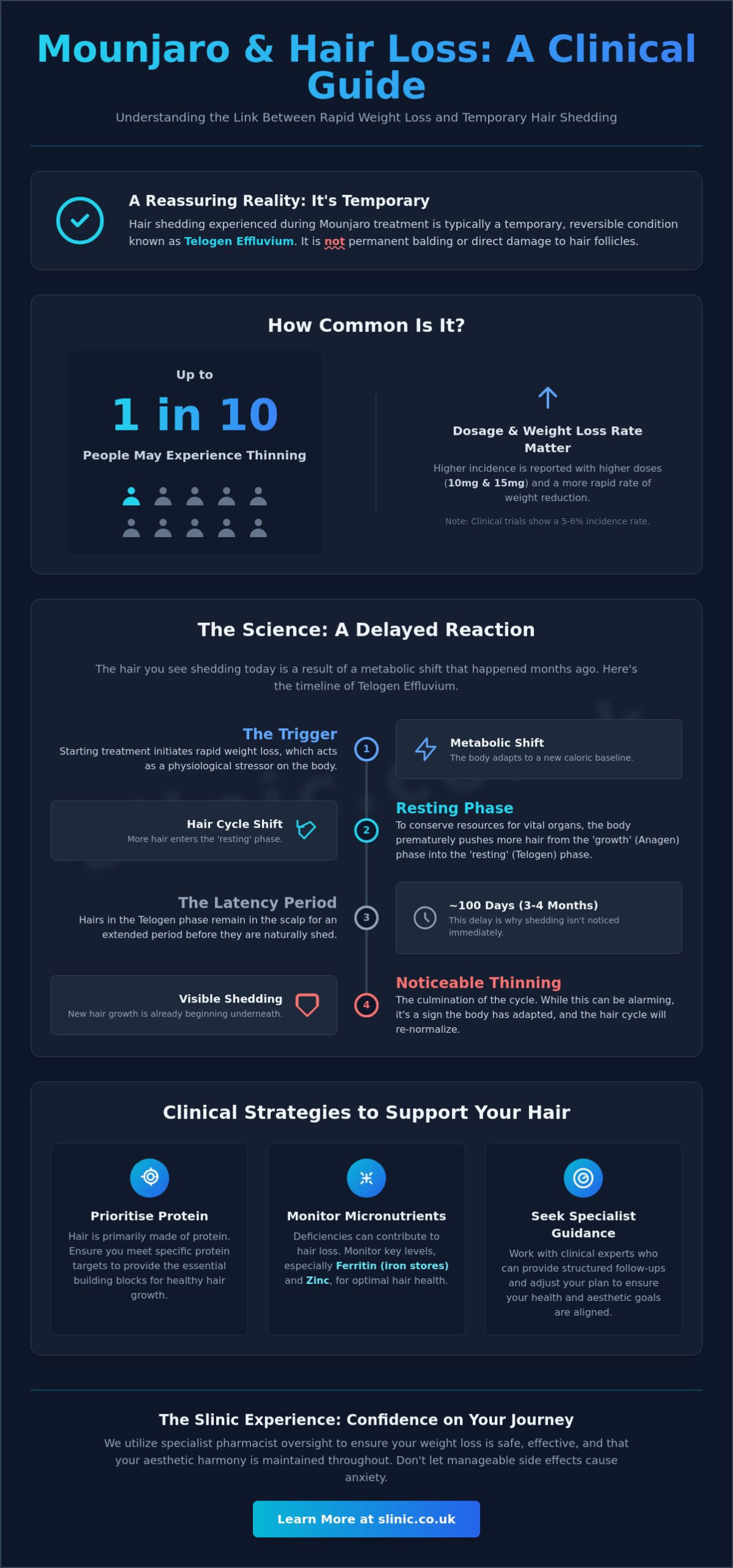
The frequency of hair shedding appears to correlate with dosage and the subsequent rate of weight reduction. In clinical studies, participants on the 10mg and 15mg doses reported higher incidences of thinning compared to those on lower maintenance doses. It’s vital to distinguish this from androgenetic alopecia, or permanent male and female pattern balding. The shedding observed during medical weight loss is typically a temporary shift in the hair’s lifecycle, not a permanent loss of the follicle itself.
Incidence Rates in UK Clinical Practice
In major weight management studies, the reported incidence rate for hair loss typically sits between 5% and 6%. In real-world UK clinical practice, reporting can fluctuate based on patient observation and the speed of their weight loss journey. Some data, such as that shared by the British Heart Foundation, suggests that up to 1 in 10 people may experience some form of thinning. Crucially, clinical data shows that hair loss is rarely a reason for patients to discontinue their weight loss treatment. Most individuals find the profound metabolic benefits far outweigh the temporary period of thinning, especially when managed with specialist oversight.
Is Mounjaro Directly Toxic to Hair?
A common misconception is that the medication acts as a toxin to the scalp. Tirzepatide (Mounjaro) does not target hair follicles directly. Unlike certain chemotherapy drugs or specific hormonal treatments that cause direct follicular damage, Mounjaro is a GLP-1 and GIP receptor agonist focused on insulin regulation and appetite suppression. The shedding is a secondary physiological response. Your body essentially enters a resource-saving mode due to the rapid caloric deficit, temporarily deprioritizing hair growth to support vital organ functions. This shift is a natural reaction to rapid biological change, not a pharmacological attack on your hair’s architecture.
The Mechanism: Why Rapid Weight Loss Triggers Telogen Effluvium
Understanding the physiological response of the scalp requires a closer look at the intricate timeline of the hair growth cycle. In most healthy individuals, approximately 90% of hair is in the Anagen, or growth, phase, while the remainder transitions through Catagen (regression) and finally into Telogen (resting). When you begin a transformative treatment like Mounjaro, the rapid metabolic shift acts as a systemic shock. This stressor prematurely forces a significant percentage of hairs out of the growth phase and into the resting phase. This condition, known as Telogen Effluvium, is the primary reason patients notice increased shedding during their weight loss journey.
Patients often ask: if I started treatment today, why am I only seeing shedding now? The answer lies in the biology of the follicle. Once a hair enters the Telogen phase, it remains anchored in the scalp for approximately 100 days before finally falling out. This creates a characteristic 3 to 4 month delay between the metabolic shock of starting your weight loss injections and the visible appearance of thinning. Recognizing this timeline is a core component of this Does Mounjaro Cause Hair Loss? UK Clinical Guide, as it helps manage expectations and reduces unnecessary alarm during the early stages of treatment.
Metabolic Resource Prioritisation
The human body is an expert at survival. During a period of rapid caloric deficit, it meticulously manages its biological architecture by diverting limited nutrients to vital organs like the heart, brain, and lungs. Because hair is non-essential for immediate survival, the production of keratin, the protein that forms the hair shaft, is often deprioritized. This resource diversion is a temporary survival mechanism. As your weight begins to stabilize, the body perceives the threat has passed and restores nutrient flow to the scalp, allowing the growth cycle to resume its natural rhythm.
Hormonal Shifts and Follicular Sensitivity
The introduction of GLP-1 and GIP agonists significantly alters your hormonal environment. While these shifts are restorative for your metabolic health and long-term well-being, the sudden change in insulin sensitivity can temporarily disrupt the scalp’s equilibrium. However, this is part of a larger journey toward long-term aesthetic harmony. Telogen Effluvium is a temporary, reversible resting phase of the hair follicle. If you’re concerned about your progress, you can access specialist support through our clinical team to ensure your plan remains optimized for your specific needs.
Comparing GLP-1 Medications: Is Hair Loss Unique to Tirzepatide?
A common concern for patients is whether the risk of thinning is specific to Mounjaro or a universal trait of all weight loss injections. Evidence suggests that hair shedding isn’t a pharmacological quirk of a single drug, but rather a common thread among all effective weight management interventions. When we compare Mounjaro (tirzepatide) to Wegovy (semaglutide), the physiological response remains consistent: as the body undergoes rapid transformation, the hair growth cycle may temporarily pause. To understand the broader landscape of these treatments, you can explore our clinical guide to weight loss injections in the UK.
While both medications are highly effective, clinical trials on Zepbound (the US brand name for weight loss tirzepatide) and Mounjaro show slightly higher reported rates of hair shedding compared to semaglutide. This isn’t because tirzepatide is more “toxic” to the follicle. Instead, it’s a reflection of the medication’s superior metabolic potency. A 2025 study in the New England Journal of Medicine found that patients on tirzepatide lost an average of 20.2% of their body weight over 72 weeks, compared to 13.7% for those on semaglutide. This Does Mounjaro Cause Hair Loss? UK Clinical Guide emphasizes that the more profound the weight loss, the more likely the body is to trigger a temporary resting phase in the hair cycle.
The “Rate of Loss” Factor
The correlation between the speed of weight reduction and the incidence of Telogen Effluvium (TE) is well-documented. Data from the SURMOUNT trials for Mounjaro and the STEP trials for Wegovy indicate that shedding is most prevalent during the initial “weight drop” phase. The Slinic approach prioritizes steady, sustainable weight reduction rather than an aggressive, unchecked deficit. By managing your titration schedule with specialist oversight, we aim to balance rapid metabolic improvement with aesthetic harmony, ensuring your body feels secure enough to maintain its biological architecture throughout the journey.
Bariatric Surgery vs. Medical Injections
To put the 5% to 10% incidence rate of Mounjaro-related shedding into perspective, we can look at bariatric surgery. Clinical data indicates that between 30% and 40% of patients who undergo surgical weight loss experience significant Telogen Effluvium. Mounjaro offers a far less invasive alternative while still delivering metabolically potent results. Unlike surgery, which can permanently alter nutrient absorption, medical weight loss allows for precise control over your nutritional intake. This flexibility is vital; it gives us the opportunity to implement proactive strategies to support hair health while you achieve your weight loss goals. If you’re ready to begin a structured, pharmacist-led program, you can view our treatment options to find a plan that suits your personal health profile.
Clinical Strategies to Mitigate Hair Shedding During Treatment
Preserving the biological architecture of your hair requires a proactive, evidence-based approach while using Mounjaro. While the physiological shift of Telogen Effluvium is often temporary, implementing specific clinical strategies can minimize the severity of shedding and support a faster return to the growth phase. This Does Mounjaro Cause Hair Loss? UK Clinical Guide prioritizes a “safety-first” methodology, focusing on internal health and scalp environment stability.
One of the most effective interventions is the prioritization of high-quality protein. Your hair is primarily composed of keratin, a protein that requires a steady supply of amino acids. We recommend a daily target of 0.8g to 1.2g of protein per kilogram of body weight. This ensures that even during a significant caloric deficit, your body has sufficient resources to maintain non-essential structures like hair follicles. Alongside protein, maintaining cellular hydration is vital. Proper fluid intake supports follicular perfusion, ensuring that the blood supply to the scalp effectively delivers the oxygen and nutrients needed for hair production.
Clinical monitoring of key micronutrients is equally essential. Deficiencies in specific vitamins and minerals can exacerbate shedding or delay the recovery of the hair cycle. We focus on four primary markers:
- Ferritin: These are your iron stores. Low ferritin is one of the most common triggers for hair thinning in the UK.
- Vitamin D: Essential for hair follicle cycling and overall immune function.
- Zinc: Plays a critical role in hair tissue growth and repair.
- Biotin: A B-vitamin that supports the infrastructure of keratin.
Nutritional Foundations for Hair Preservation
The specific amino acids L-lysine and L-methionine are the building blocks of keratin synthesis. Incorporating these into your daily intake helps maintain the integrity of the hair shaft. Because appetite suppression is a primary effect of your weight loss treatment, every calorie must be nutrient-dense. You can read our specialist guide on what to eat on Mounjaro to learn how to structure your meals for maximum follicular support. A bespoke hair care routine that avoids excessive heat or chemical trauma also helps protect existing strands during this sensitive transition.
When to Consider Supplements
While Biotin and Collagen supplements are popular, they cannot override a severe protein or caloric deficit. They should be viewed as supportive rather than curative. Before starting high-dose iron or zinc, it’s vital to undergo blood testing to avoid toxicity. Our clinical team provides ongoing monitoring and side-effect advice to ensure your supplementation is safe and effective. If you’re experiencing unexpected changes in your hair health, start a clinical consultation with our pharmacists to review your nutritional protocol and ensure your journey remains on track.
The Slinic Experience: Specialist Oversight for Safe Weight Management
The Slinic experience is defined by a rigorous commitment to clinical excellence and patient safety. While this Does Mounjaro Cause Hair Loss? UK Clinical Guide has explained the physiological mechanics of shedding, managing these changes requires more than just information; it requires professional oversight. Every Mounjaro order at Slinic undergoes a comprehensive, pharmacist-led clinical review. This isn’t an automated process. Our prescribing doctors and registered pharmacists personally evaluate your medical history and eligibility to ensure that your medical weight loss journey is both effective and biologically sustainable.
Structured follow-up is the cornerstone of our service. We don’t simply provide weight loss injections and leave you to manage side effects alone. Our approach includes dedicated support channels and ongoing monitoring, ensuring you can access expert side-effect advice on everything from titration schedules to managing Telogen Effluvium. We provide clear safety netting instructions: while general shedding is often a temporary response to weight loss, you should seek specialist dermatological advice if you notice patchy hair loss, scalp redness, or persistent itching. These symptoms may indicate conditions unrelated to your weight loss treatment and require a different clinical pathway.
Slinic prides itself on offering some of the most competitive pricing in the UK, but we never compromise on our clinical standards. We believe that premium, specialist care should be accessible. By combining high-level medical expertise with a streamlined digital experience, we provide a foundation for long-term health that general providers often struggle to match. Our nationwide reach ensures that whether you’re in a major city or a rural area, you receive the same elite level of care and fast access to professional support.
Our Commitment to Clinical Governance
Slinic operates under strict adherence to the General Pharmaceutical Council (GPhC) and MHRA safety guidelines. Our clinicians meticulously monitor your rate of weight reduction through documented protocols and audit-ready processes. If your weight loss is too rapid, it can increase physiological stress and exacerbate hair shedding. By identifying these trends early, we can adjust your plan to protect your overall well-being. You can view our Mounjaro weight loss treatment plans to see how we structure our care to prioritize your safety at every dosage increment.
Taking the Next Step Safely
Your journey toward aesthetic harmony and metabolic health begins with a tailored treatment plan. We invite you to complete a robust eligibility assessment, which often includes video consultations to provide the personalized clinical oversight required for safe medical weight management. Once approved, your medication is dispatched via discreet home delivery, supported by structured follow-up and strict safety netting regarding when to seek urgent medical help. Start your clinically supervised weight loss journey with Slinic today and experience the difference that specialist precision makes to your confidence and quality of life.
Achieving Your Health Goals with Aesthetic Confidence
Navigating the transformative path of medical weight loss requires a balance between metabolic success and personal confidence. As outlined in this Does Mounjaro Cause Hair Loss? UK Clinical Guide, temporary hair shedding is a manageable physiological response rather than a permanent hurdle. By prioritizing high-quality protein and monitoring vital micronutrients like ferritin and zinc, you can support your body’s biological architecture while reaching your weight loss milestones. The key is structured, professional oversight that prioritizes your safety above all else.
Slinic combines the clinical rigor of a GPhC regulated pharmacy with the accessibility of competitive UK pricing. Our pharmacist-led clinical reviews ensure your treatment is tailored to your specific health profile; meanwhile, our nationwide discreet delivery brings specialist care directly to your door. You don’t have to choose between your health and your hair. With the right guidance, you can achieve both restorative health and aesthetic harmony.
Begin your specialist-led Mounjaro journey with Slinic today. We’re here to partner with you at every stage, providing the tranquil reliability and medical precision you need for a lifetime of well-being.
Frequently Asked Questions
Is hair loss from Mounjaro permanent?
Hair loss associated with Mounjaro is almost always temporary and reversible. This Does Mounjaro Cause Hair Loss? UK Clinical Guide clarifies that the condition is typically Telogen Effluvium, which involves a shift in the hair’s lifecycle rather than permanent damage to the follicle. Once your body adapts to its new metabolic state and weight stabilizes, the follicles typically return to the growth phase. It is a physiological pause, not a permanent loss.
How long does hair shedding last while on Mounjaro?
Most patients observe that shedding lasts between three and six months. Because of the delayed nature of the hair cycle, thinning often begins three months after a metabolic shift and takes several months to resolve. As your weight loss treatment progresses and nutrition remains consistent, the shedding should naturally taper off. If shedding persists beyond this period, a clinical review with our specialist team is recommended.
Can I take Biotin or Zinc while using Mounjaro injections?
You can safely take Biotin or Zinc alongside your weight loss injections, provided you don’t exceed recommended daily allowances. These micronutrients support keratin synthesis and follicular health, helping mitigate the effects of Telogen Effluvium. We advise a blood test before starting high-dose Zinc to avoid imbalances. Our pharmacist-led service provides bespoke advice on how supplements fit into your wider medical weight loss plan.
Should I stop taking Mounjaro if my hair starts thinning?
You shouldn’t stop your medication without first consulting your prescribing doctor or pharmacist. Shedding is often a sign that your body is responding to rapid weight loss rather than a direct reaction to the drug itself. Stopping abruptly could disrupt your metabolic progress without immediately halting the shedding phase. Specialist support ensures most thinning is manageable through precise nutritional adjustments and clinical oversight.
Does everyone lose hair on Mounjaro?
No, only a small minority of patients experience hair thinning during their treatment. This Does Mounjaro Cause Hair Loss? UK Clinical Guide highlights that hair loss affects approximately 5% to 10% of users. Factors like the speed of weight reduction and baseline nutrition influence your individual risk. Many individuals complete their entire journey with Slinic without noticing any significant changes to their hair density or scalp health.
What happens if the hair loss doesn’t stop after 6 months?
If shedding continues beyond six months, it’s essential to seek a specialist dermatological review or a comprehensive blood panel. Persistent thinning might suggest an underlying deficiency, such as low ferritin or Vitamin D, that isn’t related to the medication itself. Our clinical team uses these markers to provide safety netting, ensuring any prolonged aesthetic changes are investigated thoroughly to protect your long-term restorative health.
Can Mounjaro improve certain types of hair loss?
Mounjaro may indirectly improve hair loss caused by hormonal imbalances, such as those seen in Polycystic Ovary Syndrome (PCOS). By improving insulin sensitivity and aiding weight reduction, the treatment can help normalize androgen levels. While the initial shock of weight loss might trigger temporary shedding, the long-term stabilization of your metabolic health often leads to improved hair density and reduced hormonal thinning over time.
How much protein do I need to eat to prevent hair loss on Mounjaro?
We recommend consuming between 0.8g and 1.2g of protein per kilogram of your body weight daily. For a person weighing 80kg, this equates to 64g to 96g of high-quality protein. Meeting these targets is vital for maintaining keratin structures during a caloric deficit. This quantitative approach is a core part of the Slinic methodology for ensuring aesthetic harmony remains a priority throughout your journey.