

Home › Blog › Weight Loss › Mounjaro Before and After UK
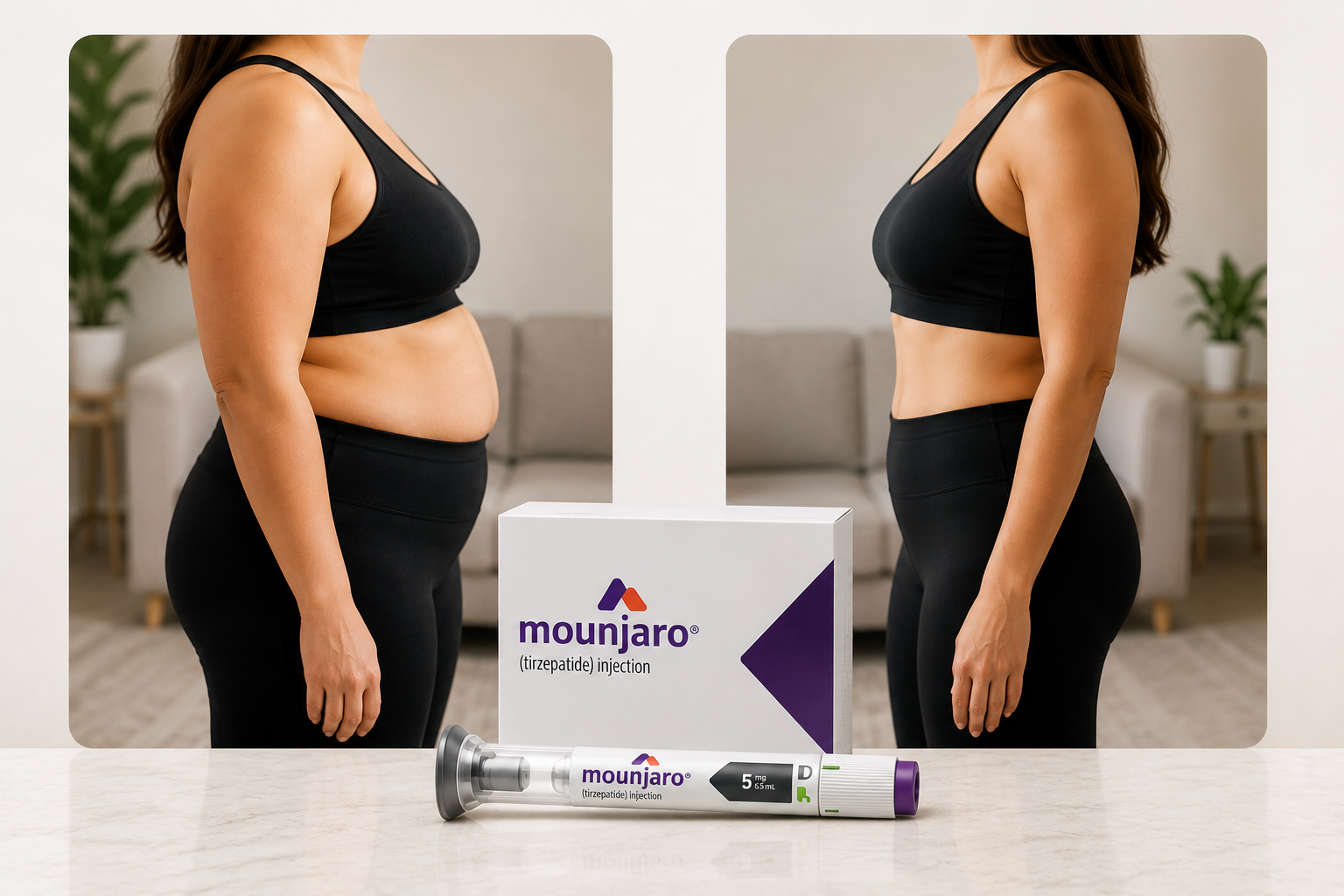
Mounjaro Before and After UK 2026: Real Results, Clinical Evidence and a Month-by-Month Guide to What to Expect
Ready to Start Your Mounjaro Journey? Slinic From £129
GPhC-regulated · NHS-contracted · No subscription · Free monthly check-ins · 25 years pharmacy experience
- ✅ Mounjaro from £129.00/pen — the results in this guide, available today
- ✅ Free starter pack with every first order
- ✅ Free monthly clinical check-ins — your progress monitored every step
- ✅ Every prescription reviewed by a registered UK prescriber
- ✅ Discreet 24-hour cold-chain delivery — £4.99
Jump to section
- Overview
- What the clinical trials actually show
- Real weight loss in kg — at every starting weight
- Month-by-month guide
- Before and after beyond the scales
- What affects your results
- Social media vs reality
- What if results are slow?
- Dealing with a plateau
- Long-term results and what happens after
- Mounjaro before and after vs Wegovy
- How to maximise your results
- Frequently asked questions
- References
Overview: What Mounjaro Before and After Really Looks Like
When people search for Mounjaro before and after, they are usually asking one of three questions: how much weight will I actually lose, how quickly will it happen, and is what I am seeing on social media realistic? This guide answers all three — honestly, with clinical evidence, and without the selective presentation that makes social media weight loss content so misleading.
The clinical evidence for Mounjaro is genuinely extraordinary. Mounjaro (tirzepatide) produces average weight loss of 22.5% of starting body weight at the 15mg dose over 72 weeks in SURMOUNT-1 — the largest and most rigorous obesity trial ever conducted for this medication class. That is an average. Some people lose more. Some lose less. But the distribution of outcomes is remarkable: 91% of participants lost at least 5% of starting body weight, and 57% lost at least 20%.
As a superintendent pharmacist who has overseen hundreds of Mounjaro treatment journeys through Slinic’s monthly check-in programme, I can tell you that the results described in clinical trials are broadly consistent with real-world patient experience — when treatment is properly managed, doses are escalated correctly, and clinical support is provided throughout.
What the Clinical Trials Actually Show: The Full Data
The SURMOUNT-1 trial — published in the New England Journal of Medicine — enrolled 2,539 adults with obesity without type 2 diabetes. Participants were followed for 72 weeks and received either Mounjaro at various doses or placebo alongside lifestyle intervention.
Average weight loss by dose
| Dose | Average weight loss | Average kg lost (100kg baseline) | Average kg lost (120kg baseline) | Average kg lost (150kg baseline) |
|---|---|---|---|---|
| 5mg | 15.0% | 15.0 kg | 18.0 kg | 22.5 kg |
| 10mg | 19.5% | 19.5 kg | 23.4 kg | 29.3 kg |
| 15mg | 22.5% | 22.5 kg (3.5 stone) | 27.0 kg (4.3 stone) | 33.8 kg (5.3 stone) |
| Placebo | 2.4% | 2.4 kg | 2.9 kg | 3.6 kg |
Who achieves what: the full outcome distribution at 15mg
| Weight loss threshold | % of participants achieving it | In plain English |
|---|---|---|
| At least 5% body weight loss | 91% | 9 in 10 patients lose at least 5% of starting weight |
| At least 10% body weight loss | 79% | Nearly 4 in 5 patients lose at least 10% |
| At least 15% body weight loss | 66% | 2 in 3 patients lose at least 15% |
| At least 20% body weight loss | 57% | More than half lose at least 20% |
| At least 25% body weight loss | 36% | More than 1 in 3 patients lose at least 25% |
| BMI reduced below 30 (no longer obese) | 55% | More than half are no longer classified as obese at trial end |
Real Weight Loss in Kilograms and Stone: What This Means for You
Percentages tell part of the story. Most patients think in kilograms and stone. Here is what the clinical trial averages actually mean in concrete weight terms at different starting weights.
| Starting weight | Starting BMI (approx, 5’5″ height) | Average loss at 15mg (22.5%) | What that looks like |
|---|---|---|---|
| 85 kg (13.4 stone) | BMI ~32 | ~19.1 kg (3.0 stone) | Dress size: typically 2–3 sizes; moves from overweight to healthy weight range |
| 100 kg (15.7 stone) | BMI ~37 | ~22.5 kg (3.5 stone) | Significant visible transformation; BMI typically moves to low-overweight range |
| 120 kg (18.9 stone) | BMI ~45 | ~27.0 kg (4.3 stone) | Profound change; most patients achieve BMI below 35; dramatic improvement in mobility and health markers |
| 150 kg (23.6 stone) | BMI ~56 | ~33.8 kg (5.3 stone) | Life-changing; equivalent to bariatric surgery outcomes in many cases |
All figures are based on 22.5% average weight loss from SURMOUNT-1 at 72 weeks, 15mg dose. Individual results will vary significantly — some patients achieve more, some less.
Month-by-Month: What to Expect from Your Mounjaro Journey
Medicspot’s month-by-month structure is the most useful format for patients researching what Mounjaro actually feels like to live with. Here is the clinical picture month by month, based on SURMOUNT-1 data and Slinic’s patient monitoring experience.
Starting the journey — 2.5mg dose
Dose: 2.5mg
Month 1 is about starting well, not about dramatic results. The 2.5mg dose is an initiation dose — its purpose is to allow your body to adapt to tirzepatide rather than to produce significant weight loss. Most patients notice:
- Mild reduction in appetite by week 2 — portions feel slightly smaller, cravings begin to reduce
- Some patients notice a reduction in “food noise” — the constant background preoccupation with eating — within the first week
- Modest weight loss: typically 1–3 kg in month 1 for most patients
- Possible mild nausea, particularly in the first few days — usually well tolerated at this dose
Appetite: beginning to reduce
Side effects: mild, usually manageable
First escalation — appetite suppression becomes real
Dose: 5mg
Month 2 brings the first dose escalation to 5mg — and this is where most patients start to truly feel the difference. The 5mg dose is the first clinically therapeutic dose, and the change in appetite for many patients is described as transformative. Common experiences:
- Significant reduction in appetite — eating half of what you previously would and feeling satisfied
- The “food noise” — constant thoughts about food — markedly reduces for most patients
- Weight loss accelerates: typically 2–5 kg in month 2
- Brief return of nausea in the first days of the new dose — usually settles within a week
- Reduced interest in high-calorie foods — many patients find previously irresistible foods no longer hold the same appeal
Cumulative: 3–8 kg
Food noise: markedly reduced
Visible changes begin — 7.5mg dose
Dose: 7.5mg
Month 3 is typically when changes become visible to others — and when patients begin to feel them in their daily lives. Clothing fits differently. Energy levels improve. The 7.5mg dose continues to build on the appetite suppression established at 5mg.
- Weight loss becomes clearly visible — face, waist, and upper body typically show changes first
- Clothing in a smaller size for many patients by the end of month 3
- Energy levels improving as weight reduces — less physical burden on joints and cardiovascular system
- Sleep quality often improves — particularly for patients with obesity-related sleep disruption
- Blood pressure and blood sugar markers beginning to improve for patients with these conditions
Cumulative: 6–13 kg
Changes: visible to others
Momentum building — 10mg dose
Dose: 10mg
Month 4 brings the 10mg dose and many patients consider this the sweet spot — significant efficacy with side effects that have largely settled. At this point, most patients have lost a meaningful proportion of their target weight and the motivational impact is significant.
- Continued steady weight loss — typically 2–4 kg per month at this stage
- Many patients note significant improvements in physical fitness — activities that were previously exhausting become manageable
- Joint pain often reduces as body weight decreases — a clinical benefit beyond weight loss itself (see our GLP-1 and joint pain guide)
- Some patients at this dose are discussing with their Slinic clinician whether 10mg is their optimal maintenance dose
- Hair thinning may be noticed at this point — see our side effects guide for management
Cumulative: ~10–17 kg
Activity: significantly easier
Approaching maintenance — 12.5mg dose
Dose: 12.5mg
Month 5 typically brings the 12.5mg dose for patients continuing to escalate. By this point, most patients have lost 15–20% of their starting body weight — results that are clearly transformative both clinically and personally.
- Cumulative weight loss is now significant and life-changing for most patients
- Cardiometabolic markers — blood pressure, cholesterol, blood sugar — typically showing meaningful improvement
- Many patients who began with significant mobility issues are moving more freely
- Psychological benefits becoming evident — improved confidence, social engagement, and quality of life
- The Slinic monthly check-in at this stage typically reviews whether to continue escalation to 15mg or to maintain at 12.5mg
Cumulative: ~15–22 kg
Health markers: significantly improved
Reaching maximum dose — the long game begins
Dose: 15mg
Month 6 brings patients who have tolerated escalation well to the 15mg maintenance dose. This is where the SURMOUNT-1 trial’s most impressive results accumulate — but it is important to understand that the journey is far from over at month 6.
- Maximum dose reached — the pharmacological ceiling for Mounjaro
- Weight loss continues to accumulate: the 22.5% average was reached at 72 weeks, not 24
- Most patients at this stage have lost 20–25% of starting body weight with proper dose management
- The 6-month “before and after” that social media celebrates is real — but months 7–18 often produce as much additional progress
- Side effects at the established 15mg dose are typically well managed by now
Cumulative: ~18–25 kg
Journey: still ongoing — best results at 12–18 months
The maintenance phase — where maximum results are achieved
Dose: 15mg (or optimal maintenance dose)
This is the section most before-and-after guides ignore — and it is the most important for patients wanting to understand what Mounjaro actually delivers long-term.
- Weight loss continues to accumulate at maintenance dose — more slowly than during escalation but consistently
- The 22.5% SURMOUNT-1 average was measured at 72 weeks (approximately 18 months) — not 6 months
- SURMOUNT-4 extension data to 88 weeks showed continued weight loss without plateau for most patients
- Patients who maintain dietary changes and increase physical activity during this phase achieve the best long-term outcomes
- Monthly Slinic check-ins continue to monitor progress, manage side effects, and discuss long-term planning
Max results: typically months 15–18
Support: monthly check-ins continue
Before and After Beyond the Scales: Health Changes You May Not Expect
The before and after that matters most is not just what you see in the mirror — it is the changes in your health markers, energy, mobility, and quality of life. SURMOUNT-1 measured these systematically. Here is what the clinical data shows happens across the body during successful Mounjaro treatment.
Cardiometabolic changes
| Health marker | Typical change at 15mg dose | Clinical significance |
|---|---|---|
| Systolic blood pressure | Average reduction of ~7–8 mmHg | Clinically meaningful — equivalent to adding a blood pressure medication for some patients |
| Diastolic blood pressure | Average reduction of ~3–4 mmHg | Reduces cardiovascular risk |
| Waist circumference | Average reduction of ~17–19 cm | Significant reduction in visceral (organ) fat — the most metabolically harmful fat type |
| Triglycerides | Average reduction of ~24–28% | Major cardiovascular risk factor — normalisation in many patients |
| Non-HDL cholesterol | Average reduction of ~18–22% | Meaningful reduction in atherosclerosis risk |
| HbA1c (blood sugar control) | Significant reduction in patients with elevated baseline | Pre-diabetes reversal and improved glycaemic control |
| Liver fat (hepatic steatosis) | Significant reduction in early-phase data | Potential reversal of fatty liver disease in many patients |
| hsCRP (inflammation marker) | Significant reduction | Reduced systemic inflammation — links to joint pain, cardiovascular risk, and multiple comorbidities |
Energy and physical function
One of the most consistently reported Mounjaro before and after experiences from Slinic patients is the improvement in daily energy levels and physical function. The mechanism is straightforward: carrying significantly less body weight reduces the physical burden on the cardiovascular system, joints, and musculoskeletal structures. Activities that were previously exhausting — stairs, walking distances, playing with children — become manageable and then comfortable.
SURMOUNT-1 measured physical function using validated patient-reported outcome tools and found significant improvements across all measures of physical functioning. Patients reported being able to walk further, move more freely, and engage in activities they had previously avoided.
Sleep quality
Obesity is strongly associated with obstructive sleep apnoea and poor sleep quality. As body weight reduces on Mounjaro — particularly as fat around the neck and upper airway decreases — sleep quality typically improves. Clinical experience with GLP-1 medications including Mounjaro shows consistent improvements in patient-reported sleep quality with weight loss.
Joint pain and mobility
Each kilogram of body weight lost reduces the force on knee joints by approximately 4 kilograms during walking. For a patient who loses 25 kg on Mounjaro, this represents a reduction of approximately 100 kg of force on each knee with every step — a clinically profound change for patients with obesity-related osteoarthritis. Combined with the anti-inflammatory effects of GLP-1 receptor activation, the joint improvements reported by many patients go beyond what the weight loss alone would predict. We cover this in full in our guide to GLP-1 agonists and joint pain.
Mental health and wellbeing
The psychological impact of Mounjaro treatment is significant and consistently reported. Patients describe improvements in confidence, reduction in anxiety around food and eating, improved body image, greater social participation, and a sense of control over health that was previously absent. The MHRA and EMA safety reviews of GLP-1 medications found no causal link between these medications and depression or suicidal ideation — and real-world patient experience is predominantly of positive mood changes associated with weight loss and improved health.
What Affects Your Mounjaro Results: The Honest Clinical Picture
The 22.5% average from SURMOUNT-1 is just that — an average. Some patients achieve significantly more. Some achieve less. Understanding what drives the variation is essential for setting realistic expectations and for maximising your own results.
1. Starting weight and BMI
Patients with higher starting BMI tend to lose more in absolute kilograms but similar or slightly lower percentages compared with lower-BMI patients. A patient starting at 150 kg may lose 35 kg (23.3%) while a patient starting at 90 kg may lose 18 kg (20%). Both are extraordinary results — the absolute figures are very different.
2. Dose reached and maintained
The dose-response relationship in SURMOUNT-1 is clear: higher doses produce greater weight loss. Patients who tolerate escalation to 15mg and maintain at this dose for 72 weeks produce the 22.5% average. Patients who maintain on 10mg produce approximately 19.5% on average. If side effects prevent escalation beyond 7.5mg, average weight loss is lower — still significant, but less than the maximum.
3. Diet quality during treatment
Mounjaro suppresses appetite significantly — but it does not dictate food choices. Patients who continue eating predominantly highly processed, energy-dense food in smaller portions will lose less weight than those who shift towards higher-protein, lower-calorie eating patterns. Combining Mounjaro with protein-rich meals and regular movement tends to produce the strongest, most lasting outcomes — this is consistent with clinical trial protocols which all include lifestyle intervention alongside medication.
4. Physical activity
Exercise during Mounjaro treatment significantly affects both total weight loss and the composition of weight lost. Patients who maintain or increase physical activity preserve more lean muscle mass, burn more total calories, and tend to achieve greater percentage weight loss than those who are sedentary. Resistance training in particular is important for maintaining lean muscle during the significant weight loss that Mounjaro produces.
5. Metabolic factors
Patients with type 2 diabetes or insulin resistance typically achieve slightly lower average weight loss than those without — not because Mounjaro is less effective, but because metabolic comorbidities attenuate GLP-1 receptor response. SURMOUNT-2 (the type 2 diabetes trial) showed 15.7% average weight loss versus 22.5% in SURMOUNT-1 (no diabetes). Still extraordinary results — but important context for patients with these conditions.
6. Quality of clinical support
This is the factor that no trial can fully control for — and the one that most differentiates providers. Patients receiving regular clinical oversight, dietary guidance, side effect management, and dose optimisation consistently outperform those who simply receive a monthly prescription renewal. This is precisely why Slinic’s free monthly clinical check-ins are not an optional extra — they are a core component of achieving the best possible outcome.
Social Media Before and After: What Is Real and What Is Misleading
TikTok, Instagram, and YouTube are full of dramatic Mounjaro before and after content. Some of it accurately represents what the medication can achieve. Some of it is selective, misleading, or simply untrue. Here is how to evaluate what you see.
What tends to be accurate
- The direction of results — significant weight loss over 6–18 months is genuinely achievable and consistent with trial data
- The “food noise” reduction — this is one of the most consistently and authentically described patient experiences across all platforms
- The emotional and psychological transformation — genuine improvements in confidence and quality of life are real and well documented
- The physical improvements — better mobility, reduced joint pain, more energy — all consistent with clinical evidence
What tends to be misleading
- Unusually fast timelines — dramatic results in 8–12 weeks are possible but represent the better end of the distribution. They are not typical, and presenting them as normal creates unrealistic expectations.
- No mention of side effects — social media before and after content almost never mentions nausea, fatigue, or hair loss. These are real and common, and their absence in content gives a misleadingly easy picture of treatment.
- Unverified starting and ending weights — weight claims in social media content cannot be independently verified. Some are accurate; some are exaggerated.
- No mention of diet and lifestyle — significant lifestyle changes often accompany Mounjaro treatment and contribute meaningfully to results. Attributing all weight loss to the medication alone overstates its isolated effect.
- Content from unlicensed “research peptide” providers — some before and after content is actually marketing for unregulated peptide products that are not genuine Mounjaro. This content is both misleading and potentially dangerous.
What If Your Results Are Slower Than Expected?
Not every patient loses weight at the rate described in clinical trials — and slower-than-expected results are one of the most common concerns raised at Slinic monthly check-ins. Here is the clinical framework for understanding why results might be slower and what to do.
Common reasons for slower-than-expected weight loss
- Still at a lower dose — at 2.5mg or 5mg, significant weight loss is not expected. The clinical results accumulate as doses escalate. The trajectory matters more than any single month’s result.
- Compensatory eating — some patients unconsciously eat more at meal times to compensate for reduced snacking. This can blunt weight loss even with Mounjaro’s appetite suppression. A food diary review at your Slinic check-in can identify this.
- Diet composition — continuing to eat predominantly processed, calorie-dense food in smaller portions produces less weight loss than shifting to a more protein-rich, whole-food based diet.
- Fluid retention — particularly in the first few months, changes in fluid balance can mask fat loss on the scales. Body composition measurements are more informative than weight alone in this period.
- Metabolic adaptation — a small number of patients have underlying metabolic factors (thyroid conditions, insulin resistance, certain medications) that slow weight loss. A clinical review can identify and address these.
If your results are slower than expected after 3 months at a therapeutic dose, discuss this at your Slinic monthly check-in. We can review your diet, consider whether dose escalation is appropriate, assess for underlying metabolic factors, and ensure the clinical picture is complete. See our Mounjaro dosing guide and our guide to how long Mounjaro takes to work.
What to Do If You Hit a Plateau
A weight loss plateau — where the scales stop moving despite continued treatment — is common and does not mean Mounjaro has stopped working. Here is the clinical context and what to do.
Why plateaus happen
As body weight reduces, the body’s basal metabolic rate (the calories burned at rest) decreases — because a lighter body burns fewer calories than a heavier one. This means that the caloric deficit created by Mounjaro’s appetite suppression gradually narrows as weight is lost. At some point, the reduced calorie intake may match the reduced basal metabolic rate — and weight loss slows or stalls.
Clinical responses to a plateau at Slinic
- Review diet quality — dietary drift is the most common cause of plateaus. Returning to protein-first eating and reducing processed carbohydrates often restarts progress.
- Increase physical activity — adding resistance exercise specifically helps counter the metabolic rate reduction by building lean muscle mass, which burns more calories at rest.
- Consider dose escalation — if you are not at your maximum dose, escalating to the next dose level will typically restart weight loss. Discuss with your Slinic clinician at your monthly check-in.
- Consider Wegovy 7.2mg as an alternative — for patients who have plateaued on Mounjaro, switching to Wegovy at the 7.2mg dose (20.7% average weight loss) may restart progress via a different mechanism. See our switching guide.
- Accept the new baseline — not all patients will reach their ideal weight on any single medication. Maintaining the weight lost is itself a significant clinical achievement, and for some patients the right decision is to consolidate rather than continue pursuing further loss.
Long-Term Results: What Happens After You Stop Mounjaro
This is the question that the before-and-after format almost always omits — and clinically it is the most important one.
SURMOUNT-4 — the long-term extension trial for Mounjaro — showed clearly that stopping tirzepatide abruptly without having established sustainable dietary and lifestyle habits leads to significant weight regain. Approximately two-thirds of weight lost was regained within 12 months of discontinuation in participants who did not have established lifestyle support.
This does not mean Mounjaro does not work. It means it works the same way that anti-hypertensive medication works — as long as you take it, blood pressure is controlled. Stop it without addressing the underlying condition, and it returns. The underlying condition in obesity is a complex interplay of metabolic, hormonal, and behavioural factors that persists beyond medication.
What this means practically
- The clinical conversation about when and how to stop Mounjaro should begin at your monthly check-in long before you reach your target weight — not at the moment you stop
- Building dietary habits, physical activity, and lifestyle foundations during treatment significantly reduces the degree of weight regain after stopping
- Some patients choose to continue Mounjaro long-term — either at maintenance dose or at a lower dose for weight maintenance — as a chronic condition management strategy
- If you need to take a break and restart, see our guide to restarting Mounjaro safely
Mounjaro Before and After vs Wegovy Before and After
For patients comparing the two medications, a 2025 head-to-head trial published in the New England Journal of Medicine directly compared tirzepatide and semaglutide 2.4mg — finding that tirzepatide produced statistically significantly greater weight loss across all doses tested.
| Comparison | Mounjaro 15mg | Wegovy 7.2mg | Wegovy 2.4mg |
|---|---|---|---|
| Average weight loss | 22.5% | 20.7% | 14.9% |
| Patients losing ≥20% | 57% | ~33% | ~10% |
| Patients losing ≥25% | 36% | ~10% | <5% |
| Slinic starting price | £129.00 (2.5mg) | Contact Slinic | £83.00 (0.25mg) |
| Slinic maintenance price | £267.00 (15mg) | Contact Slinic | £196.00 (2.4mg) |
The choice between Mounjaro and Wegovy depends on your clinical profile, cost considerations, and personal preferences. See our complete Mounjaro vs Wegovy comparison guide for the full clinical analysis.
How to Maximise Your Mounjaro Results
The gap between average results (22.5%) and the best results in SURMOUNT-1 (some patients lost 40%+) is explained almost entirely by the factors below. These are the evidence-based strategies that consistently produce better outcomes at Slinic.
1. Prioritise protein at every meal
Protein is the single most important dietary factor on Mounjaro. It preserves lean muscle mass during weight loss, maintains metabolic rate, reduces hunger, and supports skin health. Aim for 1.2–1.6g of protein per kilogram of target body weight per day. This means protein-first at every meal — chicken, fish, eggs, legumes, Greek yogurt, cottage cheese — before any carbohydrates.
2. Add resistance training
Two to three sessions of resistance training per week — weights, resistance bands, bodyweight exercises — preserves lean muscle mass, boosts metabolic rate, and significantly improves the body composition change seen on Mounjaro. Patients who combine Mounjaro with resistance training typically achieve better body composition outcomes than those who rely on the medication alone.
3. Track your progress beyond weight
Weight on the scales is only one measure. Tracking waist circumference, energy levels, blood pressure, blood sugar, clothing sizes, and physical performance gives a more complete and motivating picture of progress — particularly during periods when the scales are not moving.
4. Use your monthly check-ins actively
Slinic’s free monthly clinical check-ins are not just for prescription renewal. They are your clinical consultation for discussing progress, dietary strategies, side effect management, and dose planning. Patients who actively engage with their monthly check-ins consistently outperform those who treat it as an administrative process.
5. Be patient with the timeline
The 22.5% average was measured at 72 weeks — 18 months. The patients who achieve the most dramatic results are not the ones who lose fastest in month 1 — they are the ones who maintain consistent treatment, consistent habits, and clinical support over the full course of treatment.
Start Your Mounjaro Journey With Clinical Support — Slinic From £139
GPhC-regulated · NHS-contracted · Free monthly check-ins · 25 years pharmacy experience · No subscription
- ✅ Mounjaro 2.5mg — £129.00 · 5mg — £155.00 · 7.5mg — £206.00
- ✅ 10mg — £230.00 · 12.5mg — £247.00 · 15mg — £267.00
- ✅ + £4.99 delivery · Free starter pack · Free monthly check-ins
- ✅ Every dose increase reviewed before dispatch
- ✅ No subscription · No minimum term · No hidden fees
Setting Realistic Targets: What Good Looks Like at Each Starting Point
One of the most useful things Slinic’s monthly check-ins do is help patients calibrate expectations to their individual starting point — not the average, and not the social media highlight reel. Here is a realistic target framework based on SURMOUNT-1 data for different starting profiles.
| Starting weight | Conservative (15% loss) | Average (22.5% loss) | Strong responder (30%+ loss) | % of patients achieving 30%+ |
|---|---|---|---|---|
| 85 kg (13.4 st) | 12.8 kg (2.0 st) | 19.1 kg (3.0 st) | 25.5 kg+ (4.0 st+) | ~36% |
| 100 kg (15.7 st) | 15.0 kg (2.4 st) | 22.5 kg (3.5 st) | 30 kg+ (4.7 st+) | ~36% |
| 120 kg (18.9 st) | 18.0 kg (2.8 st) | 27.0 kg (4.3 st) | 36 kg+ (5.7 st+) | ~36% |
| 150 kg (23.6 st) | 22.5 kg (3.5 st) | 33.8 kg (5.3 st) | 45 kg+ (7.1 st+) | ~36% |
| 180 kg (28.3 st) | 27.0 kg (4.3 st) | 40.5 kg (6.4 st) | 54 kg+ (8.5 st+) | ~36% |
Conservative = 15th percentile outcome. Average = SURMOUNT-1 mean at 15mg, 72 weeks. Strong responder = 30%+ threshold. Individual results will vary.
The Invisible Before and After: What Changes Inside Your Body
The before and after photographs that circulate on social media capture the visible transformation. But the more clinically important before and after happens inside — in blood test results, blood pressure readings, and metabolic markers that most patients cannot see but their doctors can measure.
Here is what a typical patient’s blood results look like before and after 12–18 months of Mounjaro at Slinic, based on SURMOUNT-1 data and clinical monitoring of our patient population:
| Marker | Typical “before” (obese patient) | Typical “after” (18 months, 15mg) | What this means |
|---|---|---|---|
| Systolic BP | 138 mmHg | ~130 mmHg | Below Stage 1 hypertension threshold for many patients |
| Fasting blood glucose | 6.2 mmol/L (pre-diabetic) | ~5.3 mmol/L | Back in normal range — pre-diabetes reversed in many cases |
| Triglycerides | 2.8 mmol/L (elevated) | ~2.0 mmol/L | Back in normal range |
| Non-HDL cholesterol | 4.5 mmol/L (elevated) | ~3.6 mmol/L | Significant cardiovascular risk reduction |
| Waist circumference | 115 cm (very high risk) | ~96 cm | Below high-risk threshold for most patients |
| BMI (100 kg, 5’5″) | 37.5 (obese class II) | ~29.0 (overweight — no longer obese) | 55% of SURMOUNT-1 patients achieved BMI below 30 |
These internal changes — invisible in a before-and-after photograph — are the clinical foundation of why Mounjaro is being studied for cardiovascular outcomes, diabetes reversal, kidney protection, and liver disease. The weight loss is the mechanism; the systemic health improvement is the outcome.
Frequently Asked Questions
Am I Eligible for Mounjaro at Slinic?
To access the results described in this guide, you need to be eligible for Mounjaro treatment. Slinic’s eligibility criteria follow GPhC-compliant prescribing standards and are assessed at your initial consultation. You are likely eligible if you have a BMI of 30 or above, or 27 or above with at least one weight-related health condition. See our full Mounjaro eligibility guide for complete criteria. The assessment is free, takes two minutes, and is clinically reviewed by a registered Slinic prescriber. If you meet the criteria, your first pen — Mounjaro 2.5mg at £129.00 — can be with you within 24 hours. Start today.
Start Your Mounjaro Journey — The Results in This Guide Are Available to You
Slinic — GPhC-regulated · NHS-contracted · SCOPE-accredited · LegitScript certified · 25 years pharmacy experience
- ✅ Mounjaro from £129.00/pen — no subscription, no hidden fees
- ✅ Free starter pack and free monthly clinical check-ins
- ✅ Every prescription reviewed by a registered UK prescriber
- ✅ Discreet 24-hour cold-chain delivery — £4.99
- ✅ GPhC No. 1033729 · NHS-contracted · LegitScript certified
Clinical References
- Jastreboff AM, et al. Tirzepatide Once Weekly for the Treatment of Obesity (SURMOUNT-1). NEJM. 2022;387(3):205-216.
- Garvey WT, et al. Tirzepatide for obesity in type 2 diabetes (SURMOUNT-2). The Lancet. 2023;402(10402):613-626.
- Aronne LJ, et al. Continued Treatment With Tirzepatide (SURMOUNT-4). JAMA. 2024;331(1):38-48.
- Aronne LJ, et al. Tirzepatide vs Semaglutide for Obesity. NEJM. 2025;393(1):26-36.
- Wharton S, et al. Once-weekly semaglutide 7.2mg (STEP UP). Lancet Diabetes & Endocrinology. 2025;13(11):949-963.
- NICE TA1026 — Tirzepatide for managing overweight and obesity.
- GPhC guidance for online pharmacies. Updated February 2025. pharmacyregulation.org
Related Guides & Treatment Pages
Treatment GuideMounjaro Week 1 & Month 1 Results
Treatment GuideHow Long Does Mounjaro Take to Work?
Treatment GuideMounjaro Dosing Schedule: 2.5mg to 15mg Explained
Treatment GuideMounjaro Side Effects: Complete Management Guide
Treatment GuideMounjaro vs Wegovy: Which Is Better?
Treatment GuideRestarting Mounjaro After a Break: Safe Guide
BlogGLP-1 Agonists and Joint Pain: Clinical Perspective
BlogMounjaro Eligibility UK: Clinical Criteria 2026
Treatment GuideComplete Mounjaro Cost Breakdown UK 2026
BlogWegovy Pill UK: MHRA Approved June 2026
Cornerstone GuideWeight Loss Injections UK: Full 2026 Guide