
The most critical phase of your weight loss journey isn’t the first injection; it’s the clinical strategy you employ during the final one. You’ve likely spent months watching the scale drop and feeling the “hunger noise” fade, so it’s natural to feel anxious that stopping treatment will trigger an immediate rebound effect. You aren’t alone in fearing the return of intense hunger or losing the progress you’ve worked so hard to achieve. This article provides a pharmacist-led framework for How to Stop Mounjaro Safely: A UK Clinical Guide, ensuring your metabolic health remains stable as you transition.
At Slinic, we view cessation as a specialist transition from hormonal suppression to biological maintenance rather than a sudden stop. Our clinical team developed the Slinic 2026 Protocol to replace the risks of stopping abruptly with a structured, bespoke tapering plan. We’ll guide you through the specifics of reducing your dose by 2.5mg every four to eight weeks, a method supported by clinical consensus to minimize side effects. You’ll learn how to manage your maintenance phase and use metabolic priming to protect the 22.5% weight loss seen in major clinical trials, giving you a foundation for a lifetime of health.
Key Takeaways
- Understand why transitioning off Tirzepatide requires a Specialist-led approach to manage the biological reset of GLP-1 and GIP receptors.
- Compare the clinical risks of stopping “cold turkey” against the benefits of a gradual “Step-Down” method to mitigate the return of hunger noise.
- Review the structured phases of How to Stop Mounjaro Safely: A UK Clinical Guide, featuring the proprietary Slinic 2026 Protocol for tapering.
- Learn how bespoke maintenance plans and pharmacist-led monitoring provide the clinical governance needed to preserve your long-term weight loss results.
- Identify the essential safety-netting protocols and clinical indicators that signal when you should seek urgent professional medical advice.
For a full comparison of UK Mounjaro providers including pricing, see:
⇒Slinic’s Top UK Mounjaro Providers Guide
Understanding Mounjaro Cessation: Why Clinical Guidance is Essential
Ending a course of Tirzepatide (Mounjaro) isn’t a singular event; it’s a sophisticated clinical milestone. Successful weight management involves transitioning from active medication to biological maintenance. Without a structured exit strategy, the metabolic benefits achieved during treatment can quickly erode. Following How to Stop Mounjaro Safely: A UK Clinical Guide ensures your body adjusts to its new weight set point without the shock of sudden hormonal withdrawal. At Slinic, our GPhC-regulated pharmacists oversee this transition with the same precision used to initiate treatment, prioritizing your long-term health over temporary fixes.
While some providers report that 60% of patients stop GLP-1 medications within a year due to costs or side effects, Slinic frames cessation as a proactive choice for those who’ve reached their health goals. NICE guidelines in 2026 emphasize that treatment should be reviewed if a 5% reduction in body weight isn’t achieved within six months, but for those who’ve seen the mean weight loss of 22.5% recorded in the SURMOUNT-1 trials, stopping is about preserving those results. Clinical governance is vital here. You need a dedicated partner to monitor your progress and provide a safety net as your natural satiety signals return.
Clinical Reasons for Stopping Mounjaro
The most rewarding reason to stop medical weight loss treatment is achieving your target BMI. Once you’ve reached a stable, healthy weight, we focus on tapering to help your metabolism adapt. Other patients may need to stop because of persistent gastrointestinal issues that haven’t resolved with dose adjustments. In these cases, our prescribing doctors provide structured follow-up to ensure side effects dissipate safely. Some individuals also choose to stop for financial reasons or to plan a pregnancy, which requires stopping the medication at least one month before conception to ensure patient safety.
The Risks of Unsupervised Discontinuation
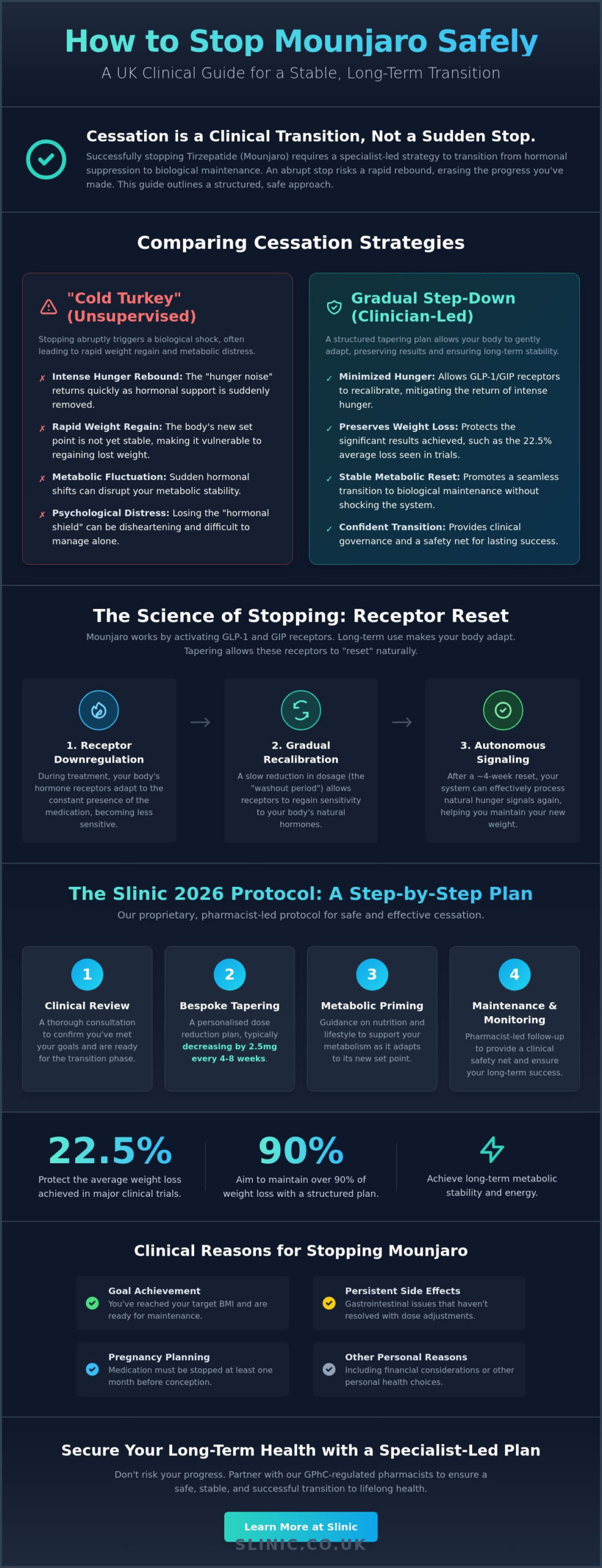
Stopping “cold turkey” often triggers a biological rebound effect. Hunger noise returns quickly. This is a biological reality. When you remove the dual-agonist support of Tirzepatide, your brain’s hunger signals can spike, often leading to rapid weight regain and metabolic fluctuations. This shift isn’t just physical; it’s psychological. Losing the “hormonal shield” that controlled your appetite can be distressing. Our weight loss injections guide emphasizes that supervised tapering helps mitigate these risks, allowing you to maintain your new aesthetic harmony and personal confidence through a seamless, restorative transition.
The Science of Stopping: GLP-1 and GIP Receptor Reset
The biological architecture of medical weight loss relies on the dual-agonist action of Tirzepatide. By mimicking both the Glucagon-like peptide-1 (GLP-1) and Glucose-dependent insulinotropic polypeptide (GIP) hormones, the medication saturates receptors in the brain and gut to suppress appetite. Over months of treatment, a process known as receptor downregulation occurs. Your body’s natural signaling pathways become less sensitive to endogenous hormones because they’ve adapted to the sustained, high-affinity presence of the medication. Understanding this hormonal shift is a cornerstone of How to Stop Mounjaro Safely: A UK Clinical Guide, as it explains why a sudden cessation can feel like a shock to your metabolic system.
A successful transition requires a “washout period” where the exogenous supply of Tirzepatide is gradually removed. Endogenous GIP and GLP-1 receptors typically require a structured four-week period to recalibrate and resume autonomous signaling after the exogenous supply of Tirzepatide is withdrawn. This recalibration is essential for returning to a state where your body can effectively process hunger signals without pharmacological assistance. NICE guidance on tirzepatide emphasizes the importance of clinical oversight during these adjustments to ensure patient safety and long-term success.
Managing the Return of Hunger Noise
As the medication clears your bloodstream, you’ll likely notice the return of “hunger noise.” Tirzepatide has a half-life of approximately five days, meaning it takes about 25 to 30 days for the drug to be fully eliminated from your system. During this window, it’s vital to distinguish between physical hunger and hormonal cravings. Physical hunger is a slow-building sensation in the stomach, while hormonal cravings are often sudden and psychologically driven. Our specialist pharmacists provide clinical strategies to “quiet” these signals, such as staying hydrated and utilizing high-volume, low-calorie foods to maintain gastric distension.
Metabolic Priming Before Your Final Dose
Your exit strategy should begin well before your final injection. Metabolic priming involves stabilizing your insulin sensitivity and protecting your biological foundation through specific lifestyle interventions. Prioritizing protein-first nutrition is essential to maintain satiety and support metabolic rate. We recommend reviewing our guide on what to eat on Mounjaro to refine your nutritional habits during this phase. Additionally, engaging in regular resistance training is critical. Preserving lean muscle mass ensures your resting metabolic rate doesn’t plummet as you transition off treatment. If you’re feeling uncertain about your next steps, a clinical consultation with our team can provide the bespoke reassurance you need for a seamless transition.
Tapering vs. Cold Turkey: Comparing UK Clinical Strategies
Selecting the right exit strategy is as vital as the initial dose selection. Within the framework of How to Stop Mounjaro Safely: A UK Clinical Guide, we distinguish between reactive cessation and proactive weaning. Reactive cessation, often called the “cold turkey” approach, is rarely the first choice unless it’s medically mandated. For instance, if a patient develops acute pancreatitis or severe gallbladder issues, our prescribing doctors will advise immediate discontinuation to prioritize systemic safety. However, for the majority of patients who’ve reached their goals, a structured transition is far more effective for preserving long-term weight stability.
The “Step-Down” method remains the clinical gold standard for most individuals. This involves gradually reducing the dose strength in 2.5mg increments, typically every four to eight weeks. By descending the titration ladder in reverse, you allow your metabolic rate and appetite-regulating hormones to adjust to lower levels of pharmacological support. Clinical observations indicate that patients who follow a structured tapering plan experience a more manageable return of hunger, whereas an abrupt stop can lead to a rapid metabolic shift that makes weight maintenance significantly more challenging.
The Spacing Strategy: Extending the Interval
An alternative to reducing the dose strength is the “spacing” strategy. This method involves moving from the standard 7-day injection cycle to a 10-day or 14-day interval under strict clinical review. This allows the medication’s concentration in your blood to dip lower before the next dose, effectively testing your body’s natural satiety signals during the extended “trough” period. Ideal candidates for spacing are those who’ve maintained a stable weight on their current dose for at least three months and haven’t struggled with significant side effects. Our pharmacists monitor these intervals closely to ensure your progress remains steady.
Dose Reduction: The Traditional Weaning Path
The most common route for our patients is a systematic reduction in dose strength. This logic mirrors the initial titration process but in reverse. By slowly lowering the dose, you provide a gentler “landing” for your GIP and GLP-1 receptors. Many individuals find success by holding at the 2.5mg “maintenance dose” for a final month before stopping entirely. This final phase of Mounjaro weight loss injections acts as a clinical safety net, ensuring your body is fully primed for independent weight management. Slinic provides structured follow-up and side-effect advice during this period, ensuring your transition is both seamless and restorative.
The Slinic 2026 Protocol: A Step-by-Step Cessation Plan
The Slinic 2026 Protocol is a meticulous framework designed to bridge the gap between active weight loss treatment and lifelong maintenance. It isn’t enough to simply reach a goal; you must secure it. This methodology applies the principles of How to Stop Mounjaro Safely: A UK Clinical Guide through three distinct phases of clinical oversight. By following this structured path, you move away from the uncertainty of hormonal suppression toward a state of biological autonomy. Our approach ensures that every patient has a bespoke exit strategy that respects their unique physiological needs.
Phase 1: Assessing Your Metabolic Readiness
Before we adjust your prescription, we conduct a Pre-Cessation Audit between weeks -4 and 0 of your planned exit. This involves a comprehensive review of your BMI, body composition, and the consistency of your lifestyle habits. We look for evidence of metabolic stability, such as a consistent weight within a 1kg range for at least four weeks. This phase includes a structured video consultation with a Slinic prescriber to ensure your nutritional foundation is robust enough to support your metabolism without medication. We don’t just look at the scale; we evaluate your readiness to maintain aesthetic harmony independently.
Phase 2 involves the Structured Taper, which typically spans months one and two. During this period, we reduce the strength of your weight loss injections by 2.5mg every four to eight weeks. This gradual descent allows your GIP and GLP-1 receptors the time they need to recalibrate, as discussed in our scientific analysis of receptor reset. During these 60 days, our Specialist pharmacists provide ongoing monitoring and side-effect advice to manage any emerging hunger noise or digestive shifts. This audit-ready process ensures that every step is documented and clinically sound.
Phase 3: Life After Mounjaro
Month three marks the transition to full independence. We implement the “TDEE + 10%” rule, where you slightly increase your caloric intake above your Total Daily Energy Expenditure to find your new maintenance equilibrium. Our digital monitoring tools help you track progress post-injection, providing data-driven reassurance that your foundation remains stable. If you experience a rapid weight fluctuation of more than 3% of your total body mass within a fortnight, it’s a clinical indicator that you should seek a follow-up consultation through our escalation pathways.
In some cases, patients may transition to a maintenance dose or consider an alternative weight loss treatment such as Wegovy if their biological response requires a different hormonal profile. Safety remains our primary priority, so we establish clear safety netting regarding when to seek urgent medical help. If you’re ready to begin your final phase, you can start your pre-cessation audit today to ensure your results last a lifetime.
Professional Oversight: Why Slinic is Your Partner in Maintenance
The conclusion of your active treatment shouldn’t mean the conclusion of your clinical support. At Slinic, we balance high-level medical expertise with a warm, patient-focused atmosphere to ensure your transition is as seamless as your initial titration. Following How to Stop Mounjaro Safely: A UK Clinical Guide requires more than just willpower; it demands a dedicated partner who prioritizes your long-term biological health. Our registered pharmacists and prescribing doctors provide the clinical governance necessary to navigate the complexities of maintenance, offering a safety-first approach that general service providers often lack.
We believe that premium care should be accessible. Slinic offers some of the most competitive pricing in the UK, with Mounjaro costs currently ranging from £129.00 to £267.00 per month depending on your maintenance dose. This value proposition ensures you can continue receiving professional oversight without financial strain. Our service includes discreet nationwide delivery and fast access to professional support, providing tranquil peace of mind as you focus on your restorative health journey.
The Value of Specialist Clinical Support
A standard high-street pharmacy often lacks the infrastructure to provide bespoke cessation plans or ongoing monitoring for weight loss injections. Slinic differentiates itself through documented protocols and audit-ready processes that ensure every patient journey is tracked with specialist precision. We don’t just dispense medication; we manage your biological architecture. This includes providing structured follow-up and specific side-effect advice as your body recalibrates its natural hunger signals. By maintaining high professional accountability, we help you protect both your functional health and the aesthetic harmony you’ve worked so hard to achieve.
Next Steps: Securing Your Maintenance Plan
Your journey toward a foundation for a lifetime continues with a structured clinical review. Our clinicians help you interpret the data from your post-injection monitoring, ensuring your medical weight loss results are permanent. We provide clear escalation pathways and safety netting, so you always know when to seek urgent medical help or when a minor adjustment to your weight loss treatment is required. This steady, informative rhythm is designed to build trust through transparency and education.
If you’re nearing your target weight, it’s time to prepare for the next phase of the Slinic experience. You can explore our comprehensive weight-loss resources to learn more about our commitment to excellence. How to Stop Mounjaro Safely: A UK Clinical Guide is your roadmap, but our specialists are your dedicated partners. When you’re ready to secure your progress and maintain your personal confidence, start your clinical consultation for weight management today to ensure your transition is handled with the meticulous care you deserve.
Securing Your Weight Loss Foundation for the Future
Transitioning away from Tirzepatide is a significant clinical milestone that marks the beginning of your independent health journey. By moving beyond the initial weight loss phase and embracing a structured taper, you provide your body with the time it needs to recalibrate its natural satiety signals. This article has detailed How to Stop Mounjaro Safely: A UK Clinical Guide, emphasizing that a managed step-down approach is far superior to an unsupervised exit. You’ve learned how the Slinic 2026 Protocol protects your metabolic rate while reducing the risk of the hormonal rebound effect.
Our GPhC-regulated pharmacy offers more than just medication; we provide a partnership rooted in clinical excellence and long-term aesthetic harmony. With pharmacist-led clinical reviews and discreet UK-wide delivery, we ensure your transition is handled with the highest standards of professional accountability. You don’t have to navigate this complex phase alone. Our team is here to provide the structured follow-up and safety netting you need to maintain your results for a lifetime.
Consult with a Slinic Specialist about your Mounjaro exit strategy today. Your commitment to health has brought you this far, and we’re dedicated to ensuring your success remains permanent.
Frequently Asked Questions
Can I stop Mounjaro cold turkey if the side effects are too much?
You can stop treatment immediately if you experience severe adverse reactions, though we recommend a supervised taper for most scenarios. If you suspect acute pancreatitis or gallbladder issues, you must stop and seek urgent medical help. For non-emergency side effects, our pharmacists provide bespoke advice to manage symptoms while you gradually reduce your dose to ensure a gentler metabolic transition.
How long does Mounjaro stay in your system after the last dose?
Tirzepatide remains in your system for roughly 30 days after your final injection. Since the medication has a half-life of five days, it takes five cycles for the active compound to be fully eliminated from your bloodstream. During this month, your GIP and GLP-1 receptors begin their essential recalibration process as they adjust to the absence of exogenous hormonal support.
Will I gain weight back immediately after stopping Tirzepatide?
Immediate regain isn’t guaranteed, but hormonal suppression wears off entirely as the medication leaves your system within 30 days. Research indicates that without a structured maintenance plan, many patients see a return of hunger noise within four weeks. Following How to Stop Mounjaro Safely: A UK Clinical Guide helps you transition to biological maintenance to protect your results and maintain your aesthetic harmony.
Is there a specific maintenance dose for Mounjaro in the UK?
The UK market doesn’t have a legally defined “maintenance dose,” but the 2.5mg and 5mg strengths are clinically preferred for the final weaning phase. At Slinic, we use these lower doses to bridge the gap between treatment and independence. This ensures your body’s metabolic architecture doesn’t face a sudden deficit of appetite-regulating hormones, allowing for a more stable and restorative exit strategy.
What should I do if my hunger returns intensely after stopping?
You should schedule a video consultation with your Slinic prescriber if hunger noise becomes unmanageable. We often recommend a “metabolic priming” approach, focusing on high-protein nutrition to stabilize insulin sensitivity during the washout period. If fluctuations exceed a 3% body mass increase, we may suggest a temporary “top-up” course or an alternative treatment path to secure your long-term success.
Can I restart Mounjaro at my old dose if I take a break?
You cannot restart at a high dose after a break of 14 days or longer. Your body loses its tolerance to the medication quickly when the weekly cycle is broken. Restarting at 7.5mg or 10mg would likely cause severe nausea or vomiting. You must return to the 2.5mg titration level to safely rebuild your biological tolerance under our specialist clinical oversight.
Does the NHS provide support for weaning off weight-loss injections?
The NHS offers weaning support through specialist weight management services for patients who meet their strict 2026 eligibility criteria. This includes mandatory “wrap-around” care featuring dietetic and physical activity support. Private patients at Slinic receive similar high-level clinical governance and pharmacist-led reviews, ensuring they have access to professional support and escalation pathways throughout their entire journey.
How often should I weigh myself after stopping the treatment?
We recommend weighing yourself exactly once per week at the same time and day. This frequency provides enough data to identify trends without the psychological stress of daily fluctuations. If you notice a weight increase of more than 2kg over two consecutive weeks, it’s a signal to contact your specialist for a clinical review to assess your maintenance strategy.