

What if the very medications once feared to strain the kidneys actually serve as their most potent protectors? For the 3.5 million people in Britain living with renal impairment, the prospect of using weight loss injections for chronic kidney disease patients uk often brings a mix of hope and hesitation. You likely feel that managing your weight is a delicate balancing act where the stakes involve your long-term biological health. It’s natural to worry about how new medications might impact your filtration rate or whether you qualify under the latest 2026 NICE clinical guidelines.
We’re here to provide the clinical clarity you need. This specialist-led guide explores how GLP-1 and GIP medications, such as Mounjaro and Wegovy, can be safely integrated into a renal care plan to preserve kidney function and improve metabolic health. You’ll learn about the rigorous safety protocols we employ at Slinic, including our pharmacist-led consultations and bespoke monitoring. We’ll outline the specific pathways to accessing these transformative treatments through a secure, clinical framework that prioritizes your safety above all else.
Key Takeaways
- Explore the dual-action benefits of GLP-1 and GIP medications, which provide significant weight reduction alongside restorative anti-inflammatory effects on kidney tissues.
- Determine clinical eligibility by understanding how GFR levels and CKD stages 1 through 5 influence the specialist prescription of Semaglutide and Tirzepatide.
- Learn how to navigate the complexities of weight loss injections for chronic kidney disease patients uk through Slinic’s safety-first protocols and essential hydration strategies.
- Discover the Slinic approach to medical weight management, where pharmacist-led clinical governance ensures a bespoke and secure treatment journey for patients with complex renal backgrounds.
- Understand the vital importance of continuous monitoring and structured follow-up care to protect long-term biological health while achieving transformative weight loss outcomes.
For a full comparison of UK Mounjaro providers including pricing, see:
⇒Slinic’s Top UK Mounjaro Providers Guide
Weight Management and Chronic Kidney Disease in the UK (2026)
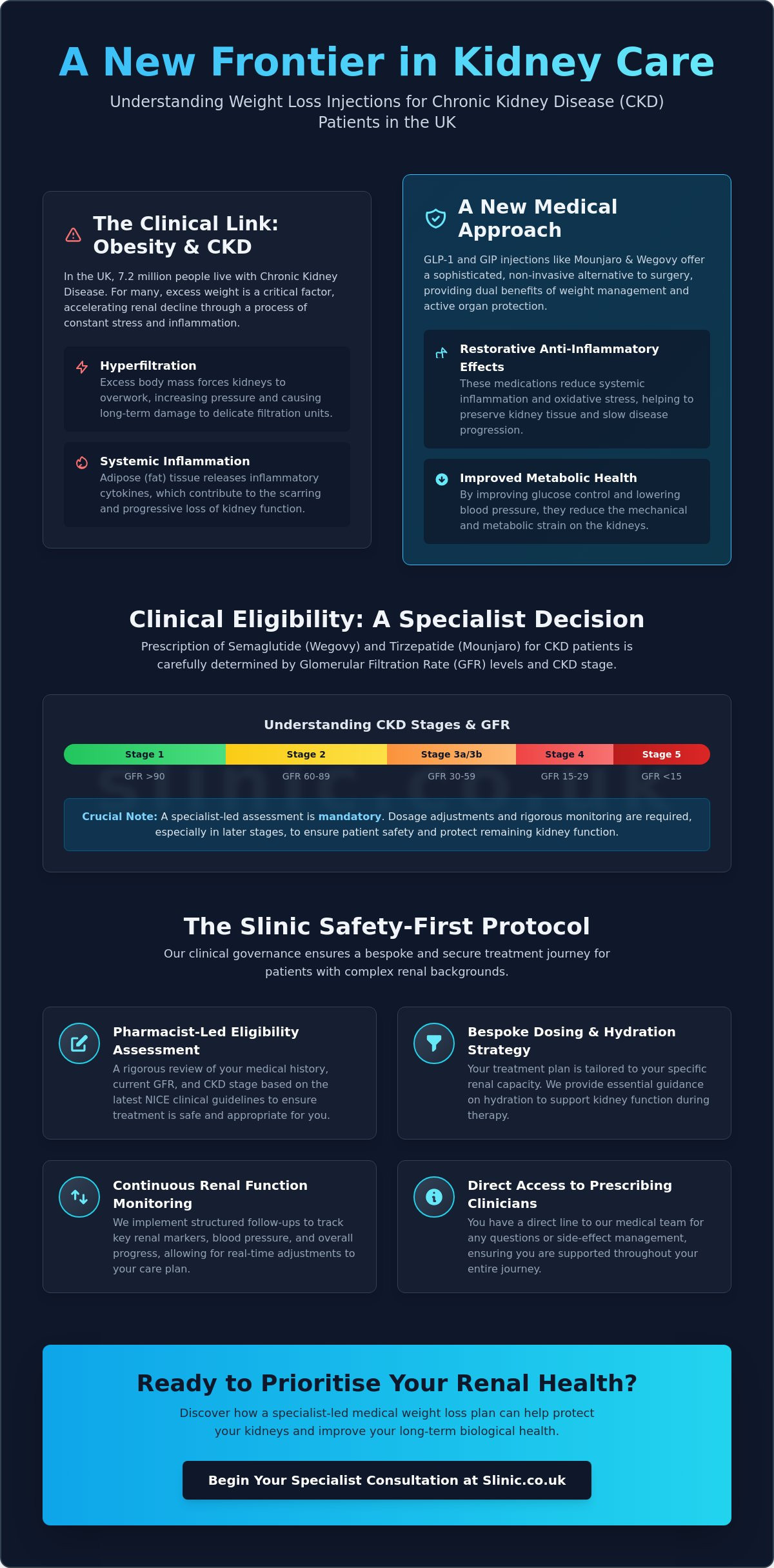
In 2026, the clinical intersection of obesity and Chronic Kidney Disease (CKD) represents one of the most pressing challenges for the NHS. Statistics indicate that roughly 7.2 million people in the UK live with CKD, and a significant proportion of these individuals face the added metabolic burden of excess weight. Traditional weight loss methods often fail CKD patients because the body’s metabolic response to renal impairment frequently involves insulin resistance and altered leptin signaling. These complexities make it nearly impossible to achieve sustainable results through willpower or standard dieting alone.
The “Slinic Approach” moves away from these temporary fixes. We prioritize long-term biological health and the preservation of renal architecture. By utilizing weight loss injections for chronic kidney disease patients uk, we provide a structured, pharmacist-led pathway that addresses the underlying hormonal drivers of weight gain. This specialist methodology ensures that every patient receives a bespoke care plan focused on protecting kidney function while achieving a healthier body mass index.
The Clinical Link Between Obesity and Renal Decline
Adipose tissue isn’t just stored energy; it’s a metabolically active organ that triggers systemic inflammation. For those managing CKD, excess weight forces the kidneys into a state of hyperfiltration, increasing glomerular pressure and accelerating the scarring of delicate tissues. Obesity-related glomerulopathy is a secondary form of focal segmental glomerulosclerosis that occurs when the kidneys are forced to overwork to meet the metabolic demands of a significantly higher body mass. Effectively managing weight is a clinical necessity to lower blood pressure and dampen the inflammatory cytokines that destroy renal architecture over time. Our clinicians focus on these physiological markers to ensure that weight loss translates directly into improved renal outcomes.
The Shift Toward Medical Weight Loss Injections
The UK healthcare landscape has shifted away from high-risk bariatric surgery toward precision pharmacology. The introduction of GLP-1 receptor agonists and GIP receptor agonists has provided a safer, non-invasive alternative for patients who must protect their remaining kidney function. These medications, such as Mounjaro, offer a way to regulate appetite and improve glucose metabolism without the physical trauma of surgery.
Patients with a reduced Glomerular Filtration Rate (GFR) require rigorous specialist oversight to ensure dosing remains safe. At Slinic, we provide this through a clinician-led service that includes:
- Strict eligibility assessments based on the latest NICE guidelines.
- Ongoing monitoring of renal markers and blood pressure.
- Discreet nationwide delivery for patients with mobility issues or fatigue.
- Direct access to prescribing doctors for side-effect management.
This structured care ensures that weight loss injections for chronic kidney disease patients uk are administered with the highest standards of clinical governance, providing a foundation for a lifetime of better health.
How GLP-1 and GIP Injections Support Renal Health
The clinical application of weight loss injections for chronic kidney disease patients uk has shifted from simple weight management to active organ protection. For many individuals in Britain, these treatments provide a vital pathway to managing the comorbidities that accelerate renal decline. While appetite suppression is the most visible effect, the underlying physiological impact on the kidneys is far more intricate. GLP-1 receptor agonists work by reducing systemic inflammation and oxidative stress, which are two primary drivers of renal scarring. By decreasing the production of pro-inflammatory cytokines, these medications help preserve the delicate filtration units within the kidney.
The management of Type 2 diabetes is central to this process. Since diabetes is the leading cause of CKD in the UK, controlling blood glucose levels is vital for long-term health. These injections improve glycaemic stability and reduce blood pressure, which collectively lowers the mechanical strain on the renal vasculature. This reduction in hyperfiltration is a key factor in stabilising the Glomerular Filtration Rate (eGFR) and lowering proteinuria levels. When the kidneys aren’t forced to work under high pressure, the rate of biological wear and tear decreases significantly.
Semaglutide (Wegovy) and Kidney Protection
Clinical evidence from the landmark FLOW trial, published in May 2024, revealed that Semaglutide 1.0 mg reduced the risk of major kidney disease events by 24% in participants with type 2 diabetes and CKD. This study was stopped early due to the clear efficacy of the treatment, highlighting its role in preventing the progression to end-stage renal failure. The Slinic perspective treats metabolic health as a foundation for all biological systems. We view Semaglutide not just as a tool for weight loss, but as a specialist intervention to support long-term renal resilience. You can learn more about this medication in our Wegovy UK: The Complete Guide to Semaglutide Injections.
Tirzepatide (Mounjaro): The Dual Agonist Advantage
Tirzepatide represents the next evolution in medical weight management by targeting both GLP-1 and GIP (glucose-dependent insulinotropic polypeptide) receptors. Tirzepatide exerts a dual-action mechanism that enhances insulin secretion and improves lipid metabolism while simultaneously reducing adipose tissue inflammation. This dual approach is particularly beneficial for CKD patients with mild to moderate impairment who require more intensive metabolic support.
Data from the SURPASS-4 trial indicated that patients using Tirzepatide experienced a significantly slower decline in eGFR compared to those on insulin glargine. This suggests that the GIP component may offer additional metabolic benefits, such as improved fatty acid oxidation, which further protects the kidneys from lipotoxicity. At Slinic, our clinicians provide rigorous oversight to ensure these weight loss injections for chronic kidney disease patients uk are administered safely. If you’re considering these options, you may wish to start a clinical consultation to assess your eligibility with our specialist team.
Clinical Eligibility: Can CKD Patients Use Mounjaro or Wegovy?
Assessing eligibility for weight loss injections for chronic kidney disease patients uk requires a meticulous examination of renal function that goes beyond a standard BMI check. In 2026, the Slinic approach prioritizes high-level clinical governance over convenience. We don’t use a “one-size-fits-all” model because renal physiology is too complex for broad assumptions. Every assessment begins with your Glomerular Filtration Rate (GFR), the primary metric used by our Specialist prescribers to determine if medications like Mounjaro or Wegovy are safe for your specific stage of kidney disease.
Current MHRA guidance and NICE protocols emphasize that while GLP-1 receptor agonists offer transformative potential, they must be managed with precision. The goal isn’t just weight reduction; it’s the preservation of your long-term biological architecture. Prescribing for renal patients in the UK involves a careful balance of metabolic benefit against the potential risk of acute kidney injury (AKI) caused by secondary factors like dehydration.
Stage 1-3 CKD: The Window for Proactive Intervention
Patients with a GFR between 30 and 89 ml/min/1.73m² often represent the ideal candidates for medical weight loss. At this stage, the focus is restorative. Reducing adipose tissue can significantly lower systemic blood pressure and intra-glomerular pressure, which may slow the progression of renal decline. A common concern is whether these medications put extra strain on the kidneys. While the active ingredients aren’t nephrotoxic, the risk lies in gastrointestinal side effects. If a patient experiences vomiting or diarrhea without adequate fluid replacement, the resulting dehydration can stress the kidneys. Our clinician-led guide details how we monitor hydration and electrolytes to ensure a seamless and safe experience.
Advanced CKD (Stage 4-5) and Dialysis Considerations
For patients in Stage 4 (GFR 15-29) or Stage 5 (GFR below 15 or on dialysis), the clinical landscape shifts toward a more cautious specialist methodology. The use of weight loss injections for chronic kidney disease patients uk in these advanced stages is generally restricted. Clinical data on drug clearance in end-stage renal disease is still developing, making the involvement of a Multi-Disciplinary Team (MDT) essential. We often find that treatment is contraindicated if there’s a history of rapid GFR decline. Safety netting at Slinic for complex cases involves:
- Rigorous Baseline Testing: Mandatory blood panels before the first dose is dispatched.
- Monthly Renal Monitoring: Regular GFR and electrolyte checks to detect subtle changes early.
- Consultant Coordination: Direct communication with your NHS nephrology team to ensure treatment harmony.
- Escalation Pathways: Clear instructions on when to pause treatment if you become acutely unwell.
This structured care ensures that even as we pursue aesthetic and functional health goals, your foundational renal safety remains the absolute priority. We believe in providing a tranquil, supportive environment where specialist precision leads to lasting well-being.
Safety Protocols: Monitoring Kidney Function During Treatment
Slinic operates under a rigorous, safety-first protocol designed specifically for high-risk renal patients. When managing weight loss injections for chronic kidney disease patients uk, our clinical team prioritizes the preservation of nephron function above rapid weight reduction. This specialist approach ensures that every patient receives a bespoke titration plan, overseen by prescribing doctors who understand the delicate architecture of the renal system.
The primary risk factor for patients with impaired kidney function is dehydration. Gastrointestinal side effects, such as nausea or persistent vomiting, can lead to rapid fluid loss, which significantly increases the risk of Acute Kidney Injury (AKI). To mitigate this, the Slinic protocol mandates a minimum daily fluid intake of 2.5 litres and provides structured guidance on managing emetic symptoms. If a patient cannot maintain hydration for more than 24 hours, our escalation pathway requires an immediate suspension of treatment and a clinical review to protect the biological health of the kidneys.
Essential Monitoring and Blood Tests
Clinical governance at Slinic dictates that no treatment commences without a comprehensive baseline profile. This includes recent results for serum creatinine, urea, and electrolytes to establish a clear picture of the patient’s current renal stability. Our prescribing doctors don’t just look at a single data point; they analyze the trend of kidney function over time to adjust dosages with meticulous precision.
- Baseline Screening: Mandatory blood panels within 30 days of starting treatment.
- Electrolyte Balance: Continuous monitoring of potassium and sodium levels to prevent cardiac or muscular complications.
- Dose Adjustment: Slower titration schedules for patients with a GFR below 45 ml/min/1.73m².
During the critical dose-escalation phase, we mandate GFR monitoring every four weeks to detect any subtle shifts in renal filtration efficiency before they become symptomatic.
Interactions with Transplant and Renal Medications
The Slinic experience is built on the intersection of art and science, particularly for transplant recipients. Patients taking immunosuppressants such as Tacrolimus or Ciclosporin require an elite level of oversight. These medications have a narrow therapeutic window, meaning even slight changes in absorption can lead to toxicity or organ rejection. Because weight loss injections delay gastric emptying, the rate at which these critical drugs enter the bloodstream may be altered.
Our clinicians perform a deep-dive analysis of your current medication regime to ensure seamless integration. This prevents “peak and trough” fluctuations in drug levels that could compromise a transplanted kidney. The Slinic Online Consultation serves as a vital diagnostic tool, allowing our specialist team to identify potential drug-drug interactions before they manifest clinically.
Ensuring your safety requires a dedicated partner in clinical excellence. Start your journey with a professional assessment through our specialist renal weight loss consultation.
Accessing Specialist-Led Weight Loss Treatment with Slinic
Patients managing renal impairment require more than a standard prescription; they need clinical oversight that understands the delicate balance of metabolic health. Slinic serves as a trusted partner for UK patients with complex medical backgrounds by prioritizing safety over speed. Our pharmacist-led model ensures every decision is backed by rigorous clinical governance, providing a bridge between advanced pharmaceutical interventions and the specific needs of those with renal concerns. We believe that specialist precision should be accessible to everyone, regardless of the complexity of their medical history.
Our service delivery is designed to be both seamless and secure. We combine the convenience of a digital platform with the accountability of a traditional clinic. This approach allows us to maintain some of the most competitive pricing in the UK without compromising on the quality of our clinicians or the safety of our protocols. From the moment you begin your journey, you’re supported by a team dedicated to your long-term biological health and personal confidence.
The Slinic Consultation Experience
Our process begins with a robust eligibility assessment designed to identify risks associated with renal function. For those exploring Mounjaro weight loss injections under clinical supervision, our practitioners review your medical history with meticulous care. This isn’t a simple tick-box exercise. It’s a comprehensive screening that ensures weight loss injections for chronic kidney disease patients uk are prescribed only when clinically appropriate. Once approved, we provide structured follow-up and specific side-effect advice, ensuring you’re never left to manage your treatment in isolation. We prioritize your safety through documented protocols and clear escalation pathways.
Your Long-Term Partner in Renal and Metabolic Health
Weight management is a journey that requires consistent support rather than a temporary fix. The Slinic promise includes ongoing monitoring and a dedicated safety-netting protocol. We provide clear guidance on when to seek urgent medical help, which is especially vital for patients who must monitor their hydration and electrolyte levels closely. Our experts remain available throughout your treatment, offering a foundation for a lifetime of improved health and restorative outcomes.
- Clinical Accountability: Every prescription is reviewed by registered UK Pharmacists and Prescribing Doctors.
- Discreet Delivery: We provide secure, temperature-controlled nationwide delivery to your door.
- Patient Support: Fast access to professional advice via our digital platform whenever you have concerns.
- Transparent Pricing: High standards of care delivered at an accessible price point.
We’re committed to helping you navigate the technicalities of medical weight loss with ease and confidence. By choosing a specialist-led service, you ensure that your path to a healthier weight is managed with the professional rigor your condition demands. Our goal is to help you achieve a transformative outcome that enhances both your physical health and your quality of life.
Securing Your Renal Health Through Specialist Weight Management
Managing weight while navigating chronic kidney disease requires a clinical approach that prioritizes long-term biological health over temporary fixes. Research through 2026 highlights that GLP-1 and GIP therapies offer significant potential for renal protection, provided they’re managed with meticulous precision. Accessing weight loss injections for chronic kidney disease patients uk demands a bespoke monitoring plan to safeguard your eGFR levels and ensure overall metabolic stability.
Slinic delivers this care through a service regulated by the General Pharmaceutical Council (GPhC). Our approach is led by Registered Pharmacists and Prescribing Doctors who implement safety-first clinical governance. This includes structured patient monitoring and documented protocols designed to maintain your health throughout the treatment journey. You don’t have to navigate these medical complexities alone; specialist support ensures your path to weight loss is both seamless and restorative.
Begin your specialist-led weight loss consultation to establish a foundation for a healthier lifestyle tailored to your unique renal needs. It’s time to invest in a future where clinical excellence and personal confidence work in perfect harmony.
Frequently Asked Questions
Is Mounjaro safe for someone with Stage 3 Chronic Kidney Disease?
Mounjaro is generally considered safe for patients with Stage 3 CKD, provided there’s specialist clinical oversight. Clinical data from the SURPASS trials indicates no dose adjustment is necessary for patients with an eGFR between 30 and 59. Our prescribing doctors monitor your renal function throughout the Slinic experience to ensure your weight loss journey remains restorative and safe.
Can weight loss injections cause kidney damage or acute kidney injury?
Weight loss injections don’t directly damage the kidneys, but they can lead to acute kidney injury (AKI) through secondary dehydration. The MHRA has noted that AKI cases are typically associated with severe gastrointestinal side effects like vomiting. We prioritise a safety-first approach, providing you with clear protocols to manage these risks before they affect your biological health.
How does dehydration from weight loss injections affect my kidneys?
Dehydration reduces the blood volume reaching your kidneys, which can cause a temporary but dangerous drop in renal function. When using weight loss injections for chronic kidney disease patients uk, it’s essential to consume at least 2 litres of water daily. This proactive hydration strategy protects your renal architecture from the strain caused by potential nausea or reduced thirst signals.
Will I need more frequent blood tests if I have CKD and start Wegovy?
You’ll need more frequent monitoring, including a baseline Urea and Electrolytes (U&E) test and follow-ups every 12 to 24 weeks. This structured care allows our specialist team to track your creatinine and eGFR levels with precision. These regular checks ensure that Wegovy is helping you achieve aesthetic harmony without compromising your long-term kidney health.
Can I use weight loss injections if I have had a kidney transplant?
Patients who’ve had a kidney transplant require a bespoke assessment and written clearance from their transplant nephrologist before starting treatment. The clinical complexity of immunosuppressant medications means we don’t offer these injections to transplant recipients as a standard service. We believe in maintaining the integrity of your transplant through cautious, specialist-led decision-making.
What should I do if I experience severe vomiting while on Mounjaro with CKD?
You should pause your medication and seek immediate medical advice if you experience persistent vomiting. Severe fluid loss can lead to a significant reduction in renal perfusion, which is a critical concern for CKD patients. Our clinical governance protocols include a clear escalation pathway to help you manage side effects and avoid emergency hospital admissions.
Are these injections available on the NHS for CKD patients in 2026?
NHS access in 2026 is limited to patients who meet strict NICE criteria, such as a BMI over 35 and specific comorbidities. While the NHS has increased funding for weight management, many people find the 2-year waiting lists a barrier to care. Slinic offers a premium alternative with rapid access to specialist prescribing and continuous clinical support.
How do GLP-1 medications interact with my blood pressure tablets?
GLP-1 medications can naturally lower your blood pressure, which might mean your current tablet dosage needs adjusting. If you’re taking ACE inhibitors or ARBs, the combined effect on your kidneys requires careful specialist monitoring. We review your blood pressure data regularly to ensure your medication regime remains balanced and effective for your overall well-being.