


Reaching the twelve-month milestone on your medical weight loss journey shouldn’t feel like a finish line. In reality, it marks a critical transition from rapid weight reduction to long-term metabolic stabilization. When considering Mounjaro Long-Term Use: What Happens After 1 Year?, it’s essential to view this period as the phase where your biological architecture truly resets. You’ve likely experienced significant success, yet it’s natural to feel anxious about potential weight regain or the safety of continued treatment. Clinical trials extending to 72 weeks show no negative long-term side effects for most, but you’re right to seek clarity on how your body adapts beyond the first 365 days.
This specialist guide provides a clear clinical roadmap for your second year of treatment. You’ll understand the metabolic shifts that occur after 12 months, the safety profile of tirzepatide, and how to manage a weight loss plateau with precision. We’ll explore the Slinic approach to maintenance dosing and the bespoke clinical governance that ensures your journey remains safe and restorative. By the end of this article, you’ll have the confidence to navigate your ongoing care with a focus on excellence and long-term biological health.
Key Takeaways
- Learn how clinical data from the SURMOUNT-1 trial demonstrates the transition from rapid weight reduction to metabolic stabilization after the initial 52 weeks of treatment.
- Understand the evolution of gastrointestinal side effects and why long-term safety monitoring of pancreatic and gallbladder health remains a specialist priority for continued care.
- Discover strategic methods for managing the 12-month weight loss plateau by counteracting metabolic adaptation through bespoke dose adjustments and clinical oversight.
- Gain professional insights into Mounjaro Long-Term Use: What Happens After 1 Year? and how to transition from relying on the medication to utilizing it as a tool for permanent habit maintenance.
- Explore the Slinic framework of clinical governance, where registered pharmacists and prescribing doctors provide the structured monitoring and safety netting essential for multi-year success.
For a full comparison of UK Mounjaro providers including pricing, see:
⇒Slinic’s Top UK Mounjaro Providers Guide
Ready to start your weight loss journey?
Mounjaro from £129/month | Wegovy from £83/month
⇒Free 2-minute clinical assessment
Clinical Outcomes: What to Expect After 52 Weeks of Tirzepatide
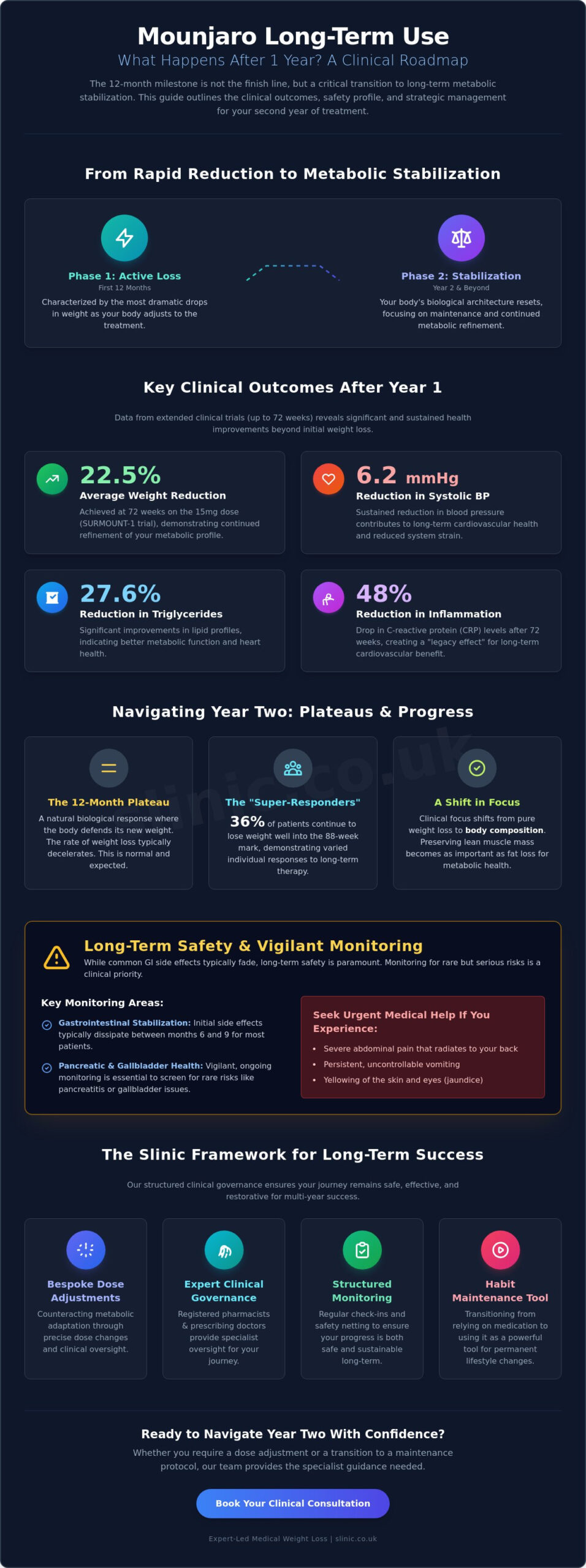
By the time you reach the one-year mark, your relationship with Tirzepatide (Mounjaro) has likely evolved from a period of rapid adjustment into a stable clinical routine. Data from the SURMOUNT-1 clinical trial provides a clear window into this phase. While the first six months often see the most dramatic drops in weight, the 72-week data shows that patients on the 15mg dose achieved an average weight reduction of 22.5%. This demonstrates that Mounjaro Long-Term Use: What Happens After 1 Year? isn’t just about maintenance; it’s about the continued refinement of your metabolic profile.
Around month 12, many patients transition from the “active loss phase” to a “plateau phase.” This is a natural biological response where the body attempts to defend its new weight. Clinical oversight during this period is vital. Our prescribing doctors at Slinic monitor these shifts closely, ensuring that secondary health markers continue to improve even if the scale moves more slowly. After one year, clinical studies have documented significant sustained reductions in systolic blood pressure (average 6.2 mmHg) and notable improvements in lipid profiles, specifically a 27.6% reduction in triglyceride levels.
Weight Loss Trajectory in Year Two
As you enter your second year of weight loss treatment, the rate of reduction typically decelerates as your body reaches a lower set point. Approximately 36% of patients are classified as “super-responders,” continuing to lose weight well into the 88-week mark. At this stage, our clinical focus shifts toward body composition. Preserving lean muscle mass becomes as important as fat loss. We recommend structured monitoring to ensure that the weight lost remains high-quality tissue loss rather than muscle depletion, which is essential for long-term metabolic health.
Cardiovascular and Metabolic Improvements
The benefits of Mounjaro Long-Term Use: What Happens After 1 Year? extend far beneath the surface. Long-term use is associated with a sustained reduction in systemic inflammation, measured by C-reactive protein (CRP) levels, which can drop by up to 48% after 72 weeks of treatment. This creates a “legacy effect,” where your cardiovascular system benefits from reduced strain and improved insulin sensitivity long after the initial weight drop. Metabolic stabilization is the point where the body adapts to its new weight while maintaining hormonal balance. This stability is the foundation of the Slinic approach, moving beyond temporary fixes to achieve lasting biological harmony.
If you’re approaching your first anniversary of treatment, a clinical consultation can help you determine the best path forward. Whether you require a dose adjustment or a transition to a maintenance protocol, our team provides the specialist guidance needed to navigate Year Two with confidence.
Long-Term Safety Profile and Biological Adaptation
As you progress beyond the twelve-month mark, your body’s internal environment undergoes a profound shift. For most patients, the initial gastrointestinal challenges reach a peak during the titration phase and typically dissipate between months 6 and 9. This stabilization is part of a broader change in your biological architecture. Understanding Mounjaro Long-Term Use: What Happens After 1 Year? requires looking past the scale to see how your organs are functioning under this new physiological reality. Our clinical oversight ensures that your use of weight loss injections remains a safe, long-term foundation for health.
Safety remains our primary focus at Slinic. While common side effects fade, long-term treatment necessitates vigilant monitoring for rare but serious risks. Clinical data, including the pivotal long-term tirzepatide study, highlights the importance of tracking gallbladder health and pancreatic function. We implement strict safety netting protocols: you must seek urgent medical help immediately if you experience severe abdominal pain that radiates to your back, persistent vomiting, or yellowing of the skin and eyes. These symptoms could indicate acute pancreatitis or gallbladder issues, which require immediate medical intervention.
Organ Health and Mounjaro
Two-year data on tirzepatide suggests a generally favorable impact on kidney and liver function. However, subtle physiological shifts can occur. We follow strict NICE guidance regarding the periodic review of treatment. Our registered pharmacists use video consultations to evaluate these markers, ensuring that if your body’s response changes, we have a clear escalation pathway in place. This level of clinical governance is what differentiates a specialist service from a standard prescription provider.
Managing Nutritional Deficiencies
A unique challenge of Mounjaro Long-Term Use: What Happens After 1 Year? is the potential for “malnutrition of obesity.” When appetite is suppressed for over 12 months, it’s easy to neglect essential micronutrients. Chronic low protein intake can lead to hair thinning or muscle loss, which undermines your metabolic rate. We recommend a focused approach to nutrition, prioritizing high-quality proteins. You can find detailed guidance on optimizing your diet in our specialist guide on what to eat on Mounjaro. If you’re concerned about your nutritional status, our team can provide a bespoke clinical review to keep your journey on track.
Ready to start your weight loss journey?
Mounjaro from £129/month | Wegovy from £83/month
⇒Free 2-minute clinical assessment
Navigating the Weight Loss Plateau at 12 Months
Entering the second year of weight loss treatment often brings a shift in momentum. While the initial months are defined by rapid change, the twelve-month mark frequently introduces the clinical plateau. When examining Mounjaro Long-Term Use: What Happens After 1 Year?, it’s vital to recognize that a stall isn’t a sign of medication failure but a sophisticated biological defense mechanism. Your body, now significantly lighter, has recalibrated its Total Daily Energy Expenditure (TDEE). A body that weighed 100kg requires more energy to function than one that weighs 80kg; if your caloric intake hasn’t adjusted alongside your new biological architecture, progress will naturally pause.
The Slinic Approach to these stalls is rooted in meticulous clinical governance. Rather than simply increasing the dose, our prescribing doctors and registered pharmacists evaluate your physiological data to determine if a shift in strategy is required. We distinguish between a temporary stall, which might last fourteen days, and a true clinical plateau. According to FDA Clinical Trial Data on Mounjaro, maintaining the highest tolerated dose is often necessary for long-term weight maintenance, but the strategy must be bespoke to your current metabolic state.
Metabolic Adaptation vs. Medication Failure
A clinical weight loss plateau is defined as six consecutive weeks of no weight change despite strict adherence to your prescribed protocol. This phenomenon, often called “starvation mode,” occurs when the body reduces its metabolic rate to conserve energy. It’s essential to understand that the medication is still providing metabolic protection by regulating insulin and suppressing appetite, even if the scale is static. At Slinic, we use video consultations and structured follow-up to identify these phases early, ensuring you don’t feel discouraged by a natural biological pause.
Strategies to Restart Progress
To overcome hormonal resistance at the one-year mark, we often recommend introducing structured resistance training. Increasing lean muscle mass elevates your basal metabolic rate, allowing your body to burn more energy at rest. Additionally, adjusting macronutrient ratios to prioritize higher protein intake can help bypass metabolic adaptation. In some specialist cases, a “maintenance break” is clinically indicated. This involves staying at a stable dose for a set period to reset metabolic signals before pursuing further reduction. If you’ve reached a stall, a clinical review can help determine the precise adjustment needed to continue your success into Year Two.
Psychological Shifts and the Return of Food Noise
Many patients find that the quietude of the mind, often referred to as the silencing of “food noise,” is the most transformative aspect of their medical weight loss journey. However, as you explore Mounjaro Long-Term Use: What Happens After 1 Year?, you might notice these intrusive thoughts beginning to whisper again. This isn’t a sign that the medication has failed. Instead, it reflects the brain’s remarkable capacity for neuroplasticity and its adaptation to GLP-1 and GIP signals over extended durations. Understanding this mental evolution is key to transitioning from the rapid loss phase into a sustainable, long-term lifestyle.
The Habituation Effect
Drug habituation is a documented physiological process where the receptors in your brain become accustomed to the steady levels of tirzepatide. While the medication continues to regulate insulin and gastric emptying, the initial “blunt force” appetite suppression may feel less intense than it did in month three. Differentiating between true physical hunger and psychological “head hunger” becomes the primary challenge of your second year. Our specialist team at Slinic provides the clinical oversight necessary to help you decode these signals, ensuring you don’t mistake a natural biological adaptation for a loss of efficacy. This period requires a more conscious effort to utilize the “tranquil” mental space the medication provides to reinforce your foundation of health.
Sustainable Lifestyle Integration
The end of the “honeymoon phase” can sometimes trigger a psychological shift once the rapid weight loss of the first twelve months slows into a steady, subtle decline. This transition requires a shift from relying on the drug as a primary driver of change to utilising it as a sophisticated tool for habit maintenance. A bespoke second-year plan focuses on long-term satiety through high-volume, low-calorie nutrition. By prioritizing foods that provide physical fullness without excessive energy density, you can manage the return of subtle hunger signals effectively. You can explore our comprehensive Slinic treatment guides for detailed strategies on integrating these habits into your daily life.
Forging permanent lifestyle changes is a meticulous process that mirrors the precision of a master craftsman. At Slinic, we emphasize that Mounjaro Long-Term Use: What Happens After 1 Year? is about aesthetic harmony and functional health working in tandem. We support you through video consultations and structured follow-up, providing a dedicated partner in your overall well-being. If you’re finding the psychological transition of Year Two challenging, our prescribing doctors are available for a structured clinical consultation to refine your maintenance strategy and ensure your long-term success remains seamless and restorative.
The Slinic Framework for Long-Term Maintenance
The Slinic framework is designed to transform medical weight loss from a simple transaction into a sophisticated, long-term clinical partnership. As you navigate Mounjaro Long-Term Use: What Happens After 1 Year?, the emphasis naturally shifts from initial titration to sustained biological management. Our service is led by registered Pharmacists and Prescribing Doctors who prioritize professional accountability over temporary results. By choosing Slinic, you’re accessing a system of clinical governance that ensures your use of weight loss injections is continuously audited for safety and effectiveness, far beyond the first twelve months of treatment.
Sustainability in the second year is not only clinical but also financial. We recognize that long-term adherence requires accessible care, which is why we offer some of the cheapest Mounjaro prices in the UK. This value proposition doesn’t compromise our rigorous standards; every patient undergoes robust eligibility assessments and is supported by documented protocols. Our safety-first approach means we maintain clear escalation pathways and strict oversight, positioning Slinic as a national leader in the provision of weight loss treatment.
Specialist Clinical Oversight
Continued prescribing in Year Two requires more than a simple renewal. We conduct structured monitoring of your BMI and metabolic health metrics to ensure your medical weight loss journey remains within safe parameters. Video consultations are a core component of this phase, allowing our specialists to discuss your progress and address any late-onset side effects in a professional, face-to-face environment. This high-touch care is balanced with the convenience of discreet nationwide delivery, ensuring your medication arrives promptly without disrupting your daily routine.
Transitioning to a Maintenance Dose
One of the most complex aspects of the Slinic experience is determining your “minimum effective dose.” This bespoke strategy aims to find the lowest pharmacological level required to maintain weight stability and suppress food noise permanently. While some UK protocols remain rigid, our clinical governance allows for carefully managed maintenance strategies that reflect your unique physiological architecture. This ensures your transition from active loss to long-term stability is seamless and restorative. If you’re ready to secure your health for the future, consult our specialists to design your long-term Mounjaro plan and take the next step in your specialist care journey.
Securing Your Foundation for Long-Term Health
Navigating the second year of treatment requires a shift from rapid change to meticulous preservation. You’ve learned that metabolic stabilization and managing the return of food noise are natural physiological phases rather than signs of failure. Success beyond twelve months is defined by how well you adapt to your new biological architecture with the support of a dedicated clinical partner. Understanding Mounjaro Long-Term Use: What Happens After 1 Year? allows you to move forward with clarity and confidence.
At Slinic, we provide the specialist pharmacist-led clinical oversight and robust safety protocols essential for this transition. As a GPhC regulated pharmacy, we combine the highest standards of clinical governance with some of the most competitive UK pricing available today. This ensures your weight loss treatment remains both sustainable and restorative for the long term. We prioritize your overall well-being through structured monitoring and audit-ready processes that put your safety first.
Start your clinically supervised Mounjaro journey with Slinic and benefit from our discreet nationwide delivery and professional support. Your transformation is a masterpiece of biological engineering; let’s work together to ensure it lasts a lifetime.
Frequently Asked Questions
Is it safe to take Mounjaro for more than one year?
Clinical evidence indicates that long-term use is safe for the majority of patients under specialist supervision. The pivotal SURMOUNT-1 trial monitored participants for 72 weeks, confirming a consistent safety profile beyond the one-year mark. At Slinic, our prescribing doctors and registered pharmacists provide the ongoing clinical oversight necessary to monitor your physiological adaptation, ensuring that multi-year treatment remains a restorative foundation for your long-term biological health.
Will I stop losing weight after 12 months on Mounjaro?
Weight loss typically decelerates as your body reaches a lower metabolic set point, often resulting in a plateau around month twelve. While the most rapid changes occur early on, 36% of patients in long-term studies continue to see weight reduction up to 88 weeks. During this phase, the Slinic approach focuses on metabolic stabilization and preserving lean muscle mass to maintain the aesthetic harmony you’ve achieved.
Do I have to stay on Mounjaro forever to keep the weight off?
Obesity is a chronic biological condition, and many individuals require a maintenance dose to prevent the return of food noise and weight regain. Clinical data shows that significant weight regain often occurs when the medication is stopped abruptly without a structured lifestyle plan. We work with you to determine the minimum effective dose required to sustain your results while ensuring your journey remains seamless and sustainable.
What happens if I reach my goal weight before the one-year mark?
Reaching your target weight early is a significant milestone that triggers a transition from active loss to a bespoke maintenance protocol. Our specialists will conduct a video consultation to review your BMI and health metrics before adjusting your prescription. This transition ensures you don’t continue to lose weight below a healthy range while providing the hormonal support needed to stabilize your new biological architecture.
Can I lower my Mounjaro dose after a year of successful use?
Dose reduction is a standard clinical strategy once a patient achieves their target weight and enters the maintenance phase. This process, known as down-titration, involves finding the lowest possible dose that still effectively suppresses appetite and regulates insulin. Slinic’s safety-first approach ensures this transition is managed through documented protocols, allowing you to maintain your success with the least pharmacological intervention necessary.
What are the long-term side effects of Mounjaro on the liver or kidneys?
Long-term use generally improves liver and kidney function by reducing systemic inflammation and visceral fat levels. However, rare risks such as acute kidney injury can occur, typically as a secondary effect of dehydration from gastrointestinal side effects. Regarding Mounjaro Long-Term Use: What Happens After 1 Year?, regular clinical monitoring of renal and hepatic markers is essential to ensure your internal organs remain healthy and functional.
How often should I have blood tests while on long-term Mounjaro treatment?
We recommend comprehensive blood panels every six to twelve months for patients committed to multi-year weight loss treatment. These assessments track essential markers including HbA1c, kidney function, and liver enzymes to verify your body’s continued positive response to the medication. This structured patient care is a cornerstone of Slinic’s clinical governance, providing the data needed to make informed decisions about your ongoing treatment plan.
Does Mounjaro lose its effectiveness over time?
The medication remains chemically effective, but your brain may undergo habituation, where it adapts to the GLP-1 and GIP signals. This can make the sensation of appetite suppression feel less intense than it was during the first few months. When considering Mounjaro Long-Term Use: What Happens After 1 Year?, success depends on utilizing the drug as a tool for habit maintenance rather than relying solely on its initial potency.